BookBrief
The Adventures of Oliver Twist cover
Archivist's Choice

The Adventures of Oliver Twist

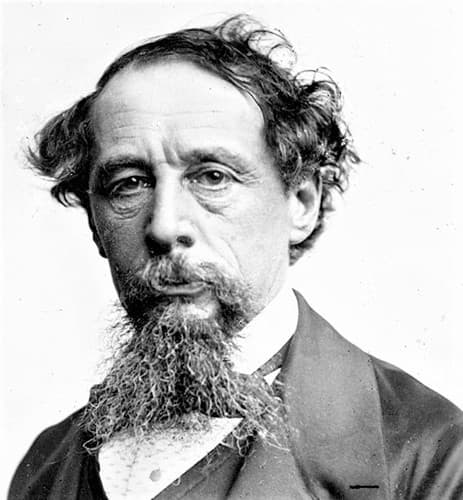
Charles Dickens (1858)

Genre

General

Reading Time

15-20 hours (approx. 610 pages)

Key Themes

See below

Track Your Reading

Sign in to track this book

An orphaned boy navigates the grimy underbelly of Victorian London, escaping Fagin's criminal enterprise and uncovering the secrets of his own lineage.

Core Idea

Oliver Twist explores how social structures and extreme poverty affect a person's moral growth, arguing that natural goodness can last despite widespread corruption. Dickens exposes the hypocrisy and moral decay within Victorian society, especially among those claiming to be charitable, while also showing the harsh realities and dangers of the criminal world. The novel champions compassion, kinship, and justice against systemic indifference and cruelty, showing that redemption and belonging are possible even for the most marginalized.
Reading time
15-20 hours (approx. 610 pages)
Difficulty
Medium
✓ Read this if...
You are interested in Victorian social commentary, the enduring power of good against adversity, or classic tales of crime, poverty, and eventual redemption.
✗ Skip this if...
You dislike lengthy, descriptive prose, grim depictions of poverty and child exploitation, or stories with a strong moralizing tone.

Core idea

The central argument and framework that powers the entire book.

Oliver Twist explores how social structures and extreme poverty affect a person's moral growth, arguing that natural goodness can last despite widespread corruption. Dickens exposes the hypocrisy and moral decay within Victorian society, especially among those claiming to be charitable, while also showing the harsh realities and dangers of the criminal world. The novel champions compassion, kinship, and justice against systemic indifference and cruelty, showing that redemption and belonging are possible even for the most marginalized.

At a glance

Reading time

15-20 hours (approx. 610 pages)

Difficulty

Medium

Read this if...

You are interested in Victorian social commentary, the enduring power of good against adversity, or classic tales of crime, poverty, and eventual redemption.

Skip this if...

You dislike lengthy, descriptive prose, grim depictions of poverty and child exploitation, or stories with a strong moralizing tone.

Key Takeaways

1

The Corrupting Hand of Poverty

Poverty isn't just a lack of resources; it's a moral and societal disease that warps individuals and systems.

Quote

Please, sir, I want some more.

Dickens clearly shows how extreme poverty, especially in London's workhouses and criminal areas, takes away not just food and shelter but also dignity, innocence, and moral direction. The novel argues that societal neglect, not inherent evil, often pushes people into desperate and criminal acts. Oliver's first request for 'more' highlights the basic unfairness and deprivation of his early life, a situation that creates a cycle of desperation and exploitation. The workhouse system, under the Poor Law, is shown as a cruel, dehumanizing ...

Supporting evidence

Oliver's early life in the workhouse, where he and other children are starved and mistreated, and then his subsequent escape into the criminal underworld led by Fagin, where he is groomed for theft.

Apply this

Recognize that systemic issues often underpin individual struggles. Advocate for social policies that address the root causes of poverty, such as adequate nutrition, education, and fair labor practices, rather than merely punishing its symptoms.

social-injusticepoverty-cyclevictorian-society
2

Innate Goodness vs. Environmental Corruption

Despite dire circumstances, some individuals retain a core purity, suggesting a resilience of spirit against the forces of depravity.

Quote

He was a child of the workhouse, but he was a child of God, and therefore, not utterly lost.

Oliver Twist represents inherent goodness, keeping his innocence and moral integrity even after being thrown into the dirtiest and most criminal environments. This strong purity, often linked to his mysterious noble birth, contrasts sharply with the corrupt characters around him, like Fagin, Sikes, and even the impressionable Dodger. Dickens uses Oliver to explore the debate of nature versus nurture, suggesting that while environment can greatly shape character, it does not always completely destroy a person's natural moral sense. Oli...

Supporting evidence

Oliver's repeated refusal to pickpocket or participate in crimes, his shock and distress at the criminal acts he witnesses, and his gentle nature even when mistreated.

Apply this

Cultivate and protect your own moral compass, even when faced with pressure or negative influences. Seek out positive environments and relationships that reinforce ethical behavior and personal growth.

moral-resiliencenature-vs-nurtureinnocence-lost
3

The Peril of Social Indifference

Societal apathy and the failure to recognize shared humanity perpetuate suffering and injustice.

Quote

There are some people who, as long as they don’t know what you are doing, will always believe you are doing right.

Dickens criticizes the widespread social indifference of Victorian society, where the suffering of the poor was often ignored or dismissed. The novel shows how a lack of empathy and a willingness to avoid uncomfortable truths allowed institutions like the workhouse to thrive and criminals like Fagin to operate freely. Characters like Mr. Bumble, who embodies the heartless bureaucracy, and the wealthy who ignore the squalor just outside their homes, represent this indifference. The story argues that active compassion and help are neede...

Supporting evidence

The officials' disinterest in Oliver's welfare, the public's general ignorance of the plight of orphans and the poor, and the slow pace of justice for victims.

Apply this

Actively seek to understand the struggles of others, especially those marginalized or less fortunate. Challenge complacency and speak out against injustice, even when it's uncomfortable.

social-apathyvictim-blamingmoral-responsibility
4

Justice, Retribution, and Redemption

The novel explores the complex interplay of legal justice, moral retribution, and the possibility of personal redemption.

Quote

The law is a ass – a idiot.

While Mr. Bumble's quote is often seen as funny, it captures Dickens's broader criticism of the legal system's flaws and its often random application. The novel shows a world where official justice is often blind, slow, or wrong, yet a form of moral payback often reaches the wicked. Fagin, Sikes, and Monks all meet ends that, while violent or sad, feel like the story balancing the scales. Conversely, characters like Nancy, despite her difficult life, show moments of deep moral courage and self-sacrifice, hinting at a chance for redemp...

Supporting evidence

The ultimate fates of Fagin (hanged), Sikes (accidentally hangs himself), and Monks (dies in prison after squandering his inheritance). Nancy's brave attempts to save Oliver, leading to her murder.

Apply this

Reflect on the difference between legal justice and moral justice. Strive for restorative justice that addresses harm and allows for rehabilitation, while holding individuals accountable for their actions.

legal-system-critiquemoral-consequencesredemption-arc
5

The Power of Kinship and Connection

The search for belonging and the discovery of family offer solace and a path out of isolation.

Quote

The memory of the old gentleman, and the pretty lady, had never faded from his mind.

Oliver's journey is a search for belonging and a stable, loving family. His desire for connection is clear from his earliest days, as he holds onto brief moments of kindness. The discovery of his true family and his adoption by Mr. Brownlow gives him the resolution he desperately wants, symbolizing the healing power of family love and a sense of identity. Dickens emphasizes that kinship, whether by blood or by choice, is essential for human well-being, offering protection, affection, and a basis for a moral life. This contrasts sharpl...

Supporting evidence

Oliver's emotional attachment to Mr. Brownlow and Rose Maylie, his deep relief upon discovering his true family, and the stark contrast with Fagin's 'family' of thieves.

Apply this

Actively cultivate strong, supportive relationships, whether with family or chosen friends. Recognize the importance of community and belonging for personal well-being.

family-tiessearch-for-identitybelonging-and-community
6

The Hypocrisy of Philanthropy

Charitable institutions can be deeply flawed, masking cruelty and self-interest under a veneer of benevolence.

Quote

It was no doubt a melancholy circumstance that they could not all be born to eat soup at a workhouse.

Dickens deeply criticizes Victorian 'philanthropy' shown by the workhouse system. Far from being truly charitable, these places are shown as sites of systemic abuse, starvation, and moral decline, often run by self-serving or indifferent people like Mr. Bumble and Mrs. Corney. The novel exposes the hypocrisy of a society that claims to care for the poor while also enacting policies that cause suffering. The 'soup' quote, said with sharp sarcasm, highlights the common belief that poverty was a moral failing rather than a societal probl...

Supporting evidence

The workhouse conditions where children are given meager rations, subjected to physical abuse, and denied education or affection, all under the supervision of 'officials' who profit from their positions.

Apply this

Critically evaluate the effectiveness and ethics of charitable organizations. Support those that genuinely empower and uplift individuals, rather than merely perpetuating cycles of dependency or abuse.

institutional-abusesocial-critiquefalse-charity
7

The Lure and Brutality of the Underworld

The criminal underworld offers a false sense of community and opportunity, ultimately leading to violence and despair.

Quote

Once a thief, always a thief.

The world of Fagin's gang is clearly detailed, showing its deceptive appeal and its deep brutality. For children like the Artful Dodger, it offers a twisted sense of belonging and a way to survive, but it is ultimately a trap. Fagin's cynical belief, 'Once a thief, always a thief,' reflects the idea that once caught, escape is nearly impossible. The novel reveals the hierarchy of the criminal world, from the clever Fagin to the terrible Bill Sikes, showing how it preys on the vulnerable and destroys its own. The supposed 'freedom' it ...

Supporting evidence

The training of children to pickpocket, the constant threats of violence from Sikes, Nancy's entrapment in the life, and the ultimate fates of the main criminals.

Apply this

Be wary of groups or opportunities that promise easy solutions or quick gains, especially if they require compromising your values or engaging in illicit activities. Recognize the long-term consequences of such choices.

organized-crimemoral-degradationsocial-exclusion
8

The Power of Compassion and Kindness

Even small acts of kindness can have profound, life-altering impacts on those who are suffering.

Quote

There are not many people in the world, I think, who can look back upon a life of self-denial, and know better than you do, what it is to have been an orphan.

Oliver's survival and eventual rescue are directly linked to the kindness shown by a few compassionate people. Mr. Brownlow, Rose Maylie, and even the seemingly small acts of the bookseller or the woman who offers him bread, provide vital help in a world otherwise marked by cruelty. These acts of empathy stand out against the widespread indifference and malice. Dickens emphasizes that real human connection and a willingness to help, without expecting reward, are strong forces for good, able to break cycles of despair and offer hope wh...

Supporting evidence

Mr. Brownlow taking Oliver in, Rose Maylie nursing him back to health, and the various small acts of generosity that help Oliver at critical junctures.

Apply this

Practice empathy and actively look for opportunities to offer kindness and support to others, particularly those who are vulnerable or struggling. Understand that even small gestures can make a significant difference.

empathy-in-actionhuman-connectionaltruism
9

The Deceptive Nature of Appearances

Outward appearances, whether of respectability or depravity, often conceal deeper truths about character.

Quote

It is because I am a gentleman, and you are not.

Dickens cleverly uses contrasting appearances to expose his society's hypocrisy and moral reversals. The Artful Dodger, despite his torn clothes and criminal life, often acts with a strange charm and wit, even calling himself a 'gentleman' in his own way. Conversely, seemingly respectable figures like Mr. Bumble and Mrs. Corney are shown to be cruel and self-serving. This theme emphasizes that true character is not defined by social status, wealth, or outward look, but by one's actions and moral core. Oliver, despite being born poor, ...

Supporting evidence

The respectable attire and manners of characters like Monks and Mr. Bumble concealing their villainy, while Nancy's 'fallen' status hides a brave and compassionate heart.

Apply this

Look beyond superficial appearances and social labels to discern true character. Avoid making hasty judgments based on someone's background, profession, or perceived status.

social-maskmoral-hypocrisyperception-vs-reality
10

The Voice of the Voiceless

Literature can serve as a powerful tool to expose social injustices and advocate for the marginalized.

Quote

I have been as good a friend to you, as you have ever had.

Dickens's main goal in writing 'Oliver Twist' was to highlight the terrible conditions of the Poor Law and the criminal world that exploited children. He used the novel to give a voice to those who were otherwise unheard and unseen in Victorian society: orphans, paupers, and crime victims. The clear, often shocking, descriptions of the workhouse, the streets of London, and the brutal lives of criminals aimed to stir public conscience and inspire reform. The novel's lasting power comes from its ability to make the suffering of the marg...

Supporting evidence

The detailed depictions of workhouse life, child labor, and the criminal justice system, which were based on contemporary reports and Dickens's own observations.

Apply this

Use your own voice and platform, however small, to advocate for social justice and highlight issues affecting marginalized communities. Support artists and writers who use their craft for social commentary.

social-commentaryadvocacy-through-artliterary-activism

Critical analysis

Notable Quotes

Please, sir, I want some more.

Oliver, starving, asks for a second helping of gruel at the workhouse.

The public are very fond of seeing a little innocent in distress; particularly when they know the distress is not a sham; and when they can comfortably think they have been the cause of it.

Narrator's cynical observation on public sentiment towards suffering.

It is because I am a boy! If I had been a man, I could have killed him with a blow.

Oliver reflects on his inability to fight back against the cruel Mr. Bumble.

Some people are so much afraid of being thought to have too much feeling, that they will not let a drop of it escape them even to drown a kitten.

Narrator's comment on the suppression of emotion and compassion.

Nature has been for some time, making great efforts to bring you out; and at last has succeeded.

Fagin's sarcastic remark to Oliver upon his 'initiation' into the criminal underworld.

He's a-going to be a gentleman, and he'll never be a professional at anything else.

The Artful Dodger's assessment of Oliver's unsuitability for a life of crime.

There are some things that can be done as well in a dark room as in a light one.

Fagin's secretive and ominous statement to his gang.

The fact is, that there are a great many people who, in their eagerness to alleviate the sufferings of the poor, do not take into consideration the moral value of their own example.

Narrator's critique of superficial charity and moral hypocrisy.

You don't mind what I say to you, do you, dear? Just a little bit of a scolding, you know, because you're such a good boy.

Fagin's manipulative and feigned affection towards Oliver.

It is no common thing for a child to be born in a workhouse, and for its mother to die there, and for it to be brought up like a pauper, and for it to be treated as if it were a criminal.

Narrator's summary of Oliver's tragic beginnings.

Of all the crimes that human beings commit, the blackest and most revolting is ingratitude.

Mr. Bumble's self-righteous pronouncement, often ironically applied.

A good name, though it be nothing but a name, is the best thing we can inherit.

Mr. Brownlow's belief in the importance of reputation and lineage.

The law is a ass—a idiot.

Mr. Bumble's frustrated outburst about the perceived flaws and injustices of the legal system.

There are not a few who, in their eagerness to be what they are not, forget what they are.

Narrator's observation on people striving for social status or to escape their true selves.

Quiz

Test Your Knowledge

Ready to see how well you understood this book? Take our interactive quiz with 10 questions.

10
Questions
~5
Minutes
?
Best Score

Key Questions (FAQ)

'The Adventures of Oliver Twist' follows the harrowing journey of an orphan boy, Oliver, as he navigates the brutal workhouses, criminal underworld, and ultimately seeks to discover his true identity and find a place of belonging in 19th-century London. It's a powerful social commentary on poverty, crime, and class inequality.

About the author

Charles Dickens

Charles John Huffam Dickens was an English writer and social critic who created some of the world's best-known fictional characters and is regarded by many as the greatest novelist of the Victorian era. His works enjoyed unprecedented popularity during his lifetime and, by the 20th century, critics and scholars had recognised him as a literary genius. His novels and short stories are widely read today.