BookBrief
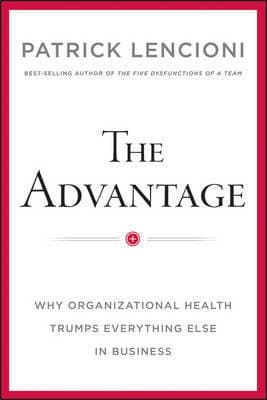
The Advantage. Perché nel business la salute organizzativa ha la priorità su tutto cover
Archivist's Choice

The Advantage. Perché nel business la salute organizzativa ha la priorità su tutto

Genre

General

Reading Time

3-4 hours

Key Themes

See below

Track Your Reading

Sign in to track this book

This book argues that true business success blossoms not from brilliant strategy or innovation, but from the deeply rooted, often overlooked, health and unity of its organizational culture.

Core Idea

The Advantage argues that organizational health is the single greatest — and most neglected — competitive advantage in any business. It posits that a healthy organization, characterized by minimal politics and confusion, high morale and productivity, and low turnover, will outperform a 'smart' one (one with great strategy, marketing, finance, and technology) every time. The core premise is that by focusing on building a cohesive leadership team, creating clarity around fundamental questions, over-communicating that clarity, and reinforcing it systematically, organizations can unlock their full potential and achieve sustainable success.
Reading time
3-4 hours
Difficulty
Medium
✓ Read this if...
You are a leader or manager struggling with team dysfunction, lack of alignment, or poor execution despite having talented individuals and a good strategy. You believe there's more to organizational success than just intellectual prowess and are looking for a practical, actionable framework to improve your company's internal dynamics and performance.
✗ Skip this if...
You are only interested in highly technical or theoretical business concepts, or you believe that a 'perfect' strategy and superior individual talent are sufficient for success, regardless of internal team health. You are not in a position to influence organizational culture or leadership team dynamics.

Core idea

The central argument and framework that powers the entire book.

The Advantage argues that organizational health is the single greatest — and most neglected — competitive advantage in any business. It posits that a healthy organization, characterized by minimal politics and confusion, high morale and productivity, and low turnover, will outperform a 'smart' one (one with great strategy, marketing, finance, and technology) every time. The core premise is that by focusing on building a cohesive leadership team, creating clarity around fundamental questions, over-communicating that clarity, and reinforcing it systematically, organizations can unlock their full potential and achieve sustainable success.

At a glance

Reading time

3-4 hours

Difficulty

Medium

Read this if...

You are a leader or manager struggling with team dysfunction, lack of alignment, or poor execution despite having talented individuals and a good strategy. You believe there's more to organizational success than just intellectual prowess and are looking for a practical, actionable framework to improve your company's internal dynamics and performance.

Skip this if...

You are only interested in highly technical or theoretical business concepts, or you believe that a 'perfect' strategy and superior individual talent are sufficient for success, regardless of internal team health. You are not in a position to influence organizational culture or leadership team dynamics.

Key Takeaways

1

Organizational Health Trumps Smarts

Focusing on internal cohesion and clarity yields greater success than mere intelligence or expertise.

Quote

The single greatest advantage any business can achieve is organizational health.

Many organizations prioritize intelligence, strategy, marketing, and technology, believing these 'smart' areas are the primary drivers of success. However, Lencioni argues that organizational health—defined by minimal politics, minimal confusion, high morale, and high productivity—is the most significant competitive advantage. Healthy organizations naturally attract and retain talent, adapt faster to change, make better decisions, and execute more effectively, regardless of their initial 'smart' advantages. This health is not about be...

Supporting evidence

Lencioni's extensive work with leadership teams across various industries consistently shows that companies prioritizing health outperform those that are merely 'smart' but dysfunctional.

Apply this

Leaders should dedicate significant time and resources to fostering clarity, communication, and cultural alignment, recognizing that these 'soft' aspects are foundational to 'hard' results.


organizational-healthcompetitive-advantageinternal-cohesion
2

Build a Cohesive Leadership Team

A unified and trusting executive team is the bedrock of organizational health.

Quote

If the people at the top of the organization are not unified, then no one else will be.

The leadership team's behavior sets the tone for the entire organization. If leaders lack trust, fear conflict, avoid accountability, shirk commitment, or ignore results, these dysfunctions will cascade down. A cohesive leadership team, conversely, cultivates trust by being vulnerable, engages in unfiltered ideological conflict, commits to decisions, holds each other accountable, and focuses on collective results. This creates a powerful example and a clear mandate for the rest of the company, eliminating confusion and fostering a cul...

Supporting evidence

Lencioni's 'Five Dysfunctions of a Team' model highlights how the absence of trust, fear of conflict, lack of commitment, avoidance of accountability, and inattention to results cripple team effectiveness.

Apply this

Leadership teams should regularly engage in exercises to build trust (e.g., personal histories), practice healthy conflict resolution, ensure clear commitment to decisions, implement peer-to-peer accountability, and maintain a relentless focus on collective outcomes.

leadership-cohesionteam-dysfunctionsexecutive-alignment
3

Create Clarity in Six Critical Areas

Define and communicate core questions to ensure everyone is on the same page.

Quote

Organizational health is impossible without clarity.

Confusion is a silent killer of productivity and morale. Healthy organizations eliminate confusion by ensuring everyone understands the answers to six critical questions: Why do we exist? How do we behave? What do we do? How will we succeed? What is most important right now? Who does what? When these questions are clearly defined and consistently communicated, employees can make autonomous decisions that align with organizational goals, reducing wasted effort and internal politics. This clarity provides a compass for daily work, strat...

Supporting evidence

Companies with clearly articulated mission, vision, values, and strategic anchors consistently demonstrate higher employee engagement and better execution than those operating with ambiguity.

Apply this

Leaders must dedicate time to explicitly defining and documenting the answers to these six questions, then relentlessly communicate them through all channels (meetings, onboarding, performance reviews).

organizational-claritymission-vision-valuesstrategic-alignment
4

Over-Communicate Key Messages

Repeat vital information relentlessly to ensure it truly permeates the organization.

Quote

If you think you have communicated too much, you’ve probably communicated just enough.

Leaders often underestimate the amount of repetition required for key messages to truly sink in across an entire organization. What feels like over-communication to a leader is often just enough for employees to internalize and act upon. This means consistently reiterating the organization's purpose, values, strategic priorities, and current goals through multiple channels, in different formats, and with varying emphasis. The goal is not just for people to hear the message, but to understand it deeply, believe in it, and integrate it ...

Supporting evidence

Studies on organizational change management show that consistent and repetitive communication is a critical factor in successful adoption of new strategies and behaviors.

Apply this

Develop a multi-channel communication plan (town halls, newsletters, team meetings, 1-on-1s, visual aids) to repeatedly share core messages. Leaders should view themselves as chief communicators, constantly reinforcing what matters most.

communication-strategymessage-reinforcementinternal-communication
5

Reinforce Clarity Systematically

Integrate clarity into all human systems to make it stick and ensure consistency.

Quote

An organization's systems must be designed to reinforce its clarity, not undermine it.

It's not enough to simply define and communicate clarity; it must be embedded into the very fabric of the organization's human systems. This means aligning hiring, onboarding, performance management, compensation, and dismissal processes with the organization's purpose, values, and strategic priorities. For example, hiring for cultural fit (aligned with values) and rewarding behaviors that exemplify those values. When systems reinforce clarity, they create a self-sustaining culture where desired behaviors are encouraged and undesired ...

Supporting evidence

Companies like Southwest Airlines exemplify how deeply embedding values into hiring and performance systems creates a strong, consistent culture and competitive advantage.

Apply this

Audit all HR-related processes (recruitment questions, performance review criteria, bonus structures) to ensure they explicitly reference and reward adherence to the organization's core values and strategic imperatives.

system-alignmentcultural-integrationhuman-resources-systems
6

Meeting Effectiveness is Crucial

Transform meetings from time-wasters into productive engines of organizational health.

Quote

If meetings are not compelling, then nothing else will be either.

Meetings are often the most dreaded and least productive part of organizational life, yet they are the primary forum for leadership teams to make decisions, resolve issues, and communicate. Lencioni argues that healthy organizations treat meetings as critical opportunities to build cohesion, reinforce clarity, and drive results. This requires different types of meetings for different purposes (e.g., daily stand-ups for tactical issues, weekly staff meetings for strategic discussions, quarterly off-sites for long-term planning). Each m...

Supporting evidence

Organizations that implement Lencioni's 'Meeting Advantage' framework report significant improvements in decision-making speed, issue resolution, and overall team morale.

Apply this

Implement a structured meeting cadence, distinguishing between daily check-ins (tactical), weekly staff meetings (strategic issues), monthly reviews (departmental), and quarterly off-sites (big picture/vision). Ensure each meeting has a clear purpose, agenda, and an assigned facilitator.

meeting-managementmeeting-cadencedecision-making
7

Embrace Healthy Conflict

Encourage open, respectful debate to uncover the best solutions and foster genuine commitment.

Quote

Conflict is not dysfunction; it is an attempt to find the best possible answer.

Many teams avoid conflict, mistaking it for personal attacks or negativity. However, 'ideological conflict' – the passionate and unfiltered debate around ideas, strategies, and decisions – is essential for organizational health. When team members are comfortable engaging in healthy conflict, they challenge assumptions, expose weaknesses, and collectively arrive at superior solutions. Avoiding conflict leads to artificial harmony, superficial agreement, and ultimately, poor decisions that no one truly commits to. Leaders must model and...

Supporting evidence

Research on high-performing teams consistently shows that they engage in more robust and open debate than lower-performing teams, leading to more innovative and resilient solutions.

Apply this

Leaders should actively draw out dissenting opinions, challenge assumptions, and create a safe environment where team members feel comfortable disagreeing without fear of retribution. Establish ground rules for respectful debate.

healthy-conflictideological-debateteam-effectiveness
8

Accountability for All

Hold everyone, especially leaders, responsible for their commitments and behaviors.

Quote

Peer-to-peer accountability is the most effective and least utilized form of accountability.

Accountability is not just about a manager holding subordinates responsible; it's about a team holding each other accountable for commitments, adherence to values, and contributions to collective results. When leaders fail to hold peers accountable, or when they are not held accountable themselves, standards erode, and individual performance suffers. Peer-to-peer accountability, based on trust and a shared commitment to the team's success, is incredibly powerful because it leverages social pressure and mutual respect. It requires cour...

Supporting evidence

Teams that implement regular peer-to-peer accountability sessions (e.g., weekly check-ins on commitments) demonstrate higher follow-through and better project completion rates.

Apply this

Leaders must model accountability, holding themselves and each other accountable. Encourage teams to establish clear commitments and regularly review progress, providing constructive feedback when commitments are not met.

peer-accountabilityleadership-accountabilityperformance-management
9

Focus on Collective Results

Prioritize team success over individual status or departmental objectives.

Quote

The ultimate test of a healthy organization is its ability to consistently achieve collective results.

The final dysfunction in Lencioni's model is inattention to results. Healthy organizations ensure that every team member, especially at the leadership level, is singularly focused on the collective outcomes of the organization. This means prioritizing the overall success of the business over individual departmental budgets, personal career advancement, or specific functional metrics. When leaders focus on collective results, they naturally make decisions that benefit the whole, fostering collaboration and synergy. Conversely, when ind...

Supporting evidence

Companies that explicitly define collective key results and tie compensation/recognition to these group outcomes consistently demonstrate better cross-functional collaboration and overall business performance.

Apply this

Clearly define a few critical collective results for the entire organization or leadership team. Regularly review progress against these results, ensuring that individual and departmental goals are always subservient to the overarching collective objectives.

collective-resultsteam-successorganizational-goals

Critical analysis

Notable Quotes

Se un'organizzazione è sana, è più intelligente. Se è più intelligente, vince.

Introduzione al concetto di salute organizzativa come vantaggio competitivo.

La salute organizzativa è la somma di quattro discipline: chiarezza, comunicazione, coesione e cultura.

Definizione degli elementi chiave che contribuiscono alla salute organizzativa.

Le aziende sane hanno meno politica interna e meno confusione, il che significa che possono prendere decisioni più velocemente e con maggiore chiarezza.

Spiegazione dei benefici di un'organizzazione sana in termini di efficienza decisionale.

La chiarezza è il punto di partenza. Le persone devono sapere perché esistono, dove stanno andando e come ci arriveranno.

Sottolinea l'importanza della chiarezza nella definizione della missione, visione e strategia.

Non è intelligenza, è salute. È la capacità di un'organizzazione di funzionare come un'unica entità coerente.

Distinzione tra intelligenza di mercato e salute interna dell'organizzazione.

La comunicazione non è ciò che dici, ma ciò che sentono.

Enfatizza l'importanza dell'ascolto e della comprensione nella comunicazione interna.

La coesione è la capacità di lavorare insieme in modo efficace, superando le differenze individuali.

Definizione della coesione come elemento fondamentale per il lavoro di squadra.

La cultura è ciò che succede quando il capo non è nella stanza.

Descrizione della cultura organizzativa come l'insieme di comportamenti e valori impliciti.

Le riunioni non sono un male necessario; sono un'opportunità per rafforzare la chiarezza e la coesione.

Rivalutazione del ruolo delle riunioni come strumento per la salute organizzativa.

Assumere le persone giuste non è sufficiente; devi anche farle rimanere e farle prosperare.

Oltre al reclutamento, si sottolinea l'importanza della retention e dello sviluppo del personale.

Il vero vantaggio competitivo non deriva da ciò che sai, ma da come ti comporti.

Sottolinea che l'esecuzione e il comportamento organizzativo superano la mera conoscenza.

Non si tratta di avere le risposte giuste, ma di porre le domande giuste e di creare un ambiente in cui le risposte possano emergere.

Enfatizza un approccio basato sull'indagine e sulla creazione di un ambiente favorevole all'apprendimento.

Il fallimento non è un'opzione, ma imparare dal fallimento è un obbligo.

Approccio alla gestione degli errori e all'importanza dell'apprendimento continuo.

Quiz

Test Your Knowledge

Ready to see how well you understood this book? Take our interactive quiz with 10 questions.

10
Questions
~5
Minutes
?
Best Score

Key Questions (FAQ)

'The Advantage' argues that organizational health is the single greatest determinant of a company's success, even more so than smarts, strategy, or technology. It posits that healthy organizations are inherently more productive, efficient, and resilient.

About the author

Author information is not available yet.