BookBrief
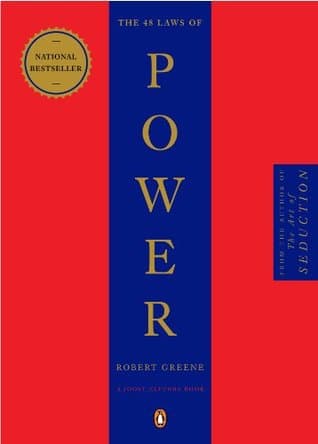
The 48 Laws of Power cover
Archivist's Choice

The 48 Laws of Power

Robert Greene (1998)

Genre

Business / Leadership / History / Philosophy / Self-Help

Reading Time

900 min

Key Themes

See below

Track Your Reading

Sign in to track this book

Learn the amoral strategies of history's most cunning figures, from Machiavelli to con men, to acquire and maintain power.

Core Idea

Power is a game. To win, one must master its rules through strategy, manipulation, and an understanding of human nature. Drawing lessons from historical figures and philosophical texts, the book dissects 48 laws that govern how to get, keep, and defend power. It argues that ethical considerations often hinder the pursuit of power, advocating for a pragmatic, amoral approach where appearances, deception, and control over emotions are most important. By applying these laws, individuals can navigate social hierarchies, influence others, and protect themselves from those who seek to dominate them.
Reading time
900 min
Difficulty
Medium
✓ Read this if...
You are interested in the historical and philosophical underpinnings of power dynamics, want to understand strategic thinking in social and professional contexts, or are looking for a controversial and thought-provoking guide to self-advancement.
✗ Skip this if...
You are looking for an ethically-driven guide to leadership, prefer a collaborative and empathetic approach to human interaction, or are easily offended by Machiavellian principles and historical examples of manipulation.

Core idea

The central argument and framework that powers the entire book.

Power is a game. To win, one must master its rules through strategy, manipulation, and an understanding of human nature. Drawing lessons from historical figures and philosophical texts, the book dissects 48 laws that govern how to get, keep, and defend power. It argues that ethical considerations often hinder the pursuit of power, advocating for a pragmatic, amoral approach where appearances, deception, and control over emotions are most important. By applying these laws, individuals can navigate social hierarchies, influence others, and protect themselves from those who seek to dominate them.

At a glance

Reading time

900 min

Difficulty

Medium

Read this if...

You are interested in the historical and philosophical underpinnings of power dynamics, want to understand strategic thinking in social and professional contexts, or are looking for a controversial and thought-provoking guide to self-advancement.

Skip this if...

You are looking for an ethically-driven guide to leadership, prefer a collaborative and empathetic approach to human interaction, or are easily offended by Machiavellian principles and historical examples of manipulation.

Key Takeaways

1

Never Outshine the Master

Always make those above you feel comfortably superior.

Quote

All superiority is odious, but the most odious of all is that of the mind.

This law stresses the importance of managing how your superiors see you. While it may seem counterintuitive to hide your own brilliance, Greene argues that openly outshining your master can cause insecurity, envy, and ultimately, your downfall. The goal is to make your master appear more brilliant and capable, subtly improving their reputation while you remain in a supportive, essential role. This is about strategic deference, not mediocrity. Your true power comes from making yourself essential without ever threatening the master's eg...

Supporting evidence

Greene recounts the story of Nicolas Fouquet, the finance minister to Louis XIV, who hosted an extravagant party that outshone the king's own palace. Louis XIV, feeling diminished, promptly imprisoned Fouquet for life, despite his prior service.

Apply this

When presenting ideas or solutions, frame them as extensions or improvements upon a superior's existing vision. Give credit liberally, even for minor contributions, and avoid public displays of intellectual superiority that could make your boss feel insecure. Offer solutions that elevate their standing.

2

Conceal Your Intentions

Keep people off-balance and in the dark by never revealing the purpose behind your actions.

Quote

To be able to make use of people, you must know how to mask your intentions.

Greene argues that revealing your true intentions too early makes you predictable and easy to attack. When people know what you want, they can defend themselves, manipulate you, or stop your efforts. By keeping your motives unclear, you maintain an element of surprise and control. People will spend energy trying to figure out your moves, leaving them less prepared to counter your actual plans. This means being strategic about transparency, not dishonest. Cultivate an air of mystery, allowing others to project their own desires onto yo...

Supporting evidence

Greene cites Otto von Bismarck, who often presented his true intentions as something entirely different, leading his opponents to misinterpret his goals and play into his hands. He would feign weakness or disinterest to lull others into a false sense of security.

Apply this

Before making a significant move, carefully consider who needs to know your full intentions and when. Instead of stating your ultimate goal, focus on immediate, smaller steps that seem innocuous. Use red herrings or feigned interests to distract from your real objective. Never tip your hand until the moment of execution.

3

Always Say Less Than Necessary

The more you say, the more likely you are to say something foolish.

Quote

When you are trying to impress people with words, the more you say, the more common you appear, and the less in control.

This law supports the power of silence and speaking little. Greene says that talking too much lessens your authority and reveals too much about your thoughts and weaknesses. When you speak less, your words carry more weight and seem more meaningful. It creates an aura of mystery and control, making others eager to fill the silence, often revealing their own hand. Silence can also be used as a strategic weapon, making others uncomfortable and forcing them to concede or reveal information. Master the art of the pause and the concise sta...

Supporting evidence

Greene uses the example of Louis XIV, who spoke little and was always brief and to the point. This made his words seem more significant and commanded respect, contrasting with courtiers who babbled to impress.

Apply this

Practice active listening and only speak when you have something truly valuable to contribute. When asked a question, provide a concise answer, then let the silence hang, allowing the other person to elaborate or reveal more. Avoid over-explaining or justifying your decisions; confident people rarely feel the need to do so.

4

So Much Depends on Reputation — Guard It with Your Life

Reputation is the cornerstone of power; through it, you can intimidate and win.

Quote

Reputation is the cornerstone of power. Through reputation alone you can intimidate and win.

Greene stresses that your reputation is your most valuable asset in the game of power. A strong reputation can deter rivals, open doors, and give you influence without much effort. Conversely, a damaged reputation can lead to isolation and powerlessness. This law is not just about having a good reputation, but actively building and fiercely protecting it. Be proactive in shaping how others see you, and be ruthless in destroying the reputations of rivals if necessary, while defending your own from any smear campaigns. A powerful reputa...

Supporting evidence

Greene recounts the story of Duke Cesare Borgia, who, after conquering Romagna, needed to establish a reputation for ruthlessness to maintain order. He had his brutal lieutenant, Remirro de Orco, execute many, then had Orco himself executed and displayed publicly, demonstrating that Borgia was even more formidable than his enforcer.

Apply this

Identify the key qualities you want your reputation to embody (e.g., integrity, ruthlessness, creativity). Act consistently with these qualities. Be vigilant against rumors or slights, addressing them swiftly and decisively. Associate with people who enhance your reputation and distance yourself from those who could tarnish it. Understand that perception often trumps reality.

5

Court Attention at All Costs

Never let yourself be lost in the crowd, or so buried in oblivion that you cannot be seen.

Quote

The world wants to see you, not for who you are, but for the role you play.

In a world with much information and competition, Greene argues that visibility is most important. If you are not seen, you are forgotten, and thus powerless. This law encourages bold, even controversial, actions to get attention. Whether through eccentricity, spectacle, or a provocative statement, the goal is to stand out from the crowd and become a focal point. While negative attention is often less desirable than positive, even scandal can be better than being unknown. The key is to constantly find ways to make yourself memorable a...

Supporting evidence

Greene highlights the career of P.T. Barnum, who mastered the art of public relations and spectacle, often creating controversies and exaggerating claims to ensure his shows and himself were always in the public eye.

Apply this

Identify unique ways to differentiate yourself in your field. This could involve developing a distinct personal brand, speaking publicly on unusual topics, or engaging in highly visible projects. Don't be afraid to occasionally break norms or create a stir to draw eyes to your work or ideas. Avoid blending in; strive to be unforgettable.

6

Play on People's Need to Believe to Create a Cultlike Following

Never let your ideas be too mundane or too complex; simplify them into a new faith.

Quote

People have an overwhelming desire to believe in something. Become the focal point of that desire.

This law looks at the psychological drive for belief and belonging. Greene suggests that people are drawn to figures who can articulate a vision, offer hope, and provide meaning. To gain power, you can use this need by presenting yourself as the leader of a new movement or idea, even if it is just for a product or an idea. Simplify complex problems, promise grand solutions, and create rituals or a unique language that binds your followers. Cultivate an air of mystery and exclusivity around your 'faith,' making people feel special for ...

Supporting evidence

Greene refers to figures like Jim Jones, who understood people's need for belief and belonging, creating a powerful, albeit destructive, cult around his persona and vision.

Apply this

Identify a common desire or frustration within your target group. Frame your project, product, or idea as the answer to this need, simplifying its message into an easily digestible 'doctrine.' Create a sense of shared identity and purpose among your team or followers. Use compelling rhetoric and symbolic actions to inspire devotion.

7

Use Selective Honesty and Generosity to Disarm Your Victim

One sincere and honest move will cover over dozens of dishonest ones.

Quote

The most effective way to deceive is to create an appearance of honesty and virtue.

Greene argues that complete honesty is rarely effective in the pursuit of power. Instead, strategic, selective honesty and generosity can be more potent tools for manipulation. A single act of apparent sincerity or a well-timed gift can disarm skepticism, create a false sense of trust, and make your target vulnerable to a larger deception. This tactic works because it plays on human psychology: people are often eager to believe in others' good intentions. By appearing virtuous or selfless at crucial moments, you lull your 'victim' int...

Supporting evidence

Greene cites the example of the legendary con artist Joseph Weil ('The Yellow Kid'), who would often return a lost wallet with all its contents to a mark, establishing trust before executing a much larger scam.

Apply this

Before a negotiation or a difficult request, offer a small, unexpected favor or genuinely praise the other person. Share a minor, seemingly vulnerable truth about yourself to build rapport. These small acts of 'honesty' or 'generosity' can make others more receptive and less guarded when you present your actual agenda.

8

Pose as a Friend, Work as a Spy

Learn to probe and gather information, using social occasions to your advantage.

Quote

The most dangerous enemies are those who wear the mask of friendship.

This law stresses the importance of gathering intelligence in the game of power. Greene advises adopting a friendly, approachable demeanor to get valuable information from others, especially rivals or potential obstacles. People are more likely to reveal their true thoughts, weaknesses, and intentions to someone they see as an ally or confidant. Social gatherings, casual conversations, and feigned interest become opportunities to 'spy' without raising suspicion. The goal is to accumulate knowledge about your adversaries' plans, insecu...

Supporting evidence

Greene highlights the tactics of Catherine the Great, who used her charm and social skills to cultivate a vast network of informers, allowing her to understand the court's dynamics and outmaneuver her enemies.

Apply this

At networking events or casual meetings, ask open-ended questions and listen more than you speak. Encourage others to talk about themselves, their challenges, and their opinions. Observe body language and subtle cues. Cultivate a reputation as a good listener to encourage candor, all while discreetly cataloging useful information for your own strategic use.

9

Crush Your Enemy Totally

If you leave even one ember glowing, it will eventually ignite into a fire.

Quote

If you are to strike, strike hard. If you are to conquer, conquer all.

Greene states that showing mercy to a defeated enemy is a dangerous mistake in the pursuit of power. If you start a conflict, you must commit to total victory. Leaving an enemy partially wounded or allowing them to retreat with dignity only fuels their resentment and gives them time to regroup and seek revenge. True power demands that you completely incapacitate your opponents, psychologically and materially, making sure they can never rise again to threaten you. This law is brutal, but pragmatic: in the high-stakes world of power, ha...

Supporting evidence

Greene cites the historical example of the Roman general Scipio Africanus, who, after defeating Hannibal, insisted on terms that completely disarmed Carthage and prevented it from ever challenging Rome again, learning from Rome's past mistakes of leaving enemies partially intact.

Apply this

When facing a serious competitor or adversary, commit fully to prevailing. Don't just win; dominate. This could mean outperforming them so thoroughly that their market share is decimated, or ensuring that their reputation is so tarnished they can no longer operate effectively. Do not leave room for a comeback or a lingering threat.

10

Enter Action with Boldness

Hesitation creates gaps; boldness strikes fear and inspires confidence.

Quote

When you are bold, you are seen as powerful, and your power will grow.

Greene asserts that boldness is a key component of power, often more important than skill or talent. Hesitation signals weakness, inviting others to take advantage. Bold action, even if slightly reckless, projects confidence, decisiveness, and authority, often intimidating rivals and inspiring followers. People are naturally drawn to those who act with conviction. Taking decisive action, even in uncertainty, creates a perception of control and competence. This is not about blind impulsiveness, but the willingness to seize opportunitie...

Supporting evidence

Greene highlights the story of Julius Caesar, who, when faced with a critical decision, famously 'crossed the Rubicon,' taking a bold, irreversible action that cemented his power and intimidated his enemies.

Apply this

When you have a plan, execute it with conviction and without visible wavering. In meetings, be the first to propose a solution or take charge of a task. Don't over-analyze to the point of paralysis; make a decision and move forward decisively. Even if you're unsure, project an air of certainty in your actions.

Critical analysis

Notable Quotes

Never outshine the master.

The very first law, emphasizing the need to make those above you feel superior.

Conceal your intentions.

A law advocating for keeping your true motives hidden to prevent others from anticipating your moves.

Always say less than necessary.

This law suggests that the more you say, the more likely you are to say something foolish or reveal too much.

So much depends on appearance—gild the lily.

Emphasizes the importance of presentation and how a polished exterior can mask deficiencies or enhance strengths.

Court attention at all costs.

A law encouraging audacious acts and controversy to ensure you are noticed and remembered.

Get others to do the work for you, but always take the credit.

Explains how to leverage the efforts of others to further your own goals and gain recognition.

Learn to keep people dependent on you.

Highlights the power gained by making others reliant on your skills, presence, or resources.

Use selective honesty and generosity to disarm your victim.

A tactic to lower people's guard by appearing trustworthy or benevolent before making a move.

When asking for help, appeal to people's self-interest, never to their mercy or gratitude.

A pragmatic approach to persuasion, focusing on what others stand to gain.

Crush your enemy totally.

A law advocating for leaving no room for an opponent to recover or seek revenge after a conflict.

Enter action with boldness.

Emphasizes that hesitation or timidity can undermine an action, while boldness can cover mistakes.

Play the perfect courtier.

Describes the art of navigating complex social hierarchies, flattering superiors, and subtly undermining rivals.

Despise the free lunch.

Warns against accepting anything for free, as it often comes with hidden obligations or costs.

Control the options.

A strategy to give others the illusion of choice while subtly guiding them towards your preferred outcome.

Quiz

Test Your Knowledge

Ready to see how well you understood this book? Take our interactive quiz with 10 questions.

10
Questions
~5
Minutes
?
Best Score

Key Questions (FAQ)

'The 48 Laws of Power' is a controversial non-fiction book by Robert Greene that distills historical examples and philosophical concepts into 48 'laws' designed to help readers acquire, maintain, and defend power. It draws lessons from historical figures and events to illustrate strategies for social and political advancement.

About the author