BookBrief
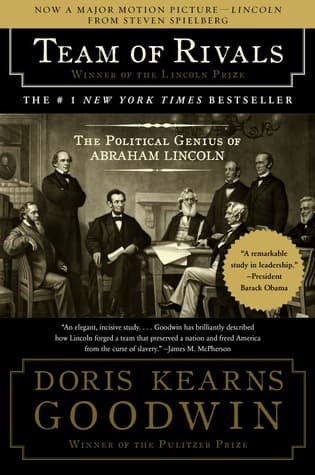
Team of Rivals: The Political Genius of Abraham Lincoln cover
Archivist's Choice

Team of Rivals: The Political Genius of Abraham Lincoln

Doris Kearns Goodwin (2003)

Genre

Politics / Biography / Leadership / History

Reading Time

12 Minutes

Key Themes

See below

Track Your Reading

Sign in to track this book

Abraham Lincoln united his fiercest political rivals into a cabinet of extraordinary talent to navigate the nation through the Civil War and preserve the Union.

Core Idea

Doris Kearns Goodwin's "Team of Rivals" argues that Abraham Lincoln's unparalleled political genius lay in his extraordinary ability to transcend personal grievances and ideological differences by assembling a cabinet of his former political rivals. Rather than surrounding himself with sycophants, Lincoln deliberately brought in the strongest, most ambitious minds from his own party – men who had openly vied for the presidency against him – and leveraged their diverse talents and perspectives to navigate the nation through its most perilous crisis, the Civil War. This strategy not only showcased his magnanimity and self-assurance but also allowed him to harness a broader range of insights and secure vital support for his policies, ultimately preserving the Union and abolishing slavery. The book meticulously details how Lincoln managed these powerful personalities, turning potential adversaries into indispensable allies through a masterful blend of empathy, strategic communication, and unwavering focus on the greater good.
Difficulty
Medium

Core idea

The central argument and framework that powers the entire book.

Doris Kearns Goodwin's "Team of Rivals" argues that Abraham Lincoln's unparalleled political genius lay in his extraordinary ability to transcend personal grievances and ideological differences by assembling a cabinet of his former political rivals. Rather than surrounding himself with sycophants, Lincoln deliberately brought in the strongest, most ambitious minds from his own party – men who had openly vied for the presidency against him – and leveraged their diverse talents and perspectives to navigate the nation through its most perilous crisis, the Civil War. This strategy not only showcased his magnanimity and self-assurance but also allowed him to harness a broader range of insights and secure vital support for his policies, ultimately preserving the Union and abolishing slavery. The book meticulously details how Lincoln managed these powerful personalities, turning potential adversaries into indispensable allies through a masterful blend of empathy, strategic communication, and unwavering focus on the greater good.

At a glance

Difficulty

Medium

Key Takeaways

1

The Power of Radical Inclusion

Lincoln's unprecedented decision to appoint his defeated rivals to key cabinet positions was a masterstroke of political genius.

Quote

Lincoln's decision to appoint his defeated rivals to his cabinet was not merely an act of magnanimity but a calculated strategy to harness the nation's best minds and unify disparate factions during a time of existential crisis.

Goodwin details how Lincoln, after becoming president over opponents like William H. Seward, Salmon P. Chase, and Edward Bates, intentionally brought these men into his cabinet. This was a radical departure from conventional politics, where victors usually rewarded loyalists. Lincoln understood the nation faced an unprecedented threat, and his rivals' collective talent and influence were essential, even if their personalities clashed. This move showed self-confidence and an ability to prioritize national interest over personal ego or ...

Supporting evidence

Lincoln's immediate appointments of Seward as Secretary of State, Chase as Secretary of the Treasury, and Bates as Attorney General, despite their initial resentment and skepticism.

Apply this

Leaders should actively seek out and integrate diverse perspectives, even from those who have opposed them, to build stronger, more resilient teams and achieve complex goals. Prioritize competence and strategic advantage over personal comfort or political alignment.


2

Empathy as a Strategic Asset

Lincoln's unique capacity for understanding and anticipating others' motives was central to his leadership.

Quote

He won because he possessed an extraordinary ability to put himself in the place of other men, to experience what they were feeling, to understand their motives and desires.

Goodwin argues that Lincoln's personal journey, marked by hardship and a lack of privilege, created a strong sense of empathy. This was not just a personal trait but a strategic tool. He could anticipate the reactions of his generals, his cabinet members, and the public. This emotional intelligence allowed him to navigate political situations, calm tensions, and persuade opponents. For example, his understanding of Seward's initial arrogance and desire for influence allowed him to patiently build a loyal friendship, turning a rival in...

Supporting evidence

Lincoln's patient handling of Seward's early attempts to dominate foreign policy, gradually winning his respect and loyalty.

Apply this

Cultivate empathy to better understand stakeholders, predict resistance, and tailor communication to achieve desired outcomes. Effective leaders don't just command; they connect and comprehend.

3

Mastering the Art of Subordination

Lincoln's unassuming demeanor and strategic humility allowed him to lead without being perceived as domineering.

Quote

While his cabinet members often believed they were guiding him, Lincoln was, in fact, subtly orchestrating their contributions toward his larger vision.

Goodwin demonstrates that Lincoln, despite having ultimate authority, rarely asserted it directly. He allowed his powerful cabinet members to express their opinions, debate, and even vent frustrations, often creating the impression they were making policy. However, Lincoln kept ultimate control, carefully weighing arguments and making final decisions that aligned with his goals. This subtle influence, rather than direct command, was effective with strong-willed individuals like Seward and Chase, who might have rebelled against a more ...

Supporting evidence

Lincoln's practice of allowing cabinet members to draft proposals and argue points, only to step in with his own carefully considered decision at the opportune moment, as seen in the Emancipation Proclamation deliberations.

Apply this

Leaders can exert influence more effectively through subtle guidance and shared decision-making processes, rather than always resorting to direct orders. Empowering team members can increase buy-in and creativity, even when the final vision is the leader's.

4

Resilience Through Adversity

Lincoln's personal history of struggle and loss forged an extraordinary capacity for perseverance.

Quote

His ability to endure, to absorb blows, to learn from mistakes, and to rise again after defeat was a hallmark of his character forged in the crucible of personal and political adversity.

Goodwin repeatedly highlights how Lincoln's humble origins, political defeats, personal tragedies (like the death of his children), and periods of melancholy contributed to his resilience. Unlike his more privileged rivals, who often struggled with setbacks, Lincoln saw failures as learning opportunities. This perseverance allowed him to withstand the pressures of the presidency during the Civil War: incompetent generals, legislative opposition, public criticism, and personal grief. This is the book's strongest insight into Lincoln's ...

Supporting evidence

Lincoln's repeated failures in early political campaigns and business ventures, and his profound grief over the death of his son Willie, which he bore while leading the nation.

Apply this

Embrace failures and setbacks as integral parts of the learning process. Cultivate mental fortitude and emotional resilience to navigate challenges, understanding that these experiences can strengthen leadership capacity.

5

The Art of Strategic Patience

Lincoln understood the critical importance of timing and preparation in major policy decisions.

Quote

He knew that even the most righteous cause could be undermined by premature action or insufficient public support.

Goodwin illustrates Lincoln's strategic patience, particularly with the Emancipation Proclamation. While morally committed to ending slavery, he resisted immediate action, understanding that the Union needed military victories and a shift in public opinion to accept such a measure. He waited for the right moment, after the Battle of Antietam, to issue the preliminary proclamation. This calculated delay allowed him to build consensus, prepare his cabinet, and frame the issue as a military necessity, strengthening its impact and reducin...

Supporting evidence

Lincoln's careful timing of the Emancipation Proclamation, waiting for a Union military success to issue it, and his prior discussions with his cabinet about public readiness.

Apply this

Major strategic shifts require careful timing, preparation, and cultivation of public or organizational support. Rushing decisions, even well-intentioned ones, can lead to unintended negative consequences.

6

Unifying a Divided Nation

Lincoln's primary goal was always the preservation of the Union, guiding all his decisions.

Quote

My paramount object in this struggle is to save the Union, and is not either to save or to destroy slavery.

Goodwin notes that while Lincoln disliked slavery, his main objective, especially early in the war, was the reunification of the United States. This focus provided a clear moral guide and strategic framework for all his actions, from his initial cabinet appointments to his military directives. He understood that without the Union, no other moral or political goal could be achieved. This clarity allowed him to make difficult decisions, compromise when necessary, and rally different groups around a common cause. This shows the power of ...

Supporting evidence

Lincoln's letter to Horace Greeley in August 1862, clarifying his primary objective regarding the Union, even before the Emancipation Proclamation.

Apply this

Leaders must articulate a clear, overarching vision that can unite diverse stakeholders, especially during periods of conflict or significant change. This vision acts as a guiding principle for all subsequent actions.

7

The Strength of Self-Deprecation and Humor

Lincoln used wit and humility to disarm opponents and build rapport.

Quote

His stories and jokes, often self-deprecating, served not just as a release from the pressures of war but as a vital tool for connecting with people and deflecting criticism.

Goodwin frequently recounts Lincoln's use of storytelling and humor, even in the darkest hours of the war. This was not just a personal quirk but a deliberate leadership tool. His self-deprecating jokes and folksy anecdotes humanized him, making him approachable to his rivals and soldiers alike. It allowed him to diffuse tension, gain time in difficult conversations, and occasionally deliver a pointed message without seeming confrontational. This ability to use humor strategically is an insight into his unique relational intelligence,...

Supporting evidence

Numerous anecdotes throughout the book detailing Lincoln's use of humorous stories to lighten tense cabinet meetings or to explain complex policy decisions to visitors.

Apply this

Strategic use of humor and humility can be powerful tools for building rapport, diffusing conflict, and making leaders more accessible and influential. It helps break down barriers and foster connection.

8

Continuous Learning and Growth

Lincoln demonstrated an unparalleled capacity to learn from experience and adapt his approach.

Quote

Unlike many of his more established rivals, Lincoln was perpetually growing, his mind open to new information and his character evolving under the immense pressure of his office.

Goodwin emphasizes that Lincoln was not a static figure but one who constantly changed. Coming from a less formal education, he remained a keen observer, learning from every interaction and setback. He adapted his military strategy, his approach to public opinion, and his management of his cabinet as circumstances changed. This continuous learning contrasted sharply with some of his rivals, who were often more rigid in their thinking and less willing to admit mistakes. This intellectual humility and adaptability were crucial for navig...

Supporting evidence

Lincoln's iterative approach to military command, replacing generals until he found Grant, and his evolving understanding of the role of emancipation in the war effort.

Apply this

Leaders must cultivate a mindset of continuous learning and adaptability. Be open to feedback, revise strategies based on new information, and never assume that past successes guarantee future ones.

9

The Moral Arc of Leadership

Lincoln's leadership demonstrated how moral conviction can evolve into powerful policy.

Quote

What began as a political necessity to preserve the Union gradually transformed into a moral crusade to end slavery, driven by Lincoln's deepening conviction.

Goodwin illustrates how Lincoln's personal dislike of slavery, initially constrained by political realities and constitutional concerns, became a decisive moral imperative during his presidency. While preserving the Union remained paramount, the Emancipation Proclamation and later the push for the 13th Amendment reflected a moral growth and a willingness to use the war's demands to achieve a greater good. This shows that effective leadership is not just about pragmatism but also about the courage to align policy with changing moral co...

Supporting evidence

The progression from Lincoln's initial stance on slavery (not wanting to interfere where it existed) to the Emancipation Proclamation, and his later advocacy for the 13th Amendment.

Apply this

Leaders should allow their moral compass to guide and evolve their strategic decisions, especially in times of crisis. Ethical considerations, when carefully integrated, can strengthen policy and inspire greater commitment.

10

Managing Competing Egos

Lincoln's genius lay in orchestrating a 'team of rivals' without letting their personal ambitions derail the national agenda.

Quote

He tolerated their ambition, channeled their talents, and ultimately bent their formidable wills to his overriding purpose.

A recurring theme is the constant challenge Lincoln faced in managing his cabinet members' large egos and conflicting ambitions. Seward, Chase, and Bates each believed themselves more qualified for the presidency and often acted with independent authority or undermined Lincoln. Goodwin details how Lincoln handled these personalities, sometimes through subtle flattery, sometimes through firm but indirect assertion of authority, and often by letting them clash against each other while he remained the ultimate arbiter. This showed his po...

Supporting evidence

The numerous instances of infighting and political maneuvering within Lincoln's cabinet, such as Chase's repeated threats of resignation and attempts to undermine Lincoln for the 1864 nomination.

Apply this

Leaders of high-performing teams must be adept at managing strong personalities and competing ambitions. Create structures that channel individual drive toward collective goals, and be prepared to mediate or intervene when necessary.

Critical analysis

Notable Quotes

Quiz

Test Your Knowledge

Ready to see how well you understood this book? Take our interactive quiz with 10 questions.

10
Questions
~5
Minutes
?
Best Score

Key Questions (FAQ)

'Team of Rivals: The Political Genius of Abraham Lincoln' by Doris Kearns Goodwin explores how Abraham Lincoln, a relatively unknown figure, managed to overcome three distinguished rivals to win the presidency. The book details his unique political genius and leadership style in navigating the tumultuous period leading up to the Civil War.

About the author

Doris Kearns Goodwin

Doris Kearns Goodwin is a Pulitzer Prize-winning historian and presidential biographer. Her notable works include 'Team of Rivals: The Political Genius of Abraham Lincoln,' which was adapted into the film Lincoln, and 'Wait Till Next Year.' Goodwin's deep research and narrative skill offer profound insights into American history and leadership.