“The problem with cable news is that it’s not news; it’s programming.”
— Smerconish reflecting on the nature of modern cable news.

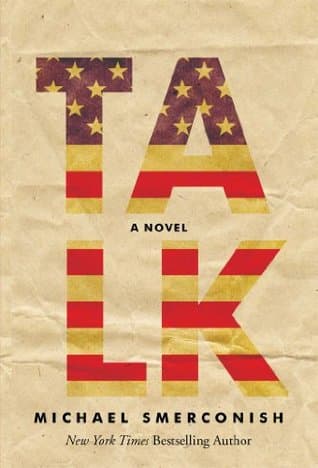
Michael A. Smerconish (2014)
Genre
Politics
Reading Time
240 min
Key Themes
See below
Sign in to track this book
A conservative talk radio host, close to deciding a presidential election, struggles with his conscience as he uses his power to sway Florida and the Oval Office, forcing him to choose between political games and an explosive truth.
“The problem with cable news is that it’s not news; it’s programming.”
— Smerconish reflecting on the nature of modern cable news.
“Partisanship has become a disease, and the media often acts as its vector.”
— Critiquing the role of media in exacerbating political division.
“If you are only listening to people who agree with you, you are not learning, you are merely confirming.”
— Emphasizing the importance of seeking diverse perspectives.
“The center is not a compromise; it’s often the place where real solutions reside.”
— Advocating for centrist approaches in political problem-solving.
“My job is not to tell you what to think, but to get you to think.”
— Describing his philosophy as a talk show host.
“The loudest voices are rarely the most representative.”
— Commenting on the disproportionate influence of extreme views.
“Facts matter, even when they are inconvenient.”
— Underlining the importance of truth in political discussion.
“We've traded nuance for soundbites, and in doing so, we've lost much of our ability to communicate.”
— Lamenting the simplification of complex issues in modern media.
“There's a difference between being open-minded and being empty-headed.”
— Distinguishing genuine intellectual curiosity from uncritical acceptance.
“The most dangerous thing in politics is certainty without humility.”
— Warning against dogmatism and lack of self-awareness in political figures.
“If you want to understand someone, listen to what they say, not just what others say about them.”
— Encouraging direct engagement with opposing viewpoints.
“The political middle is not dead; it's just often drowned out by the extremes.”
— Expressing belief in the continued relevance of moderate viewpoints.
“We need more dialogue and less monologue.”
— A plea for more genuine conversation and less one-sided pronouncements.
“Being fair doesn't mean being neutral; it means being honest about what you see.”
— Defining his approach to journalistic fairness.
Ready to see how well you understood this book? Take our interactive quiz with 10 questions.

Brett Casper
5.0

Dirk Uffelmann
4.7

Winston S. Churchill
4.5

Chimamanda Ngozi Adichie
4.5

Will Durant
4.4
Thomas Sowell
4.4
W.E.B. Du Bois
4.3
Alan Moore
4.3