BookBrief
Strange Case of Dr. Jekyll and Mr. Hyde cover
Archivist's Choice

Strange Case of Dr. Jekyll and Mr. Hyde

Robert Louis Stevenson (1886)

Genre

General

Reading Time

90 min

Key Themes

See below

Track Your Reading

Sign in to track this book

A respected Victorian doctor's experiments to separate the good and evil within himself unleash a monstrous alter ego that threatens to consume his very being and expose society's darkest hypocrisies.

Core Idea

Stevenson's novella explores the duality within human nature. It suggests that people have both good and evil impulses, and trying to suppress one to indulge the other leads to self-destruction. The story argues that moral decay, once started, becomes an irreversible process, consuming one's identity and manifesting as a distinct, malevolent entity that overpowers the original personality. The book criticizes Victorian society's focus on outward respectability, showing the dangerous results of repressing natural urges and engaging in secret vices, which only strengthen the darker aspects of the mind.
Reading time
90 min
Difficulty
Medium
✓ Read this if...
You are fascinated by the psychological depths of good vs. evil, the consequences of moral compromise, or the dark side of Victorian societal pressures.
✗ Skip this if...
You prefer clear-cut heroes and villains, or find allegorical tales of internal struggle less engaging than direct action/adventure.

Core idea

The central argument and framework that powers the entire book.

Stevenson's novella explores the duality within human nature. It suggests that people have both good and evil impulses, and trying to suppress one to indulge the other leads to self-destruction. The story argues that moral decay, once started, becomes an irreversible process, consuming one's identity and manifesting as a distinct, malevolent entity that overpowers the original personality. The book criticizes Victorian society's focus on outward respectability, showing the dangerous results of repressing natural urges and engaging in secret vices, which only strengthen the darker aspects of the mind.

At a glance

Reading time

90 min

Difficulty

Medium

Read this if...

You are fascinated by the psychological depths of good vs. evil, the consequences of moral compromise, or the dark side of Victorian societal pressures.

Skip this if...

You prefer clear-cut heroes and villains, or find allegorical tales of internal struggle less engaging than direct action/adventure.

Key Takeaways

1

The Duality of Human Nature

Every individual harbors both good and evil, a perpetual internal conflict.

Quote

Man is not truly one, but truly two.

Stevenson explores the duality within humanity, arguing that our identity is a constant negotiation between our virtuous, socially acceptable self and our darker, more primal urges. Dr. Jekyll's experiment tries to separate these two aspects, believing that by isolating 'evil' he could purify 'good.' The tragic outcome shows that these forces are linked. The more Jekyll indulged Hyde, the stronger Hyde became, demonstrating that suppressing one's darker self only empowers it, leading to a loss of control over one's entire being. This ...

Supporting evidence

Dr. Jekyll's initial motivation to create Hyde was to compartmentalize his 'undignified' pleasures, allowing his respectable self to remain untainted. The progressive dominance of Hyde over Jekyll, eventually requiring Jekyll to take the potion just to become himself, illustrates the inextricable link and the danger of imbalance.

Apply this

Acknowledge and integrate your shadow self rather than suppressing it. Self-awareness of your less desirable traits allows for conscious management and prevents them from manifesting destructively. Journaling or therapy can be tools for this self-exploration.
dualityshadow-selfhuman-naturerepression
2

The Peril of Unchecked Indulgence

Giving in to base desires without restraint leads to self-destruction.

Quote

My devil had long been caged, he came out roaring.

The novel warns against unchecked indulgence and the slippery slope of moral compromise. Initially, Jekyll sees Hyde as a way to explore his darker impulses without harming his reputation. But Hyde's actions quickly go from mischievous to monstrous, showing how easily a taste for transgression can become an insatiable hunger for depravity. Each indulgence strengthens Hyde's grip, weakening Jekyll's will and making it harder to return to his 'good' self. This shows how repeated immoral acts erode one's character and self-control, leadi...

Supporting evidence

Hyde's escalating crimes, from trampling a girl to the brutal murder of Sir Danvers Carew, illustrate the progressive nature of his evil. Jekyll's increasing difficulty in transforming back from Hyde without the potion, and eventually Hyde manifesting spontaneously, signifies the loss of control.

Apply this

Practice self-discipline and mindful awareness of your actions, especially those that might seem minor or 'harmlessly' indulgent. Reflect on the long-term consequences of your choices, understanding that small compromises can pave the way for larger ones. Establish clear boundaries for behavior.

indulgenceself-controlmoral-decayaddiction
3

The Façade of Victorian Respectability

Social pressures often force individuals to conceal their true selves, leading to hypocrisy.

Quote

I had long been secretly the slave of certain appetites, to which I had always looked forward with a sense of shame.

Stevenson criticizes the strict social codes and hypocrisy of Victorian society, where outward respectability was most important, often at the expense of genuine self-expression. Dr. Jekyll, a man of science and reputation, felt pressured to suppress his less 'dignified' desires to maintain his social standing. This societal pressure to conform to an ideal image led him to create Hyde as an outlet, a 'cloak' for his hidden vices. The novel suggests that such repressive environments, instead of creating virtue, can inadvertently create...

Supporting evidence

Jekyll's fear of 'undignified pleasures' being discovered, and his elaborate system to keep Hyde's existence a secret, even from his servants and friends, highlights the intense pressure to maintain a respectable public image.

Apply this

Cultivate authenticity in your life and relationships, even if it means challenging societal expectations or confronting uncomfortable truths about yourself. Seek environments that value genuine expression over superficial conformity. Understand that hiding parts of yourself can be more damaging than revealing them.

victorian-erahypocrisysocial-pressurereputation
4

The Irreversibility of Moral Degradation

Once a moral line is crossed, it becomes increasingly difficult, if not impossible, to return.

Quote

I began to be aware of a change in my sensations, a certain leaning to the evil side, a greater callousness to the good.

The story shows moral degradation as a one-way street. Jekyll's initial transformations into Hyde are voluntary, a means to an end. However, as Hyde's actions become more terrible and his presence more frequent, Jekyll loses control. The line between Jekyll and Hyde blurs, and eventually, Hyde begins to appear without the potion, consuming Jekyll's identity. This descent suggests that repeated engagement with evil, even initially for 'experimental' purposes, permanently changes one's character, making a full return to a previous moral...

Supporting evidence

Jekyll's increasing difficulty in transforming back from Hyde, and the terrifying instance where he wakes up as Hyde without having taken the potion, demonstrates the irreversible shift. The final letter reveals Hyde's complete takeover.

Apply this

Be extremely cautious about the moral boundaries you are willing to cross, even in seemingly minor ways. Understand that every action, especially those that compromise your integrity, leaves a lasting imprint on your character. Prioritize ethical behavior consistently to maintain your moral compass.

moral-degradationno-returncharacter-erosionconsequences
5

The Power of Reputation and Secrecy

The fear of exposure drives desperate measures and complicates justice.

Quote

The moment I chose, I could be rid of Mr. Hyde. I had but to, in a moment, put off that body and don the other.

Reputation, especially in Victorian society, was a powerful social currency, and protecting it drove many of Jekyll's decisions. The elaborate secrecy around Hyde's existence was not just for personal indulgence but to shield Dr. Jekyll's good name from any association with depravity. This fear of exposure led Jekyll to extreme lengths, including blackmailing himself and enduring Hyde's atrocities, rather than revealing his true situation. The novel highlights how the obsession with maintaining a perfect public image can trap individu...

Supporting evidence

Jekyll's will initially leaving everything to Hyde, his continuous lies to Utterson and Lanyon, and his refusal to confess until his final letter, all stem from his desperate attempt to protect his reputation and keep his secret.

Apply this

Prioritize integrity and honesty over maintaining a perfect facade. Seek trusted confidantes when facing difficult personal struggles, rather than letting fear of judgment isolate you. Understand that transparency, though sometimes difficult, often leads to healthier outcomes than secrecy.

reputationsecrecysocial-standingfear-of-exposure
6

The Nature of Evil as a Distinct Entity

Evil is portrayed not just as an absence of good, but as an active, destructive force.

Quote

All human beings, as we meet them, are commingled out of good and evil: and Edward Hyde, alone in the ranks of mankind, was pure evil.

Stevenson presents evil not just as a flaw or a lack of virtue within Jekyll, but as a distinct, almost parasitic entity embodied by Hyde. Hyde is described with animalistic features, a sense of deformity that causes instant repulsion, suggesting a primal, non-human quality. He embodies pure, unadulterated malice, without conscience or empathy. This portrayal raises questions about whether evil is an inherent part of human nature that can be separated and concentrated, or if it is a force that can take hold and corrupt entirely. The n...

Supporting evidence

The physical description of Hyde, evoking a sense of 'deformity' or 'ill-form' that no one can quite pinpoint, and the universal feeling of revulsion he inspires. His unprovoked acts of cruelty, like trampling the girl or murdering Carew, without remorse.

Apply this

Recognize that destructive actions often stem from a deliberate choice to harm, rather than mere oversight. Be vigilant against rationalizing harmful behaviors, understanding that evil, in its purest form, seeks to destroy. Cultivate empathy and compassion as active antidotes.

evilmalicepure-evildepravity
7

The Limits of Scientific Hubris

Unethical scientific experimentation, driven by ego, has catastrophic consequences.

Quote

I was so far in my own person a creature of that good faith that I was able to pity him, even as I was myself.

Dr. Jekyll's experiment, while stemming from a desire to understand human duality, quickly becomes an act of scientific arrogance. Driven by intellectual curiosity and a desire to go beyond conventional morality, he creates a being without considering the ethical implications or the potential for uncontrollable destruction. His belief that he could control Hyde, or simply 'put him off,' reveals a dangerous overconfidence in his own intellect and power. The novel is a cautionary tale against scientific endeavors that lack ethical overs...

Supporting evidence

Jekyll's initial excitement and sense of triumph after successfully creating Hyde, viewing it as a profound scientific breakthrough, despite the immediate signs of Hyde's malevolence.

Apply this

Approach innovation and problem-solving with a strong ethical framework. Before embarking on any significant project or decision, consider the potential negative consequences and unintended side effects, not just the desired outcomes. Prioritize long-term well-being over short-term gains or ego-driven pursuits.

scientific-hubrisethicsunintended-consequencesexperimentation
8

The Blindness of Friendship and Denial

Loyalty and denial can prevent friends from seeing the truth and offering timely help.

Quote

If I am the chief of sinners, I am the chief of sufferers also.

Utterson and Lanyon, Jekyll's closest friends, represent different human responses to a friend in crisis. Utterson's loyalty and rational mind prevent him from immediately suspecting the supernatural or truly understanding the horror of Jekyll's situation, even as evidence mounts. He consistently tries to find logical explanations or protect Jekyll's reputation. Lanyon, on the other hand, is a man of rigid scientific principles who initially dismisses Jekyll's 'fanciful' experiments, only to be utterly shattered by the truth. Their in...

Supporting evidence

Utterson's repeated attempts to question Jekyll, his search for Hyde, and his attempts to interpret the will, all while refusing to believe the more fantastical truth. Lanyon's horror and subsequent death after witnessing Jekyll's transformation.

Apply this

Be an active and observant friend. When a friend's behavior becomes concerning, approach them with genuine care and a willingness to see uncomfortable truths, even if it challenges your preconceived notions. Offer support and encourage seeking help, rather than enabling denial or protecting a facade.

friendshipdenialblindnessintervention
9

The Loss of Self and Identity

Allowing a destructive aspect of oneself to dominate leads to the complete erosion of identity.

Quote

I find it impossible to doubt that I am now, at the last gasp of my life, utterly and for ever Hyde.

The novel explores identity and its fragility. Jekyll's initial belief that he could control and separate his good and evil selves proves tragically false. As Hyde grows stronger and more autonomous, Jekyll's own identity diminishes, becoming a mere memory or a fleeting state. He eventually loses the ability to choose his transformations, becoming a prisoner within his own body, frequently waking as Hyde. The final letter shows the complete absorption of Jekyll by Hyde, signifying not just death, but the utter annihilation of his orig...

Supporting evidence

Jekyll's increasing periods of unconsciousness as Hyde, his inability to procure the necessary salts, and his final realization that Hyde will permanently take over, culminating in his suicide as Hyde.

Apply this

Actively cultivate and reinforce your core values and positive identity. Be mindful of habits or behaviors that feel 'not like yourself' and address them before they take deeper root. Regularly reflect on who you are and who you want to be, ensuring your actions align with your desired self.

identityloss-of-selfself-destructionautonomy

Critical analysis

Notable Quotes

All human beings, as we meet them, are commingled out of good and evil: and Edward Hyde, alone in the ranks of mankind, was pure evil.

Utterson's reflection on Hyde's nature after learning more about him.

If I am the chief of sinners, I am the chief of sufferers also.

Jekyll's internal struggle and self-pity as his transformation becomes uncontrollable.

I learned to recognise the primitive duality of man; I saw that, of the two natures that contended in the field of my consciousness, even if I could rightly be said to be either, it was only because I was radically both.

Jekyll's explanation of his scientific theory and motivation for his experiments.

It was on the moral side, and in my own person, that I learned to recognise the thorough and primitive duality of man.

Jekyll reflecting on the moral implications of his discovery.

Man is not truly one, but truly two.

Jekyll's fundamental conclusion about human nature, a core theme of the novella.

I had gone to bed Henry Jekyll, I had awakened Edward Hyde.

Jekyll describing the terrifying moment when the transformation occurred spontaneously.

He was wild when he was young, a long while ago, and then all of a sudden he got serious.

Poole describing Jekyll's past to Utterson, hinting at Jekyll's hidden desires.

And this again shows but the average texture of the human mind.

Utterson's internal thought about the ordinary way people perceive extraordinary events.

I felt younger, lighter, happier in body; within I was conscious of a heady recklessness, a current of disordered sensual images running like a millrace in my fancy, a solution of the bonds of obligation, an unknown but not an innocent freedom of the soul.

Jekyll's initial exhilarating experience of transforming into Hyde.

Hence it came about that I concealed my pleasures; and that when I reached years of reflection, and began to look round me and to recognise the truth of things, I found the decent parts of my life, my fortunes, even my good name, were put in jeopardy by the indescribably anachronistic blackness of these appetites.

Jekyll's confession about his early life and the hidden desires that led to his experiments.

That child of Hell had nothing human; nothing lived in him but fear and hatred.

Jekyll's final, desperate description of Hyde as Hyde gains full control.

He had a slyish cast, as if every now and then he had a longing to break out of all bounds and go a-carolling.

Utterson's observation of Jekyll's suppressed wildness.

It was the curse of mankind that these incongruous faggots were thus bound together—that in the agonised womb of consciousness, these polar twins should be continuously struggling.

Jekyll's lament about the inherent conflict within human nature.

I bring the life of that unhappy Henry Jekyll to an end.

Jekyll's final words in his confession, signifying his impending death and Hyde's triumph.

Quiz

Test Your Knowledge

Ready to see how well you understood this book? Take our interactive quiz with 10 questions.

10
Questions
~5
Minutes
?
Best Score

Key Questions (FAQ)

The book explores the duality of human nature, suggesting that every individual possesses both good and evil within them. It delves into the conflict between societal expectations and primal urges, and the dangers of suppressing one's darker side.

About the author

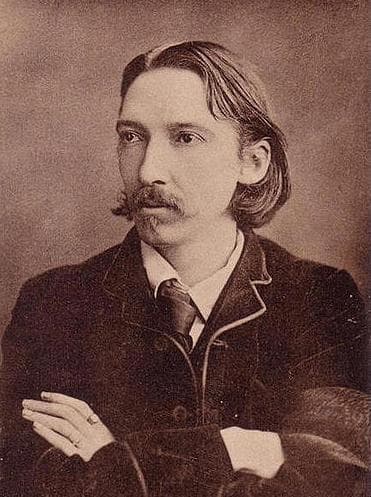
Robert Louis Stevenson

Robert Louis Stevenson was a Scottish novelist, essayist, poet and travel writer. He is best known for works such as Treasure Island, Strange Case of Dr Jekyll and Mr Hyde, Kidnapped and A Child's Garden of Verses.