BookBrief
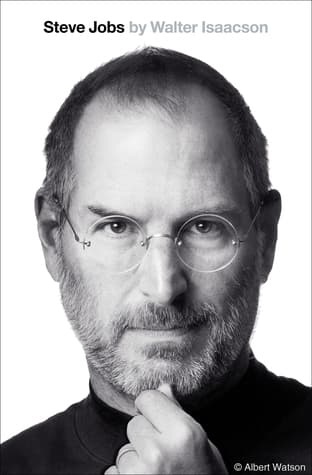
Steve Jobs cover
Archivist's Choice

Steve Jobs

Walter Isaacson (2011)

Genre

Business / Biography / Leadership / History / Technology

Reading Time

15-20 hours

Key Themes

See below

Track Your Reading

Sign in to track this book

Steve Jobs was a visionary who fused creativity and technology to revolutionize six industries and shape our digital world.

Core Idea

Steve Jobs's life showed how art and technology could combine, driven by a quest for perfection and an understanding of user experience. His leadership, often demanding, shaped industries through a focus on simplification, control over product ecosystems, and a 'reality distortion field' that inspired and pushed boundaries. The book argues that his blend of vision, marketing skill, and willingness to challenge norms, despite personal flaws, changed how we interact with technology and culture.
Reading time
15-20 hours
Difficulty
Medium
✓ Read this if...
You want a comprehensive, unvarnished look at the life and leadership of one of the most impactful figures in modern technology, understanding the interplay of his genius and his flaws.
✗ Skip this if...
You are looking for a purely technical account of Apple's products or prefer a less detailed, more hagiographic biography.

Core idea

The central argument and framework that powers the entire book.

Steve Jobs's life showed how art and technology could combine, driven by a quest for perfection and an understanding of user experience. His leadership, often demanding, shaped industries through a focus on simplification, control over product ecosystems, and a 'reality distortion field' that inspired and pushed boundaries. The book argues that his blend of vision, marketing skill, and willingness to challenge norms, despite personal flaws, changed how we interact with technology and culture.

At a glance

Reading time

15-20 hours

Difficulty

Medium

Read this if...

You want a comprehensive, unvarnished look at the life and leadership of one of the most impactful figures in modern technology, understanding the interplay of his genius and his flaws.

Skip this if...

You are looking for a purely technical account of Apple's products or prefer a less detailed, more hagiographic biography.

Key Takeaways

1

The Reality Distortion Field

Jobs's ability to bend reality to his will powered impossible innovations.

Quote

The reality distortion field was a confounding mélange of a charismatic rhetorical style, an indomitable will, and an eagerness to bend any fact to fit the purpose at hand.

Steve Jobs had an almost hypnotic ability to convince himself and others of things that were not necessarily true, a phenomenon called the 'reality distortion field' (RDF). This was not just charm; it was a combination of unwavering belief, persuasive talk, and a refusal to accept limits. The RDF allowed Jobs to push his teams beyond what they thought was possible, convincing engineers that impossible deadlines were achievable or that complex technical problems could be overcome with sheer will. While it often led to pressure and frus...

Supporting evidence

Jobs famously used the RDF to convince engineers at Apple and later NeXT that they could achieve seemingly impossible feats, like completing a circuit board in half the expected time or developing an operating system in record time. His refusal to accept 'no' or 'it can't be done' was a constant theme, from the early days of the Macintosh to the development of the iPhone.

Apply this

Leaders can harness a milder form of the RDF by cultivating an unshakeable vision and communicating it with conviction. Challenge perceived limitations and inspire your team to aim for ambitious, seemingly impossible goals. Learn to differentiate between genuine impossibilities and self-imposed mental blocks. However, temper this with empathy and realistic resource allocation to avoid burnout.

reality-distortion-fieldvisionary-leadershippersuasion
2

Connecting Art and Technology

Jobs's genius lay in merging liberal arts with engineering for profound user experiences.

Quote

The people who are going to be successful in the future are the people who can learn to link art and science.

Steve Jobs believed that true innovation came from combining the humanities and technology. He was not just a tech executive; he was an artist with an appreciation for design, aesthetics, and user experience, influenced by his calligraphy classes and interest in Eastern philosophy. This perspective let him envision products that were technologically advanced but also beautiful, intuitive, and emotionally resonant. He saw technology as a way to deliver elegant solutions and delightful experiences. This philosophy shaped Apple's product...

Supporting evidence

Jobs's famous anecdote about dropping out of Reed College but auditing a calligraphy class directly influenced the Mac's superior typography. His insistence on beautiful internal components, even those never seen by the user, and his focus on the 'unboxing' experience for products like the iPhone, exemplify this blend of art and engineering.

Apply this

Cultivate interdisciplinary thinking. Encourage teams to collaborate across traditionally siloed departments like design, engineering, and marketing. Seek inspiration from diverse fields beyond your immediate industry. Prioritize aesthetics, user experience, and emotional connection in addition to functionality when developing products or services.

design-thinkinguser-experienceinterdisciplinary-innovation
3

Insatiable Quest for Perfection

Jobs's relentless pursuit of excellence drove both groundbreaking products and personal turmoil.

Quote

He was a perfectionist. He wanted everything to be just right, and he would drive people crazy to get it there.

Steve Jobs had a need for perfection, pushing himself and everyone around him to achieve a high standard. This was not just about good quality; it was about achieving an ideal, whether in the curve of an iPhone, the click of a mouse button, or the performance of software. This drive often showed as extreme criticism, demanding countless changes, and even public shaming of colleagues who did not meet his expectations. While this behavior was difficult and often cruel for those on the receiving end, it also drove Apple's products and th...

Supporting evidence

The numerous stories of Jobs demanding engineers redesign internal components that users would never see, simply because 'it had to be beautiful all the way through.' His insistence on the perfect shade of gray for the Macintosh, or the precise feel of the iPod scroll wheel, are prime examples of this obsession.

Apply this

While avoiding Jobs's harshness, adopt a mindset of continuous improvement and uncompromising quality. Don't settle for 'good enough' when 'great' is within reach. Foster a culture where excellence is valued, and constructive feedback (delivered respectfully) is encouraged to refine products and processes to the highest possible standard.

perfectionismquality-controldesign-excellence
4

Focus and Simplification

Jobs's genius for ruthless simplification made complex technology accessible.

Quote

Deciding what not to do is as important as deciding what to do.

A core part of Jobs' strategy and design philosophy was a commitment to focus and simplification. He believed that elegance lay in removing the unnecessary, reducing products to their essential functions, and presenting them with clarity. This was not just about aesthetics; it was a strategic need. When he returned to Apple in 1997, he cut the product line from dozens to just four, believing that a narrow portfolio would let Apple excel. This principle also guided product design, leading to the single-button mouse and the minimalist i...

Supporting evidence

Upon returning to Apple, Jobs famously drew a 2x2 grid on a whiteboard, simplifying Apple's product strategy to just four products: consumer desktop, consumer portable, pro desktop, and pro portable. The elimination of floppy drives from the iMac and the single-button design of early Apple mice also exemplify this principle.

Apply this

Regularly review your projects, products, or tasks and identify areas for simplification. Ruthlessly eliminate features or processes that add complexity without significant value. Prioritize clarity and ease of use in all your endeavors. Ask: 'What is the absolute core purpose, and how can we achieve it with the fewest steps/elements?'

minimalismproduct-strategyuser-interface-design
5

The Importance of Direct Control

Jobs believed in end-to-end control to ensure a seamless, integrated experience.

Quote

We're not going to let anyone else control our products.

Unlike many competitors who licensed their software or hardware, Jobs insisted on tightly integrating Apple's hardware, software, and services. This 'end-to-end' control, from the operating system to the device and even the retail experience, was key to his vision of creating seamless user experiences. He believed that by owning the entire stack, Apple could optimize every detail and prevent compromises that happen when different companies are responsible for different components. This philosophy allowed Apple to create products like ...

Supporting evidence

Apple's closed ecosystem, where the company designs its own chips, operating system (iOS/macOS), and hardware, is a direct result of this philosophy. The contrast with Microsoft's strategy of licensing Windows to various hardware manufacturers highlights Jobs's distinct approach.

Apply this

Identify critical components of your product or service that, if not controlled, could compromise the user experience or quality. Consider where integrating more elements of the value chain could lead to a superior, more cohesive offering. Weigh the benefits of control against the potential for openness and collaboration.

ecosystem-designintegrationuser-experience-control
6

Confrontation as a Tool

Jobs used direct, often harsh confrontation to push ideas and people forward.

Quote

He was not afraid to call people on their bullshit. And that was a good thing.

Steve Jobs was known for his confrontational style. He rarely avoided direct, often brutal, criticism and public challenges. He would call ideas 'shit,' dismiss designs as 'ugly,' and challenge colleagues and subordinates with intensity. While this behavior was often hurtful and created a high-stress environment, Jobs saw it as a tool to cut through mediocrity, expose flaws, and force people to elevate their thinking. He believed that politeness could hide problems and that only direct feedback could lead to excellence. This approach,...

Supporting evidence

Numerous accounts detail Jobs's outbursts, such as telling an engineer his design 'sucked' or famously asking a team 'Why is this so ugly?' His 'A-team' vs. 'B-team' mentality and willingness to fire people on the spot for perceived incompetence are also examples.

Apply this

While avoiding Jobs's cruelty, learn to be more direct and honest in your feedback. Challenge ideas, not people. Cultivate an environment where robust debate is encouraged, and people feel safe to offer and receive constructive criticism, even if it's challenging. Focus on the work, not personal attacks, to drive improvement.

radical-candorfeedback-cultureleadership-style
7

Storytelling and Marketing Mastery

Jobs didn't just sell products; he sold dreams and an aspirational lifestyle.

Quote

The most powerful person in the world is the storyteller.

Beyond his technical and design skill, Steve Jobs was a storyteller and marketer. He understood that products, however innovative, needed a compelling story to capture the public's imagination. His product launches were theatrical events, choreographed to build anticipation, reveal features with flair, and connect emotionally with the audience. He did not just list specifications; he articulated a vision, explaining how Apple's products would empower creativity, simplify lives, or 'think different.' This ability to craft a story aroun...

Supporting evidence

The iconic '1984' Super Bowl commercial for the Macintosh, his 'one more thing...' reveals at product keynotes, and his consistent framing of Apple products as tools for creativity and individuality, rather than just devices.

Apply this

Don't just present facts; craft a compelling narrative around your work, product, or mission. Understand your audience's aspirations and articulate how your offering helps them achieve those dreams. Practice your communication skills to deliver presentations that are engaging, emotional, and memorable, turning features into benefits and products into experiences.

brand-storytellingmarketing-strategypublic-speaking
8

The Power of Intuition and Instinct

Jobs often trusted his gut over market research, leading to revolutionary products.

Quote

It's really hard to design products by focus groups. A lot of times, people don't know what they want until you show it to them.

Steve Jobs famously disliked market research and focus groups, believing that innovation came from anticipating needs consumers did not even know they had. He relied on his own intuition and aesthetic judgment. He believed that if he and his team found a product beautiful, intuitive, and desirable, others would too. This trust in his own taste and instinct, while risky, allowed Apple to create products like the iPod, iPhone, and iPad, which were not responses to existing market demands but rather redefinitions of product categories. B...

Supporting evidence

Jobs's famous quote about focus groups. The development of the original Macintosh, iPod, and iPhone all occurred with minimal or no market research, driven instead by Jobs's personal vision and aesthetic sense.

Apply this

While data is valuable, cultivate and trust your own intuition and expertise. Don't be afraid to pursue a vision, even if it's not directly supported by current market data, especially for truly innovative projects. Develop your taste and judgment by immersing yourself in diverse fields and constantly questioning the status quo.

product-visioninnovationgut-feeling
9

Learning from Failure and Exile

Jobs's 'wilderness years' after Apple were crucial for his growth and later triumphs.

Quote

I didn't see it then, but it turned out that getting fired from Apple was the best thing that could have ever happened to me.

Steve Jobs' tumultuous departure from Apple in 1985, and his ventures with NeXT and Pixar, were not failures but periods of growth and learning. While initially a painful exile, these 'wilderness years' allowed him to mature as a leader, refine his strategic thinking, and gain experience in managing different types of companies (software and animation). At NeXT, he honed his understanding of object-oriented programming and software development, while at Pixar, he learned storytelling and creative leadership. These experiences broadene...

Supporting evidence

His experiences at NeXT, though commercially challenging, led to the development of NeXTSTEP, the operating system that would form the basis for macOS. His leadership at Pixar resulted in the first computer-animated feature film, 'Toy Story,' and a deep understanding of creative content creation.

Apply this

View setbacks and failures not as endpoints, but as opportunities for learning and reinvention. Embrace periods of change or 'exile' as chances to develop new skills, gain different perspectives, and mature your leadership style. Reflect on past mistakes to inform future strategies.

resiliencepersonal-growthlearning-from-mistakes

Critical analysis

Notable Quotes

Your time is limited, so don't waste it living someone else's life. Don't be trapped by dogma — which is living with the results of other people's thinking. Don't let the noise of others' opinions drown out your own inner voice. And most important, have the courage to follow your heart and intuition. They somehow already know what you truly want to become. Everything else is secondary.

From his 2005 Stanford Commencement speech, reflecting on life, death, and following one's passion.

People who know what they're talking about don't need PowerPoint.

Jobs's disdain for traditional presentation software, preferring more direct and engaging communication.

Design is not just what it looks like and feels like. Design is how it works.

Emphasizing the functional aspect of design, not just aesthetics, in Apple products.

Innovation distinguishes between a leader and a follower.

A core belief driving Apple's strategy to consistently push boundaries and create new product categories.

Stay hungry, stay foolish.

The closing words of his 2005 Stanford Commencement speech, encouraging a continuous pursuit of knowledge and unconventional thinking.

The people who are crazy enough to think they can change the world are the ones who do.

Reflecting on Apple's 'Think Different' campaign and the mindset required for groundbreaking achievements.

We don't get a chance to do that many things, and every one should be really excellent. Because this is our life.

Explaining his philosophy of focus and perfectionism in product development at Apple.

You can't connect the dots looking forward; you can only connect them looking backward. So you have to trust that the dots will somehow connect in your future.

From his Stanford speech, discussing the role of faith and intuition in one's life path.

I'm convinced that about half of what separates the successful entrepreneurs from the non-successful ones is pure perseverance.

Highlighting the importance of persistence and resilience in entrepreneurship.

It's not about money. It's about the people you have, how you're led, and how much you get it.

Discussing the true drivers of success and passion in a business context.

My job is not to be easy on people. My job is to make them better.

Explaining his often-demanding management style and its ultimate goal of pushing employees to achieve greatness.

I want to put a ding in the universe.

A statement of his ambition and desire to make a significant, lasting impact on the world.

We hire people who want to make the best things in the world.

Describing Apple's hiring philosophy, focusing on passion and a drive for quality.

Picasso had a saying: 'Good artists copy, great artists steal.' And we have always been shameless about stealing great ideas.

Discussing the process of innovation as building upon and reinterpreting existing concepts, not necessarily inventing from scratch.

Quiz

Test Your Knowledge

Ready to see how well you understood this book? Take our interactive quiz with 10 questions.

10
Questions
~5
Minutes
?
Best Score

Key Questions (FAQ)

The book provides a comprehensive look at Steve Jobs' life, from his early days to his role in revolutionizing multiple industries. It delves into his personality, leadership style, and the creative processes that led to Apple's groundbreaking products.

About the author