BookBrief
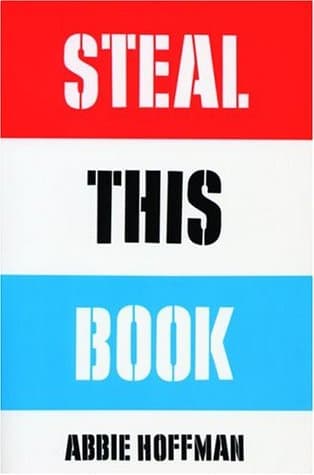
Steal This Book cover
Archivist's Choice

Steal This Book

Abbie Hoffman (1971)

Genre

Politics / Reference / History / Philosophy

Reading Time

4-6 hours

Key Themes

See below

Track Your Reading

Sign in to track this book

This counterculture handbook uses humor and illustrations to help revolutionaries challenge the establishment.

Core Idea

Abbie Hoffman's "Steal This Book" is a radical guide for surviving and subverting the capitalist system through direct action, self-sufficiency, and rejecting property norms. It argues that essential resources and information should be free, not commodities, and shows how to 'appropriate' them for personal and collective freedom. The book promotes a playful yet powerful form of resistance against the state, using humor, performance, and alternative infrastructure to build a counter-culture and question authority.
Reading time
4-6 hours
Difficulty
Medium
✓ Read this if...
You are interested in radical political philosophy, counter-culture history, practical guides for anti-establishment living, or the intersection of humor and activism.
✗ Skip this if...
You are uncomfortable with illegal activities being explicitly promoted, prefer academic or theoretical political analysis over direct action manifestos, or are easily offended by confrontational language.

Core idea

The central argument and framework that powers the entire book.

Abbie Hoffman's "Steal This Book" is a radical guide for surviving and subverting the capitalist system through direct action, self-sufficiency, and rejecting property norms. It argues that essential resources and information should be free, not commodities, and shows how to 'appropriate' them for personal and collective freedom. The book promotes a playful yet powerful form of resistance against the state, using humor, performance, and alternative infrastructure to build a counter-culture and question authority.

At a glance

Reading time

4-6 hours

Difficulty

Medium

Read this if...

You are interested in radical political philosophy, counter-culture history, practical guides for anti-establishment living, or the intersection of humor and activism.

Skip this if...

You are uncomfortable with illegal activities being explicitly promoted, prefer academic or theoretical political analysis over direct action manifestos, or are easily offended by confrontational language.

Key Takeaways

1

The Illegitimacy of Property

Challenge the very concept of ownership in a system designed for exploitation.

Quote

Steal This Book. It's yours. You have a right to it. The money you paid for it is a rip-off. It's all a rip-off.

Hoffman's main idea is that property, as defined by capitalist society, is an illegitimate way to keep power imbalances. He believes resources, goods, and information should be free for everyone, especially those the system marginalizes. 'Stealing' is not just for personal gain; it is a political statement, a direct rejection of the artificial scarcity and commodification that supports societal control. By encouraging readers to 'steal' everything from food to medical care, Hoffman promotes a radical change in thinking, where communal...

Supporting evidence

The entire premise of the book, from its title to its practical instructions on how to acquire goods and services without payment, serves as evidence. Hoffman's detailed methods for shoplifting, squatting, and even 'borrowing' cars illustrate his belief in the inherent right to access resources.

Apply this

Beyond literal theft, apply this philosophy by questioning the proprietary nature of knowledge and culture. Advocate for open-source initiatives, public domain resources, and challenge intellectual property laws that restrict access to information and innovation. Support community-run projects that prioritize access over profit.


anti-capitalismcommunalismproperty-rightssocial-justice
2

Guerrilla Information Warfare

Weaponize information and communication to subvert the establishment.

Quote

Information is power. Disinformation is even more powerful.

Hoffman knew that controlling information was a main tool of oppression. He supported 'guerrilla information warfare,' a strategy where the counter-culture would create and share its own stories, bypassing and actively undermining mainstream media. This included starting underground newspapers and radio stations, spreading rumors, and creating elaborate hoaxes to show hypocrisy or cause disruption. The goal was not just to inform, but to disrupt, to make the establishment react, and to show how 'truth' can be changed when powerful int...

Supporting evidence

Hoffman's detailed instructions on how to start underground newspapers, pirate radio stations, and even how to effectively spread rumors and organize protests are central to the book. His own history with the Yippies and their media stunts, like throwing money onto the floor of the New York Stock Exchange, exemplifies this strategy.

Apply this

In the digital age, this translates to utilizing social media and alternative platforms to disseminate counter-narratives, fact-check mainstream media, and organize grassroots movements. Support independent journalism and citizen reporting. Be critical of information sources and actively seek out diverse perspectives. Learn basic media literacy to identify bias and propaganda.

media-activismpropagandacounter-cultureinformation-literacy
3

Survival as Resistance

Practical skills for living outside the system are acts of defiance.

Quote

Survival is the ultimate freedom. If you can live without their system, you are free.

Beyond large revolutionary acts, Hoffman stresses the importance of practical survival skills for those who want to leave or resist the dominant system. The book includes instructions on how to get free food, housing, medical care, and transportation. This is not just for personal convenience; it is about building independence and relying less on the institutions one aims to dismantle. By showing that a good life can be lived outside traditional economic structures, Hoffman helps individuals break free from consumerism and wage slaver...

Supporting evidence

The book's extensive sections on 'Free Food,' 'Free Housing,' 'Free Medical Care,' and 'Free Transportation' are the core evidence. These include detailed instructions on dumpster diving, squatting, hitchhiking, and accessing free clinics.

Apply this

Learn practical skills like gardening, basic repairs, cooking from scratch, and bartering. Explore cooperative living arrangements, community gardens, and skill-share networks. Reduce your consumption and reliance on commercial services. Embrace minimalism and resourcefulness to build personal resilience and independence.

self-sufficiencyanti-consumerismmutual-aidautonomy
4

The Power of Play and Performance

Use humor, theater, and absurdity to expose hypocrisy and inspire action.

Quote

Revolution is not a dinner party. It's a circus. It's a happening. It's rock and roll.

Hoffman believed that revolution did not have to be grim. Instead, he promoted the strategic use of street theater, satire, and absurd stunts to get media attention, expose authority's foolishness, and energize the movement. His approach, often called 'Yippie tactics,' used irony and spectacle to bypass traditional political talk and directly engage public emotion. By making protest fun and engaging, he aimed to attract more people and make rebellion more appealing. This was not just about making people laugh; it was about using laugh...

Supporting evidence

Hoffman's own history with the Yippies, including their attempt to levitate the Pentagon, nominate a pig for president, and throw money onto the floor of the New York Stock Exchange, are prime examples of this strategy. The book's irreverent tone and R. Crumb's illustrations also embody this playful subversion.

Apply this

In your activism, incorporate elements of creativity, humor, and performance. Use satire, memes, and artistic expression to convey your message. Organize flash mobs, street theater, or public art installations to draw attention to causes. Don't be afraid to be provocative or unconventional to break through the noise.

culture-jammingsatirestreet-theateragitprop
5

Building a Counter-Culture Infrastructure

Create parallel systems and communities to support a revolutionary lifestyle.

Quote

The revolution must be lived. It's not just a political act, it's a way of life.

Hoffman recognized that individual acts of defiance, while important, needed support from a strong counter-culture. This meant creating alternative institutions and communities that could support people living outside mainstream norms. From crash pads and free stores to underground health clinics and legal aid, these parallel systems provided essential resources and built solidarity. The goal was to show that a different way of life was not only good but also possible, offering a clear alternative to the dominant capitalist structure....

Supporting evidence

The book details how to set up and utilize various counter-culture institutions: 'crash pads' (free lodging), 'free stores' (where goods are exchanged without money), 'free clinics,' and 'switchboards' for information and communication. He outlines how these networks function to support the community.

Apply this

Support and participate in local mutual aid networks, community kitchens, tool libraries, and co-housing initiatives. Volunteer for or donate to organizations that provide free or low-cost services to marginalized communities. Build strong, supportive relationships within your own community to foster resilience and collective action.

communal-livingalternative-economygrassroots-organizingcommunity-building
6

The DIY Revolutionary

Empower individuals with the knowledge and tools to take direct action.

Quote

Don't ask for permission. Do it yourself. The power is in your hands.

A main idea of 'Steal This Book' is radical self-reliance and direct action. Hoffman simplifies rebellion, breaking it into steps anyone can take. He gives detailed instructions on everything from making bombs (metaphorically and literally, though the book focuses more on symbolic disruption) to organizing protests and handling legal systems. This 'Do It Yourself' attitude empowers individuals, removing the need for intermediaries or 'experts' and putting action directly in the hands of the people. It is an anti-establishment guide de...

Supporting evidence

The book's entire structure is a 'how-to' guide, with chapters dedicated to specific skills like 'Free Food,' 'Free Housing,' 'Legal Survival,' and even sections on how to make simple tools or evade surveillance. It provides concrete steps for direct action.

Apply this

Educate yourself on your rights and how to navigate legal systems. Learn practical skills that enable independence. Don't wait for leaders or institutions to solve problems; organize locally, initiate projects, and take responsibility for enacting change in your own community. Prioritize action over endless deliberation.

direct-actionanarchismself-empowermentgrassroots-activism
7

Challenge All Authority

Question every institution and individual holding power, regardless of their perceived legitimacy.

Quote

The establishment is not just the government. It's your parents, your teachers, your bosses, your priests. Question them all.

Hoffman's revolutionary spirit went beyond the state; he promoted a full challenge to all forms of authority. This included political leaders, corporations, and institutions like schools, churches, and traditional family structures. He believed that unquestioning obedience to any authority, regardless of their role, created a compliant population ready for exploitation. By encouraging readers to question and resist all forms of hierarchical power, he aimed to create a culture of independent thought and radical freedom. This broad skep...

Supporting evidence

The book's numerous critiques of various societal institutions, from the police and military to educational systems and the legal framework, provide evidence. His advice on 'Legal Survival' often involves methods of evading or disrupting these systems.

Apply this

Cultivate a critical mindset. Question the motives and actions of those in power, whether in your workplace, community, or government. Don't accept narratives at face value. Advocate for democratic, decentralized decision-making in all spheres of life, from local councils to corporate governance.

anti-authoritarianismcritical-thinkingdecentralizationsystemic-critique
8

The Specter of Surveillance

Understand and navigate the omnipresent gaze of the state.

Quote

They are watching you. Assume they are always watching. Learn to live with it, and learn to beat it.

Despite its playful tone, 'Steal This Book' has a serious side about state surveillance and repression. Hoffman acknowledges the constant threat of being watched, arrested, or infiltrated. He gives practical advice on how to avoid detection, communicate safely, and handle interrogations, reflecting the real dangers activists faced then. This awareness is not meant to cause fear, but to give revolutionaries the knowledge to protect themselves and their movements. It is a practical guide for operating in a hostile environment, understan...

Supporting evidence

Sections detailing how to avoid police, handle arrests, communicate secretly, and even create false identities (though this is more about symbolic evasion than literal identity theft) underscore the omnipresent threat of state surveillance and control.

Apply this

Be aware of your digital footprint and privacy settings. Use encrypted communication tools. Understand your rights during interactions with law enforcement. Support legislation that protects civil liberties and limits government surveillance. Practice basic operational security if involved in activism.

surveillance-statedigital-privacycivil-libertiesstate-repression
9

The Personal is Political

Every aspect of life, from food to fashion, is a site of political struggle.

Quote

Don't just protest in the streets. Live the revolution in your daily life.

Hoffman's philosophy blurs the lines between personal lifestyle and political action. He argued that simply adopting counter-cultural norms—from how one dresses, eats, or travels to how one interacts with others—was a revolutionary act itself. By rejecting consumerism, traditional work, and societal expectations, individuals could live their political beliefs and create a living alternative to the dominant system. The book encourages readers to see every choice as a political statement, turning everyday acts into acts of defiance. Thi...

Supporting evidence

The book's comprehensive nature, covering everything from how to find free food and housing to advice on managing personal relationships and dealing with drugs, demonstrates that for Hoffman, the personal aspects of life are deeply intertwined with political action.

Apply this

Examine your daily habits and consumption patterns. Support ethical businesses, local producers, and sustainable practices. Adopt minimalist principles to reduce your environmental impact and reliance on corporate systems. Engage in conscious living that aligns with your political and ethical values.

lifestyle-activismconscious-consumerismholistic-revolutionethical-living
10

Humor as a Revolutionary Tool

Laughter can disarm oppressors and unite the oppressed.

Quote

The greatest weapon against fear is laughter.

Hoffman consistently used humor, satire, and absurdity as strong tools in his revolutionary efforts. He knew that laughter could disarm authority, expose its self-importance, and make radical ideas more understandable. By adding joy and playfulness to protest, he created an inviting atmosphere for participation and built solidarity among activists. Humor also acted as a psychological defense, helping individuals cope with the harsh realities of oppression and repression. It turned fear into defiance, and apathy into engagement, showin...

Supporting evidence

The book's irreverent title, its dedication to 'the freaks,' its often sarcastic tone, and the wild illustrations by R. Crumb all embody Hoffman's use of humor. His historical stunts, like the Pentagon levitation or the pig for president, were fundamentally comedic acts of political theater.

Apply this

In your advocacy, don't shy away from humor. Use satire and wit to critique power structures. Find ways to make serious issues engaging and even fun for a broader audience. Cultivate a sense of joy and resilience in your activism, using laughter to build community and maintain morale in challenging times.

political-humorsatiresocial-commentaryjoyful-resistance

Critical analysis

Notable Quotes

The only way to deal with an unfree world is to become so absolutely free that your very existence is an act of rebellion.

A central theme of the book, advocating for radical personal liberation.

Food, like sex, is a basic human right. Steal it.

Part of the instructions on how to acquire basic necessities without money.

The best way to fight the system is to make it irrelevant.

A philosophical approach to dismantling oppressive systems.

You are a member of the most powerful underground movement in the world. You are a member of the human race.

An empowering statement to the reader, emphasizing collective human potential.

If you are going to be free, you have to be free from the fear of being free.

Exploring the psychological barriers to true liberation.

Information wants to be free. Steal this book.

A direct instruction and a justification for the book's title and purpose.

Money is a fiction. It's a game. Play it, but don't let it play you.

Critique of capitalist systems and advice on navigating them.

To steal a book is an honorable and revolutionary act.

Justifying the act of stealing, particularly this book.

Never apologize for being a revolutionary.

An encouragement to maintain conviction in one's radical beliefs.

The revolution is not a dinner party.

A reminder that revolutionary change is often messy and uncomfortable.

You can't have a revolution without a party.

Highlighting the importance of community, celebration, and fun in revolutionary movements.

The purpose of this book is to make you dangerous.

Stating the explicit goal of the book: to arm the reader with knowledge for direct action.

Don't just stand there, steal something!

An immediate call to action, encapsulating the book's ethos.

The government is not your friend. It is your enemy.

A clear declaration of the book's anti-establishment stance.

Quiz

Test Your Knowledge

Ready to see how well you understood this book? Take our interactive quiz with 10 questions.

10
Questions
~5
Minutes
?
Best Score

Key Questions (FAQ)

'Steal This Book' is a counterculture survival guide written by Abbie Hoffman, providing practical advice for young revolutionaries and hippies on how to live outside conventional society, resist authority, and obtain necessities for free. It serves as both a manual for dissent and a philosophical statement against consumerism and the establishment.

About the author

Abbie Hoffman

Abbie Hoffman was a prominent American activist and counterculture figure. He is best known for his 1971 book, 'Steal This Book,' which became a counterculture bible, offering practical advice on everything from draft resistance to squatting. Hoffman was a co-founder of the Yippie Party and a key organizer of the 1968 Chicago Seven trial. His writings often blended satire, political commentary, and DIY ethos.