“There are some people who are so much in love with the idea of a problem that they don't want to solve it.”
— Discussing the motivations behind environmental activism and the resistance to solutions.


Michael Crichton (2004)
Genre
Politics / Thriller / Mystery / Science Fiction
Reading Time
12-15 hours
Key Themes
See below
Sign in to track this book
An intelligence agent races from Parisian labs to Antarctic volcanoes to connect seemingly unrelated events as a global conspiracy to weaponize natural disasters unfolds, aiming to stop eco-terrorists before they cause catastrophic climate chaos.
The novel begins with the mysterious death of Dr. Kenner, a French physicist, in Paris after a visit from Sarah Jones. At the same time, George Morton, a wealthy philanthropist, involves his nephew, Peter Evans, a lawyer, in a strange request: to represent Morton's girlfriend, Jennifer Haynes, in a lawsuit against the National Environmental Resource Fund (NERF). Peter is hesitant but agrees, unaware of the larger conspiracy he is entering. Morton, a vocal skeptic of environmental warnings, secretly funds a group planning to stage a series of catastrophic 'natural' disasters to highlight the 'state of fear' he believes environmentalists create.
Peter Evans, along with Sarah Jones, who is an agent for Morton's group, travels to Iceland to get a package. They are caught in a sudden, large avalanche, created by Morton's operatives using advanced technology. Peter survives and, despite his injuries, helps Sarah. John Kenner, a climatologist and the deceased physicist's brother, and Sanjong Thapa, a Nepalese guide, rescue them. Kenner, suspicious of the unusual weather, begins investigating the incident, unknowingly following Morton's operations.
The story moves to California, where Morton's operatives, led by Dr. Norman Hoffman, prepare to trigger a massive tsunami off Santa Monica. Their plan involves using a submersible to detonate explosives along a fault line. Peter, Sarah, Kenner, and Thapa, having just escaped another attack in Arizona where Morton's group tried to create a superstorm, race to expose and stop this plot. Peter starts to understand the true nature of Morton's organization and its global reach.
After the California incident, the team tracks Morton's next target to Antarctica. His operatives try to trigger a massive glacier collapse, aiming to create a dramatic image of climate change's supposed effects. Peter, Sarah, Kenner, and Thapa infiltrate the remote research station and confront Morton's men. They disrupt the operation, but not before experiencing the terrifying power of the man-made disaster. During this confrontation, Morton's intense beliefs and his willingness to sacrifice lives for his 'message' become clear.
The climax of Morton's global plan unfolds in the Solomon Islands, where his group intends to unleash a super-cyclone using an advanced cavitation device. This device, bought through illegal channels, can create immense destructive power. Peter, Sarah, Kenner, and Thapa, now fully aware of the scale and danger of Morton's operations, meet on the remote island. They face Morton's armed operatives and the immediate threat of the catastrophic storm. The team must disable the device and end Morton's terror.
In a confrontation on the Solomon Islands, Peter, Sarah, Kenner, and Thapa battle Morton's forces. Peter tries to reason with Morton, but the philanthropist remains firm in his belief. Morton is killed, either by his own device or in the chaos. The cavitation device is destroyed, and the super-cyclone is averted, though the region still experiences significant natural weather. The world largely remains unaware of Morton's plans, and the heroes are left to deal with what they witnessed.
Throughout the story, an intelligence agent in Tokyo, initially confused by unrelated global events, tries to connect the dots. This subplot provides an outside view of the seemingly random disasters and hints at the underlying conspiracy. The agent's investigations, separate from Peter's direct involvement, gradually align with the events, showing the global impact of Morton's actions and the difficulty of distinguishing natural phenomena from deliberate acts of terror.
The novel explores the theme of 'state of fear,' examining how environmental alarmism can be exploited. Morton's agenda is based on the idea that people are easily swayed by fear, especially when shown dramatic, undeniable evidence of catastrophe. The book looks at the psychological and societal impact of constant warnings about impending doom, suggesting such fear can control public opinion and drive specific political and economic agendas. The heroes, by stopping Morton, are not just preventing physical disasters but also challenging the manipulation of truth.
As Peter and his allies progress, they uncover the network of individuals and organizations working with George Morton. This includes his direct operatives like Dr. Norman Hoffman and Sarah Jones (who eventually defects), as well as financiers, scientists, and intelligence assets who aid his schemes. The revelation of this network shows the insidious nature of the conspiracy, demonstrating how powerful individuals can use resources and expertise to pursue radical agendas, blurring the lines between legitimate research and dangerous manipulation.
After Morton's defeat, Peter Evans and his companions reflect on their experience. While immediate threats are gone, questions about environmental alarmism, scientific integrity, and the manipulation of public fear remain largely unanswered in public discussion. The heroes have saved lives and exposed a dangerous conspiracy, but the ideological battle over climate change and the 'state of fear' it creates continues, suggesting that Morton's extreme actions touched a deeper societal vulnerability.
The Protagonist
Transforms from a skeptical, detached lawyer into a courageous and determined hero who actively fights against global environmental terrorism.
The Antagonist
Remains steadfast in his extreme ideology, ultimately dying in pursuit of his radical agenda.
The Supporting
Evolves from a loyal, though conflicted, operative of the antagonist to a key ally of the protagonists, driven by a renewed moral compass.
The Supporting
Moves from an independent investigator of anomalous weather to a central figure in exposing and combating a global eco-terrorism plot.
The Supporting
Serves as a steadfast and indispensable survival expert and moral compass for the protagonists throughout their perilous journey.
The Supporting
Remains a dedicated and ruthless operative for Morton until his inevitable demise.
The Mentioned
Remains a largely passive figure, used by Morton to set his plans in motion.
The Mentioned
His investigations slowly converge towards understanding the global conspiracy, though he doesn't directly interact with the main protagonists.
This is the novel's main theme. Crichton explores how fear, especially about environmental catastrophe, can be manufactured and used for political or ideological goals. George Morton's entire plan relies on creating dramatic, terrifying 'natural' disasters to highlight the 'state of fear' he believes environmentalists exploit. The novel questions the motives behind alarmist rhetoric and suggests that public anxiety can be a powerful, dangerous tool. For example, the staged avalanche in Iceland or the planned tsunami in California are designed not just to kill, but to shock and manipulate public perception, creating a demand for specific actions.
““The greatest challenge facing mankind is the challenge of distinguishing reality from fantasy, truth from propaganda.””
The novel examines the role of science in public discussion, particularly regarding climate change. It highlights the conflict between objective scientific inquiry and ideologically driven stories. John Kenner represents the search for truth through data, while George Morton twists scientific principles and technology to create false evidence supporting his anti-environmentalist views. The book suggests that science can be misused to create a 'state of fear' or to discredit legitimate concerns, depending on the agenda of those funding or interpreting research. The descriptions of Morton's advanced methods (e.g., cavitation devices, weather manipulation) show how powerful scientific tools can be weaponized.
““Nobody wanted to hear about science. Everybody wanted to hear about the end of the world.””
Crichton explores how truth is made and understood in a media-saturated world. The novel argues that dramatic images and sensational reports can override complex scientific realities, leading to a warped public understanding. Morton's plan is to create visually shocking events that become undeniable 'proof' of environmental catastrophe, regardless of their true origin. The plot forces characters like Peter Evans to question everything they thought they knew, challenging them to tell real threats from expertly crafted illusions. This theme is clear in the global media's reaction to the staged disasters, which often uncritically reports the 'natural' explanation.
““The media is not interested in the truth, only in what is new and sensational.””
The novel shows that advanced technology is a double-edged sword. While science offers solutions and understanding, it also provides the means for destruction and manipulation. Morton's group uses advanced technology — from cavitation devices to sophisticated weather manipulation systems — to orchestrate their 'natural' disasters. This demonstrates a form of technological arrogance, where the belief in human ability to control or simulate natural forces leads to catastrophic outcomes. The dangers are not just in the technology itself, but in the hands of individuals who use it without ethical restraint, seeking to impose their will on the world.
““Every technology, no matter how benign, can be used for destruction.””
An initial, seemingly minor legal case that draws the protagonist into the main plot.
Jennifer Haynes' lawsuit against the National Environmental Resource Fund serves as the initial MacGuffin. It is a seemingly mundane legal issue that George Morton uses to ensnare Peter Evans. The lawsuit itself is not the core of the plot, but rather a catalyst that introduces Peter to Morton's world and sets him on the path to uncovering the larger conspiracy. As Peter delves deeper, the lawsuit becomes irrelevant, superseded by the global stakes of Morton's plans.
The initial focus on environmental alarmism as the primary threat, diverting from the true antagonist.
The novel initially presents environmental alarmism as a major concern, with George Morton vocally criticizing what he sees as exaggerated claims. This serves as a red herring, making the reader question the validity of environmental science. However, the true threat emerges not from the environmental movement itself, but from Morton's extreme reaction to it – his decision to stage catastrophic events. This device is used to challenge reader assumptions and highlight the complexity of the debate, before revealing the genuine, human-driven danger.
A recurring element of impending disaster that creates constant tension.
The 'ticking clock' is a pervasive plot device throughout the novel. From the impending avalanche in Iceland to the planned tsunami in California, the glacier collapse in Antarctica, and finally the super-cyclone in the Solomon Islands, the protagonists are constantly racing against time to prevent catastrophic, man-made disasters. This device generates relentless suspense and urgency, driving the narrative forward and forcing the characters into high-stakes, immediate action to save lives and stop Morton's schemes before they reach their devastating conclusions.
The use of expert characters to explain complex scientific or technical concepts.
Crichton frequently uses characters like John Kenner and, to a lesser extent, Sarah Jones and even George Morton himself, to provide detailed explanations of scientific principles, technological capabilities, and environmental data. This device allows the author to integrate complex scientific and technical information into the narrative in an accessible way, grounding the thrilling plot in a veneer of scientific realism. It also serves to educate the reader on the specific mechanisms behind the engineered disasters, making the threats more tangible and believable.
“There are some people who are so much in love with the idea of a problem that they don't want to solve it.”
— Discussing the motivations behind environmental activism and the resistance to solutions.
“The greatest challenge facing mankind is the challenge of distinguishing reality from fantasy, truth from propaganda.”
— Reflecting on the manipulation of information and public perception in modern society.
“Nobody believes a weather report. Everybody believes a climate report.”
— Highlighting the differing levels of trust placed in short-term weather forecasts versus long-term climate predictions.
“The planet is fine. The people are fucked.”
— A character's cynical assessment of the Earth's resilience versus humanity's self-destructive tendencies.
“It is an article of faith with many people that the environment is always being destroyed, that things are always getting worse.”
— Describing a common pessimistic viewpoint regarding environmental issues.
“Consensus is what happens when people decide they’re too lazy to think anymore.”
— Critiquing the reliance on consensus in scientific and political discussions.
“In the information age, the only way to retain information is to be skeptical of it.”
— Emphasizing the importance of skepticism in an era of abundant and often unreliable information.
“There is no such thing as a global temperature. There is only temperature, at a given place and a given time.”
— Challenging the concept of a single, universally representative 'global temperature' in climate discussions.
“If you want to control people, you have to control their perceptions.”
— Explaining the strategy behind manipulating public opinion for political or ideological gain.
“The whole point of science is to question authority, to question dogma, to question received wisdom.”
— Asserting the fundamental principle of scientific inquiry against blind acceptance.
“Fear sells. Fear gets attention. Fear gets action.”
— Discussing how fear is used as a tool for persuasion and mobilization, particularly in activism.
“We are getting to the point where the environment is a religion, and to question it is heresy.”
— Observing the dogmatic nature that environmentalism can sometimes take on.
“What is the true cost of an environmental policy? Not just the money, but the human cost.”
— Prompting consideration of the broader societal impacts of environmental policies beyond financial expenses.
“It's never a single cause. It's always a constellation of causes.”
— Reflecting on the complexity of real-world phenomena and problems, rejecting simplistic explanations.
Ready to see how well you understood this book? Take our interactive quiz with 10 questions.
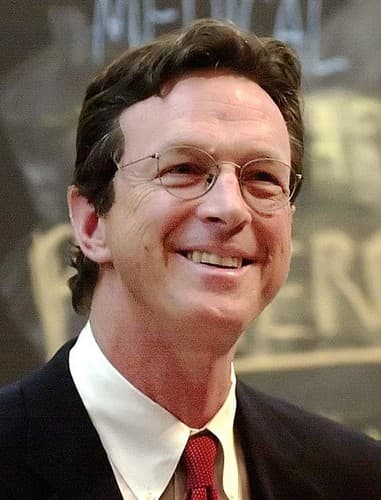
Biography coming soon.

Brett Casper
5.0

Dirk Uffelmann
4.7

Winston S. Churchill
4.5

Chimamanda Ngozi Adichie
4.5

Will Durant
4.4
Thomas Sowell
4.4

W.E.B. Du Bois
4.3

Alan Moore
4.3