BookBrief
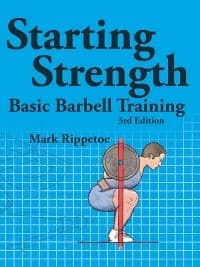
Starting Strength cover
Archivist's Choice

Starting Strength

Mark Rippetoe (2011)

Genre

Reference / Health / Science / Self-Help

Reading Time

360 min

Key Themes

See below

Track Your Reading

Sign in to track this book

Build fundamental strength with science-backed barbell training.

Core Idea

Starting Strength argues that barbell training, specifically compound movements like the squat, press, and deadlift, is the most effective way to build strength and muscle for everyone. The book explains the mechanics and proper execution of these lifts, promoting a linear progression model for beginners to quickly increase strength by adding weight consistently. It states that understanding and applying the stress-recovery-adaptation cycle, along with good nutrition, helps with ongoing physical improvement.
Reading time
360 min
Difficulty
Medium
✓ Read this if...
You are a beginner to strength training, want to learn proper barbell lifting technique, or are looking for a highly effective program to build foundational strength and muscle.
✗ Skip this if...
You are an advanced lifter, prefer bodyweight or machine-based training, or are not interested in the detailed technical aspects of barbell exercises.

Core idea

The central argument and framework that powers the entire book.

Starting Strength argues that barbell training, specifically compound movements like the squat, press, and deadlift, is the most effective way to build strength and muscle for everyone. The book explains the mechanics and proper execution of these lifts, promoting a linear progression model for beginners to quickly increase strength by adding weight consistently. It states that understanding and applying the stress-recovery-adaptation cycle, along with good nutrition, helps with ongoing physical improvement.

At a glance

Reading time

360 min

Difficulty

Medium

Read this if...

You are a beginner to strength training, want to learn proper barbell lifting technique, or are looking for a highly effective program to build foundational strength and muscle.

Skip this if...

You are an advanced lifter, prefer bodyweight or machine-based training, or are not interested in the detailed technical aspects of barbell exercises.

Key Takeaways

1

The Barbell is King

Compound barbell movements are the most effective way to build strength and muscle.

Quote

The barbell is the most effective tool for strength training because it allows for the loading of the human body in a way that most closely approximates its natural movement patterns.

Rippetoe states the barbell is the best tool for building strength. He explains that its design allows for progressive overload and works many muscle groups at once. Unlike machines that isolate muscles or dumbbells that limit weight, the barbell enables heavy, full-body loading. This complete approach to training builds functional strength that applies outside the gym. The book details why compound barbell movements, not isolation exercises or machines, are the most efficient way to gain strength and muscle, focusing on natural body ...

Supporting evidence

The entire program is built around the five fundamental barbell exercises: the squat, press, deadlift, bench press, and power clean. Rippetoe consistently refers to the biomechanical advantages of these movements.

Apply this

Prioritize barbell training in your routine. Focus on the core compound lifts, even if you're accustomed to machines or dumbbells. Invest in learning proper form for these foundational movements.


barbell-trainingcompound-liftsprogressive-overload
2

The Squat: The Foundation

The low-bar back squat is the single most important exercise for overall strength development.

Quote

The squat is the only exercise that trains every muscle in the body using a range of motion that is useful in real life, with a load that is heavy enough to produce a significant training effect.

Rippetoe considers the low-bar back squat the most important exercise for any strength program. He says its ability to work the entire posterior chain, core, and quadriceps under heavy weight makes it unique for overall strength development. Unlike high-bar squats or leg presses, the low-bar position uses more muscle, especially in the hips and glutes, allowing for heavier weights and a stronger training effect. Mastering the squat is shown as a basic human movement, important for both sports and daily life. Its complexity requires pr...

Supporting evidence

The book dedicates an entire, highly detailed chapter (Chapter 2) to the biomechanics and execution of the low-bar back squat, with numerous illustrations and common error corrections.

Apply this

Dedicate significant effort to perfecting your low-bar back squat form. Start with an empty bar and gradually increase weight, ensuring depth and proper back angle. Prioritize it in your training sessions.

low-bar-squatposterior-chainfunctional-strength
3

Linear Progression: The Novice's Goldmine

Consistent, small increases in weight are the fastest way for beginners to get strong.

Quote

The fastest way to get strong is to add weight to the bar every single workout.

The core of the Starting Strength program for beginners is linear progression: adding a small amount of weight (usually 2.5-5 lbs) to each exercise every workout. Rippetoe says beginners can adapt quickly, and this simple method uses that ability fully. This approach forces the body to adapt to heavier weights, leading to fast and predictable strength gains. Its simplicity and effectiveness mean complex periodization is not needed for those new to serious strength training. This method ensures steady progress until the beginner phase ...

Supporting evidence

The entire 'Starting Strength Program' outlined in the book is based on this principle, prescribing 3 sets of 5 repetitions with incremental weight increases each workout.

Apply this

If you are a beginner, commit to adding weight to the bar every single training session. Do not overthink periodization or complex programming; focus on consistent, linear increases as long as possible.

linear-progressionnovice-gainsprogressive-overload
4

The Stress-Recovery-Adaptation Cycle

Strength gains occur when the body recovers and adapts to training stress.

Quote

Training is merely the application of a stress to the human organism sufficient to cause an adaptation.

Rippetoe explains strength training through the biological idea of stress, recovery, and adaptation. He highlights that the workout is just the stimulus (stress); real strength gains happen during recovery when the body rebuilds stronger to handle the demands. This understanding shows how important proper nutrition, sleep, and rest are between training sessions. Without enough recovery, the body cannot adapt, leading to stalled progress or even setbacks. The program's 3-day-per-week schedule provides enough stress followed by recovery...

Supporting evidence

Rippetoe discusses the physiological mechanisms of adaptation and the necessity of recovery in the introductory chapters and throughout the programming sections.

Apply this

Prioritize sleep (7-9 hours) and adequate nutrition (especially protein) as much as you prioritize your workouts. Understand that skipping recovery elements sabotages your strength gains.

stress-adaptationrecoverysupercompensation
5

Technical Precision is Paramount

Correct form is non-negotiable for safety and effectiveness in barbell training.

Quote

There are no 'bad' exercises, only poorly performed exercises.

Starting Strength is known for its focus on correct lifting technique. Rippetoe states that wrong form increases injury risk and makes exercises less effective by not loading the right muscles. He breaks down each lift, giving detailed information on body position, bar path, and movement cues. This careful approach ensures lifters use the correct muscles and move the weight efficiently. He stresses that "bad" form means you are not doing the exercise as intended, so you miss out on full benefits. This commitment to technical mastery m...

Supporting evidence

The book's extensive use of detailed anatomical diagrams and over 750 illustrations for each exercise, alongside comprehensive checklists for proper execution and common errors.

Apply this

Before adding significant weight, spend time mastering the mechanics of each lift. Film yourself, seek feedback from experienced coaches, and don't be afraid to deload to perfect your form.

lifting-techniquebiomechanicsinjury-prevention
6

The Press: Upper Body Strength

The overhead press is a foundational movement for developing powerful shoulders and triceps.

Quote

The press is the most honest upper-body exercise there is. It's just you and the bar, pushing it directly overhead.

Rippetoe promotes the standing overhead press as an excellent exercise for upper body strength, especially for the shoulders, triceps, and upper back. Unlike the bench press, which is done lying down, the standing press uses the whole body for stability, from feet to core. This makes it a more complete test of upper body pushing strength. He emphasizes a strict, controlled movement, avoiding leg drive or too much lean, to ensure the shoulders and arms do most of the work. The press balances the pushing movements of the bench press and...

Supporting evidence

Chapter 3 is dedicated to the overhead press, detailing grip, rack position, bar path, and lockout, with extensive illustrations.

Apply this

Integrate the standing overhead press into your routine. Focus on a strong, stable core and a direct vertical bar path. Avoid using leg drive prematurely; learn to press strictly first.

overhead-pressshoulder-strengthupper-body-strength
7

The Deadlift: Raw Power

The deadlift is the ultimate test of full-body strength and a powerful muscle builder.

Quote

The deadlift is the lift that most closely approximates the real-world task of picking something heavy up off the ground.

The deadlift is presented as the ultimate display of raw strength, using almost every muscle to lift a heavy weight from the floor. Rippetoe argues that its ability to load the posterior chain, back, and grip at the same time makes it an unmatched exercise for building overall power and muscle. He details the conventional deadlift, emphasizing a proper setup that prioritizes a flat back and active lats to protect the spine and transfer force efficiently. The deadlift is often done for fewer repetitions than other lifts due to its high...

Supporting evidence

Chapter 4 provides an exhaustive breakdown of the deadlift, covering stance, grip, setup, and pull mechanics, with numerous visual aids.

Apply this

Include deadlifts in your program. Prioritize perfect form, especially maintaining a flat back throughout the lift. Start light to develop the motor pattern, and respect the intensity of the lift by managing volume appropriately.

deadliftposterior-chaingrip-strengthfull-body-strength
8

Eating to Grow Strong

Adequate caloric and protein intake is essential to fuel recovery and adaptation.

Quote

You cannot build strength out of thin air. You must provide the raw materials for your body to adapt and grow.

Rippetoe is clear about the need to eat enough to support strength gains, especially for beginners. He states that not eating enough is a main reason for stalled progress, as the body lacks the resources to recover from intense training and build new muscle. This means consuming enough calories, with a focus on protein, to help the stress-recovery-adaptation cycle. He sometimes suggests the 'GOMAD' (Gallon Of Milk A Day) plan for very thin young men, showing his belief that high calorie intake is essential for getting strong, especial...

Supporting evidence

Rippetoe discusses nutrition extensively in the context of recovery and adaptation, particularly in the section on programming and dealing with stalled progress.

Apply this

Increase your caloric intake, focusing on whole, unprocessed foods and ample protein (1g per pound of bodyweight is a good starting point). Don't be afraid to gain some body weight if your primary goal is strength.

nutritionprotein-intakecaloric-surplusmuscle-growth
9

The Power Clean: Explosive Strength

The power clean builds explosive full-body power and athleticism.

Quote

The power clean is the only exercise that trains the entire body for explosive power in a useful way.

While often challenging, Rippetoe emphasizes the power clean's role in building explosive power and athleticism. It is a complex, dynamic movement that requires coordination, speed, and strength from the entire body, moving the bar from the floor to the shoulders smoothly. Unlike the slower lifts, the power clean trains the ability to generate force quickly, which is useful in sports and other athletic activities. He acknowledges its difficulty but argues that the benefits in power development, especially for the posterior chain and h...

Supporting evidence

Chapter 5 is dedicated to the power clean, breaking down its complex mechanics into manageable phases, with detailed instruction and illustrations.

Apply this

If you are able, learn the power clean. Start with very light weights and focus on the technique and speed. It's a demanding lift, so consider professional coaching if available.

power-cleanexplosive-powerathleticismolympic-lifts
10

Beyond the Novice: The Intermediate Path

Progress becomes slower, requiring adjustments to programming for continued gains.

Quote

The linear progression cannot last forever. At some point, the stress applied must be recovered from over a longer period.

Rippetoe acknowledges that the rapid linear progression of the beginner phase eventually stops. As a lifter gets stronger, their ability for daily adaptation decreases, requiring a shift to more complex programming. This marks the move from beginner to intermediate lifter. The book briefly covers these future considerations, explaining that continued progress will require changing training intensity and volume, including light days, and possibly reducing frequency. This understanding is important for avoiding burnout and continuing pr...

Supporting evidence

The final chapters discuss the transition from novice to intermediate programming, outlining the reasons why linear progression eventually fails and suggesting initial steps for more advanced lifters.

Apply this

Understand that your progress will eventually slow. When you consistently fail to add weight linearly, research intermediate programming models (e.g., Texas Method, 5/3/1) to continue making gains effectively.

intermediate-trainingperiodizationtraining-plateauadvanced-programming

Critical analysis

Notable Quotes

The squat is the most effective exercise in the strength training arsenal, and it is also the most misused and misunderstood.

Introduction to the importance of the squat.

Strength is the most important physical adaptation, because it affects everything else.

Discussing the foundational nature of strength.

There are no shortcuts to strength. There is only work.

Emphasizing the necessity of consistent effort.

The bar must travel in a vertical line. Any deviation from this line is wasted energy and a less efficient lift.

Instruction on proper bar path for barbell exercises.

You get strong by lifting progressively heavier weight, not by doing more reps with the same weight.

Explaining the principle of progressive overload.

The primary goal of the novice lifter is to learn the basic barbell exercises and to gain strength rapidly.

Defining the objectives for beginners in strength training.

If you don't use your muscles, you lose them. This is true for everyone, regardless of age.

Highlighting the principle of 'use it or lose it' for muscle mass.

Proper recovery is as important as proper training. Without it, you will not make progress.

Stressing the critical role of rest and recovery.

The deadlift is the exercise that works more muscle mass over a longer range of motion than any other exercise.

Describing the unique benefits of the deadlift.

Eating enough food is absolutely critical for strength gains. You cannot build muscle on a caloric deficit.

Discussing the importance of nutrition for muscle growth.

The press is an exercise that builds upper body strength and stability in a way that no other exercise can.

Explaining the benefits of the overhead press.

Discipline is doing what needs to be done, even when you don't want to do it.

A broader philosophical statement on the mindset required for training.

The most common error in training is doing too much too soon.

Warning against overtraining and insufficient recovery.

Form is paramount. Always prioritize correct technique over lifting heavier weight.

Emphasizing the foundational importance of proper form.

Quiz

Test Your Knowledge

Ready to see how well you understood this book? Take our interactive quiz with 10 questions.

10
Questions
~5
Minutes
?
Best Score

Key Questions (FAQ)

Starting Strength advocates for a simple, effective, and progressive barbell training program focused on a few fundamental compound movements. The philosophy emphasizes getting strong through consistent, heavy lifting with proper form, rather than complex routines or numerous exercises.

About the author