BookBrief
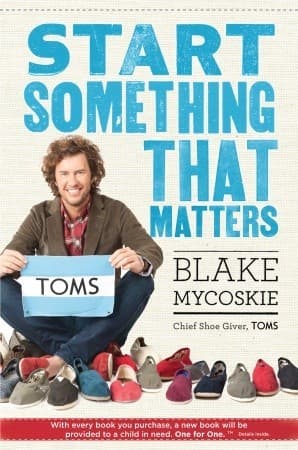
Start Something That Matters cover
Archivist's Choice

Start Something That Matters

Blake Mycoskie (2011)

Genre

Business / Entrepreneurship / Biography / Leadership / Memoir

Reading Time

150 min

Key Themes

See below

Track Your Reading

Sign in to track this book

Blake Mycoskie, TOMS founder, shows how to build a successful business by combining passion, profit, and purpose, proving that giving back is key to entrepreneurial success.

Core Idea

Blake Mycoskie, founder of TOMS Shoes, argues that modern businesses succeed by making social good part of their core model. His 'One for One' approach shows how giving back can set a company apart, attracting customers, employees, and media. This leads to lasting growth and profit. The book stresses that anyone can start an impactful business by using their story, being resourceful, keeping things simple, and building a strong community around a clear mission, rather than waiting for perfect conditions.
Reading time
150 min
Difficulty
Easy
✓ Read this if...
You're an aspiring entrepreneur looking for inspiration to build a business with a social mission, or an existing business owner wanting to integrate philanthropy into your core strategy.
✗ Skip this if...
You are seeking a deep dive into complex business theory, financial modeling, or detailed operational strategies for scaling a large enterprise.

Core idea

The central argument and framework that powers the entire book.

Blake Mycoskie, founder of TOMS Shoes, argues that modern businesses succeed by making social good part of their core model. His 'One for One' approach shows how giving back can set a company apart, attracting customers, employees, and media. This leads to lasting growth and profit. The book stresses that anyone can start an impactful business by using their story, being resourceful, keeping things simple, and building a strong community around a clear mission, rather than waiting for perfect conditions.

At a glance

Reading time

150 min

Difficulty

Easy

Read this if...

You're an aspiring entrepreneur looking for inspiration to build a business with a social mission, or an existing business owner wanting to integrate philanthropy into your core strategy.

Skip this if...

You are seeking a deep dive into complex business theory, financial modeling, or detailed operational strategies for scaling a large enterprise.

Key Takeaways

1

The One For One Model

Integrate giving into your core business model, don't treat it as an afterthought.

Quote

The One for One model isn’t just about giving. It’s about building a sustainable business that has giving built into its DNA.

Mycoskie's main point is that profit and purpose work together. The One for One model by TOMS shows how a business can succeed financially while also helping a social cause. This is not corporate social responsibility as a separate effort; it is built into the company's operations and value. By making giving a part of every sale, TOMS created a compelling story and a key difference that connected with customers, building brand loyalty and growth. This approach turns giving from an expense into a business tool, attracting customers who...

Supporting evidence

The entire TOMS Shoes origin story: for every pair of shoes sold, a pair is given to a child in need. This direct, tangible impact became the company's primary marketing message and a core reason for its rapid growth and widespread appeal.

Apply this

Entrepreneurs should explore how to embed a giving component directly into their product or service offering. Consider how each sale or interaction could directly generate social good, creating a compelling value proposition that appeals to conscious consumers. This could involve direct product donation, service provision, or a clear, measurable impact for every transaction.

social-entrepreneurshipconscious-consumerismsustainable-business-model
2

Your Story is Your Currency

Authenticity and a compelling narrative are more powerful than traditional marketing.

Quote

People don't just buy products; they buy the stories, the dreams, and the values that those products represent.

Mycoskie stresses that in today's busy market, an honest and relatable story is a valuable asset. TOMS did not rely on large advertising budgets but on the true story of its start—Mycoskie's experience in Argentina and his wish to help. This story resonated, turning customers into supporters who shared the TOMS mission. People are increasingly drawn to brands that are open and have a clear purpose. By explaining your 'why'—your main motivation, values, and the impact you want to make—you create an emotional link with your audience tha...

Supporting evidence

Mycoskie's personal narrative of traveling in Argentina, witnessing children without shoes, and being inspired to create TOMS. This personal journey became the foundation of all TOMS marketing and public relations, shared through word-of-mouth, social media, and media interviews.

Apply this

Identify your personal 'why' or your company's founding story. Craft a clear, concise, and emotionally resonant narrative that explains your motivations, values, and the problem you're solving. Share this story consistently across all platforms, from your website to social media, empowering your customers to become part of your journey.

brand-storytellingauthentic-marketingpurpose-driven-brands
3

Resourceful Without Resources

Innovation and determination can overcome a lack of traditional funding and experience.

Quote

Don't let what you don't have stop you from doing what you can do.

One inspiring part of Mycoskie's journey is how he started TOMS with little money and no shoe industry experience. This shows the power of creativity, passion, and a willingness to learn as you go. Instead of waiting for ideal conditions or lots of money, Mycoskie began with what he had—a simple idea, a trip to Argentina, and a desire to make a difference. This 'bootstrapping' method makes founders creative, efficient, and deeply connected to their mission. It proves that a lack of resources can lead to new solutions and a stronger bu...

Supporting evidence

Mycoskie starting TOMS with just $300, no shoe manufacturing experience, and relying on a simple design and direct sales model in the early days. He learned by doing, iterating on designs, and getting direct feedback, rather than waiting for venture capital.

Apply this

Before seeking external funding, exhaust all possibilities for starting small and leveraging existing assets. Focus on creating a Minimum Viable Product (MVP) and getting it into the hands of customers quickly. Seek out mentors, utilize free online resources, and be open to unconventional partnerships to stretch your limited resources.

bootstrappinglean-startupinnovation-through-constraint
4

Overcoming the Fear Factor

Don't let doubt and the unknown paralyze your ambition to start something meaningful.

Quote

Fear is a natural part of starting something new. The key is not to let it stop you.

Mycoskie openly talks about the fears and doubts he faced, especially as TOMS grew and the stakes got higher. This point addresses how people naturally hesitate when facing uncertainty, criticism, or the chance of failure. He argues that fear is a normal, even necessary, part of starting any business, but it should not control your actions. The path to starting something important is rarely smooth. Embracing discomfort, learning from problems, and keeping a clear vision are essential. By acknowledging fear and then taking small, stead...

Supporting evidence

Mycoskie recounts moments of self-doubt regarding TOMS's scalability, the challenges of overseas manufacturing, and the pressure of maintaining the 'One for One' promise as the company grew rapidly. His decision to push through these fears and learn along the way is central to the narrative.

Apply this

Identify specific fears that are holding you back. Break down your larger goals into smaller, manageable steps to reduce overwhelm. Seek support from mentors or peers who have faced similar challenges. Remember that imperfect action is always better than perfect inaction. Celebrate small victories to build confidence.

entrepreneurial-mindsetresiliencerisk-taking
5

Build a Community, Not Just Customers

Engage your audience beyond transactions, making them part of your mission.

Quote

When you invite people to be a part of something bigger than themselves, they don't just buy your product; they join your movement.

TOMS did not just sell shoes; it invited people to join a movement. This is a key difference. By creating a mission that connected with customers' values, Mycoskie built a loyal community that actively helped the brand succeed. This community involvement goes beyond typical customer service; it means sharing stories, inviting participation in giving trips, and making customers feel like they are part of creating impact. When people feel a sense of ownership and purpose connected to a brand, they become strong supporters, spreading the...

Supporting evidence

The 'TOMS Style Your Sole' events where customers could personalize their shoes, and the 'TOMS One Day Without Shoes' campaign, which encouraged people to go shoeless for a day to raise awareness, are prime examples of community building and engagement.

Apply this

Look for ways to involve your audience in your mission beyond just purchasing. Create opportunities for them to share their experiences, contribute ideas, or participate in awareness campaigns. Foster online and offline communities where like-minded individuals can connect and feel a shared sense of purpose with your brand.

community-buildingbrand-advocacymovement-marketing
6

Keep it Simple, Start Small

Don't overcomplicate your initial idea; focus on proving your core concept.

Quote

The simplest ideas are often the most powerful, and the easiest to start.

Mycoskie's first idea for TOMS was very simple: buy a pair, give a pair. He did not start with complex supply chains, many product lines, or a detailed marketing plan. He began with one simple product (the alpargata) and a clear, easy-to-understand mission. This approach lowered initial risk, allowed for quick changes, and made the main value clear to customers right away. Too much thinking and planning can stop progress. By keeping things simple, business owners can test their ideas quickly, get real feedback, and adapt before spendi...

Supporting evidence

TOMS began with a single style of shoe, the classic alpargata, and a very direct one-for-one giving model. Mycoskie personally sold the first shoes out of his apartment, demonstrating a 'start small' mentality before scaling.

Apply this

When launching a new venture or project, resist the urge to create a perfect, fully-featured product or service. Identify the absolute core value you want to deliver and build the simplest possible version of it. Get it into the hands of users or customers quickly to gather feedback and validate your concept before expanding.

minimum-viable-productlean-approachfocused-execution
7

Passion Fuels Perseverance

True passion for your mission will sustain you through inevitable challenges.

Quote

When you're doing something you truly care about, the hard work doesn't feel like work.

Building a meaningful business involves many challenges, setbacks, and moments of doubt. Mycoskie argues that true passion for your cause is the strongest motivation to keep going. When you care deeply about your mission, challenges become solvable problems instead of impossible barriers. This inner drive helps business owners get through financial issues, operational problems, and market skepticism. Passion provides the strength to learn from failures, change plans, and keep moving forward, even when outside motivation fades. It is t...

Supporting evidence

Mycoskie's unwavering commitment to the 'One for One' mission, even when facing manufacturing issues, funding challenges, or competition. His personal stories of traveling for shoe drops and seeing the impact firsthand underscore his deep emotional connection to the cause.

Apply this

Before starting, ensure your venture aligns with your deepest personal values and passions. Connect regularly with the 'why' behind your work – revisit your initial inspiration, engage with beneficiaries, or reflect on the positive impact you're creating. This emotional connection will be your strongest ally during tough times.

intrinsic-motivationgritpurpose-driven-leadership
8

Giving is Good Business

A strong social mission attracts talent, customers, and positive media attention.

Quote

When you give, you don't just help others; you create a ripple effect that comes back to you in unexpected ways.

Mycoskie clearly shows that adding giving to a business is not just kind; it is a smart business move. The 'One for One' model brought TOMS a lot of good publicity, often without a large marketing budget. It attracted a passionate customer base who felt good about their purchases. Also, it created a highly motivated and loyal team, as employees were drawn to a company with a clear, positive impact. This 'good karma' approach led to a strong brand reputation, more customer loyalty, and an advantage in a market that cares more about eth...

Supporting evidence

TOMS's ability to generate significant media coverage and word-of-mouth marketing purely based on its giving model, without large traditional advertising campaigns. The company also attracted passionate employees who were drawn to its mission, leading to a strong internal culture.

Apply this

Beyond just a giving model, ensure your company's values and social mission are clearly communicated internally and externally. Highlight the positive impact you're making in your marketing and recruitment efforts. Consider how your giving can be unique, measurable, and deeply integrated into your brand's identity to maximize its business benefits.

ethical-businessimpact-investingbrand-reputation
9

Don't Wait for Perfection

The best time to start is now, even if you don't have all the answers.

Quote

If you wait until you have all the answers, you'll never start.

A common mistake for new business owners is trying to make everything perfect before starting. Mycoskie encourages action. He did not have a perfect business plan, extensive market research, or even a finished product when he decided to start TOMS. His first idea was rough, but his willingness to act on it allowed him to learn, adapt, and improve as he went. Waiting for every detail to be perfect often leads to overthinking and missed chances. The real world gives the best feedback, and starting imperfectly allows for ongoing improvem...

Supporting evidence

Mycoskie's decision to launch TOMS very quickly after his trip to Argentina, without a fully developed business plan or extensive market research. He iterated on the shoe design and business model based on early feedback and experiences.

Apply this

Identify one small, actionable step you can take today towards your goal. Don't let the fear of imperfection or the need for a 'perfect' plan delay your start. Launch an MVP, gather feedback, and be prepared to pivot. Prioritize learning through doing over endless planning.

action-biasiterative-developmententrepreneurial-journey

Critical analysis

Notable Quotes

No matter how big your company is, you can still have a startup mentality.

Emphasizing the importance of agility and innovation even for established businesses.

When you put giving first, you're not just helping others; you're building a stronger business.

Highlighting the core philosophy of TOMS and the 'one for one' model.

Starting something that matters is not just about making money. It's about making a difference.

Defining the true purpose behind building a socially conscious enterprise.

The biggest risk is not taking any risk.

Encouraging entrepreneurs to overcome fear and take bold steps.

You don't need to be a billionaire to start something that matters. You just need an idea and the courage to act on it.

Democratizing entrepreneurship and emphasizing accessibility.

Find a need, fill a need, and give back in the process.

Summarizing the foundational principle of TOMS' business model.

Authenticity is the most powerful marketing tool.

Discussing how genuine purpose resonates with consumers.

Don't be afraid to pivot. Sometimes the best path forward isn't the one you originally envisioned.

Advising flexibility and adaptability in business development.

The greatest joy comes from helping others.

Reflecting on the personal fulfillment derived from social entrepreneurship.

Storytelling is how you connect with people on an emotional level.

Highlighting the importance of narrative in building a brand and community.

Your time is your most valuable asset. Invest it wisely.

Emphasizing the strategic allocation of personal resources for impact.

Success is not just about what you achieve, but what you inspire others to do.

Broadening the definition of success beyond personal gain to include influence.

The 'one for one' model wasn't a marketing gimmick; it was the entire business plan.

Clarifying the integral role of giving in the TOMS business structure.

Don't wait for permission to make a difference.

Empowering individuals to take initiative and act on their ideas.

Quiz

Test Your Knowledge

Ready to see how well you understood this book? Take our interactive quiz with 10 questions.

10
Questions
~5
Minutes
?
Best Score

Key Questions (FAQ)

The book's core message is that you don't have to choose between earning a living, pursuing your passions, and giving back to the world. It argues that you can find profit, passion, and meaning all at once by integrating giving into your business model from the start.

About the author

Blake Mycoskie

Blake Mycoskie is the founder of TOMS, a company known for its "One for One" business model. His book, "Start Something That Matters," details his entrepreneurial journey and the philosophy behind TOMS. Mycoskie is a prominent figure in social entrepreneurship and has inspired a generation of conscious consumers and business leaders.