“The aim of life is to live, and to live means to become aware, joyously, drunkenly, divinely aware.”
— Reflecting on the purpose of existence and the nature of being.

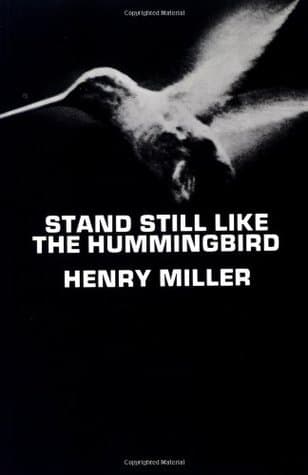
Henry Miller (1962)
Genre
Philosophy
Reading Time
240 min
Key Themes
See below
Sign in to track this book
Henry Miller explores money with humor, defends the artist's role, and declares his love for painting, all while questioning societal norms with wit and insight.
“The aim of life is to live, and to live means to become aware, joyously, drunkenly, divinely aware.”
— Reflecting on the purpose of existence and the nature of being.
“To imagine is everything. To imagine is the divine. It is the creative act.”
— Discussing the power of imagination in human experience and creation.
“The world is not to be put in order; the world is order incarnate. It is we who are in disorder.”
— Challenging the human tendency to try and control or 'fix' the external world, rather than looking inward.
“One’s destination is never a place but rather a new way of looking at things.”
— Exploring the idea of travel and personal journeys as transformative experiences.
“The moment one gives close attention to any thing, even a blade of grass, it becomes a mysterious, awesome, indescribably magnificent world in itself.”
— Highlighting the importance of mindfulness and deep observation in appreciating the world.
“The story of my life is the story of the search for myself.”
— A concise summary of his lifelong quest for self-discovery and understanding.
“Every day we slaughter our finest impulses. That is why we get a heartache when we encounter generosity, integrity, and love in others.”
— Lamenting the suppression of genuine human qualities in daily life.
“The greatest joy of all is to be a creator.”
— Emphasizing the profound satisfaction derived from the act of creation.
“Only when we are no longer afraid do we begin to live.”
— Suggesting that overcoming fear is essential for true living and freedom.
“The world is a magnificent place, and there is no end to the wonder of it.”
— Expressing an overarching sense of awe and appreciation for existence.
“Art teaches nothing, except the significance of life.”
— Defining the fundamental role and impact of art on human understanding.
“The human race is a race of cowards, and I am the first among them.”
— A self-deprecating yet profound admission about human frailty and the universal struggle with courage.
“To be free, to walk on the earth, to see the sky, to love, to be loved, to create, to destroy, to be reborn, to die, to live.”
— A poetic enumeration of the core experiences and cycles of life, emphasizing freedom.
“I have no money, no resources, no hopes. I am the happiest man alive.”
— A paradoxical statement reflecting his detached perspective on material wealth and conventional success, finding joy in simplicity.
Ready to see how well you understood this book? Take our interactive quiz with 10 questions.
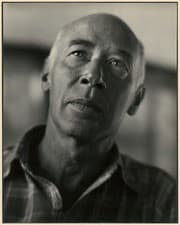
Henry Valentine Miller was an American novelist. He broke with existing literary forms and developed a new type of semi-autobiographical novel that blended character study, social criticism, philosophical reflection, stream of consciousness, explicit language, sex, surrealist free association, and mysticism. His most characteristic works of this kind are Tropic of Cancer, Black Spring, Tropic of Capricorn, and the trilogy The Rosy Crucifixion, which are based on his experiences in New York and Paris. He also wrote travel memoirs and literary criticism, and painted watercolors.

Jeff Olson
4.4
Thomas Sowell
4.4
Walter Brueggemann
4.3
Rhonda Byrne
4.3

Robin Wall Kimmerer
4.3
George S. Clason
4.3
Elliot Aronson
4.3
Joseph Campbell
4.3