The Tyranny of Imperialism
Colonial power corrupts not only the oppressed but also the oppressor, forcing them into a performative role.
Quote
I perceived in this moment that when the white man turns tyrant it is his own freedom that he destroys. He becomes a sort of hollow, posing dummy, the conventionalized figure of a sahib.
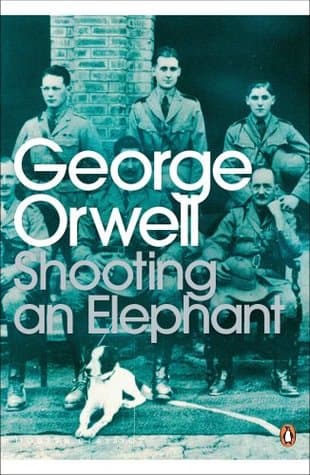
Orwell's main point in 'Shooting an Elephant' is a deep look at the psychological cost of imperialism on the colonizer. He argues that the 'white man' in power, while seemingly dominant, is enslaved by the system he supports. The need to maintain an image of strong authority forces him to act against his conscience. This is about more than political control; it's about an inner corruption where the colonizer's identity becomes a performance, a 'hollow, posing dummy,' dictated by the expectations of both the colonized people and the im...
Supporting evidence
The entire narrative of 'Shooting an Elephant' hinges on this. Orwell, despite having no desire to kill the elephant and recognizing its 'must' had passed, felt compelled to shoot it solely because 'the crowd expected it of me.' He describes feeling like a 'puppet' pushed and pulled by the will of the native crowd.
Apply this
Reflect on situations where societal or professional expectations dictate your actions against your personal values. Identify the 'crowd' you're performing for and evaluate the true cost of maintaining that image versus acting authentically.