BookBrief
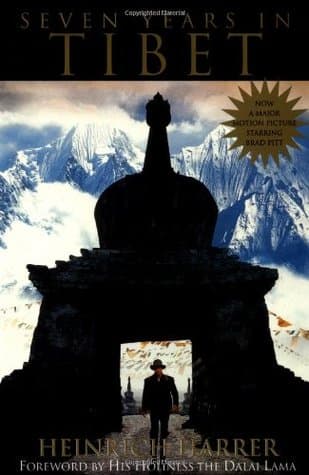
Seven Years in Tibet cover
Archivist's Choice

Seven Years in Tibet

Heinrich Harrer (1952)

Genre

Lifestyle / Biography / Memoir / History / Spirituality

Reading Time

660 min

Key Themes

See below

Track Your Reading

Sign in to track this book

An Austrian POW's daring escape leads him on an unexpected seven-year journey through Tibet, changing him from an internee to a close observer of a vanishing spiritual world.

Core Idea

Heinrich Harrer's 'Seven Years in Tibet' is a firsthand account of the author's escape from a British internment camp in India during WWII and his subsequent journey to and residence in Lhasa, Tibet, from 1944 to 1951. Harrer tells about becoming a close friend and tutor to the young 14th Dalai Lama, offering a look into secluded, pre-Chinese invasion Tibetan society. The book argues for the unique spiritual and cultural nature of old Tibet, detailing its traditions, the daily life of its people, and the influence of Buddhism on every part of existence. Harrer's narrative contrasts the material progress of the West with the spiritual depth and communal harmony of Tibet, presenting a record of a civilization on the brink of irreversible change.
Reading time
660 min
Difficulty
Medium
✓ Read this if...
You are fascinated by historical accounts of remote cultures, enjoy memoirs of extraordinary personal journeys, or wish to understand pre-invasion Tibetan society and the early life of the Dalai Lama.
✗ Skip this if...
You prefer fast-paced adventure narratives over introspective cultural observations, or are not interested in detailed historical and anthropological descriptions of a specific, isolated society.

Core idea

The central argument and framework that powers the entire book.

Heinrich Harrer's 'Seven Years in Tibet' is a firsthand account of the author's escape from a British internment camp in India during WWII and his subsequent journey to and residence in Lhasa, Tibet, from 1944 to 1951. Harrer tells about becoming a close friend and tutor to the young 14th Dalai Lama, offering a look into secluded, pre-Chinese invasion Tibetan society. The book argues for the unique spiritual and cultural nature of old Tibet, detailing its traditions, the daily life of its people, and the influence of Buddhism on every part of existence. Harrer's narrative contrasts the material progress of the West with the spiritual depth and communal harmony of Tibet, presenting a record of a civilization on the brink of irreversible change.

At a glance

Reading time

660 min

Difficulty

Medium

Read this if...

You are fascinated by historical accounts of remote cultures, enjoy memoirs of extraordinary personal journeys, or wish to understand pre-invasion Tibetan society and the early life of the Dalai Lama.

Skip this if...

You prefer fast-paced adventure narratives over introspective cultural observations, or are not interested in detailed historical and anthropological descriptions of a specific, isolated society.

Key Takeaways

1

The Allure of the Forbidden Kingdom

Tibet, before its invasion, represented a unique, isolated civilization.

Quote

Tibet was a land where time seemed to stand still, a society largely untouched by the outside world, preserving ancient traditions and a profound spiritual way of life.

Harrer's journey offers a rare look into a Tibet that no longer exists—a secluded, independent nation rooted in its Buddhist traditions and governed by a theocracy. His narrative shows the cultural differences between the Western world and this ancient civilization. The book details the customs, social structure, and religious practices that defined Tibetan life, from the highest lamas to the lowest peasants. Harrer's initial view of Tibet as just an escape route changes into a deep appreciation for its unique identity, showing the tr...

Supporting evidence

Harrer's extensive descriptions of Lhasa, its monasteries, and the daily lives of its inhabitants, including the intricate rituals and ceremonies he witnessed, such as the New Year festivities and the Dalai Lama's public appearances.

Apply this

Reflect on how isolation can foster unique cultural development and the importance of preserving distinct cultural identities in an increasingly globalized world. Consider the value of firsthand observation in understanding unfamiliar cultures.

cultural-preservationisolationtheocracy
2

From Prisoner to Confidante

Harrer's transformation from an escaped prisoner to a trusted advisor of the Dalai Lama.

Quote

My friendship with the Dalai Lama became the most significant and unexpected outcome of my seven years in Tibet. It transcended cultural barriers and offered a unique perspective into the mind of a spiritual leader.

Harrer's personal journey is perhaps the most compelling part of the memoir. His initial reason to escape a British internment camp in India was purely for survival and a return to the Western world. However, his gradual acceptance into Tibetan society, ending with his role as tutor and friend to the young 14th Dalai Lama, shows his adaptability and the Tibetans' openness. This unlikely friendship gave Harrer access to the highest levels of Tibetan power and spirituality. It shows how trust, built over time and through real engagement...

Supporting evidence

Harrer's detailed accounts of his interactions with the Dalai Lama, teaching him about the outside world, constructing a cinema, and providing insights into Western science and geography.

Apply this

Embrace opportunities for cross-cultural exchange and understand that genuine human connection can transcend political or social barriers. Seek to build trust through patience and respect when engaging with different communities.

cross-cultural-exchangementorshipadaptability
3

The Rigidity of Tradition

Tibetan society, while spiritual, was also deeply hierarchical and slow to change.

Quote

The strict adherence to tradition, while preserving their unique culture, also created a society resistant to change, even when such change might have offered practical benefits.

Harrer's observations show a society deeply tied to ancient traditions and a rigid class structure. While this helped Tibet preserve its unique culture, it also made the nation slow to adapt to outside threats and modern advances. He notes times when practical improvements were resisted due to superstition or respect for established customs. This adherence, while charming in many ways, ultimately left Tibet vulnerable. The book implicitly critiques the problems of extreme traditionalism when faced with a rapidly changing geopolitical ...

Supporting evidence

Harrer's attempts to introduce practical inventions like a cinema or modern mapping techniques, and the initial resistance he faced from conservative elements of Tibetan society and clergy.

Apply this

Recognize the double-edged sword of tradition: while it provides stability and identity, excessive rigidity can impede necessary progress. Seek a balance between honoring heritage and embracing beneficial innovation.

traditionalismsocial-structureresistance-to-change
4

Spiritualism as a Way of Life

Buddhism permeated every aspect of Tibetan existence, shaping daily life and governance.

Quote

Religion was not merely a belief system; it was the very fabric of Tibetan life, dictating customs, laws, and the rhythm of existence for every individual.

One of Harrer's most striking observations is the widespread influence of Tibetan Buddhism on all parts of life. From the highest government officials (who were often lamas) to the simplest farmers, religious rituals, superstitions, and moral codes dictated behavior, law, and even the daily schedule. Monasteries were not just places of worship but centers of learning, power, and economic activity. Harrer paints a clear picture of a society where the spiritual and temporal were linked, offering a contrast to the secularizing trends of ...

Supporting evidence

Descriptions of the numerous monasteries, the daily prayers, the omnipresence of prayer flags and mani stones, and the significant role of lamas in government and social life.

Apply this

Consider how deeply held beliefs, whether religious or philosophical, shape individual and collective behavior. Reflect on the potential strengths and weaknesses of a society where spirituality is the dominant organizing principle.

buddhismtheocracyspiritual-life
5

The Human Cost of Isolation

While preserving culture, isolation also fostered naivete and vulnerability.

Quote

Their isolation, while preserving their unique world, also left them tragically unprepared for the harsh realities of modern geopolitics and the aggressive intentions of their powerful neighbor.

Harrer's narrative, especially in its later chapters, shows the tragic results of Tibet's extreme isolation. While it allowed a unique culture to grow, it also led to a lack of knowledge about international politics and military realities. The Tibetans, with their peaceful and spiritual worldview, were unprepared to understand or defend against Communist China's expansionist goals. Harrer's attempts to warn them of the danger often went unheard, showing how a lack of engagement with the outside world can be a fatal flaw for a nation, ...

Supporting evidence

Harrer's accounts of the Tibetan government's slow and often inadequate response to the growing Chinese threat, their underestimation of Chinese military capabilities, and their reliance on traditional, non-military solutions.

Apply this

Understand that isolation, while sometimes preserving, can also lead to vulnerability and a lack of preparedness for external threats. Advocate for informed engagement with global affairs, even for seemingly remote communities.

geopoliticsvulnerabilityisolationism
6

The Impermanence of All Things

Harrer's memoir is a poignant record of a lost world.

Quote

I had witnessed the twilight of an ancient world, a civilization on the brink of being irrevocably altered, if not destroyed, by the forces of the modern age.

The book shows the Buddhist idea of impermanence. Harrer arrived in Tibet when it was still a sovereign, untouched kingdom, and he left just as the Chinese invasion began to change its landscape and culture. His detailed observations become a historical document of a world that, in many ways, stopped existing shortly after he left. The memoir has a sense of nostalgic sadness, recognizing that the unique mix of spirituality, tradition, and isolation he experienced was fragile and not sustainable against modern power dynamics. It is a r...

Supporting evidence

The concluding chapters of the book, detailing the increasing Chinese presence, the growing anxiety in Lhasa, and Harrer's eventual departure as the invasion became imminent.

Apply this

Appreciate the transient nature of cultures and societies. Support efforts to document and preserve historical and cultural heritage before it is lost. Understand that change is inevitable, even for deeply rooted traditions.

impermanencecultural-losshistorical-documentation
7

The Power of Human Ingenuity and Perseverance

Harrer's escape and survival highlight remarkable human resilience.

Quote

The human spirit, when pushed to its limits, can achieve extraordinary feats of endurance and adaptation, finding a way to survive and even thrive in the most challenging environments.

Beyond the cultural insights, Harrer's personal story is a narrative of survival and perseverance. His escape from a British internment camp in India, followed by a dangerous journey across the Himalayas with limited resources, shows great physical and mental strength. His ability to adapt to a different culture, learn a new language, and integrate into a suspicious society shows remarkable cleverness. This part of the book shows the human ability to overcome obstacles, not just through strength, but also through resourcefulness, soci...

Supporting evidence

The detailed accounts of his multiple escape attempts, the arduous trek across the Himalayas, and his continuous efforts to learn Tibetan language and customs to gain acceptance.

Apply this

Cultivate resilience and adaptability in the face of adversity. Recognize the power of perseverance and resourcefulness in achieving difficult goals, even when the odds seem insurmountable.

resiliencesurvivaladaptability
8

A Mirror for the West

Tibet's unique society offered a profound contrast to Western values and priorities.

Quote

Observing Tibetan life allowed me to see my own Western world from a new perspective, questioning the values and priorities we often take for granted.

Harrer's time in Tibetan culture provides an accidental mirror for Western society. His initial ethnocentric views slowly disappear as he sees a different way of life, one that values spiritual well-being, community, and ancient traditions over material wealth, rapid progress, and individualistic pursuits. The book invites readers to question their own societal norms and values. Is the constant drive for technological advancement always good? Does material comfort truly mean happiness? Harrer's journey encourages a re-evaluation of wh...

Supporting evidence

Harrer's internal reflections on the simplicity of Tibetan life versus the complexities of the West, his observations on their communal spirit compared to Western individualism, and their spiritual focus versus Western materialism.

Apply this

Engage in critical self-reflection about personal and societal values. Seek out diverse perspectives to challenge assumptions and broaden understanding of what constitutes a meaningful life.

cultural-relativismwestern-valuesself-reflection

Critical analysis

Notable Quotes

I had left my wife and a small son to whom I had never properly said goodbye.

Harrer reflecting on his abrupt departure from Austria for the the Nanga Parbat expedition, highlighting the personal cost.

Where we had come from, it was considered a sign of good breeding to be punctual, but here in Tibet it was a proof of wisdom to be late.

Harrer observing the cultural differences in time perception between his European background and Tibetan customs.

I am not a religious man, but I was deeply moved by the sight of this young boy's devotion.

Harrer describing his initial impressions of the young Dalai Lama's profound spirituality and his own secular perspective.

In the West, we have a saying: 'Time is money.' Here, they say: 'Time is nothing.'

Harrer contrasting the Western emphasis on efficiency and material gain with the timeless, patient approach of Tibetan society.

I often think of my earlier life as a series of fortunate escapes.

Harrer reflecting on his journey from prisoner of war to an esteemed guest in Tibet, seeing his trials as ultimately beneficial.

The people of Tibet are not merely primitive, but possess a profound wisdom that we in the West have lost.

Harrer's evolving understanding of Tibetan culture, moving beyond initial judgments to appreciate their unique insights.

I was struck by the Dalai Lama's profound curiosity about the outside world.

Harrer noting the young Dalai Lama's keen interest in Western technology, science, and global affairs.

The feeling of being utterly alone in a vast, unknown country was both terrifying and exhilarating.

Harrer describing his emotions during his escape and journey across the Tibetan plateau, highlighting the dual nature of his adventure.

It was impossible not to be impressed by the sheer scale of devotion that permeated every aspect of Tibetan life.

Harrer observing the pervasive influence of Buddhism and religious practice in the daily lives of Tibetans.

The Dalai Lama was not just a spiritual leader, but a head of state, a living god, and a very human boy.

Harrer's complex understanding of the Dalai Lama's multifaceted role and personality.

I learned that the greatest riches are not material possessions, but peace of mind and freedom.

Harrer's realization about true wealth, gained from his experiences in Tibet, contrasting with Western materialism.

A country can remain free only as long as its people are prepared to defend it.

Harrer's somber reflection on the impending Chinese invasion and the vulnerability of Tibet.

My greatest sorrow was to witness the end of an ancient world.

Harrer expressing his grief and helplessness as he watches the Chinese invasion bring an end to traditional Tibetan society.

I had come to Tibet as a prisoner, but I left as a free man, enriched by its wisdom.

Harrer's concluding thoughts on his transformative journey, highlighting his personal growth and the profound impact of Tibet.

Quiz

Test Your Knowledge

Ready to see how well you understood this book? Take our interactive quiz with 10 questions.

10
Questions
~5
Minutes
?
Best Score

Key Questions (FAQ)

Seven Years in Tibet is a memoir by Austrian mountaineer Heinrich Harrer, detailing his escape from a British internment camp in India during World War II and his subsequent journey to and life in Tibet. He spent seven years there, from 1944 to 1951, becoming a tutor and friend to the young 14th Dalai Lama and observing the unique Tibetan culture and society before the Chinese invasion.

About the author