BookBrief
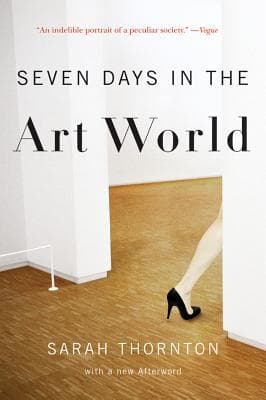
Seven Days in the Art World cover
Archivist's Choice

Seven Days in the Art World

Sarah Thornton (2008)

Genre

Business / Memoir / History / Creativity

Reading Time

320 min

Key Themes

See below

Track Your Reading

Sign in to track this book

Sarah Thornton explores the high-stakes, eccentric world of contemporary art, examining the drama of auctions, the draw of exclusive fairs, and the power struggles in studios and institutions that determine taste and fortune.

Core Idea

Sarah Thornton's "Seven Days in the Art World" argues that the contemporary art world is a complex, often self-referential system driven by a unique mix of commerce, social signaling, and the pursuit of cultural status. Through ethnographic observations of seven distinct art world settings—including an auction, an art fair, a studio visit, and a biennale—Thornton shows the often performative interactions between artists, dealers, curators, collectors, critics, and auctioneers. She demonstrates how value, both monetary and cultural, is created and negotiated within this elite sphere. She also shows the role of gatekeepers, the power of branding, and the search for meaning amidst the spectacle.
Reading time
320 min
Difficulty
Medium
✓ Read this if...
You are curious about the inner workings of the contemporary art market, the social dynamics that define it, or want an ethnographic look into a highly specialized, often opaque, world.
✗ Skip this if...
You are looking for a historical overview of art, a guide to art appreciation, or a critical take on specific art movements rather than the industry itself.

Core idea

The central argument and framework that powers the entire book.

Sarah Thornton's "Seven Days in the Art World" argues that the contemporary art world is a complex, often self-referential system driven by a unique mix of commerce, social signaling, and the pursuit of cultural status. Through ethnographic observations of seven distinct art world settings—including an auction, an art fair, a studio visit, and a biennale—Thornton shows the often performative interactions between artists, dealers, curators, collectors, critics, and auctioneers. She demonstrates how value, both monetary and cultural, is created and negotiated within this elite sphere. She also shows the role of gatekeepers, the power of branding, and the search for meaning amidst the spectacle.

At a glance

Reading time

320 min

Difficulty

Medium

Read this if...

You are curious about the inner workings of the contemporary art market, the social dynamics that define it, or want an ethnographic look into a highly specialized, often opaque, world.

Skip this if...

You are looking for a historical overview of art, a guide to art appreciation, or a critical take on specific art movements rather than the industry itself.

Key Takeaways

1

The Auction as Performance

High-stakes sales are meticulously choreographed spectacles, not just transactions.

Quote

The auction house is a theater, and the auctioneer its lead actor, orchestrating a ballet of bids that creates not just value, but drama and desire.

Thornton clearly shows the contemporary art auction as a carefully built performance, more than a simple trade. It is a high-stakes drama where the auctioneer is a charismatic leader, controlling pace, tone, and humor to get the highest price. The tension is clear, bids are often anonymous but competitive, and the atmosphere mixes social event and financial battle. This theatricality makes the art object seem more important and exclusive, while also entertaining participants. The 'hammer price' is not just a number, but the peak of a ...

Supporting evidence

Thornton's detailed account of a Christie's evening sale, where she observes the intricate dance between auctioneer, telephone bidders, and floor participants, noting the psychological tactics employed to drive up prices and create a sense of urgency.

Apply this

When observing or participating in any high-value transaction, recognize the performative elements at play. Understand that the environment, the language used, and the pacing are often designed to influence perception and decision-making, rather than solely to facilitate exchange.

art-marketchristiesauction-dynamics
2

The Artist as Brand Manager

Successful contemporary artists operate like CEOs, managing their image and production.

Quote

Murakami is not just an artist; he is a brand, a factory, and a shrewd businessman, meticulously orchestrating every facet of his production and public persona.

The idea of a solitary artist working in obscurity is mostly gone in the top parts of the contemporary art world. Thornton shows how artists like Takashi Murakami act as skilled entrepreneurs, managing large studios with many assistants, handling complex production schedules, and carefully building their public image and market value. This includes artistic creation, branding, marketing, and controlling their story. Their success depends not just on their creative work, but on their ability to handle the commercial side, work with oth...

Supporting evidence

Thornton's extensive time spent observing Takashi Murakami's studio in Tokyo, detailing his division of labor, his 'kaikai kiki' company structure, and his strategic collaborations with brands like Louis Vuitton, showcasing his dual role as artist and CEO.

Apply this

Aspiring creatives should consider the business aspects of their craft. Beyond creation, developing a strategic approach to branding, collaboration, and managing one's output can be crucial for sustained success and impact in a competitive field.

takashi-murakamiartist-brandingstudio-practice
3

Fair as a Frenzy

Art fairs are intense, overwhelming marketplaces driving taste and commerce.

Quote

Basel is a pressure cooker, a gladiatorial arena where gallerists fight for attention, collectors hunt for trophies, and the sheer volume of art threatens to overwhelm the senses.

Art Basel, as Thornton describes it, is less a quiet exhibition and more a busy commercial competition. Gallerists carefully set up their booths, placing works to attract the most important collectors and make quick sales. The atmosphere is a mix of fast networking, social showing off, and intense deal-making, all in a few busy days. It is a place where trends become solid, reputations are made (or lost), and large amounts of money change hands, often before the public even enters. This highly commercial environment shapes not only th...

Supporting evidence

Thornton's observations at Art Basel, detailing the aggressive sales tactics of gallerists, the intense competition for prime booth space, and the 'VIP preview' where major sales often occur within hours, highlighting the fair's primary function as a marketplace.

Apply this

When evaluating 'trends' in any industry, consider the commercial forces and concentrated events that may be driving them. Recognize that intense, focused marketplaces often dictate value and direction more than organic public consensus.

art-baselart-fairsgallery-system
4

The Gatekeepers of Discourse

Influential magazines wield significant power in shaping critical perception and artist careers.

Quote

Artforum, with its opaque prose and intellectual gravitas, serves as a filter, determining which artists and ideas enter the hallowed halls of critical discourse.

Thornton looks at the strong influence of publications like Artforum, showing them as important gatekeepers of critical discussion. These magazines do not just report on art; they actively shape how it is understood, its legitimacy, and its future. Their dense, often academic language and specific aesthetic preferences create a high barrier to entry, signaling to the art world what is 'serious' and what is not. A good review or feature can greatly help an artist's career, while not being mentioned can make them almost invisible in cer...

Supporting evidence

Thornton's interviews with Artforum editors and writers, exploring their editorial processes, their self-perception as intellectual arbiters, and the impact their coverage (or lack thereof) has on an artist's standing and market value.

Apply this

Understand that critical validation often comes from specific, influential sources. To gain traction in a specialized field, identifying and engaging with these gatekeepers, and understanding their criteria, is often essential.

artforumart-criticismcultural-capital
5

The Prize as a Proving Ground

Art prizes offer legitimacy and accelerate careers, but also fuel intense competition and debate.

Quote

The Turner Prize is a pressure cooker, exposing artists to unprecedented public scrutiny and transforming them, for better or worse, into household names.

The Turner Prize, one of the most debated and celebrated art awards, is a small example of the contemporary art world's worries and hopes. Thornton shows how the prize greatly boosts an artist's career, making them known to the public and often securing their place in art history. However, it also puts them under strong public and critical review, often causing intense discussions about what contemporary art is and its value. The selection process, the public exhibition, and the final announcement are all managed events meant to creat...

Supporting evidence

Thornton's detailed exploration of the Turner Prize, including interviews with former nominees, judges, and observers, analyzing the controversy, media attention, and career-altering effects of nomination and winning.

Apply this

Recognize that high-profile awards, while offering significant validation, often come with the burden of increased scrutiny and public debate. Navigating this attention effectively is as crucial as the work itself.

turner-prizeart-awardspublic-perception
6

The Pedagogy of Power

Elite art schools shape not just artists, but their network and conceptual framework.

Quote

The CalArts seminar is not just about making art; it's about learning to speak the language, to navigate the politics, and to inhabit the intellectual space of the art world.

Thornton's time in a CalArts graduate seminar shows that top art education goes far beyond technical skill. It is a demanding, often challenging environment where students learn to explain their artistic intentions, defend their work conceptually, and engage in critical discussion. More importantly, these institutions are important networking places, connecting students with future gallerists, critics, and peers who will be part of their professional community. The 'crit' (critique) process, in particular, builds intellectual strength...

Supporting evidence

Thornton's direct observation of a CalArts graduate critique seminar, detailing the intense intellectual sparring between students and faculty, and the emphasis on conceptual rigor and theoretical grounding over purely aesthetic concerns.

Apply this

When considering advanced education in creative fields, prioritize programs that offer strong conceptual training, foster critical thinking, and provide robust networking opportunities, as these are often as valuable as technical instruction.

calartsart-educationcritique-culture
7

Biennale as Global Spectacle

The Venice Biennale showcases national identity and global art trends in a grand, sprawling exhibition.

Quote

The Venice Biennale is a sprawling, chaotic, yet utterly captivating wonderland where national pride, artistic ambition, and sheer visual overload collide.

The Venice Biennale, with its national pavilions and many related events, is shown as an overwhelming but essential journey for the art world. It is a unique platform where nations compete for cultural standing through their art, and curators try to define current trends. The large size and spread-out nature of the exhibitions create a confusing but immersive experience, making viewers see a wide range of artistic expressions and curatorial statements. It is a place where global trends are both seen and strengthened, and where the lin...

Supporting evidence

Thornton's extensive exploration of the Venice Biennale, detailing the national pavilions, the curatorial themes, the social dynamics of the opening days, and the logistical challenges of experiencing such a vast, fragmented exhibition.

Apply this

When engaging with large-scale international exhibitions, be prepared for sensory overload and recognize the underlying political and nationalistic narratives that often accompany the artistic displays. Understand that these events are as much about diplomacy and soft power as they are about art.

venice-biennalenational-pavilionsglobal-art
8

The Search for Meaning

Beyond commerce and status, the art world grapples with art's deeper purpose.

Quote

Despite the relentless commerce and the pursuit of status, there remains a persistent, almost spiritual quest for meaning and transformative experience within the art world.

Underneath the shiny surface of auctions, fairs, and famous artists, Thornton subtly shows a continuing search for meaning within the art world. While money, status, and intellectual approval are strong motivators, many participants—artists, collectors, critics, and viewers—are ultimately looking for something more: a transforming experience, a deeper understanding of humanity, or a connection to something beyond the everyday. This underlying search for meaning often clashes with commercial realities, creating a tension that defines m...

Supporting evidence

Thornton weaves this theme throughout her observations, noting the passionate defenses of art's purpose by artists in their studios, the spiritual language used by some collectors, and the intense intellectual debates in seminars, all pointing to a desire for art to transcend its market value.

Apply this

When engaging with any cultural sphere, look beyond the superficial layers of commerce or trend. Consider the deeper human motivations and the underlying search for meaning that often drives creation, consumption, and critique.

art-meaningtranscendencecultural-value
9

The Ecosystem of Elitism

Access and influence in the art world are tightly controlled by a select few.

Quote

The art world, for all its talk of inclusivity, remains an intensely hierarchical and exclusive ecosystem, where access to information and opportunities is meticulously guarded.

Thornton implies that the contemporary art world works as a very exclusive system. From VIP previews at art fairs to the inner circles of auction houses and the intellectual discussions of elite seminars, access often depends on connections, wealth, and cultural standing. This creates a self-reinforcing cycle where a select group of gallerists, collectors, curators, and critics set taste, approve artists, and control the flow of information and money. While seemingly open, the barriers to real influence and participation are significa...

Supporting evidence

Repeated instances across chapters, such as the exclusive 'first pick' access granted to major collectors at Art Basel, the tight-knit community of Artforum contributors, and the specific social dynamics required to thrive in a CalArts seminar.

Apply this

When navigating any specialized, high-value industry, understand that informal networks and established hierarchies play a significant role. Building genuine relationships and understanding the unwritten rules are often more important than formal qualifications alone.

art-world-hierarchyexclusivitycultural-capital
10

Art as a Social Signal

Collecting and engaging with art are powerful tools for signaling status and identity.

Quote

For many, art collecting is less about aesthetic pleasure and more about social positioning, a refined form of conspicuous consumption that signals taste, wealth, and intellectual sophistication.

Beyond its inherent value, art acts as a strong social signal in the world Thornton describes. Collecting specific artists, attending certain events, or expressing particular critical opinions are all ways people communicate their status, taste, and belonging. For wealthy collectors, art is a high-stakes investment and a visible sign of their economic and cultural standing. For artists, being shown in a respected gallery or reviewed in a major publication raises their standing. This constant interplay of signaling and interpretation s...

Supporting evidence

Thornton notes the specific types of collectors present at Christie's, the social rituals at Art Basel's VIP events, and the intellectual posturing observed in the CalArts seminar – all instances where art engagement serves a social signaling function.

Apply this

Be aware of the 'social signaling' aspect of consumption and engagement in any field. Understand that choices, whether in art, fashion, or even intellectual pursuits, often communicate identity and status as much as genuine preference.

conspicuous-consumptionstatus-symbolcultural-identity

Critical analysis

Notable Quotes

The art market is not a meritocracy; it’s a popularity contest where the popular kids are often very rich.

Reflecting on the commercial side of art, particularly the role of wealth in determining success.

Curators are not just caretakers of art, but also creators of meaning.

Discussing the power and influence of curators in shaping how art is perceived and understood.

In the studio visit, the artist is both performer and subject, the work both prop and evidence.

Describing the dynamic and often performative nature of studio visits, especially with critics or collectors.

The biennial is a temporary autonomous zone for art, a place where new ideas can be tested and old hierarchies challenged.

Analyzing the function and significance of international art biennials as platforms for innovation.

Fairs are where the art world goes to shop, socialize, and show off.

Characterizing the multi-faceted role of art fairs beyond mere commerce, including networking and status display.

Critique is the engine of the art world, but it can also be its most destructive force.

Examining the dual nature of critical discourse, its necessity for progress and potential for harm.

The auction house is a theater of desire, where prices are not just numbers but expressions of passion and power.

Describing the dramatic and emotionally charged atmosphere of art auctions.

To be an artist is to constantly negotiate the tension between autonomy and market demands.

Reflecting on the challenges artists face in maintaining their creative integrity while engaging with the commercial art world.

The art world is a collection of overlapping subcultures, each with its own rules, rituals, and jargon.

Highlighting the fragmented and specialized nature of the global art ecosystem.

Authenticity in art is not a fixed quality but a constantly negotiated value.

Discussing how the concept of authenticity is perceived and re-evaluated within different contexts of the art world.

Being a 'superstar' artist means having your work transcend its physical form to become a brand.

Observing the phenomenon of highly successful artists whose names become synonymous with a particular style or movement.

The 'art talk' is a performance in itself, a carefully constructed narrative designed to frame and elevate the work.

Analyzing the often theatrical nature of public discussions and presentations of art.

What makes an artwork 'important' is often less about its intrinsic qualities and more about the consensus of a select few.

Questioning the mechanisms by which art gains recognition and canonical status.

The art world thrives on stories, myths, and the perpetual search for the next big thing.

Underlining the narrative-driven and speculative aspects of the art market and discourse.

Quiz

Test Your Knowledge

Ready to see how well you understood this book? Take our interactive quiz with 10 questions.

10
Questions
~5
Minutes
?
Best Score

Key Questions (FAQ)

'Seven Days in the Art World' by Sarah Thornton offers an ethnographic look into the contemporary art world through seven distinct narratives. It explores the institutions, players, and dynamics that shape creativity, taste, status, and money within this peculiar society.

About the author