BookBrief
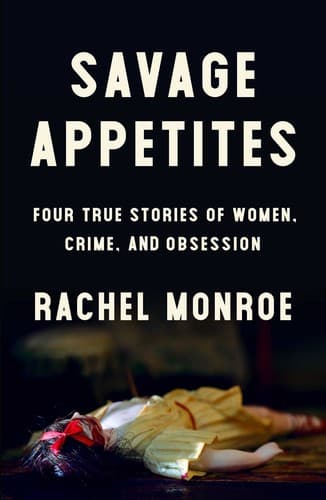
Savage Appetites cover
Archivist's Choice

Savage Appetites

Rachel Monroe

Genre

General

Reading Time

6-8 hours

Key Themes

See below

Track Your Reading

Sign in to track this book

Rachel Monroe dissects the dark allure of true crime, exploring how four infamous cases twisted the desires and identities of the women drawn into their morbid orbits.

Core Idea

Rachel Monroe's "Savage Appetites" delves into the complex and often disturbing ways women engage with true crime, exploring the various archetypes that draw them into its orbit: the femme fatale, the victim, the detective, and the cult member. Monroe argues that these roles are not merely passive reflections of societal anxieties but active constructions, revealing deeper truths about female desire, ambition, and the search for meaning in a world that often marginalizes or misrepresents women's experiences. The book dissects how true crime narratives, both real and imagined, provide a framework for women to explore forbidden fantasies, understand power dynamics, and grapple with their own identities in relation to violence and transgression.
Reading time
6-8 hours
Difficulty
Medium
✓ Read this if...
You're fascinated by the psychological and cultural dimensions of true crime, especially how women interact with its narratives. You enjoy nuanced explorations of female archetypes and the societal forces that shape them, and you appreciate a blend of investigative journalism, cultural criticism, and personal reflection.
✗ Skip this if...
You prefer straightforward true crime narratives focusing solely on facts and investigations, or if you're looking for a book that offers definitive answers rather than exploring complex, often uncomfortable questions about human nature and societal obsessions. If you're sensitive to discussions of violence, exploitation, and the darker aspects of human psychology, this might not be for you.

Core idea

The central argument and framework that powers the entire book.

Rachel Monroe's "Savage Appetites" delves into the complex and often disturbing ways women engage with true crime, exploring the various archetypes that draw them into its orbit: the femme fatale, the victim, the detective, and the cult member. Monroe argues that these roles are not merely passive reflections of societal anxieties but active constructions, revealing deeper truths about female desire, ambition, and the search for meaning in a world that often marginalizes or misrepresents women's experiences. The book dissects how true crime narratives, both real and imagined, provide a framework for women to explore forbidden fantasies, understand power dynamics, and grapple with their own identities in relation to violence and transgression.

At a glance

Reading time

6-8 hours

Difficulty

Medium

Read this if...

You're fascinated by the psychological and cultural dimensions of true crime, especially how women interact with its narratives. You enjoy nuanced explorations of female archetypes and the societal forces that shape them, and you appreciate a blend of investigative journalism, cultural criticism, and personal reflection.

Skip this if...

You prefer straightforward true crime narratives focusing solely on facts and investigations, or if you're looking for a book that offers definitive answers rather than exploring complex, often uncomfortable questions about human nature and societal obsessions. If you're sensitive to discussions of violence, exploitation, and the darker aspects of human psychology, this might not be for you.

Key Takeaways

1

The Allure of the Femme Fatale

How women who commit violent crimes captivate public imagination.

Quote

The femme fatale is a figure of both desire and destruction, embodying a dangerous independence that society simultaneously condemns and romanticizes.

Monroe explores the enduring fascination with women like Valerie Solanas, who shot Andy Warhol, and the Manson girls. These women, often defying traditional gender roles, become projections for societal anxieties and desires. Their actions, while horrific, are often reinterpreted through lenses of victimhood, madness, or rebellion, making them complex figures of both revulsion and morbid admiration. The media's portrayal often sensationalizes their stories, transforming them into archetypes that resonate deeply within the collective u...

Supporting evidence

Analysis of media coverage and public perception surrounding Valerie Solanas and the Manson Family women.

Apply this

Analyze media narratives about female criminals to identify underlying societal biases and projections of gender roles.

femme-fatalegender-rolesmedia-sensationalism
2

The True Crime Tourist

The phenomenon of individuals drawn to sites of notorious crimes.

Quote

True crime tourism is not just about morbid curiosity; it's an attempt to connect with the raw, visceral reality of human darkness, to stand where unspeakable acts occurred.

Monroe delves into the motivations of 'true crime tourists' who visit locations associated with famous murders, such as the sites of the Manson Family murders or the Black Dahlia's discovery. These individuals seek a tangible connection to the events, hoping to understand the psychology behind the crimes or simply to experience the frisson of proximity to evil. This phenomenon speaks to a desire for authenticity and a need to process trauma, both personal and collective, through a direct engagement with its physical remnants. It's a p...

Supporting evidence

Interviews with true crime tourists and observations of their behavior at crime scenes and related attractions.

Apply this

Reflect on personal motivations for consuming true crime narratives and consider the ethical implications of engaging with such content.

true-crime-tourismmorbid-curiositypsychogeography
3

The Victim's Legacy

How victims' stories are shaped, remembered, and sometimes exploited.

Quote

The victim's story is often co-opted, retold, and refashioned, serving various cultural and personal agendas, sometimes eclipsing their actual humanity.

The book examines how the stories of victims, particularly those of high-profile murders, are curated and consumed by the public. Monroe explores the case of the Black Dahlia, Elizabeth Short, whose life and death have been endlessly sensationalized and fictionalized. Victims often become symbols, their individual identities subsumed by the narrative of their demise. This process can be both a form of remembrance and a subtle act of exploitation, as their tragedy is repurposed for entertainment, moral lessons, or artistic inspiration....

Supporting evidence

Analysis of various media representations and fictionalizations of Elizabeth Short's life and murder.

Apply this

Critically evaluate how victims are portrayed in true crime media and advocate for more respectful and nuanced storytelling.

victim-narrativesmedia-ethicspublic-memory
4

The Detective's Obsession

The psychological toll and consuming nature of solving cold cases.

Quote

For some detectives, a cold case becomes an all-consuming puzzle, a personal quest that blurs the lines between professional duty and private obsession.

Monroe explores the world of amateur and professional detectives who dedicate their lives to solving cold cases, often becoming deeply entangled in the lives of both victims and perpetrators. She highlights individuals like the women obsessed with the Zodiac Killer, who spend years poring over clues and theories. This pursuit can be both noble and destructive, offering a sense of purpose while also potentially consuming one's personal life and sanity. The quest for truth in these cases often becomes an intimate, almost spiritual journ...

Supporting evidence

Case studies of individuals and groups dedicated to investigating unsolved mysteries, such as the Zodiac Killer.

Apply this

Understand the psychological impact of intense investigative work and the ethical considerations of amateur sleuthing.

cold-casesamateur-detectivesobsessive-pursuit
5

The Appeal of the Cult

Exploring the psychological mechanisms that draw individuals into destructive groups.

Quote

Cults offer a seductive promise of belonging, purpose, and absolute truth, preying on vulnerabilities and a deep human need for meaning.

The book delves into the enduring fascination with cults, particularly through the lens of the Manson Family. Monroe examines the psychological allure that draws individuals, often young women, into these insular and destructive communities. She explores the charismatic leadership, the promise of an alternative reality, and the profound sense of belonging that cults offer. This analysis goes beyond simple victim blaming, seeking to understand the complex interplay of personal vulnerability, societal disaffection, and persuasive manipu...

Supporting evidence

Examination of the Manson Family's recruitment tactics and the psychological profiles of its members.

Apply this

Recognize the signs of manipulative group dynamics and foster critical thinking skills to resist undue influence.

cult-psychologygroup-dynamicscharismatic-leadership
6

The Empathy Gap in True Crime

How true crime narratives can sometimes dehumanize those involved.

Quote

In our consumption of true crime, there's a delicate balance between empathy and voyeurism, a risk of reducing real people to mere characters in a macabre drama.

Monroe implicitly and explicitly questions the ethical implications of consuming true crime, highlighting how the genre can sometimes foster a distance between the audience and the real-life suffering it depicts. While engaging with these stories can be an act of empathy, it can also devolve into morbid voyeurism, where the nuances of human experience are flattened into sensationalized plot points. The book encourages readers to critically examine their own motivations and the impact of these narratives on their understanding of viole...

Supporting evidence

Reflections on the broader true crime genre and its common pitfalls in representation.

Apply this

Practice mindful consumption of true crime content, actively seeking out narratives that prioritize ethical storytelling and human dignity.

true-crime-ethicsvoyeurismdehumanization
7

The Performance of Grief

The public and private ways individuals mourn and memorialize crime.

Quote

Grief, especially public grief, is a complex performance, a way of signaling our humanity and our connection to collective tragedy.

Monroe explores the various ways individuals and communities grieve and memorialize victims of violent crime. This includes the public outpouring of sorrow, the creation of roadside memorials, and the more private, enduring forms of remembrance. She examines how grief can become a communal performance, a way for society to process trauma and assert its values. However, she also subtly questions the authenticity and impact of some of these displays, suggesting that while they offer comfort, they can also sometimes obscure the individua...

Supporting evidence

Descriptions of memorials, vigils, and public reactions to high-profile crimes.

Apply this

Consider the various expressions of grief and memorialization, recognizing both their importance and their potential complexities.

public-griefmemorializationcollective-trauma
8

The Enduring Mystery

How some cases resist resolution, feeding an endless cycle of speculation.

Quote

Some mysteries are not meant to be solved, or perhaps their enduring power lies precisely in their unresolved nature, inviting endless revisitation.

Monroe highlights how certain cases, particularly those with ambiguous details or missing pieces, continue to captivate the public imagination for decades. The Black Dahlia case and the Zodiac Killer are prime examples, where the lack of definitive answers fuels an ongoing cycle of speculation, amateur investigation, and media retelling. This enduring mystery speaks to a human discomfort with incompleteness and a persistent desire for narrative closure. The 'unsolvable' nature of these crimes becomes part of their allure, allowing the...

Supporting evidence

The ongoing public and investigative interest in cases like the Black Dahlia and the Zodiac Killer.

Apply this

Embrace the discomfort of ambiguity and recognize that not all questions have definitive answers, especially in complex human affairs.

unsolved-mysteriesnarrative-closurespeculation
9

The Shadow Self

True crime as a mirror reflecting our own dark impulses and fears.

Quote

The stories of extreme violence hold a dark mirror to our own potential for cruelty, our anxieties about safety, and the fragile veneer of civility.

Monroe suggests that our fascination with true crime is not just about the external events, but also about an internal exploration of our own 'shadow self.' These narratives allow us to confront, from a safe distance, the darker aspects of human nature – the capacity for violence, betrayal, and madness – that we both fear and are morbidly curious about within ourselves. By engaging with these stories, we process our anxieties about personal safety, the fragility of social order, and the thin line between normalcy and depravity. It's a...

Supporting evidence

Psychological analysis of reader engagement with true crime and discussions on its cathartic or unsettling effects.

Apply this

Use true crime as a tool for self-reflection, understanding personal fears and societal anxieties rather than merely for entertainment.

shadow-selfexistential-fearcatharsis
10

The Storyteller's Responsibility

The ethical burden on those who narrate and consume true crime.

Quote

To tell a true crime story is to wield power over memory, truth, and the lives of those involved; it demands a profound sense of ethical responsibility.

Monroe implicitly and explicitly addresses the ethical responsibilities of true crime storytellers – authors, journalists, podcasters, and filmmakers – and by extension, their audiences. She argues that the act of recounting real-life tragedy is not neutral; it shapes public perception, impacts victims' families, and can either honor or exploit those involved. The book calls for a conscious approach to true crime, urging creators to prioritize accuracy, respect, and a nuanced understanding of human suffering, and for consumers to crit...

Supporting evidence

Critiques of various true crime narratives and their impact on public understanding and individual lives.

Apply this

Advocate for and support true crime content that demonstrates ethical storytelling, empathy, and a commitment to factual accuracy.

ethical-storytellingjournalistic-responsibilitynarrative-impact

Critical analysis

Notable Quotes

The past is a foreign country; they do things differently there.

Monroe often uses this sentiment to frame her exploration of historical crimes and their contemporary resonance, highlighting how societal views and understandings of gender, violence, and justice have evolved.

We are all drawn to the darkness, some more than others.

This quote reflects the central theme of the book: the human fascination with true crime and the darker aspects of human nature, particularly as it pertains to women's roles in these narratives.

The female monster is always more compelling, more terrifying, than her male counterpart.

Monroe explores the unique cultural anxieties and projections placed upon women who commit crimes, or are perceived to be monsters, contrasting them with how male criminals are often viewed.

To be a woman is to live with a certain kind of fear.

This quote underscores the pervasive sense of vulnerability and danger that women often experience, a theme that informs many of the true crime stories Monroe examines.

The line between victim and perpetrator is often blurrier than we'd like to admit.

Monroe frequently challenges simplistic narratives of good and evil, examining the complexities and ambiguities in true crime cases, particularly when women are involved.

True crime is a way for us to grapple with the ungrappleable.

This speaks to the psychological function of true crime as a means for audiences to process and understand incomprehensible acts of violence and societal breakdown.

There’s a power in knowing the story, in controlling the narrative.

Monroe discusses how the telling and retelling of true crime stories, and who gets to tell them, shapes public perception and historical understanding.

We want to understand the 'why,' even when there is no rational explanation.

This highlights the human drive to find meaning and motive in senseless acts, a core appeal of true crime despite the often elusive nature of answers.

The myth of the perfect victim, the perfect criminal, is a comforting lie.

Monroe debunks idealized or simplistic portrayals of individuals in crime narratives, emphasizing the messy realities and challenging societal expectations.

Our appetites for these stories are savage, primal.

This quote directly ties into the book's title, describing the deep-seated, almost instinctual human craving for true crime narratives.

Every obsession has its roots in something deeper, something unmet.

Monroe delves into the psychological underpinnings of why individuals, particularly women, become obsessed with true crime, linking it to personal histories and societal roles.

The past doesn't just inform the present; it haunts it.

This emphasizes the lingering impact of historical crimes and their narratives on contemporary culture and individual psyches.

We project our own fears, desires, and moral codes onto these stories.

Monroe argues that audiences engage with true crime not just for entertainment, but as a mirror reflecting their own internal worlds and societal values.

The allure of the unsolved, the unknowable, is immense.

This speaks to the enduring fascination with mysteries and cases where definitive answers remain elusive, fueling continued speculation and engagement.

Quiz

Test Your Knowledge

Ready to see how well you understood this book? Take our interactive quiz with 10 questions.

10
Questions
~5
Minutes
?
Best Score

Key Questions (FAQ)

'Savage Appetites' explores the dark allure of true crime through the stories of four women whose lives became entangled with notorious cases. Rachel Monroe delves into their motivations and the cultural fascination with violence, examining how true crime shapes our understanding of ourselves and society.

About the author