“The First and Last Man is always the same man. This is the truth of it.”
— Reflecting on anthropological universals and the cyclical nature of human experience.

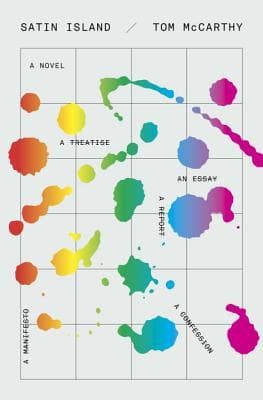
Tom McCarthy (2015)
Genre
Literary Fiction / Philosophy
Reading Time
180 min
Key Themes
See below
Sign in to track this book
A corporate ethnographer, tasked with writing a report on our era, finds himself lost in data, cargo cults, and oil spills, questioning truth and meaning in a world of screens and unclear stories.
U., the narrator, is delayed in Turin Airport. Online, he finds information about the Shroud of Turin. This artifact, with its debated authenticity and layers of interpretation, connects with his intellectual concerns. He considers how our understanding of truth is always filtered, making any perceived reality unstable. This reflection sets the philosophical tone and introduces his main task: writing the 'Great Report' for his employer, the Company, a document meant to summarize the contemporary world.
U. works as a corporate ethnographer for a powerful, almost mythical entity called 'the Company.' His main job is to compile the 'Great Report,' an ambitious document meant to define and summarize the entire contemporary human condition. The Company's exact purpose and leaders are vague, but their influence is widespread. U. struggles with the huge scope of this task, feeling overwhelmed by the data, information, and disconnected events of modern life, always questioning if such a clear summary is even possible.
U. has a long-standing interest in South Pacific cargo cults. He studies their origins, rituals, and beliefs, especially how these isolated communities saw Western goods and technology as divine or ancestral returns. U. sees similarities between the cargo cults' attempts to understand foreign objects and modern society's efforts to process the overwhelming flow of information and consumer goods, suggesting a shared human need to create stories around perceived meaning.
U. is involved with a woman named Madison, but their relationship has a deep sense of distance. Madison travels often, and her presence in U.'s life is fragmented, communicated through brief meetings or cryptic messages. He struggles to understand her, seeing her as a collection of surfaces rather than a whole person. Her transient nature and his inability to define her reflect his broader difficulty in putting together the different parts of the modern world into a coherent story for his Great Report, showing themes of detachment and the limits of understanding.
Another recurring interest for U. is the seemingly random death of a parachutist. He looks into news reports and speculative accounts, trying to understand the circumstances. The lack of a clear explanation for the death, along with fragmented and contradictory information, mirrors his struggle with the Great Report. U. tries to bring order to this chaotic event, analyzing every detail, but finds himself increasingly lost in the ambiguities, reinforcing his view of an unstable and unknowable reality.
U. develops a new interest in oil spills. He collects images and data about these environmental disasters, fascinated by how the oil spreads, blurs boundaries, and turns landscapes into shapeless, oozing masses. This interest in the formless nature of oil spills becomes a metaphor for his own struggle with the Great Report, which he fears might also remain a 'shapeless, oozing plasma' rather than a clear document. The oil represents the undifferentiated, uncontrollable flow of information and events in the modern world.
Amid his intellectual and existential wandering, U. has a powerful and vivid dream. The dream shows an apocalyptic city, perhaps a vision of collapse or change. This intense experience provides a sudden shock, briefly cutting through his usual detached observation and overwhelming data. The dream, with its stark images and emotional impact, contrasts with the abstract reality he usually inhabits, suggesting a deeper, more basic understanding or a subconscious comment on his worries about the world.
The Company U. works for is ever-present yet elusive. Its headquarters are vaguely defined, its goals unclear, and its leaders largely unseen. U. is a part of a vast, unknowable machine, tasked with a project so grand it borders on the absurd. This ambiguity about his employer contributes to U.'s sense of detachment and his struggle to find meaning. The Company represents a powerful, abstract force that shapes the modern world, yet remains beyond full comprehension, reflecting U.'s own feelings of being lost in a buffer zone of information.
Throughout his work on the Great Report, U. faces the challenge of putting together the vast, different data points of modern existence into a coherent, meaningful story. He feels overwhelmed by the 'ubiquity of data' and the constant flow of information, which often seems to contradict itself or lack clear connections. His observations on cargo cults, the Shroud of Turin, Madison, and oil spills are all individual threads he tries to weave, but his report threatens to unravel into an 'oozing plasma' rather than a definitive statement. He questions if a unified understanding is even possible.
A main concern for U. is the elusive nature of truth in the modern world. From the debated authenticity of the Shroud of Turin to the unclear details of the parachutist's death, he constantly finds situations where reality is filtered through 'veils or screens' of interpretation and media. He recognizes that our access to any objective truth is always mediated, making definitive statements or complete understanding difficult, if not impossible. This philosophical view underlies his struggles with the Great Report and his perception of the world as unstable.
As U. continues his work, he increasingly questions whether the Great Report can ever truly be finished or if it can provide 'the first and last word' on the world, as its mandate suggests. The sheer, ever-growing volume of information and constant shifts in the modern world make any sense of closure seem impossible. He considers the paradox of trying to capture an infinitely unfolding present, ultimately recognizing that the report, like reality itself, might be an ongoing process, always incomplete and resistant to a final summary.
The Protagonist
U. begins as a detached observer attempting to synthesize the world, and while he struggles with the impossibility of this task, he gains a deeper, albeit fragmented, understanding of mediation and the human need for narrative.
The Supporting
Madison remains consistently elusive, serving as a constant reflection of U.'s inability to fully grasp or synthesize the world around him.
The Mentioned/Antagonistic force (conceptual)
The Company remains a static, abstract force, its enigmatic nature underscoring the novel's themes of unknowability and the limits of understanding.
The Mentioned (conceptual)
The parachutist's story remains unresolved, serving as a constant reminder of the world's inherent ambiguity and U.'s struggle to find coherent narratives.
The Mentioned (conceptual)
The Shroud's significance remains constant throughout U.'s reflections, acting as a foundational example of mediated truth.
The Mentioned (conceptual)
The cargo cults' practices serve as a recurring conceptual touchstone, informing U.'s understanding of how humans create meaning.
A main theme is that objective truth is largely inaccessible, always mediated by 'veils or screens' of interpretation, data, and representation. U.'s interest in the Shroud of Turin, an artifact whose authenticity is always debated, shows this. Similarly, his inability to fully understand Madison or find a clear explanation for the parachutist's death highlights how reality resists clear, singular stories. The novel suggests that in the information-saturated modern world, meaning is not found but created, and often imperfectly.
“''Our access to the truth is always mediated by a set of veils or screens, with any world built on those truths inherently unstable.'”
The novel explores the overwhelming amount of data and information in the contemporary age. U., an ethnographer tasked with summarizing an entire era, is constantly flooded by facts, images, and disconnected events. This data overload makes synthesis incredibly difficult, threatening to turn his 'Great Report' into a 'shapeless, oozing plasma.' The oil spills, with their formless spread, become a metaphor for this undifferentiated flow, suggesting that too much information can be as confusing as too little, leading to a kind of mental paralysis.
“'He felt himself overwhelmed by the ubiquity of data, lost in buffer zones, wandering through crowds of apparitions.'”
U. constantly grapples with the human need to create stories, even when facing chaos. His study of cargo cults, who built elaborate narratives around Western goods, highlights this. He sees modern society doing something similar, trying to make coherent stories from different events and information. The 'Great Report' itself is the ultimate storytelling challenge. The novel questions whether a single, definitive story of an era is possible or desired, suggesting that perhaps only fragmented, incomplete stories can truly capture the complexities of contemporary existence.
“'We are always trying to find meaning (or just to stay awake) and discern the narratives we think of as our lives.'”
U. shows a deep sense of detachment, both from his personal relationships (like with Madison, who remains elusive) and from the world he observes. His role as an ethnographer encourages this distance, but it also reflects a deeper alienation in modern life. He often feels 'lost in buffer zones,' observing events and people as 'apparitions.' This detachment allows him to analyze, but it also isolates him, preventing real connection or a direct experience of reality, until perhaps his apocalyptic dream offers a brief, intense break from this intellectual remove.
“'He felt like he was observing the world from behind a pane of glass, a buffer zone.'”
An impossible, all-encompassing document U. is tasked with writing.
The 'Great Report' serves as the central MacGuffin and thematic anchor of the novel. It is U.'s ultimate, seemingly impossible task: to sum up the entire contemporary era. As a plot device, it provides U. with his purpose and drives his intellectual explorations, forcing him to confront the vastness and incoherence of modern information. Simultaneously, it acts as a metaphor for humanity's collective desire to understand and categorize the world, while highlighting the inherent futility of such an endeavor in an age of overwhelming data and mediated truths.
Disparate intellectual fixations that U. attempts to connect.
U.'s various obsessions—the South Pacific cargo cults, the Shroud of Turin, oil spills, and the parachutist's death—are key plot devices. They function not as subplots, but as recurring motifs and intellectual touchstones through which U. explores the novel's central themes. Each obsession offers a different lens through which to examine mediation, meaning-making, and the elusive nature of truth. By juxtaposing these seemingly unrelated phenomena, the novel invites the reader to follow U.'s fragmented thought process and to find their own connections within the overwhelming stream of information.
Characters whose ambiguity and distance reflect the novel's themes.
Madison and The Company serve as plot devices through their very elusiveness and ambiguity. Madison, U.'s transient partner, symbolizes the difficulty of truly knowing another person and the fragmented nature of modern relationships. The Company, U.'s enigmatic employer, represents the vast, opaque, and often incomprehensible forces that shape the contemporary world. Their lack of concrete definition or consistent presence mirrors U.'s struggle to synthesize a coherent understanding of reality, reinforcing the theme that truth and meaning are often mediated, distant, and ultimately ungraspable.
“The First and Last Man is always the same man. This is the truth of it.”
— Reflecting on anthropological universals and the cyclical nature of human experience.
“All of us, in some sense, are working on the Great Report. Whether we know it or not.”
— Considering the collective, unconscious project of humanity to document and understand itself.
“What is the opposite of a fact? Not a lie, but a story.”
— Pondering the distinction between empirical data and narrative meaning.
“Every event, however trivial, however mundane, is a node in a vast, invisible network.”
— Contemplating the interconnectedness of all phenomena and the hidden structures of reality.
“The world is already saturated with meaning. Our task is not to create it, but to uncover it.”
— Discussing the inherent meaning in the world, waiting to be discovered rather than imposed.
“We are all ethnographers of our own lives, constantly observing, constantly interpreting.”
— Relating the protagonist's professional role to the universal human experience of self-observation.
“The past is not a foreign country; it is a foreign language, and most of us are only fluent in fragments.”
— Reflecting on the difficulty of truly understanding and accessing historical events.
“There is no such thing as 'raw data.' All data is already cooked, processed, interpreted.”
— Challenging the notion of objective, unmediated information.
“The greatest report would be one that was never written, because it would already be everywhere.”
— Imagining a perfect, all-encompassing understanding that transcends formal documentation.
“Everything is a sign, if only we know how to read it.”
— Exploring semiotics and the potential for meaning in all things.
“To understand something fully is to become it, to dissolve into its structure.”
— Considering the ultimate goal of understanding as a form of merging with the subject.
“The world doesn't care about our narratives. It just is.”
— A stark reminder of the indifference of objective reality to human storytelling.
“Our lives are footnotes to a text we can never fully read.”
— A poignant reflection on the human condition and our limited understanding of the larger scheme.
“The future is just the present, recycled and re-presented.”
— A cynical yet insightful view of the continuity and lack of true novelty in time.
Ready to see how well you understood this book? Take our interactive quiz with 10 questions.
Biography coming soon.