BookBrief
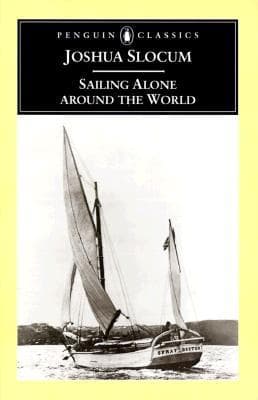
Sailing Alone around the World cover
Archivist's Choice

Sailing Alone around the World

Joshua Slocum (1800)

Genre

Lifestyle / Biography / Memoir / History

Reading Time

270 min

Key Themes

See below

Track Your Reading

Sign in to track this book

On his thirty-six-foot sloop, Captain Slocum faces pirates, storms, and the vast, lonely sea to become the first person to sail around the world alone, a display of great courage and seamanship.

Core Idea

Joshua Slocum's "Sailing Alone Around the World" tells the story of his daring solo trip around the world on his self-rebuilt sloop, the Spray. The book shows the strength of the human spirit, explaining how deep resourcefulness, knowing one's boat and surroundings well, and strong will can overcome huge challenges. It suggests that true freedom and skill come not from avoiding danger, but from facing and adapting to nature's unpredictable forces with cleverness and self-reliance. The story also looks at what it is like to be alone at sea for a long time, showing both its comfort and its dangers. Slocum's journey highlights the lasting power of human connection, even when physically isolated. It celebrates the simple satisfaction of a life lived fully and adventurously, creating a legacy through the act of living and sharing an extraordinary tale.
Reading time
270 min
Difficulty
Easy
✓ Read this if...
You are fascinated by tales of extreme adventure, self-reliance, and historical maritime exploration, or you enjoy memoirs that blend practical skills with philosophical reflections on solitude and freedom.
✗ Skip this if...
You prefer fast-paced thrillers, dislike detailed descriptions of sailing and ship maintenance, or are looking for deep psychological introspection rather than an adventure narrative.

Core idea

The central argument and framework that powers the entire book.

Joshua Slocum's "Sailing Alone Around the World" tells the story of his daring solo trip around the world on his self-rebuilt sloop, the Spray. The book shows the strength of the human spirit, explaining how deep resourcefulness, knowing one's boat and surroundings well, and strong will can overcome huge challenges. It suggests that true freedom and skill come not from avoiding danger, but from facing and adapting to nature's unpredictable forces with cleverness and self-reliance.

The story also looks at what it is like to be alone at sea for a long time, showing both its comfort and its dangers. Slocum's journey highlights the lasting power of human connection, even when physically isolated. It celebrates the simple satisfaction of a life lived fully and adventurously, creating a legacy through the act of living and sharing an extraordinary tale.

At a glance

Reading time

270 min

Difficulty

Easy

Read this if...

You are fascinated by tales of extreme adventure, self-reliance, and historical maritime exploration, or you enjoy memoirs that blend practical skills with philosophical reflections on solitude and freedom.

Skip this if...

You prefer fast-paced thrillers, dislike detailed descriptions of sailing and ship maintenance, or are looking for deep psychological introspection rather than an adventure narrative.

Key Takeaways

1

The Audacity of Solo Endeavor

True pioneering spirit lies in tackling the seemingly impossible alone.

Quote

To the landsman, a ship is a ship, but to the sailor, she is a living thing, and the Spray was more alive to me than any ship I had ever sailed.

Slocum's trip was not just about sailing; it was about human ability and taking on a never-before-done challenge. When most long voyages were done with crews, his choice to sail around the world alone was incredibly bold. This was not just a physical feat but a mental one, requiring huge self-reliance, problem-solving under extreme pressure, and strong trust in his own judgment. His journey changed what people thought was possible for a lone sailor, inspiring many adventurers who came after him.

Supporting evidence

Slocum's entire premise: setting off from Boston in April 1895 aboard the 36-foot sloop Spray, without a crew, to circumnavigate the world, a feat never before accomplished by a single individual.

Apply this

Identify a personal 'impossible' challenge that relies solely on your own skills and determination. Break it down into manageable steps and commit to the journey, understanding that the greatest rewards often come from solo endeavors.

solo-endeavorself-reliancepioneering-spirit
2

Mastery Through Intimate Connection

Deep understanding of one's tools leads to unparalleled control and resilience.

Quote

The Spray was a good boat, and I had a good boatman. She was built for the sea, and I was built for her.

Slocum's success came from his deep understanding and close relationship with his boat, the Spray. He did not just sail the boat; he knew every part of it, every rope, every detail of how it behaved in different seas. This deep knowledge, gained from years of building and sailing, let him foresee problems, make exact changes, and push the Spray to its limits with confidence. This deep skill is not just technical; it is a kind of intuitive intelligence built through constant involvement and respect for one's craft, making the boat an e...

Supporting evidence

Slocum's detailed descriptions of rebuilding the Spray from an abandoned hull, understanding her unique sailing characteristics, and his ability to navigate treacherous waters and storms by 'feeling' the boat.

Apply this

Cultivate a deep, almost intuitive understanding of your primary tools or craft, whether it's a software program, a musical instrument, or a specific skill set. Spend time beyond just functional use to truly understand its capabilities and limitations, allowing for more creative and resilient problem-solving.

craftsmanshipintuitive-masteryvessel-relationship
3

Resourcefulness as the Ultimate Navigator

Adaptability and ingenuity are more vital than advanced technology in extreme situations.

Quote

I had no chronometer, having been robbed of the one I had, but I did not miss it, for I had a good clock within me.

Before modern navigation tools, Slocum's journey shows that resourcefulness is the most important skill. He faced challenges—pirates, storms, broken equipment, lack of supplies—with a constant ability to improvise and adapt. Whether it was using tacks to keep pirates away, catching flying fish for food, or navigating by dead reckoning and stars without a chronometer, Slocum always found solutions with what he had. This is not just about making do; it is about seeing possibilities where others see limits, turning problems into chances ...

Supporting evidence

His ingenious method of spreading tacks on the deck to deter pirates off Gibraltar, navigating without a chronometer by 'lunar observation' and dead reckoning, and his self-sufficiency in repairing the Spray throughout the voyage.

Apply this

When faced with a challenge, resist the immediate urge for external solutions. Instead, first assess your existing resources and skills. Practice 'making do' with what's at hand, fostering a mindset of creative problem-solving and self-reliance.

ingenuityadaptationproblem-solving
4

The Solace and Peril of Solitude

Isolation brings both profound peace and intense psychological trials.

Quote

I had my coffee and salmon for breakfast, and was content. What more could I ask for?

Slocum's solo trip gives a unique look at the good and bad sides of being alone. On one hand, he describes moments of deep peace, self-sufficiency, and an almost spiritual connection with the sea and sky, finding happiness in simple routines. On the other hand, the sheer isolation must have caused huge mental pressure, requiring great mental strength to fight loneliness, fear, and the burden of sole responsibility. His 'conversations' with figures like the pilot of the Pinta during hallucinations show how the mind copes in extreme iso...

Supporting evidence

Slocum's recounted hallucinations and conversations with the pilot of Columbus's Pinta during a period of illness and isolation, contrasting with his frequent expressions of contentment and self-sufficiency.

Apply this

Embrace periods of intentional solitude to reconnect with yourself and find inner peace, but also develop coping strategies for potential feelings of isolation, such as maintaining a journal or engaging in creative pursuits that provide mental stimulation.

solitudemental-fortitudeself-reflection
5

Embracing the Unpredictable

True adventure requires a willingness to surrender to the unknown and adapt to constant change.

Quote

The sea is a fickle mistress, but a true one if you treat her right.

Slocum's journey is a lesson in facing and adapting to the completely unpredictable nature of the world. From fierce storms and dangerous coral reefs to unexpected meetings with indigenous people and even pirates, his story is a continuous series of unforeseen challenges. He did not just survive these; he accepted the changing reality of his situation, constantly adjusting his plans, route, and mindset. This willingness to go with the unknown, rather than fight it, is vital for any long-term effort where control is an illusion. It tea...

Supporting evidence

His encounters with 'savage Indians' in Tierra del Fuego, pirates off Gibraltar (and his unique deterrent), and numerous storms and calms that forced him to alter course and strategy.

Apply this

Develop a flexible mindset in your own projects or life goals. Instead of rigid plans, create adaptable frameworks that allow for unexpected deviations. View unforeseen obstacles not as failures, but as integral parts of the journey that require creative adjustment.

adaptabilityunpredictabilityresilience
6

The Human Connection Amidst Isolation

Even in extreme solitude, moments of unexpected camaraderie provide vital sustenance.

Quote

I was never lonely, for I had the sea, the sky, and the stars for company, and now and then a ship came along to speak to.

Despite the book's title, Slocum's journey was not entirely without human contact. His story includes surprising and often funny meetings with many different people: fishermen, islanders, missionaries, government officials, and even fellow explorer Henry Stanley. These brief connections, whether for trade, help, or simple conversation, show the basic human need for connection, even for the most self-sufficient person. These interactions gave Slocum practical aid, information, and perhaps most importantly, a temporary break from deep s...

Supporting evidence

His humorous visit with Henry Stanley in South Africa, his interactions with islanders for supplies and information, and the hospitality he received in various ports.

Apply this

Even when pursuing solitary goals, recognize the value of brief, meaningful interactions with others. Actively seek out opportunities for connection, as these moments can provide unexpected support, perspective, and renewed motivation.

human-connectioncamaraderiesocial-interaction
7

The Simplicity of True Freedom

Liberation often comes from shedding material burdens and embracing a minimalist existence.

Quote

I had no fear, for I had nothing to lose.

Slocum's voyage shows a deep sense of freedom that comes from radical simplicity. He sailed with minimal supplies and equipment, relying on his skills and the help of nature and occasional human contact. This simple approach was not just practical for a solo sailor; it was a philosophy. By getting rid of the complexities and material needs of life on land, he achieved a pure form of independence. His story suggests that true freedom is not about having a lot, but about not having unnecessary burdens, allowing one to live entirely on o...

Supporting evidence

The small size of the Spray (36 feet), his reliance on fishing and local provisions, and his general lack of concern for material possessions beyond what was essential for survival and navigation.

Apply this

Evaluate areas in your life where material possessions or unnecessary complexities create burdens. Experiment with decluttering and simplifying, observing how a more minimalist approach can foster a greater sense of freedom and control.

minimalismautonomysimplicity
8

The Enduring Power of Narrative

Sharing one's extraordinary journey transforms personal experience into timeless inspiration.

Quote

I had made up my mind to sail around the world, and I had done it.

Beyond the amazing feat itself, Slocum's choice to carefully write down and then publish his adventures ensures his legacy. 'Sailing Alone Around the World' is not just a logbook; it is a captivating story full of wit, observations, and vivid descriptions. His storytelling turns a personal victory into a universal tale of courage, resilience, and the human spirit's ability to explore. The book's lasting popularity, a century later, proves that sharing one's journey, with all its challenges and triumphs, can inspire generations and mak...

Supporting evidence

The very existence and continued popularity of 'Sailing Alone Around the World' as a classic of adventure literature, inspiring countless sailors and adventurers.

Apply this

Document your own significant projects or life experiences, not just for personal reflection, but with an eye towards sharing. Consider how your unique journey, even if seemingly small, could offer insights or inspiration to others.

storytellinglegacyinspiration

Critical analysis

Notable Quotes

I had made up my mind to go; I had to go.

Slocum's determination to embark on his solo circumnavigation.

To stand at the helm of a vessel when the sea is in an uproar, and know that you are master of the situation, is a sensation to thrill the heart of a man.

Reflecting on the exhilaration of controlling his ship, the 'Spray,' amidst a storm.

The sea, to be sure, is a hard master, but a just one.

Commenting on the challenges and fairness of the ocean as a force of nature.

I did not then know that I was to sail around the world; I had not given it a thought, but I was living the life that leads to it.

Looking back on his early life and experiences that unknowingly prepared him for his epic voyage.

A man's best friend is his boat.

Expressing his deep bond and reliance on the 'Spray' during his solitary journey.

I had a good mind to stay there, but the world was still before me.

Feeling the allure of a peaceful stopping point but knowing his journey had to continue.

The wind was fair, and I felt as if I had the world by the tail.

Experiencing a moment of perfect sailing conditions and feeling invincible.

It was impossible to be lonely under such conditions, with the whole world to talk to, as it were.

Describing his feelings of connection to the vast ocean and nature, despite being alone.

I had no doubt of my ability to accomplish the voyage.

His unwavering confidence in his skills and the 'Spray' at the outset of his journey.

The adventures of one day were enough for a lifetime.

Reflecting on a particularly eventful or challenging day at sea.

I felt no pain, only a feeling of being very tired, and a great desire to sleep.

Describing his physical state after a prolonged period of intense effort and lack of rest.

There are no short cuts to any place worth going.

A general reflection on the nature of significant achievements and the effort required.

The 'Spray' was a vessel of character, and she had a soul.

His anthropomorphic view of his beloved boat, seeing it as a living entity.

It is not the ship so much as the skillful handling of her that makes the voyage.

Emphasizing the importance of seamanship and human skill over the vessel itself.

I was monarch of all I surveyed, and my right there was none to dispute.

Feeling absolute freedom and control while alone at sea.

Quiz

Test Your Knowledge

Ready to see how well you understood this book? Take our interactive quiz with 10 questions.

10
Questions
~5
Minutes
?
Best Score

Key Questions (FAQ)

'Sailing Alone around the World' is Joshua Slocum's autobiographical account of his pioneering solo circumnavigation of the globe aboard his sloop, the Spray, from 1895 to 1898. It chronicles his adventures, challenges, and observations during this historic voyage.

About the author