“The cheapest way to travel, and the quickest way to get rich, is to stay at home.”
— Twain reflecting on the allure and ultimate cost of his western adventure.

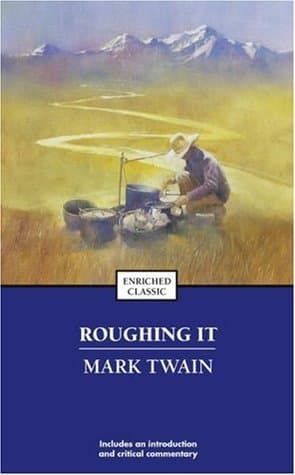
Mark Twain (1872)
Genre
Lifestyle / Historical Fiction
Reading Time
18.5 hours
Key Themes
See below
Sign in to track this book
Young Mark Twain humorously navigates the American West, finding rich experiences (if not always gold) that shape his literary voice.
In 1861, young Samuel Clemens, later known as Mark Twain, decides to go with his older brother, Orion Clemens, to the Nevada Territory. Orion is appointed Secretary of Nevada Territory by President Lincoln, and Samuel, seeking adventure and to avoid the coming Civil War, gets a job as his brother's assistant for a small salary. They leave St. Louis, Missouri, by overland stagecoach, a journey through vast, wild lands. Twain describes the cramped conditions, the many different passengers, and the basic stage stations, often exaggerating for humor. He details his initial inexperience with Western life, from his naive understanding of distances to his wonder at the natural beauty of the prairies and mountains. This first part of the journey sets the book's tone, mixing factual observation with Twain's humor and self-deprecating style as he leaves civilization for the unknown.
When they arrive in Carson City, Nevada Territory, Twain and Orion find a rough, noisy settlement full of prospectors, gamblers, and people drawn by the silver boom. Twain quickly grows bored with his secretarial duties, finding them dull. He is much more interested in the stories of quick riches from silver strikes. The widespread 'fever' of mining takes hold of him, and he begins to dream of getting rich himself. He observes the rough politics and social life of the new territory, often with a critical but humorous eye. This period marks Twain's entry into the unique culture of the American West, where fortunes could be made or lost instantly, and where social rules were still changing. This sets the stage for his own unsuccessful mining attempts.
Driven by the promise of great wealth, Twain leaves his secretarial job and, with several friends, starts a series of silver prospecting ventures. He tells about his experiences in various mining camps, including Aurora and Esmeralda. These chapters are full of funny stories about the difficulties of prospecting: hard labor, primitive living conditions, the constant hope of a 'strike,' and the unavoidable disappointments. He details the often-absurd plans and exaggerated claims common in the mining world. Despite his lack of success, Twain gains a deep respect for the miners' resilience and optimism. He learns about 'claim jumping,' mining law, and the sheer unpredictability of finding a valuable lode, all while keeping his blend of humor and sharp observation of human nature under pressure.
One of Twain's most memorable and frustrating mining experiences involves a 'blind lead'—a rich silver vein found on a claim that was technically expired or wrongly filed. He and his partners discover a promising lode, and for a short time, they believe they are millionaires. Twain vividly describes their joy and the elaborate plans they make for their new wealth. However, their dreams are shattered when a rival group, aware of a legal loophole or an error in their claim's paperwork, manages to take their claim. Twain tells of the bitter disappointment and the important lesson learned about how random fortune can be and the cutthroat nature of frontier law. This incident becomes a turning point, solidifying his understanding that success in the West often depended as much on luck and legal cleverness as on hard work.
After his mining failures, Twain is nearly broke. By luck and connections, he gets a job as a reporter for the 'Territorial Enterprise' newspaper in Virginia City, Nevada. This marks a shift in his career and the development of his writing style. He describes the busy, often chaotic atmosphere of the newspaper office and the challenges of reporting in a frontier town. During this time, he first uses the pen name 'Mark Twain.' He recounts his early journalistic exploits, including fabricating stories, engaging in rivalries, and developing his distinct satirical humor and descriptive writing. This role not only gives him a steady income but also sharpens his observational skills and provides a platform to comment on the colorful characters and events of the booming silver city.
As a reporter for the 'Territorial Enterprise,' Mark Twain's reputation grows, not just for his factual reporting, but for his humorous sketches and satirical pieces. He becomes known for his sharp wit and willingness to challenge local figures, often leading to amusing or tense conflicts. One notable event he recounts is a near-duel with a rival editor, James Laird, which he avoids by leaving town. This incident shows the volatile nature of frontier journalism and the personal risks of expressing strong opinions. Twain's experiences as a journalist allow him to document the oddities and lawlessness of Virginia City, from its showy politicians to its rowdy saloons, all while refining the narrative style that would make him famous. He becomes deeply involved in the social fabric, gathering material for much of his later work.
After the near-duel and a growing restlessness, Mark Twain decides to leave Virginia City and go to San Francisco, California. He describes his journey and the difference between the rough Nevada frontier and the more established, though still wild, atmosphere of California. In San Francisco, he continues his work as a journalist, writing for local newspapers, but sometimes struggles financially. He tells of his experiences with the city's diverse population, its unique social customs, and the lingering effects of the California Gold Rush. This move marks another stage in his personal and professional development, as he seeks to broaden his experiences beyond mining camps and embrace California's more sophisticated, yet still vibrant, culture. He continues to observe and record, gathering more stories and experiences.
It is during his time in California that Mark Twain first gains national literary fame with 'The Celebrated Jumping Frog of Calaveras County.' He describes the story's unexpected success and the opportunities it creates. Soon after, the 'Sacramento Union' newspaper commissions him to travel to the Sandwich Islands (modern-day Hawaii) as a correspondent. His chapters detailing his time in Hawaii are full of charming descriptions of the islands' natural beauty, the customs of the native Hawaiians, and the impact of Western influence. He observes the whaling industry, visits volcanoes, and offers reflections on cultural differences and the idea of 'civilization.' This journey further broadens his perspective, providing him with unique material and solidifying his reputation as a unique American voice.
After returning from Hawaii, Mark Twain begins a successful career as a public lecturer, sharing his humorous observations and stories from his travels in the West and the Sandwich Islands. He describes the challenges and successes of public speaking, detailing his efforts to improve his delivery and engage audiences. These lectures become very popular, allowing him to connect directly with the public and further establish himself as a witty and engaging storyteller. The demand for his lectures eventually leads him to return East, where he finds himself a celebrated figure. This period marks the culmination of his 'roughing it' experiences, as he turns his raw adventures into polished entertainment and literature, bridging his wild frontier days with his future as a renowned author.
In the final parts of 'Roughing It,' Mark Twain reflects on the deep impact his six years in the American West had on his character and outlook. He compares his naive, inexperienced self at the start of the journey with the more seasoned, cynical, yet ultimately more appreciative person he became. He thinks about the rapid changes in the West, regretting the loss of its wild spirit as civilization grows. Twain shares his final thoughts on the unique people he met—miners, stagecoach drivers, desperadoes, and pioneers—and the lasting impression they left on him. The book ends with a sense of nostalgia for a past era and a deep understanding of the forces that shaped a significant period of American history, all seen through his blend of humor, irony, and genuine affection.
The Protagonist
He transforms from a greenhorn Easterner into a seasoned Westerner, a failed prospector, and ultimately a celebrated journalist and lecturer, finding his unique literary voice along the way.
The Supporting
He remains largely consistent in his role as a government official, while Twain's character undergoes significant transformation.
The Supporting
Bem's story remains largely static, serving as a representation of the average prospector's fate.
The Supporting
Higbie's arc mirrors the common trajectory of many miners – a cycle of hope, hard work, and eventual disappointment.
The Mentioned
Slade serves as an example of frontier justice and violence, his character remaining a static representation of lawlessness.
The Supporting
His character is static, serving primarily as an example of a specific storytelling tradition.
The Mentioned
Its 'arc' is its journey from a local anecdote to a nationally published sensation, signifying Twain's literary breakthrough.
The Supporting
Mr. Brown's character remains consistent, serving as a comedic representation of a difficult traveling companion.
The pursuit of wealth, especially through silver and gold mining, is a main theme. Twain shows the 'fever' that grips prospectors, causing them to endure great hardship and hold onto unlikely dreams of getting rich. He details the joy of near-successes, like the 'blind lead' incident where he and Higbie believe they are millionaires, only to have their dreams crushed by legal technicalities. This theme explores the psychological impact of mining's lottery-like nature, where immense wealth is always just out of reach, often leading to disappointment and moral compromises. It highlights how the promise of quick riches shaped the fast, often chaotic, development of the West.
“We were in a beautiful country, and the air was pure and bracing; but a man would find more fault with them than he would with the climate of any other country under the sun, if that country was going to make him rich.”
Twain's personal journey from a naive Easterner to a seasoned Westerner, and eventually a famous writer, is central. He often contrasts his initial ignorance with his acquired knowledge of frontier life, detailing his learning curve in everything from riding a mule to understanding mining claims. The hardships and adventures he faces, from failed prospecting to near-duels, force him to adapt and grow. This theme is clear in his changing view of nature, society, and his own abilities. His transformation is not just about gaining experience but about forming a unique literary voice from these raw experiences, ending with his adoption of the 'Mark Twain' persona and his success as a lecturer and author.
“I was a young man, and I thought I knew a great deal. I was not alone in that error.”
Twain offers many descriptions of the wild landscapes and unique culture of the American West. He captures both the raw beauty of the prairies, mountains, and deserts, and the harsh realities of frontier life. The West is presented as a place of great opportunity but also danger, where lawlessness often rules, and nature is a powerful force. His observations of stagecoach travel, mining camps, and busy frontier towns like Carson City and Virginia City paint a clear picture of a society in transition, where old norms are challenged by new realities. This theme celebrates the rugged individualism and pioneering spirit while also acknowledging the brutality and rapid changes in the region.
“It was a wild, free, fantastic, tumultuous life, and I loved it.”
Throughout the story, Twain emphasizes storytelling as both entertainment and a way to understand the world. He uses humor, exaggeration, and satire to recount his adventures, often making light of his own troubles and the quirks of others. The book itself shows the power of narrative, as Twain turns his raw experiences into compelling tales. This theme is especially clear in his observations of frontier storytellers, like Jim Blaine, and his own development as a journalist and lecturer. His ability to create engaging, often hilarious, stories is what ultimately brings him fame and defines his literary legacy.
“A good story is a good story, and a bad one is a bad one, and there is no use in trying to make it anything else.”
Twain repeatedly highlights the sharp differences between the established East and the wild, developing West. His journey begins with a departure from the 'civilized' comforts of St. Louis into the 'untamed' wilderness. He often compares the legal systems, social customs, and even the pace of life in the two regions. The West is shown as a place where rules are flexible, self-reliance is key, and a rough form of justice often prevails. As the story progresses, he also observes civilization's impact on the wilderness, noting the changes brought by settlement and development. This theme explores the tension between progress and preservation, and the evolving identity of a nation dealing with its own expansion.
“In the East, we call that a lie; in the West, it is simply a 'stretch.'”
Twain uses humor and hyperbole to critique and entertain.
Twain's signature use of satire and exaggeration is a primary plot device, serving both to entertain and to subtly critique the people, customs, and institutions of the American West. He frequently magnifies events, characters' traits, and his own reactions for comedic effect, often to the point of absurdity. For example, his descriptions of the stagecoach journey, the hardships of mining, or the near-duel are all imbued with hyperbole. This device allows him to poke fun at human folly, the superficiality of boomtown culture, and even his own youthful naiveté, while still conveying underlying truths about the frontier experience. It shapes the reader's perception of events and contributes to the book's enduring appeal.
The story is told directly through Mark Twain's personal experiences and observations.
The entire book is narrated in the first person by Mark Twain (Samuel Clemens), making his personal experiences, thoughts, and evolving perspective central to the narrative. This device creates an intimate and immediate connection with the reader, as events are filtered through Twain's unique voice and personality. It allows for subjective commentary, self-deprecating humor, and direct addresses to the reader, enhancing the feeling of a personal memoir. The first-person perspective also underscores the theme of personal transformation, as the reader witnesses Twain's growth from a naive greenhorn to a seasoned Westerner and accomplished writer, all through his own eyes.
The narrative is composed of loosely connected, often digressive, individual stories and observations.
Rather than a tightly structured plot with a singular overarching conflict, 'Roughing It' employs an anecdotal structure. The book is a collection of individual stories, humorous sketches, and observations from Twain's various adventures in the West and Hawaii. While there's a general chronological progression, many chapters function as self-contained vignettes that could stand alone. This device mimics the oral storytelling traditions of the frontier, where narratives were often rambling and filled with digressions. It allows Twain to explore a wide range of topics, introduce numerous characters, and maintain a flexible, conversational tone, reflecting the unpredictable and varied nature of his experiences.
Characters whose contrasting traits highlight aspects of the protagonist or themes.
Twain uses several foil characters to emphasize his own traits or to highlight certain themes. His brother Orion, for instance, with his earnestness and adherence to official duties, serves as a foil to Twain's more adventurous, unconventional, and often rebellious spirit. Other characters, like the perpetually complaining Mr. Brown on the stagecoach, highlight the diversity of human nature under duress and provide comedic contrast to Twain's own reactions. These foils help to accentuate Twain's personal growth and perspective, allowing him to comment on different approaches to frontier life and the various responses to its challenges.
“The cheapest way to travel, and the quickest way to get rich, is to stay at home.”
— Twain reflecting on the allure and ultimate cost of his western adventure.
“In the Carson City foot-hills, from the tops of the highest peaks, one can see a sea of mountains.”
— Describing the vast and rugged landscape of Nevada.
“We were in as good spirits as if we had been born to the business of 'roughing it.'”
— Early in their journey, the protagonists embrace the challenges of frontier life.
“A mine is a hole in the ground owned by a liar.”
— Twain's cynical take on the often fraudulent nature of mining claims.
“The noblest and best of all the creatures of God is a good woman.”
— A rare moment of sincere sentiment amidst Twain's usual humor and cynicism.
“There are many humorous things in the world; among them, the white man's notion that he is less savage than the other savages.”
— Twain's satirical observation on racial prejudice and hypocrisy.
“I had a consuming desire to be rich, and a still more consuming desire to remain honest.”
— Reflecting on the moral dilemmas faced during the Nevada silver rush.
“A pioneer is a man who has to get out and rustle for his living, and is generally in a hurry.”
— Defining the energetic and often frantic lifestyle of a frontier settler.
“We had a good deal of company on the trip, and it was a mixed company.”
— Describing the diverse group of travelers encountered on the stagecoach.
“The trees were not like other trees, but were more like a forest of giant cauliflowers.”
— A humorous and imaginative description of the unique appearance of sagebrush.
“When you have a thing to say, say it; don't make a five-act play of it.”
— Twain's advice on conciseness in communication, often illustrated by his own verbose style.
“It was a wild, free, fantastic, wonderful life.”
— A nostalgic summary of his experiences in the American West.
“I don't mind a reasonable amount of lying, but I do object to the kind of lying that is done without any purpose.”
— Twain's humorous and cynical take on the prevalence and utility of falsehoods.
“The 'Alkali Desert' is a place where there is no water, and what there is is alkali.”
— A concise and witty description of the harsh conditions of the desert.
Ready to see how well you understood this book? Take our interactive quiz with 10 questions.
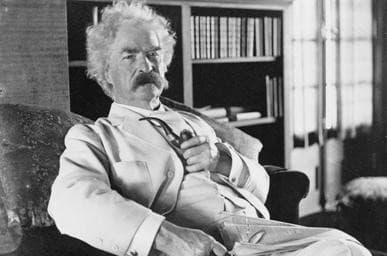
Samuel Langhorne Clemens, best known by his pen name Mark Twain, was an American writer, humorist, entrepreneur, publisher, and lecturer. He was praised as the "greatest humorist the United States has produced", and William Faulkner called him "the father of American literature". His novels include The Adventures of Tom Sawyer (1876) and its sequel, Adventures of Huckleberry Finn (1884), the latter of which has often been called the "Great American Novel". Twain also wrote A Connecticut Yankee in King Arthur's Court (1889) and Pudd'nhead Wilson (1894), and co-wrote The Gilded Age: A Tale of Today (1873) with Charles Dudley Warner.