BookBrief
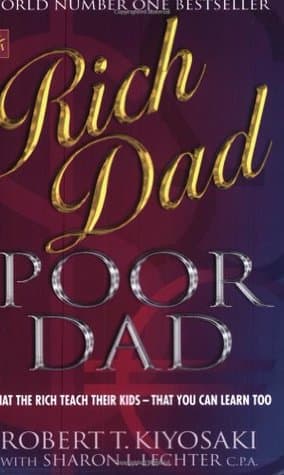
Rich Dad, Poor Dad cover
Archivist's Choice

Rich Dad, Poor Dad

Robert T. Kiyosaki (1990)

Genre

Business / Entrepreneurship / Economics / Finance / Self-Help

Reading Time

180 min

Key Themes

See below

Track Your Reading

Sign in to track this book

Robert Kiyosaki explains that financial literacy, owning assets instead of liabilities, and making money work for you are the real ways to build wealth, lessons he learned from his biological 'poor dad' and his best friend's entrepreneurial 'rich dad.'

Core Idea

Robert Kiyosaki questions common ideas about money, work, and education by comparing the financial views of his 'rich dad' (his friend's father, who owned businesses) and his 'poor dad' (his biological father, who was well-educated). The book suggests that traditional schooling prepares people to be employees, not business owners or investors, which keeps them working solely for a paycheck. Kiyosaki promotes financial understanding, knowing the difference between assets (things that bring in money) and liabilities (things that cost money), and buying assets that generate income, like real estate and businesses. He says that real wealth comes from having money make money for you, not from working for money. Overcoming fear and taking calculated risks are important for financial freedom.
Reading time
180 min
Difficulty
Easy
✓ Read this if...
You are questioning traditional career paths, want to understand basic financial concepts from an entrepreneurial perspective, or are looking for motivation to start investing and building assets.
✗ Skip this if...
You prefer academic or evidence-based economic analysis, are looking for detailed investment strategies, or disagree with a strong emphasis on real estate and business ownership over traditional employment.

Core idea

The central argument and framework that powers the entire book.

Robert Kiyosaki questions common ideas about money, work, and education by comparing the financial views of his 'rich dad' (his friend's father, who owned businesses) and his 'poor dad' (his biological father, who was well-educated). The book suggests that traditional schooling prepares people to be employees, not business owners or investors, which keeps them working solely for a paycheck. Kiyosaki promotes financial understanding, knowing the difference between assets (things that bring in money) and liabilities (things that cost money), and buying assets that generate income, like real estate and businesses. He says that real wealth comes from having money make money for you, not from working for money. Overcoming fear and taking calculated risks are important for financial freedom.

At a glance

Reading time

180 min

Difficulty

Easy

Read this if...

You are questioning traditional career paths, want to understand basic financial concepts from an entrepreneurial perspective, or are looking for motivation to start investing and building assets.

Skip this if...

You prefer academic or evidence-based economic analysis, are looking for detailed investment strategies, or disagree with a strong emphasis on real estate and business ownership over traditional employment.

Key Takeaways

1

Assets vs. Liabilities: The Real Score

Understand the fundamental difference to build wealth, not debt.

Quote

An asset is something that puts money in my pocket. A liability is something that takes money out of my pocket.

Kiyosaki says many people mistakenly think their home is an asset. While a home's value can go up, a main residence often acts as a liability because of mortgage payments, property taxes, insurance, and upkeep costs, all of which take money from you. Real assets, by his definition, are things like income-generating real estate, stocks, bonds, intellectual property, or businesses that bring in cash. Understanding this difference is important. The 'poor dad' mindset often means buying liabilities (expensive cars, large houses) that peop...

Supporting evidence

Kiyosaki contrasts his 'poor dad's' advice (get a good job, save money, buy a house) with his 'rich dad's' (acquire assets). He uses the example of a house, explaining that while it might appreciate, its ongoing expenses make it a liability in terms of cash flow, whereas a rental property is an asset because it generates income.

Apply this

Analyze your current possessions. For each, ask: 'Does this put money in my pocket or take money out?' Begin to shift your focus from acquiring consumer goods (liabilities) to acquiring income-generating assets. Prioritize investing in things that generate cash flow before indulging in lifestyle upgrades.
financial-literacycash-flowinvestment-strategy
2

Mind Your Own Business (Literally)

Focus on building an asset column, not just climbing the corporate ladder.

Quote

The rich focus on their asset columns while everyone else focuses on their income statements.

Kiyosaki stresses that even with a good job, you should 'mind your own business' – meaning, build your own assets separate from your employment. Your job provides income, but it does not necessarily build wealth unless you regularly invest that income into assets. Many people confuse their job with their business; a doctor's job is medicine, but their business, according to Kiyosaki, should be investing in real estate or stocks. This difference encourages people to control their financial future by actively buying assets that make mon...

Supporting evidence

Kiyosaki's 'rich dad' advises him to get a job to learn skills but simultaneously build his own asset column. He gives the example of Ray Kroc of McDonald's, who wasn't just in the burger business, but primarily in the real estate business, owning the land under the franchises.

Apply this

Even while employed, dedicate a portion of your income and time to acquiring or developing assets that generate passive income. This could be investing in stocks, rental properties, or starting a side business that can eventually become an asset. Don't let your job be your only source of financial security.

passive-incomeentrepreneurshipwealth-building
3

The Power of Financial Education

Formal education teaches you to work for money; financial education teaches you to have money work for you.

Quote

The single most powerful asset we all have is our mind. If it is trained well, it can create enormous wealth in a split second.

Kiyosaki believes that traditional schooling prepares students for the 'rat race' by teaching them to be good employees, not financially independent people. He says schools focus on academic and job skills but do not teach financial literacy, leaving graduates unprepared to manage or grow their money. His 'rich dad' always emphasized the importance of understanding accounting, investing, markets, and the law. This is not about getting another degree, but about actively seeking knowledge on how money works, how to make it work for you,...

Supporting evidence

Kiyosaki contrasts his 'poor dad's' academic achievements (PhD) with his 'rich dad's' lack of formal education but profound financial wisdom. His rich dad constantly encouraged him to read, attend seminars, and learn about business and investing, rather than just focusing on good grades in school.

Apply this

Commit to continuous financial education. Read books on investing, real estate, and business. Attend workshops, follow financial news, and seek out mentors who are financially successful. Understand basic accounting, how taxes work, and the principles of supply and demand.

financial-literacyself-educationinvestment-knowledge
4

Don't Work for Money; Have Money Work for You

Escape the 'rat race' by building systems that generate income independently.

Quote

The rich don't work for money. They make money work for them.

This is a main idea of the book. Kiyosaki shows how most people are stuck in the 'rat race' – working hard for a paycheck, only to spend it on expenses and liabilities, leaving little to invest. The 'rich dad' philosophy is to buy or create assets that generate income without needing constant active work. This means building businesses, investing in real estate that brings in cash, or owning intellectual property. The goal is financial freedom where your passive income covers your living expenses, so you do not have to work for a sala...

Supporting evidence

Kiyosaki's experience working for his 'rich dad' for a mere 10 cents an hour, and later for free, was designed to teach him this lesson. He learned to identify opportunities to make money work for him, rather than just being paid a wage. The 'poor dad' constantly worked for more money, while the 'rich dad' focused on building systems.

Apply this

Actively seek opportunities to create passive income streams. This could involve investing in dividend stocks, purchasing a rental property, or developing a product or service that can be scaled. The goal is to build a portfolio of assets that generate income even when you're not actively working.

passive-incomefinancial-freedomrat-race
5

The Fear of Losing: A Roadblock to Riches

Embrace risk and learn from failures, as fear paralyzes potential wealth creators.

Quote

The primary difference between a rich person and a poor person is how they manage fear.

Kiyosaki says that the fear of losing money, being criticized, or making mistakes stops many people from financial success. His 'poor dad' avoided risk, preferring security and stability, while his 'rich dad' saw failure as a way to learn and a normal part of becoming wealthy. He encourages readers to get past this fear, understanding that all successful investors or business owners have faced problems. The goal is not to avoid risk completely, but to manage it, learn from it, and be brave enough to act despite uncertainty. This chang...

Supporting evidence

Kiyosaki recounts how his 'rich dad' constantly pushed him to take calculated risks and not be afraid of failure, using real-world investment scenarios. His 'poor dad' always played it safe, fearing job loss or financial insecurity, which ultimately limited his financial growth.

Apply this

Identify your financial fears and challenge them. Start with small, calculated risks in investing or business. View setbacks as lessons, not failures. Develop a resilient mindset that allows you to learn from mistakes and continue moving forward, rather than being paralyzed by the possibility of loss.

risk-tolerancefailure-mindsetcourage
6

Taxes: The Biggest Expense

Understand the tax system to legally minimize your financial outflow.

Quote

It's not how much money you make, but how much money you keep.

Kiyosaki points out that taxes are often the biggest expense for most people, especially employees. He explains that rich people often pay taxes differently than poor and middle-class people because they understand corporations and investments. Employees earn, then pay taxes, then spend. Corporations earn, spend, then pay taxes on what is left. This basic difference allows wealthy people to use tax laws to their benefit, lowering their taxable income through deductions and write-offs. Financial education includes understanding tax rul...

Supporting evidence

Kiyosaki describes how his 'rich dad' taught him that corporations are designed to protect assets and minimize taxes. He contrasts this with his 'poor dad' who, as an employee, was subject to high income taxes with few deductions.

Apply this

Educate yourself on tax laws relevant to your income and investments. Consider consulting with a tax professional to understand how to legally minimize your tax burden. Explore the benefits of structuring your assets through entities like corporations or LLCs if applicable, and understand available deductions for investors and business owners.

tax-efficiencycorporate-structurefinancial-planning
7

The Power of Corporations and LLCs

Learn how the rich use legal entities for protection and tax advantages.

Quote

The rich know that corporations are not real. They are simply legal documents that create a legal body without a soul. But the rich use them to protect their assets.

Kiyosaki often discusses how wealthy people use corporations and Limited Liability Companies (LLCs) not just for business, but also for protecting assets and gaining tax benefits. These legal structures separate personal assets from business liabilities, protecting against lawsuits. They also allow expenses to be paid before taxes are calculated, which is a clear advantage over individuals who pay taxes on gross income. Understanding and using these entities is a key method used by the rich to grow and protect their wealth, instead of...

Supporting evidence

Kiyosaki's 'rich dad' explained how owning assets through a corporation provided both legal protection from creditors and allowed for expenses to be paid pre-tax, unlike an individual's salary.

Apply this

Research the benefits of forming an LLC or corporation for your investments or business ventures. Consult with legal and financial professionals to understand how these entities can offer asset protection and tax efficiencies for your specific situation. Don't be afraid to utilize these tools of the wealthy.

asset-protectionlegal-entitytax-advantage
8

The Importance of Networking and Mentors

Surround yourself with financially intelligent people to accelerate your learning.

Quote

The biggest reason people are not rich is because they have the wrong friends and the wrong advisors.

Kiyosaki emphasizes the importance of learning from others, especially from those who are already financially successful. His 'rich dad' was his main mentor, offering guidance and real-world lessons that his formal education lacked. The book suggests that your financial path is greatly affected by the advice and mindset of the people closest to you. Being around financially knowledgeable, entrepreneurial, and growth-focused people can provide valuable insights, opportunities, and accountability. Spending time with people who have a 'p...

Supporting evidence

The entire premise of the book revolves around the contrasting advice given by two different fathers, highlighting the profound impact of mentorship and influence. His 'rich dad' actively taught him lessons and principles, acting as a direct mentor.

Apply this

Actively seek out mentors in areas of finance and business you want to grow in. Attend industry events, join investment clubs, and network with successful individuals. Be selective about who you take financial advice from, prioritizing those who have achieved the results you aspire to.

mentorshipnetworkingfinancial-community
9

Overcome Excuses: Action Over Inaction

Don't let laziness, cynicism, or arrogance prevent you from taking action.

Quote

The world is full of people who are waiting for someone else to solve their problems.

Kiyosaki identifies several common reasons that stop people from becoming financially independent: laziness (putting things off), cynicism (finding fault without offering solutions), and arrogance (thinking one already knows everything). He says these mental blocks are more harmful than not having enough money or opportunities. The 'rich dad' philosophy emphasizes taking action, learning from mistakes, and having a humble, open mind about financial education. It is about personal responsibility and actively working on your financial f...

Supporting evidence

Kiyosaki recounts how his 'poor dad' would often say, 'I can't afford it,' while his 'rich dad' would ask, 'How can I afford it?' This subtle shift in language reflects a proactive mindset versus a defeatist one. He also describes people who are too lazy to learn or too cynical to believe in opportunities.

Apply this

Identify any excuses you're making regarding your financial situation. Replace 'I can't' with 'How can I?' Commit to taking consistent, small actions towards your financial goals, even when faced with uncertainty. Cultivate an attitude of continuous learning and humility, always being open to new information and strategies.

proactive-mindsetpersonal-responsibilityaction-bias
10

Invest in Real Estate: The Rich Dad's Playground

Leverage property for cash flow, appreciation, and tax benefits.

Quote

Real estate is a powerful tool for building wealth, but only if you understand the rules of the game.

While not only about real estate, Kiyosaki's 'rich dad' used real estate a lot to create wealth. He separates a personal home (often a liability) from investment properties (assets that generate cash flow). The rich dad knew how to use debt smartly, buy properties that produced rental income, and benefit from value increases and tax advantages. Real estate offers chances for both passive income and capital growth, making it a main part of the 'rich dad' plan for building assets. It is about understanding market conditions, financing, ...

Supporting evidence

Kiyosaki frequently uses examples of his 'rich dad' buying apartment buildings or commercial properties that generated rental income, emphasizing the cash flow aspect of real estate investing. He also highlights the ability to leverage loans to acquire these assets.

Apply this

Research real estate investing in your area. Start by understanding local market trends, rental yields, and financing options. Consider starting with smaller, cash-flowing properties like duplexes or even REITs (Real Estate Investment Trusts) if direct ownership is not feasible initially. Focus on properties that provide positive cash flow after all expenses.

real-estate-investingcash-flow-propertyleverage

Critical analysis

Notable Quotes

The single most powerful asset we all have is our mind. If it is trained well, it can create enormous wealth almost instantly.

Highlighting the importance of financial education and mental training over physical labor.

The rich don't work for money. They make money work for them.

A core principle differentiating the financial strategies of the rich from the poor and middle class.

An asset puts money in your pocket. A liability takes money out of your pocket.

Defining the fundamental difference between assets and liabilities, often misunderstood.

The poor and the middle class work for money. The rich have money work for them.

Further elaborating on the distinction between the rich and other classes regarding their relationship with money.

Most people fail to realize that in life, it's not how much money you make, it's how much money you keep.

Emphasizing the importance of financial management and retention over mere income generation.

Financial struggle is often the result of people working all their lives for someone else.

Criticizing the traditional employment model and advocating for entrepreneurship and asset ownership.

The main reason people have financial problems is that they have spent years in school but learned nothing about money.

Pointing out the deficiencies in traditional education concerning financial literacy.

Cash flow tells the story of how a person handles money.

Highlighting cash flow as a crucial indicator of financial health and management.

Many people are so afraid of losing that they choose to lose.

Discussing the fear of failure as a barrier to taking financial risks and pursuing opportunities.

The primary difference between a rich person and a poor person is how they manage fear.

Explaining that both rich and poor experience fear, but their responses to it differ.

Financial intelligence is simply having more options.

Defining financial intelligence not just as knowledge, but as the ability to see and create choices.

Your house is not an asset.

A controversial statement challenging the common belief that a primary residence is always an asset, often being a liability due to ongoing costs.

Financial aptitude is what you do with what you learn.

Emphasizing that knowledge alone is not enough; practical application of financial education is key.

The greatest secret of the rich is that they use debt to buy assets.

Revealing a strategy used by the rich to leverage debt for wealth creation, contrasting with common advice to avoid debt.

Quiz

Test Your Knowledge

Ready to see how well you understood this book? Take our interactive quiz with 10 questions.

10
Questions
~5
Minutes
?
Best Score

Key Questions (FAQ)

The core message of Rich Dad Poor Dad is to challenge conventional wisdom about money, emphasizing financial literacy, investing, and building assets over simply earning a high income. It highlights the importance of understanding the difference between assets and liabilities.

About the author