BookBrief
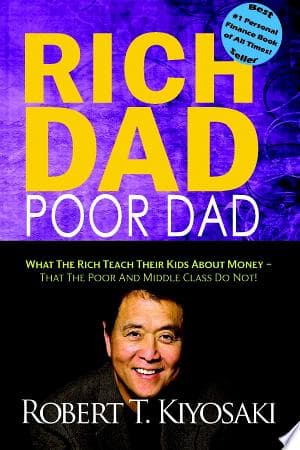
Rich Dad Poor Dad - What the Rich Teach Their Kids About Money cover
Archivist's Choice

Rich Dad Poor Dad - What the Rich Teach Their Kids About Money

Robert T. Kiyosaki (2021)

Genre

General

Reading Time

12 Minutes

Key Themes

See below

Track Your Reading

Sign in to track this book

Robert Kiyosaki compares the financial views of his educated but struggling father and his wealthy mentor to show how traditional education does not prepare people for financial independence.

Core Idea

"Rich Dad Poor Dad" challenges conventional wisdom about money, work, and education, advocating for financial literacy and entrepreneurship over traditional employment. Robert Kiyosaki contrasts the financial philosophies of his 'poor dad' (his highly educated but financially struggling biological father) and his 'rich dad' (his friend's father, a high school dropout who became a millionaire). The central argument is that the wealthy teach their children different lessons about money than the poor and middle class, primarily focusing on acquiring assets that generate income rather than relying solely on a paycheck.
Difficulty
Easy

Core idea

The central argument and framework that powers the entire book.

"Rich Dad Poor Dad" challenges conventional wisdom about money, work, and education, advocating for financial literacy and entrepreneurship over traditional employment. Robert Kiyosaki contrasts the financial philosophies of his 'poor dad' (his highly educated but financially struggling biological father) and his 'rich dad' (his friend's father, a high school dropout who became a millionaire). The central argument is that the wealthy teach their children different lessons about money than the poor and middle class, primarily focusing on acquiring assets that generate income rather than relying solely on a paycheck.

At a glance

Difficulty

Easy

Key Takeaways

1

The Asset vs. Liability Myth

Your house is not always an asset; understanding the true definitions is key to wealth.

Quote

An asset is something that puts money in your pocket. A liability is something that takes money out of your pocket.

This is the book's most basic and often debated idea, going against common beliefs. Kiyosaki says many things people see as assets, like their main home, are actually liabilities. This is because they create ongoing costs (mortgage, taxes, upkeep) without making money. He stresses that real assets, like rental properties, stocks, or businesses, put money in your pocket, while liabilities take it out. This idea makes readers rethink their personal finances and focus on buying assets that make passive income, not consumer items that red...

Supporting evidence

Kiyosaki repeatedly contrasts his 'poor dad's' belief that his house was his biggest asset with his 'rich dad's' view that it was a cash drain, illustrating the financial struggles of those who conflate the two.

Apply this

Analyze your current possessions. For each, ask: 'Does this put money in my pocket or take money out?' Prioritize investing in income-generating assets like dividend stocks, rental properties, or starting a side business, rather than accumulating liabilities.

2

Work for Learning, Not Just Money

Prioritize acquiring financial literacy and valuable skills over chasing high salaries.

Quote

The single most powerful asset we all have is our mind. If it is trained well, it can create enormous wealth almost instantly.

Kiyosaki believes people should look for jobs and experiences that teach useful skills in finance, sales, marketing, and communication, instead of just aiming for the highest salary. His 'rich dad' told him to work for free or low pay in roles that would build his financial knowledge and business sense. This view suggests a smart way to develop a career, seeing early jobs as training in the world of money. The 'poor dad's' advice to 'go to school, get good grades, and find a safe job' leads to the 'Rat Race,' while the 'rich dad' enco...

Supporting evidence

Kiyosaki's own experience working for Xerox, not for the sales commission, but to overcome his fear of rejection and learn sales techniques, is a prime example of this principle in action.

Apply this

When evaluating job opportunities or career paths, consider what skills you will acquire that contribute to financial independence, beyond just the salary. Actively seek out learning opportunities in sales, marketing, accounting, and investing.

3

Mind Your Own Business

While employed, build your own asset column outside of your primary job.

Quote

Many people go to work every day and mind other people's business. They mind the business of the owner of the company, the business of the government, and the business of the bank.

This idea does not suggest quitting your job right away. Instead, while employed, start building your own 'asset column'—investments, businesses, or intellectual property—that makes money separate from your salary. Kiyosaki criticizes the traditional employee mindset where all financial effort goes to someone else's business. He argues that true financial freedom comes from having your own income-producing assets. This is an important difference: your job provides money, but your own business (meaning building your personal assets) ...

Supporting evidence

The contrast between the 'poor dad' who only worked for the government and the 'rich dad' who continually acquired income-producing businesses and real estate highlights this principle.

Apply this

Even with a full-time job, dedicate time and a portion of your income to building your personal asset column. This could involve investing in stocks, starting a small online venture, or acquiring rental properties.

4

The Power of Corporations and Taxes

Understanding tax laws and corporate structures can significantly accelerate wealth building.

Quote

The rich know that corporations are designed to protect them. They also know that corporations are designed to make money.

Kiyosaki says the rich follow different financial rules, using corporate structures and tax laws to their benefit. He notes that employees earn, get taxed, then spend. Corporations, however, earn, spend (on deductible expenses), then get taxed on what is left. This basic difference allows the wealthy to legally reduce their tax burden and reinvest more of their earnings. This is one of the book's strongest points, showing a structural advantage often missed by those without financial education. However, setting up and managing corpora...

Supporting evidence

Kiyosaki details how his 'rich dad' used corporations to pay expenses before taxes, while his 'poor dad' paid taxes on his income before he could spend or save.

Apply this

Educate yourself on tax laws and consider how forming a legal entity (like an LLC) for your investments or side businesses could provide tax advantages and asset protection, always consulting with legal and financial professionals.

5

Overcome Fear and Self-Doubt

Emotional intelligence and risk-taking are crucial for financial success.

Quote

The primary cause of financial struggle is fear and ignorance, not the economy or the government or the rich. It's fear that paralyzes people.

Kiyosaki points out that emotional barriers like fear, cynicism, laziness, bad habits, and arrogance often hinder wealth more than external factors. He shows how the fear of losing money stops many from investing, while the 'rich dad' encourages learning to manage risk, not avoid it. This view highlights the psychological side of building wealth, suggesting that a successful financial journey requires mental strength and a willingness to step out of one's comfort zone. While the book focuses on practical financial ideas, this psycholo...

Supporting evidence

Kiyosaki recounts his own fears and how his 'rich dad' taught him to face them, transforming fear into a motivator to learn and take calculated risks.

Apply this

Identify your financial fears (e.g., fear of losing money, fear of failure). Instead of avoiding them, seek knowledge and take small, calculated steps to address them, like starting with small investments or educating yourself thoroughly before making a move.

6

The Importance of Financial Education

Traditional schooling fails to teach essential money skills; self-education is paramount.

Quote

Schools are designed to produce good employees, not good employers. They educate you to be a specialist, not a generalist.

A repeated point is that the traditional education system does not prepare people for financial success. Kiyosaki argues that schools teach people to be good employees (reading, writing, math for a job) but ignore important topics like how money works, investing, taxes, and business. This creates a workforce that can earn a paycheck but cannot manage and grow wealth. The book strongly supports ongoing self-education in financial matters, emphasizing that knowledge is the new money. This argument shows a big gap in societal education t...

Supporting evidence

The contrast between his 'poor dad's' academic success but financial struggles and his 'rich dad's' lack of formal education but profound financial wisdom is central to this point.

Apply this

Commit to ongoing financial education. Read books, attend seminars, listen to podcasts, and seek mentors who can teach you about investing, accounting, and market dynamics.

7

The Rich Don't Work for Money

They make money work for them through investing and business ownership.

Quote

The rich don't work for money. They have money work for them.

This main idea supports much of Kiyosaki's philosophy. It means moving from an 'employee mindset'—trading time for money—to an 'investor/owner mindset'—buying assets that make money on their own. The 'poor dad' worked harder for more money, often just moving into a higher tax bracket. The 'rich dad' focused on building systems and buying assets that made money even when he was not working. This idea is powerful but can be hard to apply for those starting with little money, as it needs initial savings and a willingness to learn about d...

Supporting evidence

The entire narrative of the book is built around the 'rich dad' teaching Kiyosaki and Mike to invest in businesses and real estate from a young age, rather than just earning a salary.

Apply this

Shift your focus from solely earning a paycheck to identifying and acquiring income-generating assets. Start by saving a portion of your income to invest in dividend stocks, REITs, or a small side business that can eventually generate passive income.

8

The Power of Networking and Mentorship

Surround yourself with financially intelligent people and learn from their experiences.

Quote

The rich get richer because they are connected to other rich people. They have a network of advisors and mentors who guide them.

While not a separate chapter, the idea of mentorship and networking appears throughout the book. Kiyosaki's 'rich dad' is his main mentor, offering guidance his biological father could not. This shows how valuable connections and advice from experienced people are in dealing with the financial world. The 'rich dad' was not just a teacher; he provided access to a network and a different way of thinking. This argument has much merit, as learning from others' successes and failures can speed up one's own progress and open doors to opport...

Supporting evidence

The core premise of the book is the direct mentorship Kiyosaki received from his 'rich dad,' who was a successful businessman and investor in Hawaii.

Apply this

Actively seek out mentors in areas of finance and business where you want to grow. Attend networking events, join investment clubs, and connect with people who can offer guidance and introduce you to new opportunities.

9

Don't Be Afraid to Fail

Failure is a stepping stone to learning and eventual success.

Quote

Winners are not afraid of losing. But losers are. Failure is part of the process of success. People who avoid failure also avoid success.

Kiyosaki often states that taking risks and having setbacks are key parts of learning to build wealth. His 'rich dad' encouraged him to learn from mistakes, seeing them as valuable lessons, not failures. This differs sharply from the 'poor dad's' more careful approach, which valued security over opportunity. This view is vital for anyone entering entrepreneurship or investing, as losses and errors are almost certain. The ability to recover, analyze what went wrong, and apply those lessons to future efforts is a mark of successful peop...

Supporting evidence

Kiyosaki's own experiences with failed businesses and investments are presented as crucial learning opportunities that ultimately contributed to his success.

Apply this

Embrace a mindset where mistakes are learning opportunities. Start small with investments or business ventures to mitigate potential losses, and always analyze what went wrong to improve your strategy for the next attempt.

10

The Illusion of Job Security

Reliance on a single employer for income is a risky strategy in the long term.

Quote

The idea of job security was a 'poor dad' idea. The rich know that security comes from your own financial intelligence and your asset column.

This idea questions the deeply held belief that a stable job provides true security. Kiyosaki argues that relying only on an employer for income leaves one open to economic downturns, technology changes, and company decisions beyond one's control. He contrasts this with the 'rich dad's' method of building multiple income streams through diverse assets, which offers stronger financial security. While 'job security' might offer comfort, the book says true security comes from financial literacy and an independent asset base. This view is...

Supporting evidence

The 'poor dad's' constant worry about job stability and pensions, contrasted with the 'rich dad's' focus on self-reliance through business and investments, exemplifies this point.

Apply this

Diversify your income streams beyond your primary job. This could mean investing in the stock market, starting a side hustle, or acquiring rental properties, reducing your dependence on a single source of income.

Critical analysis

Notable Quotes

Quiz

Test Your Knowledge

Ready to see how well you understood this book? Take our interactive quiz with 10 questions.

10
Questions
~5
Minutes
?
Best Score

Key Questions (FAQ)

The core message of Rich Dad Poor Dad is that the traditional mindset about education and career (get good grades, get a secure job) doesn't necessarily lead to financial wealth. It emphasizes the importance of financial literacy, investing, and entrepreneurship.

About the author