BookBrief
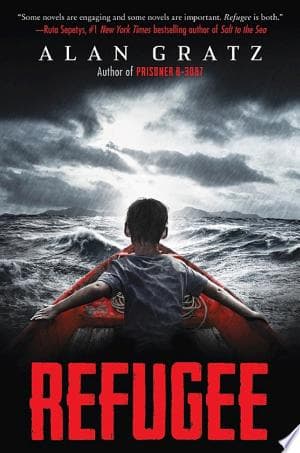
Refugee cover
Archivist's Choice

Refugee

Alan Gratz (2017)

Genre

General

Reading Time

240 min

Key Themes

See below

Track Your Reading

Sign in to track this book

Three young refugees, separated by continents and decades, make dangerous journeys for survival and freedom, their searches for home bound by shared hope.

Core Idea

Alan Gratz's "Refugee" shows that the experience of refugees is tragically consistent, no matter the time or place. It is defined by danger, the loss of childhood, and the search for safety and belonging. The book tells the stories of Josef, Isabel, and Mahmoud, showing that the reasons people leave their homes—persecution, war, and political problems—are similar across different eras. These people face impossible choices and often depend on the kindness of strangers. Gratz shows the strength people have when facing terrible situations. He also points out the moral duty of those who see such suffering, asking readers to recognize how human lives are connected and how both cruelty and kindness affect us.
Reading time
240 min
Difficulty
Medium
✓ Read this if...
You want to understand the universal and timeless struggles of refugees through compelling, interconnected personal stories, and are looking for a book that fosters empathy and highlights historical and contemporary issues of displacement.
✗ Skip this if...
You prefer non-fiction accounts of historical events or are not comfortable with narratives that depict significant hardship, loss, and the harsh realities of war and persecution, even when presented through a young adult lens.

Core idea

The central argument and framework that powers the entire book.

Alan Gratz's "Refugee" shows that the experience of refugees is tragically consistent, no matter the time or place. It is defined by danger, the loss of childhood, and the search for safety and belonging. The book tells the stories of Josef, Isabel, and Mahmoud, showing that the reasons people leave their homes—persecution, war, and political problems—are similar across different eras. These people face impossible choices and often depend on the kindness of strangers. Gratz shows the strength people have when facing terrible situations. He also points out the moral duty of those who see such suffering, asking readers to recognize how human lives are connected and how both cruelty and kindness affect us.

At a glance

Reading time

240 min

Difficulty

Medium

Read this if...

You want to understand the universal and timeless struggles of refugees through compelling, interconnected personal stories, and are looking for a book that fosters empathy and highlights historical and contemporary issues of displacement.

Skip this if...

You prefer non-fiction accounts of historical events or are not comfortable with narratives that depict significant hardship, loss, and the harsh realities of war and persecution, even when presented through a young adult lens.

Key Takeaways

1

The Enduring Plight of Refugees Across Eras

Despite different times and places, the core challenges and human desire for safety remain constant.

Quote

They were all refugees, searching for a place to call home.

Gratz shows that the refugee crisis is not new or limited to one place or time. Josef's escape from Nazi Germany in 1938, Isabel's flight from Castro's Cuba in 1994, and Mahmoud's journey from Syria in 2015 show how similar the experiences of people forced to leave their homes are. Each character faces discrimination, dangerous travel, loss, and the risk of being turned away. This shows that human displacement happens repeatedly, caused by political problems, persecution, and violence. It highlights the lasting struggle for basic huma...

Supporting evidence

Josef's family being denied entry to Cuba and later sent back to Europe; Isabel's family facing the US Coast Guard and the threat of repatriation; Mahmoud's family being rejected at multiple European borders.

Apply this

When discussing contemporary refugee crises, recognize the historical precedents and understand that the core motivations and struggles for safety and a new beginning are universal, fostering empathy beyond current headlines.

historical-displacementuniversal-human-rightsempathy-building
2

The Moral Compass of the 'Bystander'

The actions, or inactions, of those not directly affected dictate the fate of refugees.

Quote

Sometimes doing nothing is the worst thing of all.

A main point from 'Refugee' is the effect of bystanders, from individuals to whole countries. The book shows not just the problems of refugees but also how others react to them. Josef's story, especially what happened with the MS St. Louis, reminds us how political indifference and fear of foreigners can harm desperate people. Isabel's journey shows both the kindness and cruelty of strangers. Mahmoud's story points to failures in international systems and individual compassion. The book quietly asks readers to think about their own pa...

Supporting evidence

The passengers of the MS St. Louis being denied entry to Cuba and the US; the German tourists who help Mahmoud's family; the Hungarian soldiers who attack refugees; the Spanish coast guard rescuing Isabel's family.

Apply this

Actively seek opportunities to support refugee aid organizations, advocate for humane immigration policies, and challenge xenophobic narratives in your community. Understand that your voice and actions, however small, can make a difference.

bystander-effectmoral-responsibilityxenophobiainternational-aid
3

Childhood Lost, Resilience Gained

Children on the run are forced to mature rapidly, displaying incredible strength in the face of unimaginable trauma.

Quote

He was a boy, but he had seen things no boy should ever see.

Gratz shows the harsh reality of childhood during forced displacement. Josef, Isabel, and Mahmoud are children who must lead, protect, and make decisions in dangerous situations. Josef sees the horrors of the Holocaust and takes on the responsibility for his family's safety. Isabel, at eleven, guides her family through dangerous waters and makes difficult sacrifices. Mahmoud, who starts as a quiet observer, becomes a leader, speaking up for his family and others. This loss of innocence is sad, but it also shows an amazing ability for ...

Supporting evidence

Josef's bar mitzvah on the ship and his desperate attempt to save his father; Isabel trading her trumpet for gasoline; Mahmoud's decision to leave the detention center and lead his family through Hungary.

Apply this

Support initiatives focused on child refugees, providing educational resources, psychological support, and safe spaces. Recognize the inherent strength and potential of young people who have experienced trauma, rather than just seeing them as victims.

child-refugeesresiliencetrauma-and-developmentloss-of-innocence
4

The Shifting Sands of Identity and Belonging

Forced to leave their homes, refugees grapple with who they are and where they truly belong.

Quote

He didn't want to be invisible anymore.

Identity is central to the refugee experience in the book. Josef struggles with being Jewish under Nazi rule, then with losing his 'German' identity. Isabel, a Cuban, feels a strong connection to her homeland even as she leaves it, and wonders what it means to be Cuban in a new place. Mahmoud, at first wanting to be 'invisible' to avoid danger, eventually finds his voice and identity as a Syrian seeking respect. The book shows how displacement removes familiar parts of identity, forcing people to redefine themselves and find new ways ...

Supporting evidence

Josef's Star of David armband; Isabel's attachment to her trumpet and the Cuban national anthem; Mahmoud's journey from trying to blend in to actively protesting and demanding recognition.

Apply this

When interacting with immigrants or refugees, acknowledge and respect their cultural heritage while also supporting their integration into new societies. Understand that identity is complex and evolves, especially for those who have experienced displacement.

cultural-identitybelongingassimilationdiaspora
5

The Interconnectedness of Human Fates

Seemingly disparate lives across time and space are woven together by shared experiences and a common humanity.

Quote

The past was always with them, a shadow they couldn't outrun.

One of the book's strongest points is how Josef, Isabel, and Mahmoud are connected. Gratz builds suspense, hinting at these connections before showing them at the end. This shows that historical events and individual choices have long-term effects, echoing through generations and across continents. The shared struggle for survival and how their stories come together show a universal human experience, beyond specific historical times. It reminds us that while situations differ, the basic human desire for safety, home, and respect conne...

Supporting evidence

The revelation that Mahmoud's family is rescued by the same family that sheltered Josef's sister, Ruth, decades earlier; Isabel's connection to the 'Wet Foot, Dry Foot' policy that affected Cuban refugees.

Apply this

Recognize that global events are interconnected and have ripple effects across the world. Seek to understand historical contexts when evaluating current events, particularly those related to migration and conflict, to see the deeper human narrative.

intergenerational-traumaglobal-citizenshiphistorical-memoryshared-humanity
6

The Illusion of Safety, The Reality of Peril

The journey to 'safety' is often as dangerous, if not more so, than the dangers left behind.

Quote

The sea was beautiful, but it was also a monster.

Gratz clearly shows the extreme dangers of the refugee's journey. Josef's family faces Nazi threats and a dangerous sea trip on the MS St. Louis. Isabel makes a desperate crossing of the Florida Straits in a homemade boat. Mahmoud's family endures dangerous border crossings, crowded dinghies, and violent encounters. The book removes any idea of an easy escape. The 'safe' destination is often an illusion, with the path to it full of exploitation, natural disasters, and the constant threat of death. This takeaway highlights the great co...

Supporting evidence

Josef's father's paranoia and breakdown; Isabel's boat nearly sinking and her friend dying; Mahmoud's family losing their mother and infant sister to the sea and border violence.

Apply this

When consuming news about refugees, look beyond the headlines to understand the profound risks and sacrifices involved in their journeys. Advocate for safer, legal pathways for asylum seekers to reduce reliance on dangerous smuggling routes.

perilous-journeyssmuggling-routesasylum-seekinghuman-cost-of-migration
7

The Power of Small Acts of Kindness

In the darkest moments, human compassion, however fleeting, offers vital hope and sustenance.

Quote

Even a small kindness could be a lifeline.

While the book shows the horrors and failures that refugees face, it also shows the great effect of individual acts of kindness. A German tourist offering a blanket to Mahmoud's cold family, a fellow refugee sharing food, a stranger helping Isabel's family – these moments, even if short, provide important physical and emotional support. They remind us that even when many people are indifferent or hostile, humanity can still appear. These small acts balance the overwhelming sadness and show the lasting power of empathy and unity.

Supporting evidence

The German couple who gives Mahmoud's family blankets and food; the Spanish fishermen who rescue Isabel's dinghy; the family in Germany who takes in Mahmoud's family.

Apply this

Seek out opportunities to offer direct support to refugees in your community, whether through volunteering, donations, or simply offering a welcoming presence. Recognize that even small gestures can have a significant impact on someone's journey.

compassionsolidarityhumanitarian-aidempathy-in-action
8

The Unseen Scars: Beyond Physical Survival

The psychological toll of displacement leaves lasting wounds that extend far beyond the journey itself.

Quote

The memories were like sharp shards of glass inside him.

Gratz quietly but strongly addresses the psychological effect of trauma on refugees. Josef's father, after his time in a concentration camp, suffers from severe paranoia and mental health problems, showing the lasting scars of persecution. Mahmoud's initial wish to be invisible, a way to cope with fear, speaks to the emotional burden of constant danger. Isabel's internal struggles with guilt and responsibility after her friend's death show the deep emotional wounds that come with loss and survival. This takeaway shows that 'getting to...

Supporting evidence

Josef's father's breakdown and the family's struggle to cope with his mental state; Mahmoud's initial fear of being noticed and his later courage; Isabel's grief and survivor's guilt.

Apply this

Support mental health services for refugees and displaced persons. Understand that trauma manifests in various ways and requires empathetic, long-term support, not just immediate physical aid.

ptsdmental-health-supportsurvivor-guilttrauma-informed-care
9

The Illusion of Choice in Desperate Circumstances

Refugees are often left with no good options, forced to choose between unimaginable evils.

Quote

When you have nothing, you have nothing to lose.

The choices Josef, Isabel, and Mahmoud face are not between good and bad, but often between bad and worse. Josef's family must choose between a dangerous sea trip or staying in Nazi Germany. Isabel's family chooses the incredibly dangerous journey across the sea over starvation and political oppression in Cuba. Mahmoud's family must choose between certain death in Syria or an uncertain, often brutal, journey through Europe. This takeaway shows the desperation that makes people become refugees. It highlights that their 'choices' are ma...

Supporting evidence

Josef's parents making the agonizing decision to send him and his sister to safety, sacrificing themselves; Isabel's family leaving everything behind, including her grandfather; Mahmoud's family's repeated attempts to cross borders despite the dangers.

Apply this

Challenge narratives that portray refugees as choosing to 'take advantage' of systems. Understand that their decisions are born out of extreme duress and a fundamental desire for survival, not convenience or malice.

forced-migrationsurvival-instincthumanitarian-crisismoral-dilemmas
10

Home is a Feeling, Not Just a Place

The ultimate quest for refugees is not just a physical destination, but a sense of peace, security, and belonging.

Quote

Home wasn't a place. It was a feeling.

While the characters travel to find a new land, their deeper desire is for 'home' in a more meaningful way. It is the longing for safety from persecution, the freedom to live without fear, and the ability to rebuild a life with respect. Josef's family seeks refuge from Nazi terror, Isabel's from political oppression and poverty, and Mahmoud's from civil war. The book makes clear that 'home' is not just a place but a state of being – a place where one feels secure, accepted, and can imagine a future. This theme is clear in all three st...

Supporting evidence

Josef's family's desire for a place where Jews are safe; Isabel's longing for a place where her family can thrive; Mahmoud's family finding a welcoming community in Germany where they can finally start to heal.

Apply this

Support policies and community initiatives that facilitate the integration of refugees, providing not just shelter but also opportunities for employment, education, and cultural exchange, helping them to build a new sense of 'home'.

sense-of-belongingintegrationrefugee-resettlementhuman-dignity

Critical analysis

Notable Quotes

All three young people would go on harrowing journeys in search of refuge. All would face unimaginable dangers—from drownings to bombings to betrayals. But there was always the hope of tomorrow.

Opening lines introducing the three protagonists' parallel stories.

Josef Landau was a boy again, for one last time.

Josef's realization as he takes on adult responsibilities on the MS St. Louis.

Isabel Fernandez listened as the crowd chanted 'Libertad!' She thought of her father, of her grandfather, of her country. And she knew she had to leave.

Isabel's decision to flee Cuba during the 1994 Maleconazo protests.

Mahmoud Bishara had learned to be invisible. It was the only way to stay safe.

Mahmoud's survival strategy as a Syrian refugee in Aleppo.

If no one saw them, no one could help them. And maybe the world needed to see.

Mahmoud's realization about the importance of visibility for refugees.

The Nazis laughed, and Josef's face burned hot with shame. He looked around the ship—at the families huddled on deck, at the sea of faces that were all Jewish like his—and for the first time, he truly felt like a refugee.

Josef's humiliation during a Nazi inspection on the MS St. Louis.

Isabel's grandfather, Lito, was her compass. He knew the way to the United States.

Isabel relying on her grandfather during their boat journey from Cuba.

They only see us when we do something they don't want us to do.

Mahmoud reflecting on how refugees are often ignored until they're perceived as a problem.

The trick was to be invisible. To be no one. To be a ghost.

Mahmoud's internal mantra for surviving as a refugee in hostile environments.

Josef felt the stirrings of indignation, of anger, of sympathy. When his father had needed him, Josef hadn't been there. Now he was.

Josef stepping up to protect his father from Nazi abuse.

Isabel played her trumpet, and for a moment, the music made them forget they were refugees.

Isabel using music to bring temporary relief during their perilous journey.

Mahmoud's father had always told him that the most important thing was to stay alive. But now Mahmoud wondered if that was enough.

Mahmoud questioning survival versus dignity during their escape from Syria.

A refugee is someone who has survived.

A recurring theme summarizing the essence of being a refugee.

The world was a whirlwind of chaos and noise, but in that moment, all that mattered was the next breath.

Describing the overwhelming experience of fleeing across the Mediterranean.

Quiz

Test Your Knowledge

Ready to see how well you understood this book? Take our interactive quiz with 10 questions.

10
Questions
~5
Minutes
?
Best Score

Key Questions (FAQ)

'Refugee' is a historical fiction novel that follows three children—Josef (a Jewish boy fleeing Nazi Germany in 1938), Isabel (a Cuban girl escaping the 1994 Cuban Raft Crisis), and Mahmoud (a Syrian boy fleeing the Syrian Civil War in 2015)—on their perilous journeys to find safety and a new home. Their stories, though separated by time and place, are interconnected through themes of courage, survival, and the universal quest for refuge.

About the author

Alan  Gratz

Alan Gratz is a critically acclaimed author known for his gripping historical fiction for young readers. His notable works, including "Refugee," "Code of Honor," and "Grenade," often explore themes of resilience and survival against the backdrop of significant historical events. Gratz's engaging storytelling and meticulous research have earned him a dedicated readership and numerous accolades within the children's literature community.