BookBrief
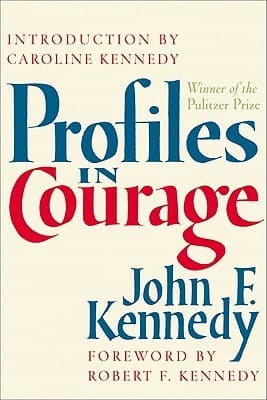
Profiles in Courage cover
Archivist's Choice

Profiles in Courage

John F. Kennedy (1955)

Genre

Politics / Biography / Leadership / History

Reading Time

245 min

Key Themes

See below

Track Your Reading

Sign in to track this book

John F. Kennedy's book examines eight American politicians who risked their careers by acting on their beliefs, showing the importance of courage when facing opposition.

Core Idea

John F. Kennedy's "Profiles in Courage" argues that true political leadership comes from moral courage: the willingness of public servants to ignore party pressure, public opinion, and personal goals to follow their conscience and serve the nation's long-term interests. Through biographies of U.S. Senators, Kennedy shows how principled actions, often criticized at the time, are vital for maintaining democracy and advancing justice. The book suggests courage is a core virtue for good governance, showing that effective leaders prioritize their convictions over convenience, even when it means personal sacrifice.
Reading time
245 min
Difficulty
Medium
✓ Read this if...
You are interested in the historical examples of political courage, leadership ethics, and the challenges faced by public servants who prioritize principle over popularity.
✗ Skip this if...
You are looking for a detailed academic analysis of political theory or a comprehensive history of American politics, rather than a narrative exploration of individual moral fortitude.

Core idea

The central argument and framework that powers the entire book.

John F. Kennedy's "Profiles in Courage" argues that true political leadership comes from moral courage: the willingness of public servants to ignore party pressure, public opinion, and personal goals to follow their conscience and serve the nation's long-term interests. Through biographies of U.S. Senators, Kennedy shows how principled actions, often criticized at the time, are vital for maintaining democracy and advancing justice. The book suggests courage is a core virtue for good governance, showing that effective leaders prioritize their convictions over convenience, even when it means personal sacrifice.

At a glance

Reading time

245 min

Difficulty

Medium

Read this if...

You are interested in the historical examples of political courage, leadership ethics, and the challenges faced by public servants who prioritize principle over popularity.

Skip this if...

You are looking for a detailed academic analysis of political theory or a comprehensive history of American politics, rather than a narrative exploration of individual moral fortitude.

Key Takeaways

1

Courage as Political Necessity

True leadership demands prioritizing conviction over popular appeal.

Quote

The stories of past courage...can supply not only inspiration in times of crisis but also a guide in daily conduct.

Kennedy argues that courage is not just a moral trait but a basic need for effective political leadership. He describes individuals who, at key times, chose to defy their party, their constituents, or even their own ambition for what they believed was right for the nation. This often meant facing isolation, political defeat, or public ridicule. The book challenges the idea that politicians must always cater to the easiest demands, instead stating that the greatest leaders are those willing to make unpopular decisions based on principl...

Supporting evidence

John Quincy Adams's defiance of his own party (the Federalists) to support Jefferson's Louisiana Purchase and later his solitary fight against the 'gag rule' in Congress, despite severe political isolation.

Apply this

When faced with a decision that could advance your career but compromises your core values, choose the latter. Understand that true leadership sometimes means being a party of one.


political-integrityprincipled-leadershipmoral-courage
2

The Price of Principle

Standing firm on convictions often entails significant personal and political sacrifice.

Quote

The true test of a man's character is what he does when no one is watching.

Kennedy details the high personal and political costs paid by the individuals profiled. These were not easy choices, nor were they always immediately rewarded. Many saw the end of their political careers, public criticism, or the loss of friendships and support. The book makes it clear that courage in public life is not a romantic idea but a difficult, often thankless effort. It is a strong reminder that upholding principles can be a solitary path, requiring deep inner strength and a willingness to accept negative results, even when t...

Supporting evidence

Daniel Webster's 'Seventh of March' speech supporting the Compromise of 1850 to preserve the Union, which alienated his anti-slavery constituents and effectively ended his presidential aspirations.

Apply this

Before making a principled stand, mentally prepare for potential backlash, criticism, and even professional setbacks. Cultivate resilience and a strong internal locus of control.

sacrificepolitical-isolationintegrity
3

Beyond Partisan Lines

Courageous leaders prioritize national interest over party loyalty.

Quote

A man does what he must – in spite of personal consequences, in spite of obstacles and dangers and pressures – and that is the basis of all human morality.

A repeated idea is these politicians' willingness to break with their own party when they believed the national interest required it. In a time often marked by strict party loyalty, Kennedy highlights figures who showed independent thought and action. This was not about being contrary for its own sake, but about a deeper commitment to the country's well-being, even if it meant alienating allies and empowering rivals. The book implicitly criticizes blind partisanship and celebrates the intellectual and moral independence needed to rise...

Supporting evidence

Thomas Hart Benton's persistent opposition to the expansion of slavery into new territories, despite being a Democrat from a slave state (Missouri) and facing immense pressure from his party.

Apply this

When evaluating political issues, actively seek information from diverse sources and challenge your own partisan biases. Support leaders who demonstrate independent thinking rather than strict party adherence.

bipartisanshipnational-interestpolitical-independence
4

The Weight of Public Opinion

True courage often means defying the prevailing popular sentiment.

Quote

The ultimate irony of politics is that a man may be a statesman even while he is still a politician.

Kennedy explores the immense pressure elected officials face from their constituents, especially in a democracy where re-election depends on public support. The profiled individuals were not immune to these pressures; their courage was often defined by their willingness to stand against a strong wave of public opinion. This required a deep belief in their own judgment and a long-term vision that went beyond the next election. The book suggests that while listening to the public is important, a leader's ultimate duty is to act in the n...

Supporting evidence

Edmund G. Ross's pivotal 'not guilty' vote in President Andrew Johnson's impeachment trial, which went against the overwhelming sentiment of his party and the public, risking his career to uphold the integrity of the presidency.

Apply this

As a citizen, be critical of leaders who only follow polls. As a leader, develop a strong moral compass and be prepared to explain your rationale for unpopular but principled decisions.

public-pressuremoral-fortitudestatesmanship
5

Character Over Compromise

There are lines of principle that should never be crossed, even for political gain.

Quote

Conformity is the jailer of freedom and the enemy of growth.

While politics often involves compromise, Kennedy shows that there are basic principles on which no compromise should be made. The courage of his subjects was in their refusal to give in on these core beliefs, even when doing so would have offered an easier path or greater political gain. This highlights a key difference between strategic flexibility and giving up integrity. The book argues that a leader's character is defined by their steady commitment to these non-negotiable truths, suggesting that some battles are worth losing if i...

Supporting evidence

Sam Houston's steadfast opposition to Texas secession from the Union, despite being governor of Texas and facing intense pressure and threats, ultimately leading to his removal from office.

Apply this

Identify your own non-negotiable principles in your professional and personal life. Practice saying 'no' when a request or opportunity conflicts with those principles, even if it's difficult.

moral-boundaryunwavering-principlesethical-leadership
6

The Long Arc of History

Courageous acts may not be appreciated in their time, but history often vindicates them.

Quote

The stories of past courage...can supply not only inspiration in times of crisis but also a guide in daily conduct.

Many of the figures Kennedy profiled faced immediate criticism and political ruin for their courageous stands. Their actions were often misunderstood or disliked by people at the time. However, Kennedy's historical view shows that over time, their foresight and integrity were often recognized and praised. This offers a strong lesson in delayed reward and the importance of a long-term vision. It suggests that true leadership is not about immediate praise but about making decisions that will ultimately serve the greater good, even if fu...

Supporting evidence

The initial public and political backlash against most of the profiled individuals, contrasting with their subsequent veneration in historical accounts, such as John Quincy Adams's later recognition for his anti-slavery efforts.

Apply this

When facing difficult decisions, consider the long-term implications and how your actions might be viewed in the future, rather than solely focusing on immediate outcomes or reactions.

historical-perspectivefuture-generationslegacy
7

Beyond the Battlefield

Political courage is as vital, and often as rare, as military heroism.

Quote

Physical courage, animal courage, is common enough. Moral courage, intellectual courage, is a rarer and more valuable commodity.

Kennedy purposely elevates political courage to a status similar to, or even above, battlefield bravery. He argues that while physical courage involves facing immediate danger, political courage often requires sustained mental and moral strength to endure prolonged criticism, isolation, and the potential end of one's career. This type of courage is less dramatic but arguably more complex, as it involves navigating difficult ethical problems and resisting subtle, yet powerful, pressures. The book makes a compelling case for recognizing...

Supporting evidence

Kennedy's deliberate choice to focus on political figures and their struggles within the legislative and executive branches, rather than military heroes, to illustrate a different kind of bravery.

Apply this

Recognize that courage manifests in many forms. In your own life, acknowledge and cultivate the 'moral courage' to speak truth to power or stand up for what's right, even when there's no immediate physical threat.

moral-heroismcivic-couragepolitical-duty
8

The Power of the Individual

One person's conviction can alter the course of history.

Quote

One man with courage makes a majority.

A clear message in 'Profiles in Courage' is the great impact a single person can have when guided by strong principles. Kennedy shows how one senator's vote, one governor's stand, or one president's decision, against strong opposition, significantly shaped the nation's path. This is a powerful antidote to cynicism about the political process, reminding readers that individual action matters deeply. It encourages citizens to believe that their own principled stands, however small, contribute to society's moral fabric and can, over time...

Supporting evidence

Edmund G. Ross's single vote prevented President Johnson's impeachment, a moment Kennedy highlights as a critical preservation of the checks and balances of American democracy.

Apply this

Never underestimate the power of your own voice and actions. When you believe strongly in something, speak up and act, understanding that even a single dissenting voice can be a catalyst for change.

individual-agencycatalyst-for-changedemocratic-impact
9

Courage as a Habit

The ability to act courageously is cultivated through consistent moral choices.

Quote

Without belittling the courage with which they faced physical danger, it is clear that the 'moral courage' of these men was a far rarer and more valuable commodity.

While the book highlights specific, dramatic acts of courage, it also suggests that such moments often come from a lifetime of smaller, principled decisions. The ability to make a grand stand does not appear suddenly; it is built through consistent practice of integrity, self-reflection, and a refusal to compromise on smaller issues. Kennedy's profiles reveal individuals who had a history of independent thought and a deep commitment to their values, suggesting that courage is less a spontaneous event and more a cultivated character tr...

Supporting evidence

The biographical details of each profile often show a pattern of independent thought and a willingness to challenge norms throughout their careers, not just in one singular moment.

Apply this

Start small. Practice making ethical choices in your daily life, even when it's inconvenient. Build your 'courage muscle' through consistent adherence to your values, preparing you for larger challenges.

character-developmentmoral-practicehabit-of-virtue
10

Hope for the Future

These historical examples offer guidance and inspiration for contemporary challenges.

Quote

What happens to the country, to the world, depends on what we do with what others have left us.

As Robert F. Kennedy's foreword emphasizes, 'Profiles in Courage' is not just a collection of historical stories; it is a living example and a source of hope. Kennedy intended these stories to guide future generations facing their own moral and political problems. The book instills confidence that even in times of deep division or crisis, individuals can rise to the occasion through courage and conviction. It is a reminder that democracy's challenges are constant, but so is the human capacity for integrity and principled action, offer...

Supporting evidence

The inclusion of Kennedy's correspondence and contemporary reviews, along with the foreword and introduction by his family, underscores the book's enduring relevance and its intended purpose as a timeless guide.

Apply this

When facing seemingly insurmountable political or ethical challenges, draw inspiration from historical figures who demonstrated courage. Reflect on their methods and motivations to inform your own actions.

historical-guidanceoptimismcivic-duty

Critical analysis

Notable Quotes

A man does what he must—in spite of personal consequences, in spite of obstacles and dangers and pressures—and that is the basis of all human morality.

Introductory statement about the nature of courage.

The stories of past courage can define that ingredient—they can teach, they can offer hope, they can provide inspiration. But they cannot supply courage itself. For this each man must look into his own soul.

Reflecting on the purpose of historical examples of courage.

Without belittling the courage with which men have fought and died on the battlefield, the 'courage to be great' is a quality very different from the 'courage to fight.'

Distinguishing between physical courage and political/moral courage.

In a democracy, every citizen, regardless of his interest in politics, 'holds office'; every one of us is in a position of responsibility; and, in the final analysis, the kind of government we get depends upon the kind of citizens we are.

Discussing the responsibility of citizens in a democratic system.

The true democracy, living and growing and inspiring, puts its faith in the people—faith that the people will not only elect men of good sense and good will, but, what is more important, will themselves have the good sense and good will to make their democracy work.

Elaborating on the essential faith in the people within a democracy.

It is not the critic who counts; not the man who points out how the strong man stumbles, or where the doer of deeds could have done them better. The credit belongs to the man who is actually in the arena...

Attributed to Theodore Roosevelt, quoted by Kennedy to emphasize the value of active participation.

To be courageous, one must be able to overcome the fear of public opinion, the fear of the press, the fear of their constituents, and the fear of the loss of their own political careers.

Describing the specific fears political figures must conquer.

Conformity is the jailer of freedom and the enemy of growth.

Highlighting the dangers of conformity in political life.

The ultimate test of a man's conscience may be his willingness to defy his party, his constituents, and even his own ambition in order to do what he considers right.

Defining the ultimate act of political courage.

Only those who dare to fail greatly can ever achieve greatly.

A general statement on the necessity of risk for significant achievement.

We cannot be content to stand by and do nothing, merely because we cannot do everything.

An argument against inaction due to perceived limitations.

In the long history of the world, only a few generations have been granted the role of defending freedom in its hour of maximum danger. I do not shrink from this responsibility—I welcome it.

Kennedy's own words from his inaugural address, reflecting the spirit of the book.

The stories of past courage can define that ingredient—they can teach, they can offer hope, they can provide inspiration. But they cannot supply courage itself. For this each man must look into his own soul.

Reiterating the personal nature of courage, despite historical examples.

For in a democracy, every citizen, regardless of his interest in politics, 'holds office'; every one of us is in a position of responsibility; and, in the final analysis, the kind of government we get depends upon the kind of citizens we are.

Emphasizing the foundational role of active and responsible citizens in a democracy.

Quiz

Test Your Knowledge

Ready to see how well you understood this book? Take our interactive quiz with 10 questions.

10
Questions
~5
Minutes
?
Best Score

Key Questions (FAQ)

'Profiles in Courage' by John F. Kennedy profiles eight United States senators who demonstrated immense integrity and moral courage by standing by their convictions despite facing extreme political pressure and potential career ruin. It serves as a testament to the importance of conscience in public service and an inspiration for future leaders.

About the author