BookBrief
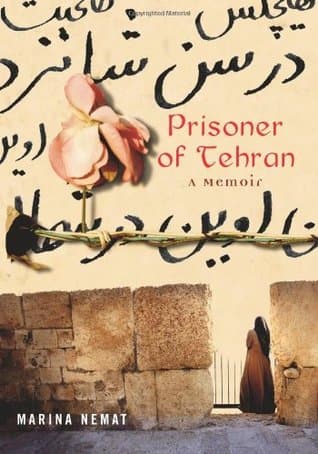
Prisoner of Tehran cover
Archivist's Choice

Prisoner of Tehran

Marina Nemat (2007)

Genre

Politics / Biography / Memoir / History / Spirituality

Reading Time

5-7 hours

Key Themes

See below

Track Your Reading

Sign in to track this book

After Iran's 1979 revolution, a sixteen-year-old girl's protest against classroom Koran studies leads to her arrest and a brutal journey through Evin Prison's torture chambers, ending in a death sentence that tests her will to survive and her desire for freedom.

Core Idea

Marina Nemat's "Prisoner of Tehran" is a memoir about her imprisonment and torture as a teenager in Evin Prison after the Iranian revolution. The book details the psychological and physical abuse of interrogations, the random nature of justice under an extremist government, and the difficult choices individuals had to make. It explores how youthful hope was destroyed by political terror and the complex feelings of survival, guilt, and the search for meaning during immense suffering. The central idea is that extreme ideologies can destroy human dignity and freedom. Yet, the book also shows the lasting, though delicate, power of human connection, faith, and the importance of telling what happened. Nemat's story shows that even in the darkest times, people grapple with forgiveness and hope, trying to understand and move past the lasting effects of trauma.
Reading time
5-7 hours
Difficulty
Medium
✓ Read this if...
You are interested in firsthand accounts of political imprisonment, the Iranian Revolution's impact on ordinary citizens, or the psychological resilience required to survive extreme trauma.
✗ Skip this if...
You are sensitive to detailed descriptions of torture, violence, and intense emotional suffering, or prefer books with a less somber and more optimistic tone.

Core idea

The central argument and framework that powers the entire book.

Marina Nemat's "Prisoner of Tehran" is a memoir about her imprisonment and torture as a teenager in Evin Prison after the Iranian revolution. The book details the psychological and physical abuse of interrogations, the random nature of justice under an extremist government, and the difficult choices individuals had to make. It explores how youthful hope was destroyed by political terror and the complex feelings of survival, guilt, and the search for meaning during immense suffering.

The central idea is that extreme ideologies can destroy human dignity and freedom. Yet, the book also shows the lasting, though delicate, power of human connection, faith, and the importance of telling what happened. Nemat's story shows that even in the darkest times, people grapple with forgiveness and hope, trying to understand and move past the lasting effects of trauma.

At a glance

Reading time

5-7 hours

Difficulty

Medium

Read this if...

You are interested in firsthand accounts of political imprisonment, the Iranian Revolution's impact on ordinary citizens, or the psychological resilience required to survive extreme trauma.

Skip this if...

You are sensitive to detailed descriptions of torture, violence, and intense emotional suffering, or prefer books with a less somber and more optimistic tone.

Key Takeaways

1

The Perilous Innocence of Youthful Idealism

Even seemingly small acts of defiance can carry life-altering consequences under oppressive regimes.

Quote

Before, I had been an ordinary girl, concerned with ordinary things. Now, I was a prisoner.

Nemat's story clearly shows how the innocent, yet principled, idealism of youth can clash terribly with the harshness of totalitarian rule. Her arrest was not for major revolutionary acts, but for a simple, youthful protest against changes in her school curriculum – a complaint about religious study replacing other lessons. This seemingly harmless act, born from a desire for intellectual freedom, was seen as counter-revolutionary and led directly to her imprisonment and torture. It highlights how efficiently such governments suppress ...

Supporting evidence

Marina's arrest after complaining to her teachers about the new curriculum and the replacement of lessons with Koran study, leading to her being taken to Evin Prison.

Apply this

Reflect on how easily individual freedoms can erode when dissent, however minor, is criminalized. Understand that true courage often begins with small, principled stands, but also recognize the immense personal cost in oppressive environments.


youthful-dissentauthoritarian-controlerosion-of-freedom
2

The Psychological Warfare of Interrogation

Torture extends beyond physical pain, aiming to dismantle identity and sever human connection.

Quote

They wanted to break my spirit, to make me betray myself and others.

Nemat's time in Evin Prison reveals the cruel psychological methods interrogators used. Beyond physical beatings and 'falaka' (beating the soles of the feet), the real terror was in manipulation and isolation. Prisoners had to implicate friends, faced fake executions, and were constantly threatened with harm to their families. This psychological warfare aimed to destroy a person's sense of self, trust, and morals, making them a tool of the government. The goal was not just to get information, but to erase the prisoner's inner world, l...

Supporting evidence

Her detailed accounts of mock executions, being forced to write confessions, implicating others, and the constant fear for her family's safety during interrogation sessions.

Apply this

Recognize the insidious nature of psychological manipulation in oppressive systems. Cultivate mental resilience and a strong internal moral framework, understanding that identity is a primary target in such environments.

psychological-tortureidentity-erosionstate-repression
3

Unlikely Bonds in the Abyss

Human connection, even with an oppressor, can emerge in the darkest circumstances, creating moral paradoxes.

Quote

He saved my life, and I hated him for it. I was grateful, and I was terrified.

One of the most unsettling parts of Nemat's memoir is her forced marriage to Ali, her interrogator and 'savior.' This relationship, born from force and fear, is hard to define. Ali, who had tortured her, also stopped her execution. This creates a difficult moral problem: a torturer who becomes a protector, an oppressor who offers a twisted kind of salvation. This complex situation shows how blurred human boundaries become under extreme pressure, where survival can depend on forming an unthinkable connection with one's captor. It makes...

Supporting evidence

The detailed account of her interrogator, Ali, preventing her execution, and his subsequent forced marriage to her, which granted her some protection within the prison system.

Apply this

Challenge simplistic moral judgments in complex human situations. Understand that survival instincts can lead to unimaginable compromises and relationships, and that true empathy requires grappling with these difficult paradoxes.

stockholm-syndromemoral-paradoxcoercive-relationships
4

The Crushing Weight of Guilt and Survival

Surviving trauma often leaves a profound and lasting burden of guilt for those who perished.

Quote

Why me? Why was I spared when so many others, better than me, died?

Nemat's story powerfully conveys the survivor's guilt that stays with her long after her release. She questions why she lived while many friends and fellow prisoners were executed. This is not just a passing feeling; it is a deep wound, a constant reminder of the random cruelty she experienced. The guilt is made worse by the compromises she made to survive, especially her forced marriage to Ali. This point emphasizes that escaping physical prison does not mean escaping the psychological prison of trauma. The burden of witnessing, of m...

Supporting evidence

Her recurring reflections on the executions of her friends, especially those who died on the same day she was initially scheduled to be executed, and her ongoing struggle with why she was spared.

Apply this

Practice empathy for survivors of trauma, understanding that their journey to healing is complex and often includes profound guilt. Recognize that resilience is not about forgetting, but about learning to carry the weight of memory.

survivors-guiltpost-traumatic-stressmemory-burden
5

Faith and Doubt in the Crucible of Suffering

Extreme suffering can either solidify or shatter one's spiritual beliefs, often leading to profound questioning.

Quote

I prayed, but my prayers felt empty. How could God allow such evil?

Nemat's spiritual journey in prison is an honest look at faith tested to its limits. Raised in a Christian family, she struggles with the idea of a good God amid unimaginable cruelty. Her prayers often feel empty, her faith wavers, and she openly questions divine justice. This reflects a common human experience: when faced with great evil, one's spiritual framework is either strengthened by a search for meaning or broken by its apparent absence. Her struggle is not a rejection of spirituality, but a painful, personal reevaluation of h...

Supporting evidence

Her internal monologues and direct prayers to God, questioning His presence and justice during her torture and after witnessing the deaths of her friends.

Apply this

Allow for nuanced spiritual exploration in times of crisis, understanding that doubt can be a part of a deeper faith journey. Respect individual processes of grappling with existential questions in the face of suffering.

spiritual-crisistheodicyexistential-questioning
6

The Indelible Scars of Trauma

Physical release from prison does not equate to freedom from the psychological wounds of torture.

Quote

The prison walls were gone, but they were still inside me.

Even after her release and moving away, Nemat's memoir makes it clear that the trauma of Evin Prison remained deeply ingrained. She describes vivid flashbacks, nightmares, and a constant sense of fear and distrust. Physical scars may heal, but psychological ones are permanent, affecting her relationships, her feeling of safety, and her ability to fully live a normal life. This point is important for understanding the long-term effects of state violence; it is not a temporary hardship, but a life-changing event that requires great cour...

Supporting evidence

Her descriptions of ongoing nightmares, difficulty sleeping, hyper-vigilance, and the emotional distance she felt even years after leaving Iran and starting a new life.

Apply this

Recognize that trauma's effects are long-lasting and often invisible. Offer sustained support and understanding to survivors, acknowledging that their healing journey is complex and unique.

complex-traumapost-traumatic-effectshealing-journey
7

The Power of Witness and Bearing Witness

Telling one's story of trauma is an act of defiance, healing, and a moral imperative.

Quote

I had to speak, for those who could not.

Nemat's decision to write and publish her memoir years later is itself a significant act. It turns her personal suffering into a public testimony, giving voice not only to her own experience but also to countless others who died or were silenced. This act of 'bearing witness' is essential for historical accuracy, for justice, and for preventing future cruelties. By sharing her story, she takes back control, faces her past, and provides valuable insight into the human cost of political extremism. It highlights the moral duty of survivo...

Supporting evidence

The very existence of the book, 'Prisoner of Tehran,' and her explicit statements about feeling compelled to share her story to honor those who died and to ensure such events are not forgotten.

Apply this

Support platforms for survivors to share their stories. Understand the therapeutic and societal importance of narrative in processing trauma and advocating for human rights.

testimonial-literaturecollective-memoryhuman-rights-advocacy
8

The Corrosive Nature of Ideological Extremism

Rigid ideologies, regardless of their origin, inevitably lead to the dehumanization and persecution of dissenters.

Quote

They believed they were doing God's work, and that made them even more dangerous.

The Iranian Revolution, initially driven by a desire for change, quickly became a brutal theocracy. Nemat's experience shows how absolute ideological conviction—whether religious, political, or both—can justify terrible cruelty. The belief that one is acting for a divine or 'higher' power removes all moral limits, allowing followers to dehumanize and eliminate anyone who does not conform. This is a warning, showing that the dangers of extremism lie not just in its specific beliefs, but in its intolerance for difference and its ability...

Supporting evidence

The transformation of Iran after the 1979 revolution, the imposition of strict religious laws, and the systematic persecution and execution of those deemed 'enemies of the revolution,' including teenagers like Marina.

Apply this

Critically analyze any ideology that demands absolute conformity or demonizes dissent. Advocate for pluralism, free thought, and the protection of individual liberties against any form of ideological extremism.

totalitarianismreligious-extremismdehumanization
9

The Fragility and Resilience of Freedom

Freedom is a constant struggle, easily lost and fiercely reclaimed, requiring vigilance and courage.

Quote

I understood then that freedom was not a gift, but something you had to fight for, every single day.

Nemat's journey from a free child in pre-revolutionary Iran to a prisoner and then an exile, highlights how precious and fragile freedom is. Her story is a powerful reminder that democratic freedoms are not guaranteed; political upheaval and ideological shifts can quickly dismantle them. Her eventual escape to Canada, and the ongoing struggle to live freely without the shadow of her past, shows that true freedom is not just the absence of chains, but an internal state that requires continuous effort, healing, and watchfulness. It show...

Supporting evidence

The dramatic shift in daily life in Iran after the revolution, her loss of freedom, and her subsequent journey to Canada to find a new life where she could speak freely and live without fear.

Apply this

Actively participate in democratic processes. Support human rights organizations. Reflect on how easily freedoms can be eroded and commit to defending them in your own community and globally.

political-freedomhuman-rightscivic-engagement
10

The Enduring Power of Forgiveness and Hope

Despite unimaginable suffering, the human spirit can find pathways to forgiveness and cultivate hope for the future.

Quote

I had to forgive, not for them, but for myself, to truly be free.

One of the hardest parts of Nemat's healing is her eventual path toward forgiveness, especially for Ali and the system that brutalized her. This is not a passive act of excusing evil, but an active, conscious choice to free herself from the consuming bitterness and hatred that would otherwise keep her imprisoned. Her memoir, while detailing immense suffering, ultimately conveys a message of hope – not naive optimism, but a hard-won belief in the possibility of healing, finding peace, and living a meaningful life even after experiencin...

Supporting evidence

Her later reflections on Ali's actions, her eventual ability to speak about her experiences without being consumed by rage, and her commitment to building a new life and advocating for human rights.

Apply this

Explore the concept of forgiveness as a tool for personal liberation, understanding it as a process, not necessarily an event. Cultivate a resilient sense of hope, even in challenging circumstances, by focusing on agency and growth.

trauma-recoverypersonal-liberationresilience

Critical analysis

Notable Quotes

Suddenly, it was as if someone had pulled a curtain, and the world was bathed in a new, blinding light. It was the light of fear.

Describing the immediate aftermath of the Revolution and the shift in atmosphere.

The silence in the classroom was so thick you could cut it with a knife. It was the silence of fear, and it was contagious.

Recalling the atmosphere in school after the new regime took hold.

We were young, we were idealists, and we thought we could change the world. We didn't know the world would change us.

Reflecting on the initial hopes and eventual disillusionment of her generation.

Every time they called out a name, a piece of my heart broke off and died.

Witnessing her friends being taken away for execution.

In Evin, every day was a battle for survival, not just for your body, but for your soul.

Describing the daily struggle within Evin Prison.

Hope was a dangerous thing in Evin. It could make you weak, make you vulnerable.

Reflecting on the psychological toll of imprisonment and the nature of hope.

To forget was to betray. To remember was to live with the pain.

Grappling with the dilemma of memory and trauma after release.

I learned that hate is a poison that destroys the hater, not the hated.

A realization about the destructive nature of hatred, perhaps learned through her experiences.

The hardest part was not the physical pain, but the constant erosion of your humanity.

Highlighting the psychological and emotional torture in prison.

God was still there, even in Evin. Perhaps especially in Evin.

Finding spiritual solace and strength amidst the horrors of prison.

We were not just prisoners of the regime; we were prisoners of our own silence.

Reflecting on the complicity of silence and the need to speak out.

Freedom is not something you are given; it is something you take.

A powerful statement about agency and the fight for liberty.

The past is not dead. It is not even past. It is with us, always.

Acknowledging the enduring impact of historical trauma on individuals and societies.

Even in the darkest places, there can be light. Sometimes, you just have to create it yourself.

A message of hope and resilience, emphasizing inner strength.

Quiz

Test Your Knowledge

Ready to see how well you understood this book? Take our interactive quiz with 10 questions.

10
Questions
~5
Minutes
?
Best Score

Key Questions (FAQ)

'Prisoner of Tehran' is a powerful memoir by Marina Nemat, recounting her harrowing experiences as a teenager arrested and imprisoned in Evin Prison during the aftermath of the 1979 Iranian Revolution. It details her interrogation, torture, and unexpected reprieve from a death sentence, offering an intimate look at a dark period in Iranian history.

About the author