BookBrief
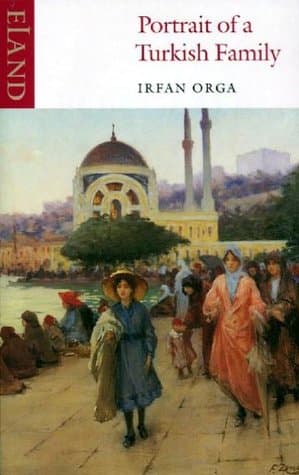
Portrait of a Turkish Family cover
Archivist's Choice

Portrait of a Turkish Family

Irfan Orga (1950)

Genre

Lifestyle / Biography / Memoir / History

Reading Time

6-8 hours

Key Themes

See below

Track Your Reading

Sign in to track this book

In fin-de-siècle Istanbul, an Ottoman family, led by an autocratic grandmother and a child-bride mother, copes with the collapse of their empire, fortune, and way of life, from opulent hamam rituals to the reality of a new Turkish republic.

Core Idea

Irfan Orga's "Portrait of a Turkish Family" is a memoir that chronicles the decline of a privileged Ottoman family during the transition from the Ottoman Empire to the modern Turkish Republic. Through his personal experiences, Orga shows the impact of war, political change, and social reforms on individual lives, family structures, and cultural identity. The book argues that this period involved a rapid loss of traditional grandeur, forcing individuals to confront poverty, redefine their place in a new society, and deal with the psychological weight of memory and nostalgia for a vanished world. The central idea is that the historical shifts of early 20th-century Turkey were not just political events but personal catastrophes, eroding established identities and forcing a re-evaluation of what it meant to be Turkish. The narrative emphasizes the strength and struggles of those caught between two worlds, showing how a family's experience represents the larger historical narrative of a nation changing.
Reading time
6-8 hours
Difficulty
Medium
✓ Read this if...
You are interested in the human cost of historical transitions, the intimate details of Ottoman life before its collapse, or how a family navigates extreme poverty and cultural upheaval.
✗ Skip this if...
You prefer fast-paced narratives with clear plot arcs, or are looking for a purely objective historical account without personal reflection.

Core idea

The central argument and framework that powers the entire book.

Irfan Orga's "Portrait of a Turkish Family" is a memoir that chronicles the decline of a privileged Ottoman family during the transition from the Ottoman Empire to the modern Turkish Republic. Through his personal experiences, Orga shows the impact of war, political change, and social reforms on individual lives, family structures, and cultural identity. The book argues that this period involved a rapid loss of traditional grandeur, forcing individuals to confront poverty, redefine their place in a new society, and deal with the psychological weight of memory and nostalgia for a vanished world.

The central idea is that the historical shifts of early 20th-century Turkey were not just political events but personal catastrophes, eroding established identities and forcing a re-evaluation of what it meant to be Turkish. The narrative emphasizes the strength and struggles of those caught between two worlds, showing how a family's experience represents the larger historical narrative of a nation changing.

At a glance

Reading time

6-8 hours

Difficulty

Medium

Read this if...

You are interested in the human cost of historical transitions, the intimate details of Ottoman life before its collapse, or how a family navigates extreme poverty and cultural upheaval.

Skip this if...

You prefer fast-paced narratives with clear plot arcs, or are looking for a purely objective historical account without personal reflection.

Key Takeaways

1

The Grandeur and Fragility of Ottoman Life

A privileged existence teetering on the brink of collapse.

Quote

The old ways, the traditions, the very air we breathed, seemed as eternal as the Bosphorus itself. Yet, beneath the surface, the foundations were crumbling.

Orga paints a vivid picture of the opulent, traditional life enjoyed by wealthy Ottoman families in fin de siècle Istanbul. This was a deeply ingrained cultural fabric, characterized by specific rituals, social hierarchies, and an almost insular self-sufficiency. The family's sprawling konak, the elaborate meals, the rigid social protocols, and the distinct roles of each family member, from the autocratic grandmother to the young, impressionable mother, all describe a world that felt unchanging. However, Orga subtly includes the under...

Supporting evidence

The detailed descriptions of the family's large home, the numerous servants, the elaborate weekly hamam visits, and the mother's marriage at thirteen, all illustrate a specific, high-status Ottoman lifestyle.

Apply this

Appreciate that even seemingly stable and prosperous systems are subject to change and external pressures. Understanding historical context helps us anticipate societal shifts.

ottoman-empirefin-de-siecleistanbul-historysocial-hierarchy
2

War's Unseen Devastation

Gallipoli's impact extended far beyond the battlefield, fracturing families and futures.

Quote

The war, which seemed so distant, so abstract to us at first, slowly, insidiously, began to consume everything we held dear.

While often viewed through the lens of military strategy and ANZAC heroism, Orga's memoir offers the 'other side' of the Gallipoli story: its devastating impact on the Turkish civilian population, particularly the elite. The war was not just about soldiers; it was about the slow, agonizing erosion of societal structures, economic stability, and personal well-being. Orga describes the gradual disappearance of male family members to the front, the increasing scarcity of food and resources, and the psychological toll of constant uncertai...

Supporting evidence

The narrative details the father's departure to war, the subsequent financial struggles, the increasing difficulty in acquiring basic necessities, and the eventual loss of family wealth directly attributed to wartime economic collapse.

Apply this

Recognize that conflict has a ripple effect, impacting civilians and future generations long after the fighting ceases. Seek out diverse perspectives when studying historical events.

gallipoli-campaignworld-war-icivilian-impacteconomic-collapse
3

Generational Clashes and Traditionalism's Grip

The formidable grandmother embodies resistance to inevitable change.

Quote

My grandmother was a fortress of tradition, her will as unyielding as the ancient stones of our courtyard. She would rather see us starve than abandon the customs of our ancestors.

At the heart of the family's struggle is the grandmother, an 'eccentric autocrat' who personifies the unyielding grip of tradition. Her character is a powerful symbol of the old Ottoman world stubbornly resisting the encroaching tide of modernity and republicanism. Even as their financial situation deteriorates and the new republic mandates radical changes, she clings fiercely to her habits, beliefs, and sense of dignity from the past. This creates an internal conflict within the family, as the younger generation, particularly the mot...

Supporting evidence

The grandmother's insistence on maintaining traditional rituals, even when impoverished, and her disapproval of modern adaptations, such as the abolition of the fez, exemplify her traditionalism.

Apply this

Understand that societal change often creates intergenerational friction. Recognize the emotional difficulty of letting go of deeply held traditions, even when necessary for adaptation.

cultural-changegenerational-gapottoman-traditionidentity-crisis
4

The Republic's Radical Transformation

Atatürk's reforms upended social norms and personal identities overnight.

Quote

Suddenly, the fez, a symbol of our identity, was a relic. The very clothes on our backs, the language we spoke, the way we lived, all were to be changed by decree. It was exhilarating for some, terrifying for others.

The establishment of the Turkish Republic under Atatürk marked a swift and radical transformation, and Orga's memoir provides an intimate view of its immediate, often disorienting, impact on everyday lives. The book highlights specific reforms like the abolition of the fez and the adoption of Western dress, which were not merely fashion changes but symbolic shifts in national identity. For a family steeped in Ottoman tradition, these changes were not just inconvenient; they represented a direct assault on their cultural heritage and p...

Supporting evidence

The specific mention of the red fez being 'ousted by the cloth cap' and the family's struggle to adapt to new clothing and social norms are direct examples of Atatürk's reforms impacting daily life.

Apply this

Consider how political and social reforms, even those intended for progress, can create significant personal and cultural upheaval for individuals and families.

turkish-republicataturk-reformscultural-revolutionnational-identity
5

Poverty as a New Identity

From affluence to destitution, the family confronts an unimaginable reality.

Quote

We had always known abundance. To wake each day to the gnawing anxiety of hunger, to wear patched clothes, to count every penny – this was not merely a change in circumstance, but a complete redefinition of who we were.

Perhaps the most striking aspect of Orga's memoir is the family's precipitous descent from immense wealth to poverty. This is not just a financial decline; it is an identity crisis. The book details the psychological and practical struggles of a family accustomed to luxury suddenly facing hunger, cold, and social degradation. The shame associated with their new status, the constant struggle for basic necessities, and the loss of their social standing are clear. Orga shows how poverty forces individuals to shed their former selves and ...

Supporting evidence

The descriptions of the family moving into smaller, less comfortable homes, the constant worry about food, the selling of family heirlooms, and the mother's efforts to find work all highlight their severe impoverishment.

Apply this

Develop empathy for those who experience sudden and profound changes in socio-economic status. Understand that poverty is often a complex issue with deep psychological impacts.

poverty-impactsocioeconomic-changeidentity-shiftresilience
6

The Mother's Quiet Strength

Adapting to hardship with grace and determination.

Quote

My mother, once a delicate flower, blossomed into a formidable tree, bending with the winds of change, yet never breaking.

Irfan Orga's mother is a poignant and powerful figure, representing the adaptive capacity of individuals in the face of overwhelming adversity. Married at thirteen into a life of privilege, she was initially a sheltered beauty, seemingly ill-equipped for hardship. However, as the family's fortunes dwindle, she transforms. Her quiet strength, her willingness to learn new skills, like cooking and managing a household without servants, and her dedication to her children are central to the family's survival. She navigates the complex dema...

Supporting evidence

The narrative details her learning to cook and manage a household, her efforts to find income, and her emotional fortitude in caring for her children amidst profound loss and change.

Apply this

Recognize the often-underestimated strength and adaptability of individuals, especially women, when confronted with life-altering challenges. Value quiet determination over overt displays of power.

female-resilienceadaptationmaternal-strengthgender-roles-change
7

Memory and Nostalgia as Survival

Recalling a lost world provides solace amidst present hardship.

Quote

In the leanest times, the scent of a forgotten spice, the echo of a distant song, could transport us back to a time of abundance, if only for a fleeting moment. These memories were our truest treasures.

Orga's narrative is steeped in a sense of nostalgia, not merely as sentimental longing, but as a coping mechanism for the family. In their impoverished present, memories of their opulent past, of grand feasts, bustling markets, and cherished family rituals, become a form of psychological sustenance. These 'brilliant vignettes of old Turkish life' contrast the beauty and richness of what was lost with the harshness of their new reality. Recalling these details, whether of the hamam visits or the elaborate meals, allows the family, and ...

Supporting evidence

The detailed descriptions of specific traditional events, foods, and customs, like the weekly hamam visits, serve as vivid recollections of a lost era, often juxtaposed with their later struggles.

Apply this

Understand the psychological power of memory and nostalgia in coping with loss and change. Cultivate an appreciation for cultural heritage as a source of identity and resilience.

nostalgiacollective-memorycultural-heritagecoping-mechanisms
8

The Personal is Political

Macro-historical events have micro-level, intimate consequences.

Quote

The fall of an empire, the birth of a republic – these grand narratives were, for us, not abstract history, but the daily erosion of our very existence, the cold wind seeping into our homes.

Orga's memoir is a powerful example of how the personal is political. It shows how monumental historical events, the collapse of the Ottoman Empire, World War I, and the rise of the Turkish Republic, are not just textbook facts, but personal experiences that change individual lives and family trajectories. The family's financial ruin, the loss of male members to war, the forced adoption of new cultural norms, and their ultimate social displacement are all direct consequences of these larger political shifts. The book shows how macro-l...

Supporting evidence

The entire narrative arc of the family's decline and adaptation is a direct consequence of the historical events mentioned, from the war causing financial ruin to Atatürk's reforms demanding social change.

Apply this

Always seek to understand the human impact of large-scale political and historical events. Recognize that policy decisions have real-world, personal consequences.

historical-impactpolitical-consequencesmicrohistorysocial-change
9

Cultural Identity in Flux

Navigating the tension between Ottoman past and Turkish future.

Quote

We were Turks, yes, but we were also Ottomans. The new republic demanded we shed one skin for another, but the old one clung stubbornly to our souls.

The book explores the complex and often painful process of cultural identity formation during a period of radical national change. The family, having been pillars of Ottoman society, suddenly finds themselves in a nascent Turkish Republic that actively seeks to distance itself from its imperial past. This creates a deep internal conflict: how does one reconcile a cherished, deeply ingrained Ottoman identity with the demands of a new, modern Turkish one? The shift is not just about political allegiance; it is about language, dress, soc...

Supporting evidence

The grandmother's refusal to adapt to new clothing, the family's lingering adherence to older customs despite republican decrees, and the internal struggle to accept the new order showcase this identity crisis.

Apply this

Appreciate the complexities of cultural identity, especially during periods of national transformation. Understand that identity is rarely monolithic and often involves negotiating multiple influences.

cultural-identitynation-buildingsecularismottoman-legacy
10

The Power of Affectionate Detail

Chilling events rendered with warmth and human connection.

Quote

Even in our darkest hours, the threads of affection, the shared memories, the small gestures of love, kept us from completely unraveling.

Despite the tragic arc of the family's decline, Orga's narrative has a remarkable 'affectionate detail.' He describes the disintegration of their lives with a tenderness that prevents the story from becoming merely a chronicle of loss. This warmth comes through in his vivid descriptions of characters, their quirks, their relationships, and the sensory richness of their former life. The 'scent of fin de siècle Istanbul' and the 'brilliant vignettes' are not just historical footnotes; they are expressions of a deep love for a lost world...

Supporting evidence

Sir John Betjeman's quote, 'A most interesting and affectionate book,' and Harold Nicolson's 'A wholly delightful book,' underscore the enduring warmth and human connection despite the tragic subject matter. Orga's rich sensory descriptions throughout the book contribute to this 'affectionate detail'.

Apply this

Recognize the importance of human connection and affection in enduring hardship. Appreciate how personal narratives can humanize grand historical events and make them relatable.

memoir-writinghuman-connectionnarrative-styleemotional-depth

Critical analysis

Notable Quotes

My father's death was a cataclysm that split my world in two, leaving me on the trembling edge of an abyss.

Reflecting on the profound impact of his father's sudden death when Irfan was young.

The women of our family moved through life with a quiet strength, their resilience forged in the fires of tradition and necessity.

Observing the roles and character of the female members of his family.

Istanbul, even in its decline, held a certain grandeur, a faded beauty that spoke of empires past.

Describing the city of Istanbul during the tumultuous early 20th century.

Poverty, when it struck, was not merely a lack of money, but a slow erosion of dignity, a constant gnawing at the spirit.

Recounting the family's struggles with financial hardship after his father's death.

The old ways were dying, slowly but surely, like a great tree succumbing to the axe, making way for something new and uncertain.

Reflecting on the societal changes and the end of the Ottoman Empire.

Food was not just sustenance; it was an expression of love, a ritual, a connection to our heritage.

Discussing the importance of meals and culinary traditions within the family.

We lived in a world where the echoes of the past were always present, whispering tales of glory and sorrow.

Pondering the pervasive influence of Turkish history on daily life.

Education was seen as a beacon, a way out of the darkness, a promise of a better future.

Highlighting the family's emphasis on Irfan's schooling despite their financial difficulties.

The Turkish temperament, I learned, was a complex blend of fiery passion and deep melancholy.

General observation on the national character and emotional landscape.

War, when it came, shattered not just borders, but the very fabric of our existence, leaving scars that would never truly heal.

Describing the impact of World War I and the Turkish War of Independence on his family and country.

My grandmother, with her stories and her unwavering faith, was the anchor that held our fragmented family together.

Appreciating the central role of his grandmother in the family's life.

The call to prayer, echoing through the city, was a constant reminder of our faith, a timeless melody in a changing world.

Describing the sensory experience of life in Istanbul, particularly the religious aspects.

To be Turkish was to carry the weight of a magnificent past and the burden of an uncertain future.

A reflection on Turkish identity amidst national transformation.

Memory is a peculiar thing; it embellishes, it distorts, but it also preserves the essence of what once was.

A meta-reflection on the act of memoir writing and the nature of memory itself.

Quiz

Test Your Knowledge

Ready to see how well you understood this book? Take our interactive quiz with 10 questions.

10
Questions
~5
Minutes
?
Best Score

Key Questions (FAQ)

'Portrait of a Turkish Family' is a memoir by Irfan Orga that chronicles the dramatic decline of a wealthy Ottoman family in Istanbul. It details their financial and emotional disintegration amidst the collapse of the Ottoman Empire and the birth of the Turkish Republic, offering a unique personal perspective on a pivotal historical period.

About the author