BookBrief
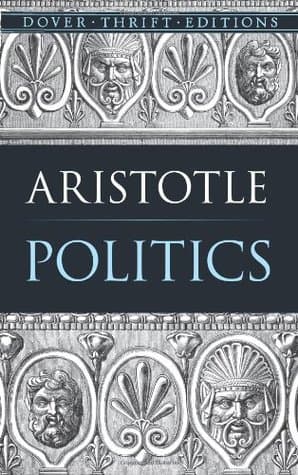
Politics cover
Archivist's Choice

Politics

Aristotle

Genre

Politics / History / Philosophy

Reading Time

1200 min

Key Themes

See below

Track Your Reading

Sign in to track this book

Aristotle's Politics examines the ideal state, citizen education, and wealth's purpose, while comparing his ideas to Plato's to define the best human life.

Core Idea

Aristotle's "Politics" argues that the state is a natural institution, needed for human flourishing, because people are 'political animals' whose highest good (eudaimonia) can only be found in an organized political community. The book looks at different governments, analyzing their strengths and weaknesses. It suggests a mixed government (polity) that balances aristocratic and democratic parts for stability and to help citizens live well. The state's main purpose is not just survival or money, but to grow moral and intellectual goodness in its people through good laws, education, and fair rule, helping individuals live a good and complete life.
Reading time
1200 min
Difficulty
Hard
✓ Read this if...
You are interested in the foundational theories of Western political thought, the ethical basis of governance, or the historical origins of concepts like citizenship and constitutionalism.
✗ Skip this if...
You are looking for a light, contemporary read on political science or find ancient philosophical texts on societal structures tedious and challenging to contextualize.

Core idea

The central argument and framework that powers the entire book.

Aristotle's "Politics" argues that the state is a natural institution, needed for human flourishing, because people are 'political animals' whose highest good (eudaimonia) can only be found in an organized political community. The book looks at different governments, analyzing their strengths and weaknesses. It suggests a mixed government (polity) that balances aristocratic and democratic parts for stability and to help citizens live well. The state's main purpose is not just survival or money, but to grow moral and intellectual goodness in its people through good laws, education, and fair rule, helping individuals live a good and complete life.

At a glance

Reading time

1200 min

Difficulty

Hard

Read this if...

You are interested in the foundational theories of Western political thought, the ethical basis of governance, or the historical origins of concepts like citizenship and constitutionalism.

Skip this if...

You are looking for a light, contemporary read on political science or find ancient philosophical texts on societal structures tedious and challenging to contextualize.

Key Takeaways

1

Man is a Political Animal

Human flourishing is inherently tied to participation in the polis.

Quote

Man is by nature a political animal.

Aristotle says humans are 'political animals' (zoon politikon). This is not just about being social, but a claim that people reach their best potential, or eudaimonia (flourishing), only in an organized political community, the polis. The state is not made up; it naturally grows from family and village. It is necessary for self-sufficiency and a 'good life.' Outside the polis, one is either a beast or a god, meaning a life below or above human potential. This core idea guides all of Aristotle's political thought, stressing that indivi...

Supporting evidence

Aristotle traces the development from family to village to state, arguing that the state is the ultimate community, aiming at the highest good. He contrasts humans with other animals, noting our unique capacity for speech and reason, which enables us to discern good and bad, just and unjust, and form communities based on these distinctions.

Apply this

Modern citizens should recognize their inherent connection to their political communities and actively participate in civic life, understanding that their well-being is deeply intertwined with the health and justice of the state. It encourages a rejection of extreme individualism in favor of communal responsibility.

eudaimoniapolispolitical-animal
2

The State as a Natural Institution

The polis is not an artificial construct but the natural culmination of human association.

Quote

The state is a creation of nature, and man is by nature a political animal.

Unlike some thinkers who saw the state as just an agreement, Aristotle says the state is a natural institution, the final and most complete human community. It grows naturally from the family, which meets daily needs, then into the village, which meets broader needs, and finally into the state, which achieves self-sufficiency and allows for the 'good life'—a life of virtue and moral excellence. The state's purpose is not just survival but to help people flourish and develop good character. This natural view gives the state a moral pur...

Supporting evidence

Aristotle's genetic account of the state's origin, moving from the pairing of male and female, master and slave, to the household, then the village, and finally the self-sufficient polis. Each stage fulfills a more complex set of needs, with the state being the ultimate fulfillment.

Apply this

Citizens should view their government and political structures not just as administrative bodies but as essential frameworks for collective well-being and moral development. This perspective encourages engagement and a shared responsibility for the state's ethical direction, rather than treating it as an external, arbitrary authority.

natural-stateteleologyself-sufficiency
3

Virtue as the Aim of the State

The best state cultivates virtuous citizens, not just prosperity or security.

Quote

The end of the state is the good life.

For Aristotle, the state's main purpose is not just money, security, or freedom. It is to help citizens grow moral and intellectual goodness. A state that puts wealth or power before virtue misses its real goal. The 'good life' (eudaimonia) comes from doing good things. The state must create conditions—through laws, education, and institutions—that let citizens practice and develop these virtues. This means the best government is one that best promotes its people's moral excellence, leading to a truly flourishing society.

Supporting evidence

Aristotle critiques states like Sparta for prioritizing military prowess over holistic virtue and states focused solely on wealth accumulation. He argues that the constitution should be designed to promote the 'highest good,' which he identifies with virtue and ethical living.

Apply this

Policy-makers and citizens should evaluate public policies not just by their economic or security outcomes, but by their impact on the moral character and civic virtue of the population. This implies a focus on education, ethical leadership, and institutions that encourage responsible citizenship over pure self-interest.

virtue-ethicseudaimoniagood-life
4

The Golden Mean in Governance

The ideal constitution often lies between extremes, favoring a strong middle class.

Quote

The best political community is formed by citizens of the middle class.

Applying his 'golden mean' idea to politics, Aristotle says extreme wealth and extreme poverty both corrupt citizens and make the state unstable. The very rich become proud and unwilling to obey, while the very poor become jealous and likely to revolt. So, the ideal state has a large and strong middle class. These citizens are less likely to be extreme, are more reasonable, and more likely to follow laws and keep stability. This balance promotes moderation and stops the state from swinging between harsh oligarchy and chaotic democracy...

Supporting evidence

Aristotle's analysis of different constitutions (monarchy, aristocracy, polity, and their corruptions: tyranny, oligarchy, democracy) and his argument that 'polity' (a blend of oligarchy and democracy, often rule by the middle class) is the most stable and desirable. He explicitly states that where the middle class is numerous, there are fewer factions and revolutions.

Apply this

Societies should strive to cultivate a robust middle class through economic policies and social structures that prevent extreme disparities in wealth. This means promoting policies that support broad economic opportunity and reduce the concentration of power and resources at either end of the spectrum.

golden-meanmiddle-classpolitypolitical-stability
5

Education for Citizenship

A public, uniform education system is crucial for cultivating virtuous citizens.

Quote

The training of the young should be provided by the state.

Aristotle stresses the importance of education, saying it must be public and consistent, controlled by the state, not left to families. Education's purpose is not just to teach facts but to shape citizens' character, teaching virtues needed for the common good and the state's government. Citizens must learn to rule and be ruled, to understand justice, and to do their civic duties. Shared education ensures common values and laws, promoting unity and stability, and preventing division that private education can cause. It is the base for...

Supporting evidence

Aristotle critiques the private education systems of his time and argues for a state-controlled, uniform curriculum that teaches music, gymnastics, and letters, with a focus on developing moral character suitable for the polis. He emphasizes that the education must align with the specific constitution of the state.

Apply this

Modern societies should prioritize robust public education systems that aim to cultivate civic virtues, critical thinking, and a shared understanding of societal values, beyond mere vocational training. This implies significant public investment and a curriculum designed to foster responsible and engaged citizens.

civic-educationpublic-educationvirtuous-citizen
6

Classification of Constitutions

States are classified by who rules and whether they rule for common good or self-interest.

Quote

There are three kinds of constitutions, and three deviations from these.

Aristotle classifies governments based on two things: the number of rulers (one, few, or many) and their goal (the common good or their own interest). The 'good' forms are Monarchy (one ruler for the common good), Aristocracy (few, the best, for the common good), and Polity (many, the middle class, for the common good). Their 'corrupt' forms are Tyranny (one ruler for self-interest), Oligarchy (few, the wealthy, for self-interest), and Democracy (many, the poor, for self-interest). This framework describes and also suggests good gover...

Supporting evidence

Aristotle's detailed analysis of each constitutional form, including their typical characteristics, strengths, weaknesses, and tendencies towards corruption or revolution. For example, he distinguishes between a true aristocracy (rule by the virtuous) and an oligarchy (rule by the wealthy).

Apply this

Citizens and leaders should critically analyze their political systems not just by their structure, but by their actual functioning and whether they genuinely serve the common good or are manipulated for sectional interests. This encourages vigilance against the corruption of power, regardless of the nominal form of government.

monarchyaristocracypolitytyrannyoligarchydemocracy
7

Justice as Proportional Equality

Justice means treating equals equally and unequals unequally, based on merit or contribution.

Quote

Justice is a virtue of the soul which is concerned with the distribution of honour, money, and other things which are to be divided among those who have a share in the constitution.

Aristotle's idea of justice is complex, covering both fair distribution and correcting wrongs. Distributive justice, especially for the state, is not about total equality but fair proportion: people should get shares (of jobs, honors, wealth) based on their merit, contribution, or relevant excellence within that government. This differs from modern equal views. For example, in an aristocracy, the virtuous get more; in an oligarchy, the wealthy; in a democracy, the free. A state's challenge is to define 'merit' fairly and ensure distri...

Supporting evidence

Aristotle's discussion of different criteria for distribution in various constitutions. He argues that the democratic conception of justice (equal shares for all free citizens) is flawed because it ignores differences in merit, just as the oligarchic conception (shares based on wealth) is flawed because it ignores virtue.

Apply this

Societies should strive for fairness in the distribution of opportunities, resources, and political influence, recognizing that 'fair' does not always mean 'equal.' This requires careful consideration of what criteria are most relevant and just for different types of distributions (e.g., political office vs. basic needs) and how to prevent arbitrary or self-serving definitions of merit.

distributive-justiceproportional-equalitymeritocracy
8

Household Management and Slavery

The management of the household is foundational to the state, but Aristotle's views on slavery are problematic.

Quote

The household is the first and simplest form of association.

Aristotle starts his state analysis with the household (oikos), seeing it as the basic unit from which larger groups grow. He discusses managing property, relationships between husband and wife, parents and children, and master and slave. While his ideas on household money and family's role are valuable, his defense of 'natural slavery' is a very troubling part of his philosophy. He argues that some people are naturally suited to be slaves because they lack reason, existing as 'living tools' for their masters. This justification is ce...

Supporting evidence

Aristotle's detailed discussion in Book I of 'Politics' on the components of the household, including the acquisition of property and the roles of master and slave. He distinguishes between natural slaves (those lacking full reason) and conventional slaves (those enslaved by conquest), arguing that only the former are just.

Apply this

While recognizing the historical context, modern readers must critically examine and reject Aristotle's justification of slavery. However, his emphasis on the household as a fundamental unit of society still encourages reflection on the importance of family structures and responsible resource management as foundations for a stable state.

oikosnatural-slaveryhousehold-management
9

The Purpose of Wealth Acquisition

Wealth is a means to an end, not an end in itself; excessive accumulation is unnatural.

Quote

There are two kinds of wealth-getting, one is a part of household management, the other is retail trade.

Aristotle separates two ways to get wealth: 'household management' (oikonomike), which is natural and limited, aiming for goods needed for the household and a good life; and 'chrematistics' (chrematistike), which is unnatural and possibly unlimited, aiming for wealth for its own sake, often through trade and lending. He criticizes the latter, especially making money just to have more money, as it twists wealth's natural purpose. True wealth, for Aristotle, means having enough resources to live a good life and take part in the polis, n...

Supporting evidence

Aristotle's detailed analysis in Book I of 'Politics' on the two types of wealth acquisition. He argues that money's natural purpose is as a medium of exchange, not as an end in itself, and criticizes usury as making 'money out of money,' which is unnatural.

Apply this

Individuals and societies should critically evaluate their economic priorities, distinguishing between acquiring resources necessary for well-being and pursuing unlimited wealth for its own sake. This encourages a focus on sustainable living, responsible resource management, and economic systems that serve human flourishing rather than pure profit maximization.

oikonomikechrematisticsusuryeconomic-ethics
10

The Dangers of Faction and Revolution

Understanding the causes of political instability is key to maintaining a stable state.

Quote

The greatest and most frequent cause of revolution is inequality.

Aristotle spends much time on why governments become unstable and have revolutions (stasis), showing a sharp understanding of human nature and social dynamics. He names inequality, especially between rich and poor, as the main cause of division and revolt. Other causes include ambition, fear, contempt, and unequal power growth in any part of the state. He carefully analyzes how different governments are prone to certain revolutions. His goal is not just to describe but to suggest solutions, such as keeping fair equality, building a st...

Supporting evidence

Aristotle's extensive catalog of causes of revolution, broken down by constitutional type (e.g., democracies are overthrown by oligarchs, oligarchies by the people). He provides practical advice for preserving states, such as small changes over time to prevent large ones, and ensuring no one citizen becomes too powerful.

Apply this

Leaders and citizens should actively work to mitigate extreme inequalities and address the root causes of social discontent. This involves promoting fair distribution of resources, ensuring political participation, and fostering a sense of shared community and justice to prevent the polarization that leads to instability and revolution.

stasisrevolutioninequalitypolitical-stability

Critical analysis

Notable Quotes

Man is by nature a political animal.

Defining the fundamental nature of humanity and society.

The state comes into existence for the sake of life and continues in existence for the sake of a good life.

Explaining the purpose and ultimate goal of the political community.

He who is unable to live in society, or who has no need because he is sufficient for himself, must be either a beast or a god.

Emphasizing the necessity of community for human flourishing.

Plurality of citizens, if not accompanied by community of action, is not a state.

Highlighting that a true state requires shared purpose and action, not just a collection of individuals.

Law is order, and good law is good order.

Underscoring the importance of law for a well-functioning society.

The best political community is formed by citizens of the middle class.

Advocating for a strong middle class as the foundation of a stable and just polity.

Poverty is the parent of revolution and crime.

Identifying a key cause of social unrest and instability.

Democracy is when the indigent, and not the men of property, are the rulers.

Defining democracy based on the economic status of the ruling class.

The city is a partnership of equals, aiming at the best life possible.

Describing the ideal nature and goal of the polis.

Justice is the bond of men in states, and the administration of justice, which is the determination of what is just, is the principle of order in political society.

Emphasizing the foundational role of justice in maintaining social order.

The true forms of government are those in which the rulers govern with a view to the common interest.

Distinguishing between good and corrupt forms of government based on their aims.

The citizen is one who shares in the administration of justice and in the holding of office.

Defining citizenship by active participation in the political life of the polis.

Education is the best provision for old age.

Highlighting the long-term benefits and importance of education.

For that which is common to the greatest number has the least care bestowed upon it.

Observing the 'tragedy of the commons' in relation to shared property.

Quiz

Test Your Knowledge

Ready to see how well you understood this book? Take our interactive quiz with 10 questions.

10
Questions
~5
Minutes
?
Best Score

Key Questions (FAQ)

Aristotle's Politics primarily investigates the nature of the state, the ideal form of government, and the relationship between the individual and the community. It seeks to understand how a state can best enable its citizens to live a good and virtuous life.

About the author

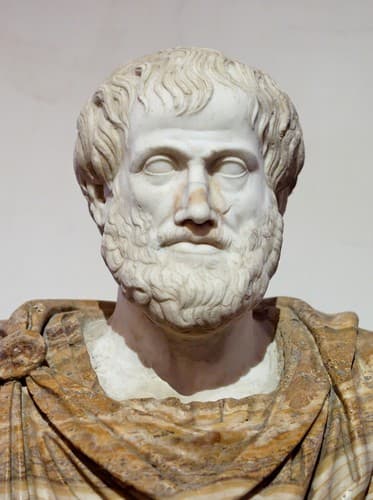
Aristotle

Aristotle was a Greek philosopher and polymath whose writings covered many subjects, including physics, ethics, politics, and art. He is renowned for his seminal works such as "Physics," "Poetics," and "Politics," which laid the groundwork for Western philosophy and scientific inquiry. A student of Plato and tutor to Alexander the Great, Aristotle's intellectual contributions continue to influence thought across numerous disciplines.