The Impossibility Spectrum
Not all 'impossible' things are equally impossible; Kaku categorizes them by their potential for future realization.
Quote
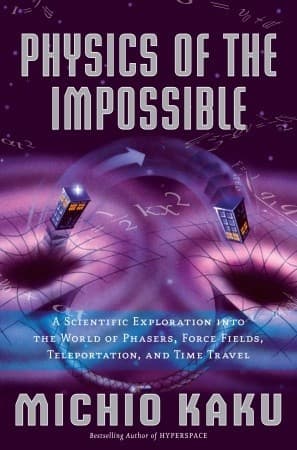
One hundred years ago, scientists would have said that lasers, televisions, and the atomic bomb were beyond the realm of physical possibility. In Physics of the Impossible, the renowned physicist Michio Kaku explores to what extent the technologies and devices of science fiction that are deemed equally impossible today might well become commonplace in the future.
Kaku introduces a tiered system for 'impossible' technologies: Class I (impossible today, but possible within a century or two), Class II (impossible today, but possible in millennia), and Class III (impossible today, and possibly never possible). This system shifts the discussion from a simple 'possible/impossible' to a nuanced understanding of scientific limits. It recognizes that our current understanding of physics is not complete and that technology often redefines what is feasible. This classification helps readers appreciate sc...
Supporting evidence
Kaku's entire book is structured around this classification, applying it to diverse concepts like force fields (Class I), faster-than-light travel (Class II), and perpetual motion machines (Class III).
Apply this
When encountering a new 'impossible' concept, apply Kaku's framework. Instead of dismissing it outright, consider which class it might fall into based on current scientific understanding. This encourages a more open-minded and scientifically informed approach to future technologies.