“Of all the needs of a statesman in a free country, the chief need is courage.”
— Reflecting on the qualities required for political success.

Anthony Trollope (2011)
Genre
Politics / Historical Fiction
Reading Time
16-20 hours
Key Themes
See below
Sign in to track this book
A charming Irish politician in 19th-century Britain struggles to balance his ideals with his desire for power and affection.
Phineas Finn, a young Irishman from County Clare, arrives in London with money from his father, Dr. Finn, wanting to join Parliament. His family initially worries about the cost, but his father encourages him. Phineas has passed the Bar but does not plan to practice law. He quickly gets involved in politics, making connections and learning about Parliament, hoping to find a way to a seat. His charm and intelligence help him fit into social circles, which is important for someone without established connections or wealth.
Phineas's chances seem low until he is offered a seat for Loughshane in Ireland, a borough controlled by Lord Brentford, a Liberal peer. This chance comes after the sudden death of the current MP. With Lord Brentford's backing and help from his Irish friend, Laurence Fitzgibbon, Phineas wins the election for the House of Commons. This quick rise to Parliament is mostly due to patronage, a common practice then, and starts his active political life in the Liberal party.
As a new MP, Phineas soon finds himself divided between his beliefs and party loyalty. He gains notice by speaking about Irish tenant rights, earning both praise and criticism. At the same time, his personality attracts several women. He becomes close friends with Lady Laura Standish, Lord Brentford's smart daughter. He also falls for Violet Effingham, a wealthy heiress engaged to his friend, Lord Chiltern. These early relationships set up much of the novel's romantic plot.
Phineas continues to support Irish tenant rights, often disagreeing with his party's more conservative members. His independent stand earns him respect from some, but also makes him a difficult subordinate. Still, his abilities are recognized, and Mr. Monk, a respected Liberal statesman, offers him a junior role as a Lord of the Treasury. This appointment is a big step in his political career, bringing him closer to government and increasing his social standing, though it also brings new pressures about party discipline.
Lady Laura Standish, seeing Phineas's potential, asks him to marry her. Phineas, despite his strong affection for Laura, realizes he does not love her enough and declines. Laura then marries the wealthy but cold Robert Kennedy, an older Scottish MP. Phineas, meanwhile, keeps pursuing Violet Effingham, even after she breaks off her engagement to Lord Chiltern. His attempts to win Violet are complicated by Chiltern's lasting love for her and Phineas's own feelings for Laura.
As a minister, Phineas faces increasing challenges. He is pressured to vote against measures he believes in, especially those about Irish land reform, for party unity. He struggles with the compromises of political life, often talking to his mentor, Mr. Monk. His honesty and ideals are both his strength and weakness, making him a target for political maneuvering. He also faces money problems, as his minister's salary is barely enough for his London life and to support his family in Ireland.
Lord Chiltern, still in love with Violet Effingham and angry about Phineas's pursuit of her, challenges Phineas to a duel. The duel happens in Belgium, and though neither is badly hurt, the event causes a scandal and further complicates Phineas's life. After this confrontation, Violet finally accepts Lord Chiltern's proposal, recognizing his steady devotion. This frees Phineas from his romantic involvement with Violet, allowing him to focus more on his political career, though with sadness.
The Liberal government introduces a reform bill, but Phineas cannot support a clause about Irish tenant rights, which he feels is not enough. Despite strong pressure from his party and the Prime Minister, Mr. Daubeny, Phineas votes against the government. This act of conscience leads to his resignation from his government role. While some praise his integrity, his resignation effectively ends his immediate chances for advancement in the party, leaving him unhappy with the realities of parliamentary politics.
After resigning, Phineas is at a crossroads. He sacrificed his political career for his beliefs, but without a clear path forward. He decides to return to Ireland, to his family home in County Clare, to think about his options. His father, Dr. Finn, and his sister, Mary, welcome him, though they worry about his future. During this time, he thinks about his time in London, his successes and failures, and his personal sacrifices. He finds comfort in familiar surroundings but also feels the pain of his political exile.
While in Ireland, Phineas meets Mary Flood Jones again, a childhood friend and daughter of a local clergyman, whom he always respected. Mary has quietly loved Phineas for years. After the intense world of London politics and high society, Phineas starts to see Mary differently, valuing her steadiness, kindness, and true affection. He realizes a stable life with true companionship might be more fulfilling than constantly seeking political fame. He proposes to Mary, and she happily accepts, marking a big change in his personal life.
Even after deciding to marry Mary and live in Ireland, Phineas cannot entirely let go of his political ambitions. His mentor, Mr. Monk, and other political friends suggest that his principled stand, though costly now, has earned him respect and that a return to Parliament is possible later. Phineas starts to consider how he might re-enter politics, perhaps with a clearer understanding of the compromises involved, but also with a stronger sense of his own beliefs and his new wife's support. The novel ends implying that Phineas Finn's political journey is not over.
The Protagonist
Phineas evolves from a naive, ambitious newcomer to a more seasoned but still principled politician, learning the harsh realities of Westminster while ultimately prioritizing personal integrity and love.
The Supporting
Laura sacrifices love for financial security, leading to a life of regret and unhappiness within a loveless marriage.
The Supporting
Violet moves from indecisiveness in love to making a firm commitment, choosing stability and devoted affection over more transient passions.
The Supporting
Chiltern matures from a reckless young man to a devoted husband, proving his love through perseverance and self-improvement.
The Supporting
Monk remains a steadfast moral and political guide, serving as a consistent example of integrity for Phineas.
The Antagonist
Kennedy remains a static, unyielding character, embodying the oppressive forces in Laura's life.
The Supporting
Dr. Finn consistently provides a stable, loving home base for Phineas, offering practical advice and support.
The Supporting
Mary remains a constant, loving presence, eventually becoming the stable anchor Phineas needs after his tumultuous London experiences.
A main theme is the conflict between Phineas Finn's ideals and the practical, often compromising, nature of politics. Phineas struggles to align his beliefs, especially on Irish tenant rights, with party loyalty and his government role. His resignation over a reform bill clause (Plot Summary, Section 8) shows his inability to compromise his convictions, illustrating the novel's question of whether one can keep integrity while pursuing a political career. Mr. Monk often shows how one can be both principled and effective within the system.
“A man's conscience is a very troublesome thing, and if he lets it get the upper hand of him, he is very apt to find himself in a minority.”
The novel explores how love, marriage, and social ambition connect, especially for Victorian men and women. Phineas's romantic choices are often influenced by potential social and financial gains, as seen in his pursuit of the wealthy Violet Effingham. Lady Laura Standish's marriage to Robert Kennedy, driven by a need for money despite her love for Phineas, leads to deep unhappiness (Plot Summary, Section 5). Phineas's eventual marriage to Mary Flood Jones, a woman of lower social standing but true affection, questions marriages based only on status, highlighting the importance of real companionship.
“A man must be either a god or a beast who can stand alone in the world and own no wants.”
Trollope shows the system of political patronage in 19th-century Britain, where access to Parliament and government roles often depended on connections, not just merit. Phineas's entry into Parliament through Lord Brentford's 'pocket borough' of Loughshane (Plot Summary, Section 2) is an example. His later rise, while partly due to his abilities, is greatly helped by figures like Mr. Monk and his social connections. The novel implicitly questions the fairness of this system, even while showing its reality.
“He knew that he was there, in Parliament, not by his own merits, but by the nomination of a peer.”
The novel's political background focuses on 'The Irish Question,' specifically tenant rights and Ireland's relationship with the British Parliament. Phineas Finn, as an Irish MP, often supports his countrymen, which often puts him at odds with the Liberal party (Plot Summary, Section 4). His principled stand on Irish land reform eventually leads to his resignation (Plot Summary, Section 8). This theme shows Trollope's interest in current political issues and offers a critical view of how Irish concerns were often handled in British politics.
“He thought that no country could be well governed unless the people of that country were contented.”
Social gatherings as crucial spaces for political and personal networking.
The novel frequently uses political salons, dinner parties, and social gatherings as key plot devices. These environments, often hosted by influential women like Lady Laura Standish or Madame Max Goesler, are where Phineas makes crucial connections, gathers information, and advances both his political and romantic interests. They serve as informal arenas for political maneuvering, gossip, and the formation of alliances, illustrating how much of Victorian politics happened outside the official chambers of Parliament. These scenes allow for the development of character relationships and the subtle shifting of political loyalties.
Complex romantic rivalries driving personal and social conflict.
The intricate web of romantic relationships, particularly the dynamic between Phineas, Lady Laura, Violet Effingham, and Lord Chiltern, serves as a primary driver of the non-political plot. These romantic entanglements create personal drama, test friendships, and reflect the societal pressures surrounding marriage and status. The rivalries, culminating in a duel (Plot Summary, Section 7), highlight the emotional stakes for the characters and often parallel the political maneuvering Phineas experiences, showing how his personal life is as complicated and demanding as his public one.
Characters facing choices between personal integrity and external pressures.
Throughout the novel, characters, especially Phineas, are repeatedly presented with moral dilemmas where they must choose between their deeply held principles and the pragmatic demands of their situation. Phineas's decision to resign his ministerial post over the Irish tenant-right clause (Plot Summary, Section 8) is the most prominent example. These dilemmas underscore the novel's central theme of idealism versus pragmatism, forcing characters to confront the cost of integrity in a world often driven by self-interest and political expediency. They serve to define character and drive the plot towards moments of significant personal sacrifice.
“Of all the needs of a statesman in a free country, the chief need is courage.”
— Reflecting on the qualities required for political success.
“A man must be a Tory, or a Whig, or a Radical, or a Liberal, or a Liberal-Conservative, or a Conservative-Liberal, or a Conservative-Radical, or a Radical-Conservative.”
— Phineas contemplating the nuances and divisions within political parties.
“It is a grand thing to be in Parliament. It is a grand thing to make speeches. It is a grand thing to have your name in the papers. It is a grand thing to have your voice heard.”
— Phineas's initial excitement and ambition upon entering the House of Commons.
“What is the good of a principle, if you are not to be allowed to carry it out?”
— Phineas grappling with the compromises and practicalities of political life.
“It is not by speeches that things are done, but by votes.”
— A seasoned politician advising Phineas on the true mechanics of parliamentary power.
“There are some men who are always striving to make the world better, and who, in their efforts, make it worse.”
— A cynical observation on well-intentioned but misguided reformers.
“A man who wants to get on in the world should marry a woman with money.”
— A practical, though perhaps unromantic, piece of advice given to Phineas.
“The greatest pleasure in life is to do what people say you cannot do.”
— Lady Laura Kennedy expressing her strong-willed and determined personality.
“It is so hard for a man to be honest when he is poor.”
— Phineas reflecting on the pressures and temptations faced by those with limited means.
“The House of Commons is a good school, but it is a dear one.”
— An observation on the demanding and often costly nature of a political career.
“A man's private life has very little to do with his public character.”
— A cynical view on the separation between personal conduct and political standing.
“It is a great thing to be a gentleman, but it is a greater thing to be a man.”
— A sentiment emphasizing integrity and character over mere social status.
“The highest ambition of a young man is to get into Parliament, and the next highest is to get out of it.”
— A humorous and somewhat disillusioned perspective on the political career path.
“There is no knowing what a man may be made to do, if he is only sufficiently pressed by circumstances.”
— Phineas considering the influence of external pressures on human actions.
Ready to see how well you understood this book? Take our interactive quiz with 10 questions.
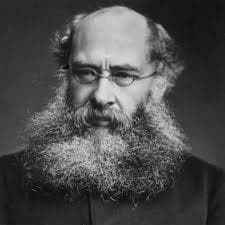
Anthony Trollope was an English novelist and civil servant of the Victorian era. Among his best-known works is a series of novels collectively known as the Chronicles of Barsetshire, which revolves around the imaginary county of Barsetshire. He also wrote novels on political, social, and gender issues, and other topical matters.

Brett Casper
5.0
Dirk Uffelmann
4.7

Winston S. Churchill
4.5
Chimamanda Ngozi Adichie
4.5
Will Durant
4.4
Thomas Sowell
4.4
W.E.B. Du Bois
4.3
Alan Moore
4.3