“When a government becomes destructive of these ends, it is the right of the people to alter or to abolish it.”
— A foundational philosophical statement on the right to revolution, often invoked by the characters.

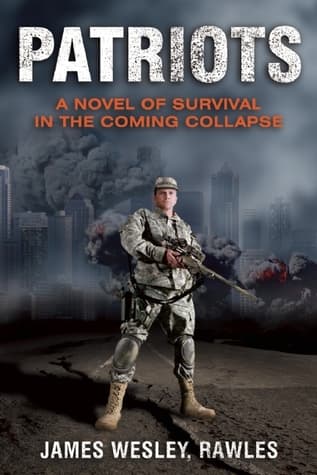
James Wesley (1999)
Genre
Politics / Thriller / Science Fiction
Reading Time
9 hours 36 min
Key Themes
See below
Sign in to track this book
In a future America, a group of friends fights societal collapse and lawless hordes, using survivalist tactics to reach an Idaho ranch and rebuild constitutional order.
The novel opens with the United States in a severe economic crisis. Hyperinflation is widespread, the stock market has crashed, and civil unrest is growing. Dr. Gary Harrington, a physician, and his wife, Sarah, are at home in Indianapolis, discussing the worsening situation with their friends, attorney Randall "Randy" Anderson and his wife, Alice. They know the fragility of modern society and have prepared for a collapse for years. They monitor news reports of increasing violence and government instability, firming up their decision to activate their plan: to evacuate to Randy's prepared retreat in northern Idaho, a place they call 'The Ranch'.
The turning point comes when electricity grids fail and communication systems go down, plunging the country into darkness and silence. Rioting and looting erupt in Indianapolis. Gary and Sarah, along with Randy and Alice, execute their emergency plan. They get their pre-staged vehicles, which are heavily modified for survival and loaded with supplies. Navigating through burning streets and avoiding desperate mobs, they meet other group members, including the skilled survivalist Eddie and his family. Their goal is to get out of the city before it becomes an inescapable trap, facing a civilization in freefall.
The journey west is full of danger. Roads are blocked by abandoned vehicles, and law enforcement is gone. The group meets desperate refugees, opportunistic looters, and organized gangs. They must use their extensive survival training, using concealed routes, rationing supplies, and maintaining strict security. Gary's medical skills treat minor injuries, while Randy's tactical knowledge guides their movements. They see the breakdown of all societal norms, witnessing acts of both horrific violence and unexpected kindness from strangers. This confirms that survival depends on self-reliance and vigilance.
After weeks of travel, the group reaches The Ranch in northern Idaho. It is a secluded, heavily fortified property, stocked with years of food, fuel, and ammunition, and has its own power and water systems. Randy, who meticulously prepared the location, guides them through its defenses. They begin the hard task of settling in, establishing routines for security, gardening, and resource management. The initial relief of reaching safety is balanced by the understanding that their struggle is far from over, as the outside world remains dangerous and unpredictable. They immediately set up a perimeter watch and begin consolidating their resources.
The peace at The Ranch is short-lived. Desperate groups of survivors, some organized and some chaotic, begin to appear in the area, drawn by rumors of a self-sufficient community. The Ranch's defenses are tested as they repel initial attempts at probing and infiltration. Gary, Randy, and Eddie lead the defensive efforts, using their tactical skills and the ranch's fortifications to deter attackers without unnecessary bloodshed. These encounters show the constant threat and the need for vigilance, forcing the group to make hard decisions about how to interact with the broken world outside and when to use force.
As time passes, The Ranch begins to become a small, self-sustaining community. They meet and carefully vet other survivors who prove trustworthy and have valuable skills, such as mechanics, farmers, and former military personnel. These new members, including the resourceful Bob, join the ranch's operations, strengthening its defenses and expanding its capabilities. The group establishes a council for decision-making and a system of labor, showing their commitment to rebuilding order and mutual support in a world without it, but always keeping a healthy skepticism of outsiders.
The challenges grow when a more organized and ruthless group of raiders, led by a charismatic but brutal leader, begins to operate in the region. These raiders are better armed and more determined than previous threats, posing a significant danger to The Ranch. Randy and the other leaders recognize the need for a more coordinated defense strategy. They fortify their positions further, conduct patrols, and prepare for a potential siege, understanding that a direct confrontation is likely. The stakes are raised, and the community's survival rests on its ability to face a determined enemy.
The anticipated attack comes, leading to a fierce and prolonged battle for The Ranch. The raiders launch a full-scale assault, testing every part of the community's defenses and the resolve of its members. Gary, Randy, Eddie, and the other residents fight bravely, using their training, the ranch's strategic layout, and their combined firepower. Casualties occur on both sides, but the defenders' planning, discipline, and knowledge of their terrain ultimately win. They repel the raiders, securing their home, but at a heavy cost in lives and resources.
Following the battle, The Ranch wins but is scarred. They bury their dead and care for the wounded, reflecting on the cost of their survival. Recognizing the need for broader cooperation, Randy and other leaders begin to reach out to other survivalist groups and communities in the region. They discuss strategies for establishing regional stability, enforcing a new form of justice, and eventually, working towards restoring constitutional law and order on a larger scale. This marks a shift from pure survival to the goal of rebuilding society from the ground up, starting with local alliances.
The novel concludes with The Ranch and its allies working to form a new, self-governing society based on constitutional principles. They establish rules of conduct, a system of trade, and a collective defense pact among the allied communities. Gary continues to provide medical care, while Randy focuses on legal and organizational structures. The future is uncertain, and the challenges immense, but the survivors are united by a common purpose: to build a better, more resilient society from the ashes of the old. They have moved from merely surviving to actively building, showing hope for a new beginning.
The Protagonist
Gary transforms from a suburban doctor into a vital leader and combatant, adapting his medical expertise to a brutal new world while retaining his humanity.
The Protagonist
Randy evolves from a planner into a hardened leader and defender, guiding his community through extreme adversity and working to rebuild constitutional order.
The Supporting
Sarah grows from a prepared spouse into a vital and capable member of the survival community, contributing her skills and resilience to its success.
The Supporting
Alice maintains her supportive role, becoming an anchor of stability and practicality within The Ranch community.
The Supporting
Eddie's tactical skills are fully utilized, making him an indispensable defender and trainer for the growing community.
The Supporting
Bob integrates into The Ranch, using his mechanical skills to contribute significantly to the community's sustainability and defense.
The Antagonist
The Raider Leader serves as a catalyst for the Ranch's growth in defensive capabilities and unity, ultimately being defeated as the community solidifies its power.
The novel shows how quickly modern society can fall apart when its core systems—economic, governmental, and infrastructural—collapse. The rapid descent from urban life to lawless chaos in Indianapolis, with widespread looting and violence, highlights the thin layer of order. This theme is central as characters reflect on how past conveniences are now deadly, forcing them to adapt to a brutal, primitive existence where only self-reliance and immediate action matter. The initial journey through abandoned cities reminds them of this fragility.
“The lights went out, and with them, the last vestiges of the world we knew.”
A main idea of 'Patriots' is the importance of individual and group preparedness for catastrophic events. Randy, Gary, and their friends spent years gathering skills, supplies, and a fortified retreat. Their survival depends entirely on this foresight, from their well-stocked vehicles to The Ranch's defenses and stored resources. The story contrasts their success with the suffering of unprepared people, stressing that proactive measures are essential for a post-collapse world. This theme is clear in every decision and action the protagonists take, from rationing to tactical defense.
“Luck favors the prepared, and in this new world, preparation was the only currency that mattered.”
Without established government, the novel explores how new communities form and the principles they use to govern themselves. The Ranch starts as a small group of friends but grows to include other trustworthy survivors, showing the need for cooperation. They establish rules, a system of defense, and eventually, alliances with other groups, aiming to rebuild a society based on constitutional principles rather than anarchy. This theme highlights the human need for order and collective action, contrasting their efforts with the violent, predatory groups that emerge.
“We weren't just surviving; we were building. Building a new foundation, brick by painful brick.”
The collapse forces characters to make difficult moral choices, blurring the lines between right and wrong for survival. They must decide when to use lethal force, when to help strangers, and how to allocate scarce resources. Gary, the doctor, often struggles with these ethical questions, balancing his oath to heal with the necessity of self-defense. The novel shows the brutality needed for survival, but it also explores the characters' attempts to maintain their humanity and principles amidst the chaos, especially when dealing with desperate refugees or hostile raiders.
“The old rules were gone, but that didn't mean we had to abandon all honor.”
The story details the psychological impact of losing modern comforts and the security of a functioning society. Characters mourn the loss of electricity, instant communication, easy access to food, and the rule of law. Children in the story grow up in a world where violence and scarcity are normal, losing their innocence. This theme shows the harsh reality that the 'old world' is gone, forcing survivors to embrace a more primitive, dangerous existence and to redefine their understanding of safety and normalcy, symbolized by the constant need for vigilance.
“Every whisper of the wind, every distant sound, was now a potential threat. The world had become a hunter's game.”
A rapid, systemic economic failure initiates the societal breakdown.
The novel uses a catastrophic economic collapse, driven by hyperinflation and a stock market crash, as the primary trigger for all subsequent events. This device grounds the dystopian scenario in a plausible, albeit extreme, real-world threat, making the ensuing chaos feel more immediate and believable. It sets the stage for the breakdown of infrastructure, law enforcement, and social order, forcing the characters into a survivalist mode from the very beginning. This initial crisis is what differentiates the story from other post-apocalyptic narratives that might rely on natural disasters or plagues.
A meticulously prepared, self-sufficient safe haven.
The Ranch serves as the central hub and ultimate destination for the protagonists. It is a highly detailed, pre-planned survival compound, complete with its own power, water, food production, and extensive defenses. This device allows the author to showcase practical survivalist techniques and strategies in a controlled environment. It represents the culmination of the characters' preparedness efforts and acts as a beacon of hope and stability in a chaotic world, providing a tangible goal for their perilous journey and a base from which to rebuild.
A perilous overland trek through a collapsed nation.
The initial segment of the novel is structured as a journey, with the protagonists traveling from Indianapolis to Idaho. This device allows the author to illustrate the widespread effects of the collapse across different regions, expose the characters to various threats (looters, desperate refugees, broken infrastructure), and develop their skills and resolve through direct experience. It provides a dynamic backdrop against which the characters' survival strategies are tested, making the eventual arrival at The Ranch a hard-earned victory rather than a simple starting point.
Detailed and realistic depiction of survival techniques and gear.
The novel employs a 'hard science' approach to survivalism, providing meticulous details about gear, tactics, medical procedures, and resource management. This device enhances the realism of the story, making the characters' actions feel authentic and believable. It educates the reader on practical aspects of preparedness, from firearm usage and defensive strategies to food preservation and alternative energy. This detailed exposition serves to immerse the reader in the practicalities of a post-collapse world, distinguishing it from more fantastical survival stories.
“When a government becomes destructive of these ends, it is the right of the people to alter or to abolish it.”
— A foundational philosophical statement on the right to revolution, often invoked by the characters.
“The price of freedom is eternal vigilance.”
— A recurring theme emphasizing the constant need for readiness and awareness.
“They had traded security for freedom, and now they had neither.”
— Reflecting on the state of society after the collapse, where people gave up rights for safety.
“The most dangerous thing in the world is a government that fears its own people.”
— A commentary on the oppressive nature of the post-collapse government.
“It's not about being a hero; it's about being prepared.”
— A core tenet of the survivalist philosophy espoused by the protagonists.
“When the grid goes down, civilization goes with it.”
— Highlighting the fragility of modern infrastructure and its impact on society.
“The only thing necessary for the triumph of evil is for good men to do nothing.”
— An appeal to action and a warning against complacency in the face of tyranny.
“Food, water, shelter, security. Everything else is a luxury.”
— A stark reminder of basic human needs in a survival situation.
“They called us paranoid. We called it foresight.”
— The protagonists' justification for their preparedness in the face of skepticism.
“The ultimate test of a man is not where he stands in moments of comfort and convenience, but where he stands at times of challenge and controversy.”
— Reflecting on the moral character revealed during times of crisis.
“You can't eat your money when the world falls apart.”
— A critique of materialism and the irrelevance of currency in a post-collapse world.
“The tree of liberty must be refreshed from time to time with the blood of patriots and tyrants.”
— A direct quote from Jefferson, used to justify revolutionary action.
“Hope is a powerful weapon, but only if it's backed by action.”
— Emphasizing that passive hope is insufficient without active resistance.
Ready to see how well you understood this book? Take our interactive quiz with 10 questions.

Biography coming soon.

Brett Casper
5.0

Dirk Uffelmann
4.7

Winston S. Churchill
4.5

Chimamanda Ngozi Adichie
4.5

Will Durant
4.4
Thomas Sowell
4.4

W.E.B. Du Bois
4.3

Alan Moore
4.3