BookBrief
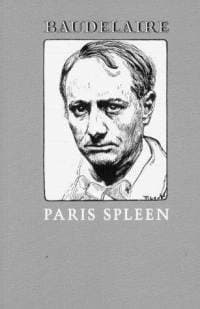
Paris Spleen cover
Archivist's Choice

Paris Spleen

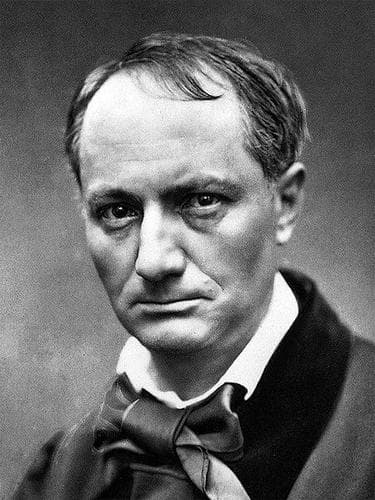
Charles Baudelaire (2013)

Genre

Philosophy

Reading Time

120 min

Key Themes

See below

Track Your Reading

Sign in to track this book

In 19th-century Paris, Baudelaire examines the city's intoxicating squalor and fleeting beauty, creating a new prose poetry that reflects a restless era.

Synopsis

Baudelaire's "Paris Spleen" is a collection of prose poems that captures the fragmented, melancholic, and often raw beauty of 19th-century Parisian life. Through the eyes of the flâneur, the book explores the tension between urban experiences and the artist's search for beauty, often finding meaning in the ordinary, the overlooked, and the morally complex. It is a reflection on the human condition during rapid societal change, expressing a deep weariness, or 'spleen,' alongside an appreciation for new urban experiences. The collection suggests that true poetic expression for the modern age needs to move past traditional verse. Instead, it argues for the flexibility of prose, which can reflect the discontinuous, contradictory, and often surprising nature of city life. Baudelaire makes the ordinary special, elevating the anonymous crowd, the street vendor, and city daydreams into subjects for artistic thought, thereby redefining what poetry can be.
Reading time
120 min
Difficulty
Medium
✓ Read this if...
You are interested in the origins of modernism, the philosophy of urban life, the flâneur archetype, or the development of prose poetry. You appreciate works that explore melancholy, beauty in decay, and the psychological impact of the modern city.
✗ Skip this if...
You prefer narrative-driven books, highly structured arguments, or optimistic themes. The fragmented, often dark, and introspective nature of prose poetry might not appeal to those looking for clear plot or character development.

Plot Summary

Principal Figures

Themes & Insights

Plot Devices & Literary Techniques

Critical analysis

Notable Quotes

It is not given to every man to take a bath of multitude; to make the crowd his own, as the air his garment, and to drink, as with an incomparable alacrity, of the universal fluid.

From 'The Crowd', describing the flâneur's unique joy in urban anonymity.

I have always thought that the only way to arrive at the knowledge of others is to begin by knowing oneself. In this, I am perhaps a little like a child.

From 'The Old Mountebank', reflecting on self-knowledge and understanding.

Life, a hospital where each patient is possessed by the desire of changing his bed.

From 'Anywhere Out of the World', a famous line expressing existential restlessness.

The poet is like the prince of the clouds, who frequents the storm and laughs at the archer.

From 'The Albatross' (from 'Les Fleurs du Mal', but its spirit resonates strongly with Paris Spleen's themes of the artist's alienation).

How many times have I been obliged to confess that the most subtle of human perversities consists in being the source of one's own misfortune!

From 'The Bad Glazier', observing human self-sabotage.

The beautiful is always strange.

A foundational aesthetic principle articulated in his essays, and profoundly evident in 'Paris Spleen'.

Solitude is dangerous for a man of twenty; it is sweet for a man of forty.

From 'The Widows', contrasting the experience of solitude at different life stages.

To be a great man and a saint for oneself, that is the only important thing.

From 'The Bad Glazier', an ironic or perhaps deeply personal statement on self-worth.

I can conceive of no more delightful occupation than to be always dreaming of a journey, without ever having to make it.

From 'Anywhere Out of the World', expressing a preference for imagined escape over reality.

Melancholy is the most distinguished of our guests.

From 'The Old Mountebank', personifying melancholy as an ever-present companion.

One must always be a poet, even in prose.

An underlying principle of 'Paris Spleen' itself, showcasing the poetic potential of prose.

The study of the beautiful is a duel in which the artist, shrieking with terror, is vanquished before he has begun.

From 'The Desire to Paint', highlighting the struggle and fear inherent in artistic creation.

I am unable to understand how a man of genius can have a weak heart.

From 'The Desire to Paint', linking genius with resilience and strength.

There are no beautiful subjects, or rather, the subject is not the point, but the artist.

A core idea from his art criticism, applied to his own work where the mundane becomes profound through his lens.

Quiz

Test Your Knowledge

Ready to see how well you understood this book? Take our interactive quiz with 10 questions.

10
Questions
~5
Minutes
?
Best Score

Key Questions (FAQ)

'Spleen' in Baudelaire's work refers to a profound melancholic state, a sense of ennui, despair, and existential boredom, often linked to the urban environment and the pressures of modern life. It's a feeling of being weighed down by the world's triviality and one's own mortality.

About the author

Charles Baudelaire

Charles Pierre Baudelaire was a French poet who also worked as an essayist, art critic and translator. His poems are described as exhibiting mastery of rhyme and rhythm, containing an exoticism inherited from Romantics, and are based on observations of real life.