BookBrief
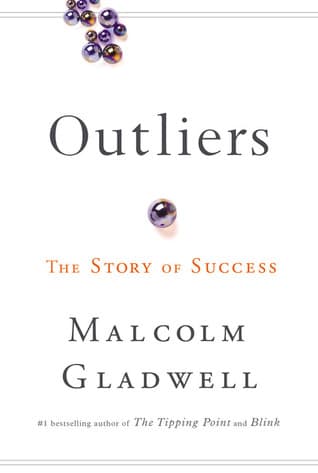
Outliers: The Story of Success cover
Archivist's Choice

Outliers: The Story of Success

Malcolm Gladwell (2008)

Genre

Business / Leadership / Economics / Science / Self-Help

Reading Time

12 Minutes

Key Themes

See below

Track Your Reading

Sign in to track this book

Malcolm Gladwell argues that true success is not just about individual talent, but about the hidden advantages of culture, opportunity, and unique experiences that shape extraordinary lives.

Core Idea

Malcolm Gladwell's "Outliers" challenges the conventional understanding of success, arguing that it is not solely a product of individual talent, hard work, or innate ability. Instead, Gladwell posits that extraordinary success is often the result of a complex interplay of hidden advantages, cultural legacies, timing, opportunities, and environmental factors. He introduces concepts like the '10,000-hour rule' and explores how birth dates, family backgrounds, and specific historical and cultural contexts provide crucial, often unacknowledged, boosts to those who achieve outlier status. The central thesis is that success is deeply rooted in the circumstances and environments from which individuals emerge, rather than being an entirely self-made phenomenon. Gladwell uses a series of compelling anecdotes and case studies, from hockey players and Bill Gates to plane crash investigators and Korean airline pilots, to illustrate how a combination of fortunate circumstances, deliberate practice, and cultural heritage shapes an individual's trajectory toward exceptional achievement, ultimately redefining our perception of what it means to be successful.
Difficulty
Medium

Core idea

The central argument and framework that powers the entire book.

Malcolm Gladwell's "Outliers" challenges the conventional understanding of success, arguing that it is not solely a product of individual talent, hard work, or innate ability. Instead, Gladwell posits that extraordinary success is often the result of a complex interplay of hidden advantages, cultural legacies, timing, opportunities, and environmental factors. He introduces concepts like the '10,000-hour rule' and explores how birth dates, family backgrounds, and specific historical and cultural contexts provide crucial, often unacknowledged, boosts to those who achieve outlier status.

The central thesis is that success is deeply rooted in the circumstances and environments from which individuals emerge, rather than being an entirely self-made phenomenon. Gladwell uses a series of compelling anecdotes and case studies, from hockey players and Bill Gates to plane crash investigators and Korean airline pilots, to illustrate how a combination of fortunate circumstances, deliberate practice, and cultural heritage shapes an individual's trajectory toward exceptional achievement, ultimately redefining our perception of what it means to be successful.

At a glance

Difficulty

Medium

Key Takeaways

1

The 10,000-Hour Rule

Mastery isn't innate talent; it's a product of immense, deliberate practice.

Quote

The thing that distinguishes one performer from another is how hard he or she works. That's it. And what's more, the people at the top don't work just harder or even much harder than everyone else. They work much, much harder.

Gladwell's most famous idea is that becoming an expert in any field takes about 10,000 hours of practice. This isn't just any practice, but focused effort. He shows this with the Beatles, who played for endless hours in Hamburg clubs, and Bill Gates, who had early access to computers. Gates accumulated thousands of programming hours before most people even saw a computer. This idea questions the belief in 'natural talent,' suggesting that opportunity and consistent effort are more important. While the 10,000-hour rule has faced some a...

Supporting evidence

The Beatles' 10,000 hours playing in Hamburg; Bill Gates' early access to computers and programming hours at Lakeside School.

Apply this

Identify a skill you want to master and commit to a structured, deliberate practice regimen, tracking your hours. Seek out environments that facilitate sustained, deep work.

2

The Importance of Birthdate

Arbitrary cut-off dates in sports and education create significant, lasting advantages for some.

Quote

The particular month in which you are born, it turns out, affects your chances of success.

Gladwell shows how arbitrary cut-off dates in youth sports and education can affect a person's life path. For example, Canadian hockey players born in the early months of the year (January, February, March) are much more likely to be in elite leagues. This is because they are slightly older and more physically developed than their peers when selections start, giving them early advantages like more coaching, better facilities, and increased playing time. These advantages add up over time. This shows how small structural details can cre...

Supporting evidence

Analysis of birthdates of elite Canadian hockey players, showing a disproportionate number born in the first three months of the year.

Apply this

When designing systems (e.g., educational programs, talent identification), critically examine how arbitrary thresholds might unfairly advantage or disadvantage certain groups. Advocate for more flexible or age-banded approaches.

3

The Power of Practical Intelligence

Book smarts (IQ) are overrated; practical intelligence and social savvy are keys to navigating the world.

Quote

IQ is a good predictor of success in school. But life is more than school.

Gladwell argues that a basic IQ is needed, but beyond a certain point (around 120), a higher IQ doesn't lead to greater real-world success. Instead, 'practical intelligence'—knowing how to 'talk your way into something,' 'negotiate,' or 'read a situation'—becomes much more important. He compares the 'concerted cultivation' parenting style of middle-class families, who actively work with institutions and advocate for their children, with the 'accomplishment of natural growth' common in poorer families. Children from concerted cultivati...

Supporting evidence

Lareau's study on parenting styles (concerted cultivation vs. accomplishment of natural growth) and their impact on children's interactions with institutions.

Apply this

Develop your 'practical intelligence' by practicing negotiation, active listening, and understanding social cues. Teach children how to advocate for themselves and navigate bureaucratic systems effectively.

4

Legacy and Cultural Heritage

Deep-seated cultural legacies, often inherited over generations, profoundly shape behavior and success.

Quote

Success is not a random act. It arises out of a predictable and powerful set of circumstances and opportunities.

This is perhaps the book's most striking claim: that cultural legacies, sometimes centuries old, shape our behavior and performance. Gladwell looks at the 'culture of honor' in the American South, tracing its origins to herding communities and showing how it still affects rates of violence and defensive reactions. He also explores why Asian students do well in math, linking it to the historical demands of wet-rice farming, which taught diligence, persistence, and the belief that hard work, not innate ability, brings success. While som...

Supporting evidence

Culture of honor in the American South (Nisbett and Cohen's studies); historical demands of wet-rice farming in Asian cultures and their link to work ethic.

Apply this

Recognize and reflect on the cultural legacies that have shaped your own worldview and behaviors. When working in diverse teams, strive to understand the cultural backgrounds that influence different approaches to work and communication.

5

Meaningful Work and Autonomy

Work that is complex, autonomous, and provides a clear link between effort and reward fosters engagement and success.

Quote

Hard work is a prison sentence only if it does not have meaning.

Gladwell explores the 'Roseto Mystery,' a community in Pennsylvania where residents had remarkably low rates of heart disease, despite typical Italian-American diets and smoking. The secret was not diet or exercise, but their strong, equal social structure and meaningful work. He connects this to the Jewish immigrant experience in New York's garment industry, where despite difficult conditions, the work offered independence, complexity, and a direct link between effort and reward (piece-rate pay). This allowed them to develop skills, ...

Supporting evidence

The 'Roseto Mystery' (community health); Jewish immigrants in the New York garment industry and their ability to become entrepreneurs.

Apply this

Seek out or cultivate work environments that offer complexity, autonomy, and a clear line of sight between your efforts and their impact. If leading a team, empower members with ownership and a sense of purpose.

6

The Trouble with Geniuses

Exceptional intelligence alone is not enough; opportunity and support are critical for high IQs to translate into success.

Quote

The Terman study concluded that the best and the brightest came from a particular background and received a particular kind of nurturing.

Gladwell examines Lewis Terman's long-term study of 'geniuses' (Termites), children with very high IQs. He finds that while many were successful, some of the most brilliant did not achieve extraordinary things, and some Nobel laureates were initially rejected from the study for not being 'smart enough.' This shows that a high IQ, while an advantage, does not guarantee success. What truly set the successful Termites apart was not just their intelligence, but also their background—often wealthy, stable, and supportive—and the practical ...

Supporting evidence

Lewis Terman's 'Termites' study, showing that high IQ alone didn't guarantee exceptional achievement.

Apply this

Don't solely rely on IQ tests or academic metrics for identifying potential. Focus on fostering supportive environments, providing opportunities, and developing practical intelligence alongside academic skills.

7

Demographic Luck

Being born at the right time into the right demographic can be a colossal, unearned advantage.

Quote

It is not the brightest who succeed. Nor is success simply the sum of the decisions we make and the efforts we put in. It is a product of a 'particular time and place.'

Gladwell argues that historical timing and population trends play a huge, often unnoticed, role in success. He points to the birth year of software pioneers like Bill Gates (1955). This generation was perfectly positioned to take advantage of the personal computer revolution, reaching their late teens and early twenties just as the technology was emerging and available. They had enough time to get the 10,000 hours of practice needed for mastery, without being too old to adapt or too young to have access. This 'demographic luck' offere...

Supporting evidence

The birth year (mid-1950s) of many software billionaires like Bill Gates and Steve Jobs, coinciding with the rise of personal computing.

Apply this

Recognize that your own opportunities may be influenced by your birth year and historical context. Be open to identifying and seizing emerging trends and technologies, understanding that timing can be a critical factor.

8

The Power of the Air Controller

Communication and cultural norms can have life-or-death consequences in high-stakes environments.

Quote

The most important lessons about why some people succeed and others don't are not to be found in the personal histories of the successful. They are to be found in the cultures and communities they come from.

In perhaps the book's most compelling example of cultural legacy, Gladwell analyzes the high rate of plane crashes in Korean Air during the late 1980s and 1990s. He attributes this not to individual pilot error, but to Korea's hierarchical culture, specifically its 'power distance index' (PDI). Korean co-pilots, due to cultural norms of respect, struggled to directly challenge or correct their captains, even when critical errors were made. Only when Korean Air started a program to retrain its pilots in English (a language that reduces...

Supporting evidence

Analysis of Korean Air's accident rate and subsequent improvement after implementing English-only cockpit communication and assertiveness training.

Apply this

In high-stakes or cross-cultural environments, explicitly train for direct, assertive communication, especially across hierarchical boundaries. Foster psychological safety where subordinates feel empowered to speak up.

9

The Cumulative Advantage of Small Opportunities

Success is often a chain reaction of small, compounding opportunities rather than a single 'big break.'

Quote

Success is not a random act. It arises out of a predictable and powerful set of circumstances and opportunities.

Gladwell consistently shows that success is not about one grand moment of genius or luck, but a series of small advantages that build on each other. The hockey players born in January get more practice, which leads to better coaching, which leads to more selective teams, and so on. Bill Gates's early access to computers in the 1960s was an 'opportunity' that led to thousands of hours of programming, which positioned him well for the PC revolution. These were not singular 'breaks' but rather a combination of favorable circumstances tha...

Supporting evidence

The Canadian hockey player example; Bill Joy's early access to a time-sharing system at the University of Michigan.

Apply this

Actively seek out and leverage small, compounding opportunities in your career and personal development. When mentoring others, focus on creating initial advantages that can snowball into larger successes.

10

The Myth of the Self-Made Man

No one succeeds alone; personal achievement is inextricably linked to inherited advantages and societal structures.

Quote

Outliers are those who have been given opportunities — and who have had the strength and presence of mind to seize them.

Gladwell's main argument continuously breaks down the 'self-made man' myth. From the Beatles' unique Hamburg training to Bill Gates's unmatched access to early computing, from the cultural history of diligent rice farmers to the demographic luck of a birth year, he shows that even the most exceptional people are products of specific times, places, cultures, and opportunities. Their success is not solely due to their individual grit or talent, but also to the invisible advantages they inherited or found. This is the book's fundamental ...

Supporting evidence

All case studies throughout the book (Beatles, Gates, hockey players, Korean Air, Terman's Termites) collectively support this thesis.

Apply this

Cultivate gratitude for the opportunities you've received. Advocate for equitable access to opportunities and resources for others, recognizing that societal structures play a huge role in individual outcomes.

Critical analysis

Notable Quotes

Quiz

Test Your Knowledge

Ready to see how well you understood this book? Take our interactive quiz with 10 questions.

10
Questions
~5
Minutes
?
Best Score

Key Questions (FAQ)

The main idea of 'Outliers' is that extraordinary success is not solely due to innate talent or hard work, but is significantly shaped by a combination of environmental factors, cultural legacies, and opportunities that are often overlooked. Gladwell argues we should pay more attention to the circumstances of outliers' upbringing and the historical context they emerged from.

About the author