BookBrief
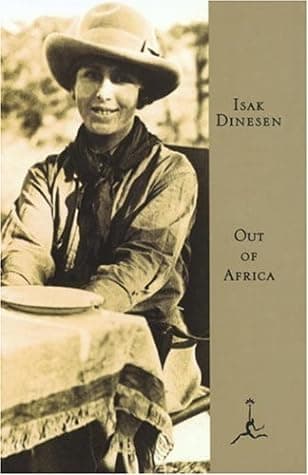
Out of Africa cover
Archivist's Choice

Out of Africa

Isak Dinesen (1937)

Genre

Lifestyle / Biography / Memoir / History

Reading Time

10-12 hours

Key Themes

See below

Track Your Reading

Sign in to track this book

In the wild heart of Kenya, a Danish baroness builds a life on a coffee plantation, surrounded by untamed land and a passionate, tragic love, while becoming a master storyteller.

Core Idea

Isak Dinesen's "Out of Africa" is a memoir about her seventeen years running a coffee plantation in British East Africa (now Kenya) in the early 20th century. It explores the relationship between humans and the wild, discussing themes of belonging, loss, and the short-lived nature of human efforts against a grand, indifferent landscape. Dinesen writes about colonial life, her affection for the native Kikuyu people and their culture, the challenges and rewards of living with nature, and how both love and solitude shaped her in a land that captured her heart but not her permanence. The book is a collection of stories, character sketches, and thoughts, all with a sense of longing for a world that was always just out of reach.
Reading time
10-12 hours
Difficulty
Medium
✓ Read this if...
You appreciate evocative prose, reflective memoirs, and a deep, philosophical engagement with nature, culture, and the human spirit in a historical colonial context.
✗ Skip this if...
You prefer fast-paced narratives, plot-driven stories, or a strictly objective historical account without poetic license and personal reflection.

Core idea

The central argument and framework that powers the entire book.

Isak Dinesen's "Out of Africa" is a memoir about her seventeen years running a coffee plantation in British East Africa (now Kenya) in the early 20th century. It explores the relationship between humans and the wild, discussing themes of belonging, loss, and the short-lived nature of human efforts against a grand, indifferent landscape. Dinesen writes about colonial life, her affection for the native Kikuyu people and their culture, the challenges and rewards of living with nature, and how both love and solitude shaped her in a land that captured her heart but not her permanence. The book is a collection of stories, character sketches, and thoughts, all with a sense of longing for a world that was always just out of reach.

At a glance

Reading time

10-12 hours

Difficulty

Medium

Read this if...

You appreciate evocative prose, reflective memoirs, and a deep, philosophical engagement with nature, culture, and the human spirit in a historical colonial context.

Skip this if...

You prefer fast-paced narratives, plot-driven stories, or a strictly objective historical account without poetic license and personal reflection.

Key Takeaways

1

The Allure of the Wild

Africa as a teacher of profound truths, not just a backdrop.

Quote

Here was a people who could not themselves read, but to whom the stories from the books, when I told them, were as if written in the air, or in their own hearts.

Dinesen's memoir is more than a travelogue; it shows Africa's power to change someone. She describes the continent as a living character that demands respect, teaches humility, and reveals basic truths about existence. Through her interactions with the land, its animals, and its people, Dinesen sheds the layers of European civilization, finding a more authentic self. The wildness of Africa, with its unpredictable beauty and harsh realities, forces her to face her own limits and broadens her understanding of life's connections. This de...

Supporting evidence

Her detailed descriptions of the Ngong Hills, the plains, the wildlife like lions and giraffes, and the challenges of farming coffee, all underscore Africa's dominant presence. Her personal evolution from a Danish baroness to a resilient farm manager is directly tied to her immersion in this environment.

Apply this

Seek environments that challenge your preconceived notions and force you to adapt. Embrace discomfort as a catalyst for personal growth and deeper understanding of the world around you.
nature-immersionpersonal-transformationwilderness-wisdom
2

The Art of Storytelling

Finding one's voice and connecting through shared narratives.

Quote

I learned how to tell tales. The natives have an ear still. I told stories constantly to them, all kinds.

Dinesen's time in Africa helped her grow as a storyteller. She learned that stories cross cultural and language barriers, providing a strong way to connect and understand. Her interactions with the local Kikuyu and Somali people, who had a rich oral tradition, taught her the strong impact of narrative. She tells how she would tell stories to her workers and her lover, Denys Finch-Hatton, much like Scheherazade. This practice improved her skill, allowing her to express the complex beauty and tragedy she witnessed. Storytelling became h...

Supporting evidence

Her explicit statement about learning to tell tales and her frequent anecdotes about sharing stories with her staff and Finch-Hatton, often improvising or drawing from literature, highlight this theme. The structure of the memoir itself, with its episodic, almost mythical quality, reflects this mastery.

Apply this

Cultivate the skill of storytelling, whether through writing, speaking, or art. Recognize its power to connect with others, convey meaning, and process your own experiences. Practice active listening to the stories of others.

narrative-powercultural-exchangeoral-tradition
3

The Weight of Colonization

Navigating the complexities of power, responsibility, and cultural clash.

Quote

I had a farm in Africa, at the foot of the Ngong Hills. The Equator runs across these highlands, a hundred miles to the North, and the farm lay at an altitude of over six thousand feet.

While Dinesen's memoir is very personal, the colonial setting is undeniable. She held a position of power as a white landowner in British East Africa, and her narrative, though often empathetic, reflects the inequalities of the time. She handles the responsibilities of managing a large workforce, understanding local customs, and resolving disputes, often from a paternalistic view common among colonizers. The book offers a nuanced, if sometimes uncomfortable, look at the complex relationships between Europeans and Africans, marked by b...

Supporting evidence

Her role as a farm owner employing numerous Kikuyu workers, her interactions with the British colonial administration, and her descriptions of the 'native' way of life, including their legal systems and spiritual beliefs, all highlight the colonial framework. Her efforts to provide medical care and education, while benevolent, are also part of this system.

Apply this

Critically examine historical narratives, especially those from privileged perspectives. Recognize the power dynamics inherent in all human relationships and strive for equitable, respectful engagement across cultural differences.

colonialism-impactpower-dynamicscultural-understanding
4

Love in Untamed Lands

Exploring unconventional relationships amidst wild beauty.

Quote

He was a great hunter, and a great gentleman. He was the most beautiful man I have ever seen.

Dinesen's relationship with Denys Finch-Hatton is a central part of the story, defined by a deep intellectual and spiritual connection, rather than traditional domesticity. Their bond grew from shared adventures, a love for the wild, and a mutual appreciation for beauty and freedom. Finch-Hatton, the mysterious big-game hunter, embodies Africa itself – untamed, independent, and captivating. Their love story is unusual, marked by long separations and a deep understanding that went beyond societal expectations. It shows how certain envi...

Supporting evidence

Her numerous descriptions of safaris with Finch-Hatton, their conversations about literature and philosophy, his visits to the farm, and her profound grief after his death, all illustrate the depth and nature of their bond. The 'Scheherazade' analogy for her storytelling to him is also key.

Apply this

Define love and companionship on your own terms, prioritizing shared values, intellectual connection, and mutual respect over societal norms. Embrace the unique qualities that make relationships meaningful to you.

unconventional-loveshared-adventurespiritual-connection
5

The Ephemeral Nature of Possession

Learning to let go when circumstances dictate.

Quote

If I know a song of Africa, of the giraffe and the African new moon lying on her back, of the plows in the fields and the sweaty faces of the coffee pickers, does Africa know a song of me?

A key lesson Dinesen learns is that material possessions and even one's chosen way of life are temporary. After years of dedicating herself to her coffee plantation, she is forced to sell it due to financial difficulties. This loss is more than just financial; it is the loss of her identity, her community, and her deep connection to the land. Her return to Denmark shows that while we invest ourselves deeply in places and projects, we are ultimately transient. The experience teaches her that true ownership is not in legal documents, bu...

Supporting evidence

The entire concluding section of the book details the financial struggles of the farm, the decision to sell, and her painful departure from Africa, leaving behind her home, her staff, and the graves of those she loved.

Apply this

Practice non-attachment to material possessions and even to specific life plans. Cultivate inner resilience and find meaning in experiences and relationships, understanding that external circumstances are often beyond our control.

impermanenceresilienceletting-go
6

Respect for Indigenous Wisdom

Appreciating alternative ways of knowing and living.

Quote

The Kikuyu are a people of the earth, they know the earth, and they are happy on it.

Despite her colonial position, Dinesen shows genuine respect and interest in the indigenous people she lived among, especially the Kikuyu. She observes their deep connection to the land, their social structures, and their spiritual beliefs with a keen eye, often comparing their intuitive wisdom with European rationalism. She acknowledges their deep understanding of their environment, their resilience, and their unique sense of humor and dignity. Her interactions with individuals like Farah Aden, her Somali headman, show a bond built o...

Supporting evidence

Her detailed descriptions of Kikuyu customs, their legal system, their spiritual practices (like sacrifices to Ngai), and her efforts to understand and sometimes mediate within their community. Her deep trust and reliance on Farah Aden for managing the farm and her personal safety exemplify this respect.

Apply this

Actively seek out and learn from different cultural perspectives. Recognize that there are multiple valid ways of understanding the world and living a meaningful life, and challenge ethnocentric biases.

indigenous-knowledgecultural-respectalternative-perspectives
7

The Burden of Responsibility

Navigating the weight of leadership and care for others.

Quote

I was a white woman, I owned the land, and I was responsible for my people.

Managing a large coffee plantation in a foreign land brought immense responsibilities. Dinesen was not just a farmer; she was a quasi-magistrate, a doctor, an employer, and a protector for hundreds of African workers and their families. She took these duties seriously, often going to great lengths to provide medical care, resolve disputes, and advocate for her people against the colonial administration or other threats. This role, while part of the colonial system, highlights her personal commitment to those under her care. It emphasi...

Supporting evidence

Her accounts of establishing a school and a clinic, her efforts to get fair treatment for her workers in court, her management of disputes among her staff, and her personal involvement in their lives, such as attending their ceremonies or helping in times of crisis.

Apply this

Recognize that true leadership involves a deep sense of responsibility for the well-being of others. Embrace the challenges of caregiving and advocacy, understanding that impact extends beyond personal gain.

ethical-leadershipsocial-responsibilitycommunity-care
8

Finding Beauty in Solitude

Embracing independence and self-reliance in vast landscapes.

Quote

There was no one in the world who would have done this for me, but myself.

After separating from her husband, Dinesen largely managed the farm herself, often spending long periods alone. This solitude, rather than being a burden, became a space for deep self-discovery and a greater appreciation for the world around her. She found comfort and strength in the vastness of the African landscape, in the rhythms of farm life, and in her own company. Her independence was not just necessary but a chosen path that allowed her to develop her inner life, observe closely, and form her unique perspective. The book celebr...

Supporting evidence

Her descriptions of long days alone on the farm, her solitary rides into the wilderness, and her internal reflections on her experiences, often without direct dialogue with others, emphasize her comfort and growth in solitude.

Apply this

Actively seek out moments of solitude to reflect, recharge, and connect with your inner self. Cultivate hobbies and interests that can be pursued independently, fostering a strong sense of self-reliance.

solitude-benefitsself-relianceintrospection
9

The Spirit of Adventure

Embracing risk and the unknown for a richer life.

Quote

To be able to fly was to be able to live. To be able to fly was to be able to die.

Dinesen's life in Africa was an extended adventure, full of risks, challenges, and exciting experiences. From managing a struggling coffee farm in a wild landscape to going on safaris with big-game hunters, she embraced a life far from the conventional expectations of a European baroness. Her love for flying with Denys Finch-Hatton symbolizes this spirit of adventure – a willingness to face danger, see the world from new perspectives, and live intensely. This adventurous spirit is not about recklessness, but about a deep engagement wi...

Supporting evidence

Her experiences with hunting, her willingness to live in an isolated environment, her learning to manage a complex agricultural enterprise, and especially her passion for flying over the vast plains of Africa with Finch-Hatton.

Apply this

Step outside your comfort zone, pursue new experiences, and embrace a mindset of curiosity and exploration. Don't shy away from challenges, as they often lead to the most profound growth and memorable moments.

adventure-seekingrisk-takingexploration
10

Memory as Legacy

How personal stories become timeless tributes.

Quote

I had a farm in Africa. I had a farm in Africa.

Written after she had lost her farm and returned to Denmark, 'Out of Africa' is an act of memory, a deliberate effort to preserve a cherished past. Dinesen transforms her personal experiences into a timeless narrative, ensuring that her life in Africa, the people she knew, and the landscapes she loved, are not forgotten. The book itself becomes her legacy, showing the lasting power of storytelling to immortalize moments and individuals. It demonstrates how, even when physical possessions are lost, the richness of experience and the de...

Supporting evidence

The entire book is a recollection, written years after her departure. Her frequent reflections on the past tense of her experiences ('I had a farm...') and her dedication to detailing the lives and personalities of her African staff and friends serve to preserve their memory.

Apply this

Document your own experiences and memories, whether through journaling, photography, or storytelling. Recognize that your personal history holds value and can be a source of insight and connection for future generations.

memory-preservationlegacy-buildingnarrative-healing

Critical analysis

Notable Quotes

Here at last was a life which would not run away.

Dinesen reflecting on her initial feelings about living in Africa.

If I know a song of Africa, of the giraffe and the African new moon lying on her back, of the plows in the fields and the sweaty faces of the coffee pickers, does Africa know a song of me? Would the air over the plain shimmer with a color that was mine, or describe a shape my body made in the day or night when I think of Africa, or would the eagles look out for me, and the playful baboons keep an eye on me, as I am always watching them?

A poignant question about belonging and the reciprocal relationship with the land.

The views were of infinite greatness, and the earth heaved and fell in long sweet undulations towards the blue mountains.

Describing the vast and beautiful landscape of the African plains.

You could not be for long in Africa without the thought of death being brought home to you.

Reflecting on the omnipresence of danger and mortality in the wild.

It is not for me to say whether I have been a good master to the natives, but I have been a good friend.

Dinesen reflecting on her relationship with the Kikuyu people who worked on her farm.

The true art of conversation is not to say the right thing, but to be able to hear the wrong thing and not be offended.

A general observation on human interaction and tolerance.

People who dream when they sleep at night know of a special kind of happiness which the world of the day knows nothing of, a happiness of movement and freedom.

Contemplating the unique joy and liberation found in dreams.

All my life I have been a man of destiny, and Africa has always been my destiny.

A quote often attributed to Denys Finch Hatton, reflecting on his connection to Africa.

The great secret, Eliza, is not having bad manners or good manners or any other particular sort of manners, but having the same manners for all human souls: in short, behaving as if you had no manners at all.

A philosophical insight into genuine human interaction, often attributed to a discussion with a character.

Of all the animals, it was the lion who came closest to my ideal.

Expressing her admiration for the lion and its symbolism.

It was a terribly sad thing to be a white man in Africa, and to have to leave it.

Dinesen's personal sorrow at having to sell her farm and depart from Africa.

The air was like wine, and the sun was golden.

A vivid sensory description of the African atmosphere.

In the end, we will remember not the words of our enemies, but the silence of our friends.

A profound reflection on betrayal and the impact of inaction, though often misattributed or paraphrased.

A great many things have been written about Africa, but not yet nearly enough.

Dinesen's belief that Africa's stories are vast and still largely untold.

Quiz

Test Your Knowledge

Ready to see how well you understood this book? Take our interactive quiz with 10 questions.

10
Questions
~5
Minutes
?
Best Score

Key Questions (FAQ)

'Out of Africa' is Isak Dinesen's memoir detailing her seventeen years (1914-1931) managing a coffee plantation in Kenya, near Nairobi. It recounts her experiences with the land, the indigenous people, her marriage, and her passionate affair with big-game hunter Denys Finch-Hatton.

About the author