BookBrief
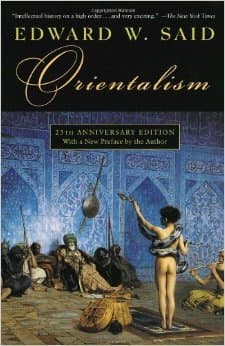
Orientalism cover
Archivist's Choice

Orientalism

Edward W. Said (1978)

Genre

Politics / History / Philosophy

Reading Time

10-15 hours (given its density and length)

Key Themes

See below

Track Your Reading

Sign in to track this book

Edward Said's "Orientalism" examines how Western scholarship, art, and politics created a widespread and often demeaning 'Orient' to justify domination, silencing the diverse voices and realities of the East.

Core Idea

Edward W. Said's "Orientalism" argues that the 'Orient' is not a natural geographical or cultural reality, but a concept built by the West. This concept, mainly by European scholars, writers, and politicians, defined the East as its exotic, irrational, and inferior 'Other.' This definition then justified Western colonial and imperial control. Said contends that this body of knowledge was deeply tied to power, allowing and continuing political and economic control over the Middle East and Asia.
Reading time
10-15 hours (given its density and length)
Difficulty
Hard
✓ Read this if...
You are interested in postcolonial theory, the relationship between knowledge and power, the historical construction of identity, or the critique of Western representations of non-Western cultures.
✗ Skip this if...
You are looking for an introduction to Middle Eastern cultures, prefer purely historical narratives without theoretical or philosophical analysis, or are uncomfortable with critical deconstructions of academic disciplines.

Core idea

The central argument and framework that powers the entire book.

Edward W. Said's "Orientalism" argues that the 'Orient' is not a natural geographical or cultural reality, but a concept built by the West. This concept, mainly by European scholars, writers, and politicians, defined the East as its exotic, irrational, and inferior 'Other.' This definition then justified Western colonial and imperial control. Said contends that this body of knowledge was deeply tied to power, allowing and continuing political and economic control over the Middle East and Asia.

At a glance

Reading time

10-15 hours (given its density and length)

Difficulty

Hard

Read this if...

You are interested in postcolonial theory, the relationship between knowledge and power, the historical construction of identity, or the critique of Western representations of non-Western cultures.

Skip this if...

You are looking for an introduction to Middle Eastern cultures, prefer purely historical narratives without theoretical or philosophical analysis, or are uncomfortable with critical deconstructions of academic disciplines.

Key Takeaways

1

The Orient as European Construct

Orientalism is a Western system of thought, not an objective reality.

Quote

Orientalism is a style of thought based upon an ontological and epistemological distinction made between 'the Orient' and (most of the time) 'the Occident.'

Said argues that the 'Orient' is not a neutral geographical or cultural area, but a concept from Western academic, literary, and political discussion. This concept helped define Europe's identity by creating a contrasting 'Other'—mysterious, exotic, irrational, and often dangerous—against which European reason and superiority could be measured. This is not just about misrepresentation; it is about creating knowledge that serves power. The Orient, therefore, shows more about the West's worries, desires, and self-image than about the ac...

Supporting evidence

Said's analysis of countless texts, from travelogues and novels to academic treatises and political speeches, demonstrating consistent patterns in how the 'Orient' was described and framed by European authors and scholars.

Apply this

When encountering descriptions or analyses of 'other' cultures, question the underlying assumptions and the perspective from which the information is being presented. Consider what the portrayal reveals about the observer's own culture and biases, rather than solely about the subject being observed.

epistemologypower-knowledgeorientalism-definition
2

Knowledge as Power

The production of knowledge about the Orient was inextricably linked to imperial control.

Quote

The relationship between Occident and Orient is a relationship of power, of domination, of varying degrees of a complex hegemony...

Said shows how the large amount of 'Orientalist' knowledge—in linguistics, history, ethnography, anthropology—was not just scholarly work but a tool of imperial power. By 'knowing' the Orient, the West could better manage, control, and justify its rule over these areas. This knowledge was not just descriptive; it set rules, creating categories that reinforced the subjugation of Oriental peoples. The colonizer's ability to define the colonized, to speak for them, and to interpret their cultures became a way to maintain control, taking ...

Supporting evidence

The close historical ties between academic Orientalists and colonial administrations, such as British scholars advising on Indian policy or French scholars on North African affairs. Said highlights figures like Silvestre de Sacy and Ernest Renan, whose scholarly work contributed to the broader Orientalist discourse that facilitated imperial expansion.

Apply this

Critically analyze how academic or expert knowledge is used in contemporary political or social debates, especially concerning international relations or minority groups. Ask: whose interests does this knowledge serve? Who benefits from this particular framing of information?

colonialismhegemonydiscourse
3

The Absence of Oriental Voices

Orientalism speaks for, rather than listens to, the Orient.

Quote

The Orientalist, in his dealings with the Orient, is a man of vision, who can see for himself what the Orient is, and who can represent it in his own way.

A main criticism of Orientalism is its basic imbalance: it is a discussion almost entirely without real Oriental voices or self-representation. The 'Oriental' is always the subject of study, never the one doing the studying; always talked about, never speaking for themselves. This silencing is not by chance but by structure. By denying the East the ability to represent itself, Orientalism keeps its position as the only interpreter of the Orient. This continues stereotypes and prevents any true, empathetic understanding, instead creati...

Supporting evidence

Said's examination of European novels and travelogues where Oriental characters are consistently flat, stereotypical, or serve merely as foils for European protagonists, rarely exhibiting complex interiority or agency reflective of real people. For example, the depiction of 'harem women' or 'savage sheikhs' in popular literature.

Apply this

Seek out and prioritize primary sources and self-representations from marginalized or 'othered' communities. Actively challenge narratives where one group consistently speaks on behalf of another, and create platforms for diverse voices to tell their own stories.

representationagencysubaltern
4

The Persistence of Stereotypes

Ancient tropes continue to shape modern perceptions of the Middle East.

Quote

The Orient is virtually a European invention, and has been since antiquity a place of romance, exotic beings, haunting memories and landscapes, remarkable experiences.

Said traces how certain lasting stereotypes—the 'timeless' Orient, the 'sensual' Orient, the 'despotic' Orient, the 'irrational' Orient—are not new but have deep historical roots in classical and medieval European thought. These ideas have been remarkably persistent, changing through different historical periods but keeping their main meaning. Even in seemingly modern, 'objective' analysis, these old biases often hide, shaping news coverage, policy decisions, and popular culture. This shows the quiet power of cultural stories to last ...

Supporting evidence

Said highlights the continuity of themes from classical Greek texts, through medieval Crusader accounts, to 19th-century academic Orientalism and even 20th-century political rhetoric concerning the Middle East. For example, the consistent portrayal of Islamic societies as inherently static or violent.

Apply this

Become critically aware of recurring tropes and stereotypes in media, political discourse, and popular culture, especially when discussing regions like the Middle East or North Africa. Question the origins and implications of these repeated narratives and actively seek out counter-narratives.

stereotypingcultural-narrativehistorical-continuity
5

The 'Latent' vs. 'Manifest' Orientalism

Deep-seated prejudices underpin even seemingly objective scholarship.

Quote

Latent Orientalism is an unconscious positivity, a certain attitude toward the Orient and its people...

Said distinguishes between 'latent' and 'manifest' Orientalism. Manifest Orientalism refers to the clear statements, policies, and actions of Orientalists and governments. Latent Orientalism, however, is the deeper, more lasting, and often unconscious set of unquestioned assumptions, prejudices, and basic beliefs about the Orient. This latent layer provides the structure for manifest Orientalism. It means that even when specific theories or facts are updated, the underlying, often negative, attitudes towards the Orient remain. This di...

Supporting evidence

Said points out how even 'sympathetic' or 'objective' 20th-century scholars might still frame their studies within the traditional Orientalist categories, such as focusing on 'Islamic fundamentalism' as an inherent characteristic rather than a complex political phenomenon, thus subtly reinforcing older notions of an irrational Orient.

Apply this

When evaluating information, look beyond the surface-level arguments and try to identify the underlying assumptions or 'common sense' beliefs that inform the discussion. Challenge these latent assumptions, as they often hold more sway than explicit statements.

unconscious-biasideologycultural-assumptions
6

Orientalism's Self-Correction Illusion

The field often reinforces its own framework, rather than truly evolving.

Quote

The Orient was Orientalized not only because it was discovered to be 'Oriental' in all those ways but also because it could be — that is, submitted to being — made Oriental.

Said argues that Orientalism, as an academic field, often referred to itself. Instead of truly trying to understand the diverse realities of the East, it often used its own established texts and theories as main sources, creating a closed system. New scholars would build on the foundations laid by previous Orientalists, often strengthening existing biases rather than questioning them. This circularity meant that the 'Orient' remained mostly an intellectual construct, continually re-imagined through the lens of earlier European interpr...

Supporting evidence

The common practice of Orientalist scholars primarily citing other European Orientalists, creating a canon that largely excluded indigenous perspectives or critiques from within the 'Orient' itself. This led to a scholastic tradition where the 'Orient' was often studied through its textual representations rather than its lived realities.

Apply this

In any field of study, particularly those dealing with 'others,' actively seek out dissenting voices, alternative methodologies, and perspectives from those being studied. Be wary of academic fields that seem to only speak to themselves or rely heavily on their internal canon without external critique.

epistemic-closurecanonacademic-discourse
7

The Human Cost of Othering

Orientalism's legacy extends to real-world prejudice and conflict.

Quote

The point is that the Orient was not a free subject of thought or action; it was a European construct.

Beyond academic criticism, Said highlights the very real and often terrible human cost of Orientalism. By simplifying complex societies and individuals into simple, often negative, stereotypes, it made exploitation easier, justified military action, and fueled prejudice. When people are consistently shown as irrational, backward, or dangerous, it becomes easier to deny them their rights, dismiss their complaints, and harm them. This 'othering' process dehumanizes, making empathy difficult and conflict more likely. Said's work is a cle...

Supporting evidence

The historical justification for colonial rule in the Middle East, such as the 'civilizing mission' built upon the premise of Oriental backwardness. More contemporaneously, Said implicitly critiques how post-9/11 rhetoric often fell back on Orientalist tropes to justify interventions in the Middle East, depicting entire populations as inherently hostile or uncivilized.

Apply this

Actively challenge dehumanizing language or narratives that reduce entire groups of people to a single, often negative, characteristic. Recognize the link between such language and the potential for real-world harm, and advocate for nuanced, human-centered perspectives in public discourse.

dehumanizationpost-colonialismidentity-politics
8

Challenging the Universal Authority

Said's work dismantles the illusion of objective, value-free scholarship.

Quote

Every writer on the Orient assumes some Oriental prior to his writing, and this in turn determines the Orient that he writes about.

One of Said's most important contributions is his challenge to the idea of universal, objective scholarship, especially concerning non-Western cultures. He argues that all knowledge comes from a specific position and is influenced by historical, cultural, and political contexts. There is no neutral 'God's-eye view' from which to observe and describe the world, especially when power is unequal. By showing the biases in Orientalism, Said makes us confront the political nature of knowledge itself, urging a more critical and self-aware ap...

Supporting evidence

Said's methodological approach, which involves analyzing not just what Orientalist texts say, but *how* they say it, and *from what position*. He critiques the 'impersonal' tone often adopted by Orientalist scholars, revealing the subjective underpinnings of their 'objective' analyses.

Apply this

In any field, question claims of absolute objectivity or universality, especially when discussing human societies and cultures. Identify the author's positionality, potential biases, and the historical context that shapes their perspective. Embrace the idea that multiple, situated truths exist.

objectivityrelativismpositionality
9

The West's Internal Orient

The construction of the 'Orient' reflects the West's own anxieties and desires.

Quote

The Orient was a place where Europe could project its darkest fantasies and its most ardent desires.

Said argues that the 'Orient' acted as a mirror for the West, reflecting its internal worries, hidden desires, and unacknowledged contradictions. The exoticism, sensuality, and irrationality projected onto the Orient were often qualities that Europe either denied within itself or longed for. By placing these aspects onto an 'Other,' the West could define itself as rational, moral, and orderly. The Orient became a place for the West to act out its fantasies and fears, a psychological landscape as much as a geographical one. This shows ...

Supporting evidence

The recurrent themes of sexual licentiousness and arbitrary despotism in Orientalist literature, which Said suggests were projections of European societal anxieties regarding morality, power, and freedom, rather than accurate depictions of Eastern societies.

Apply this

Reflect on how your own culture or group defines itself in relation to an 'Other.' Consider what aspects of your own society's identity might be projected onto external groups, and how these projections might reveal internal anxieties or desires.

projectionpsychological-otheringcultural-identity
10

A Call for Contrapuntal Reading

Understanding requires acknowledging multiple, often conflicting, narratives.

Quote

My argument is that history and culture are made by human beings, who can also revise them.

While taking apart Orientalism, Said also offers a way forward: 'contrapuntal reading.' This involves reading texts and histories not just from the dominant view, but also acknowledging and including the often-silenced or marginalized stories of colonized or 'othered' peoples. It means recognizing that multiple, often conflicting, experiences and interpretations exist at the same time. This approach encourages a richer, more complex understanding that moves beyond simple divisions and acknowledges the agency and perspective of those w...

Supporting evidence

Said's own methodology throughout the book, where he implicitly and explicitly highlights the disjuncture between European representations and the likely realities experienced by people in the Middle East. He advocates for an approach that would, for instance, read Jane Austen's 'Mansfield Park' alongside texts about the colonial sugar plantations that funded the characters' lifestyles.

Apply this

When studying history or literature, actively seek out and juxtapose different perspectives, especially those from marginalized groups. Read 'against the grain' of dominant narratives, looking for what is omitted, silenced, or distorted, to construct a more complete and nuanced understanding.

contrapuntal-readingdecolonizationmultiperspectivity

Critical analysis

Notable Quotes

Orientalism is a style of thought based upon an ontological and epistemological distinction made between 'the Orient' and (most of the time) 'the Occident.'

Defining the core concept of Orientalism.

The Orient was almost a European invention, and had been since antiquity a place of romance, exotic beings, haunting memories and landscapes, remarkable experiences.

Describing the constructed nature of the Orient in European imagination.

Orientalism responded to the Orient as if the latter were an object, not an agent.

Highlighting the passive role assigned to the Orient by Orientalist discourse.

Every European, in what he could say about the Orient, was consequently a racist, an imperialist, and almost totally ethnocentric.

A strong assertion about the inherent biases within Orientalist scholarship.

The relationship between the West and the East is a relationship of power, of domination, of varying degrees of a complex hegemony.

Summarizing the power imbalance inherent in the East-West dynamic.

The Orient is not an inert fact of nature. It is not merely 'there,' any more than the Occident is purely 'there.'

Emphasizing that both geographical and cultural entities are constructed.

To say that Orientalism is a system of truths, not a collection of lies, is to say that it is a discourse, not a reflection.

Distinguishing Orientalism as a structured discourse rather than simple factual error.

The Orient, then, is not only adjacent to Europe; it is also the place of Europe's greatest and richest and oldest colonies, the source of its civilizations and languages, its cultural contestant, and one of its deepest and most recurring images of the Other.

Expanding on the multifaceted relationship between Europe and the Orient.

Knowledge of the Orient, because generated out of strength, in a sense creates the Orient, the Oriental, and his world.

Arguing that Western knowledge actively shaped and defined the Orient.

What I am interested in doing is showing the formidable structure of cultural domination and specifically of ideological hegemony.

Stating the author's primary analytical goal.

The Orient was a stage on which the whole of the East was confined.

Illustrating the limited and theatrical role assigned to the East by Orientalism.

Orientalism is premised upon exteriority, that is, on the fact that the Orientalist, poet or scholar, makes the Orient speak, describes the Orient, renders its mysteries plain for and to the West.

Explaining how Orientalists positioned themselves as interpreters of the Orient.

The Orient was a project, not a place.

A concise summary of the active construction of the Orient.

My argument is that history and culture are made by men and women, and can be changed by men and women.

An optimistic statement about human agency and the possibility of change.

It is not the question of whether there is an 'actual' Orient or not, but rather of the discourse of Orientalism itself.

Clarifying that the focus is on the discourse, not the objective reality of the Orient.

Quiz

Test Your Knowledge

Ready to see how well you understood this book? Take our interactive quiz with 10 questions.

10
Questions
~5
Minutes
?
Best Score

Key Questions (FAQ)

According to Edward Said, Orientalism is a style of thought based upon an ontological and epistemological distinction made between 'the Orient' and (most of the time) 'the Occident.' It is also a Western academic and artistic tradition of perceiving and representing the Middle and Near East, often in a biased or stereotypical way, which began during Europe's period of domination over these regions.

About the author