BookBrief
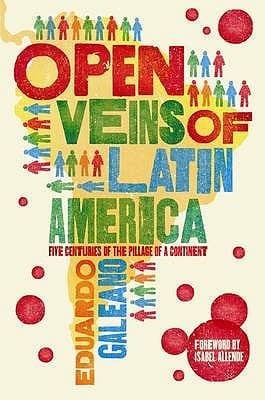
Open Veins of Latin America cover
Archivist's Choice

Open Veins of Latin America

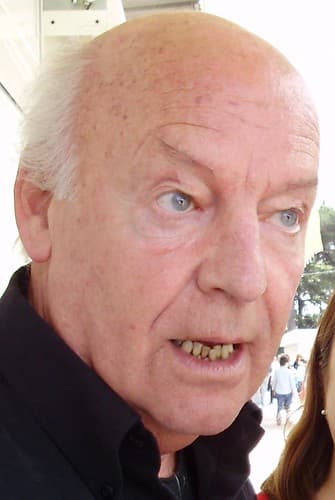
Eduardo Galeano (2008)

Genre

Politics / History / Economics

Reading Time

10-12 hours

Key Themes

See below

Track Your Reading

Sign in to track this book

Galeano's "Open Veins" is a five-century account of Latin America's exploitation and underdevelopment by colonial and capitalist powers.

Core Idea

Eduardo Galeano's "Open Veins of Latin America" describes five centuries of exploitation and underdevelopment in the region. He argues that Latin America's poverty is not natural but a direct result of its place in the global capitalist system. From European powers extracting metals and crops to multinational corporations and financial institutions dominating the region, the book shows how outside forces have systematically taken its wealth, damaged its economies, and stopped its social and political growth. Galeano states that Latin America's role as a raw material supplier has kept it dependent, enriching a global elite at the cost of its own people. This historical pattern of exploitation continues in today's economic structures and power dynamics.
Reading time
10-12 hours
Difficulty
Medium
✓ Read this if...
You want to understand the historical roots of Latin American underdevelopment, are interested in a powerful anti-colonial and anti-imperialist critique of global capitalism, or seek a passionate, fact-driven account of exploitation.
✗ Skip this if...
You prefer a purely academic, dispassionate analysis of economic history, are not open to a Marxist-leaning perspective, or are looking for a neutral or pro-capitalist view of development.

Core idea

The central argument and framework that powers the entire book.

Eduardo Galeano's "Open Veins of Latin America" describes five centuries of exploitation and underdevelopment in the region. He argues that Latin America's poverty is not natural but a direct result of its place in the global capitalist system. From European powers extracting metals and crops to multinational corporations and financial institutions dominating the region, the book shows how outside forces have systematically taken its wealth, damaged its economies, and stopped its social and political growth. Galeano states that Latin America's role as a raw material supplier has kept it dependent, enriching a global elite at the cost of its own people. This historical pattern of exploitation continues in today's economic structures and power dynamics.

At a glance

Reading time

10-12 hours

Difficulty

Medium

Read this if...

You want to understand the historical roots of Latin American underdevelopment, are interested in a powerful anti-colonial and anti-imperialist critique of global capitalism, or seek a passionate, fact-driven account of exploitation.

Skip this if...

You prefer a purely academic, dispassionate analysis of economic history, are not open to a Marxist-leaning perspective, or are looking for a neutral or pro-capitalist view of development.

Key Takeaways

1

The Scars of Silver and Gold

Latin America's 'discovery' initiated a relentless drain of its mineral wealth.

Quote

The gold and silver taken from Latin America could build a bridge of solid gold from Potosí to Spain.

Galeano shows how the 'discovery' of the Americas started a brutal taking of wealth from Latin America. Europe's great demand for precious metals, especially from the Potosí mines in Bolivia and Zacatecas in Mexico, led to an unmatched removal of wealth. This was not just business; it was a violent takeover that destroyed native populations through forced labor, disease, and killing. The riches mostly went to Europe, fueling its industrial revolution and capital, while leaving Latin American nations poor, dependent, and underdeveloped...

Supporting evidence

The detailed accounts of the silver mines of Potosí, which alone produced so much silver that, according to some estimates, it could build a bridge of solid silver to Spain. Galeano cites historical records of the millions of indigenous lives lost in these mines.

Apply this

When analyzing economic development in any region, look beyond surface-level indicators to understand historical resource extraction patterns and their long-term structural impacts. Consider how past 'booms' might have created present 'busts' for local populations while enriching external powers.

potosi-minesresource-cursecolonialismextractive-economy
2

Sugar's Bitter Legacy

The monoculture of sugar cane created vast wealth for colonizers but enduring poverty and social stratification for Latin America.

Quote

The sugar plantations of the Caribbean and Brazil were 'factories of human misery' and engines of European wealth.

After precious metals, sugar became the next major source of exploitation. Galeano describes how Europe's great desire for sugar led to the brutal creation of large single-crop plantations across the Caribbean and Brazil. This system required bringing in many enslaved Africans, causing a terrible human tragedy and deeply shaping the population, social, and economic structures of these areas. The huge profits from sugar for European powers and local rich families came at the cost of environmental harm, the stopping of diverse farming, ...

Supporting evidence

Galeano's extensive discussion of the sugar plantations in Brazil's Northeast and the Caribbean islands, detailing the brutal conditions of slavery, the immense profits reaped by European merchants, and the subsequent economic decline of these regions once sugar prices fell or competition arose.

Apply this

Critically examine current global supply chains for agricultural commodities. Investigate how historical land ownership, labor practices, and international market demands continue to influence social inequality and economic instability in developing nations.

sugar-monoculturetransatlantic-slaveryplantation-economyagrarian-reform
3

The Banana Republic Paradigm

Foreign corporate interests manipulated politics and economics to control Latin American resources.

Quote

The United Fruit Company was more powerful than many of the governments in Central America.

Galeano uses the 'banana republic' to show how foreign companies, often supported by their home governments, had too much power over independent Latin American nations. The United Fruit Company (UFCO) is the best example. It controlled land use, labor laws, and even political results in Central American countries. UFCO's huge economic power allowed it to crush local competition, exploit workers, and even cause coups against governments that threatened its interests, like in Guatemala in 1954. This corporate control kept economic depen...

Supporting evidence

The detailed account of the United Fruit Company's operations in Central America, including its ownership of vast tracts of land, railways, ports, and its role in the 1954 coup in Guatemala against President Jacobo Árbenz Guzmán.

Apply this

When analyzing international relations and economic development, investigate the historical and contemporary roles of multinational corporations. Question their influence on local governance, labor rights, and environmental policies, especially in resource-rich but economically vulnerable nations.

banana-republicsunited-fruit-companycorporate-imperialismus-intervention
4

Underdevelopment as a Byproduct of Development

Latin America's 'underdevelopment' is not a failure but a direct consequence of global capitalist development.

Quote

The underdevelopment of Latin America is a consequence of the development of others.

This is a main idea of Galeano's work: Latin America is not 'underdeveloped' because it failed to grow, but because its resources and labor were systematically taken to fuel the growth of Europe and the United States. He strongly argues against the idea of a simple path to development, stating that the global capitalist system naturally creates a hierarchy where some nations do well at the expense of others. This is not just history; current debt, unfair trade terms, and the continued removal of raw materials keep this structural ineq...

Supporting evidence

Galeano consistently links the economic booms in Europe (e.g., the Industrial Revolution) and the United States to the simultaneous resource extraction and economic stagnation in Latin America, showing a direct causal relationship rather than separate trajectories.

Apply this

Challenge narratives that blame 'underdeveloped' nations solely for their internal policies or cultural traits. Instead, analyze global economic structures, historical power dynamics, and international trade agreements to understand the root causes of persistent inequalities between nations.

dependency-theoryunequal-exchangeglobal-capitalismmodernization-theory
5

Debt: The New Chains

Foreign debt transformed into a modern mechanism for economic control and resource extraction.

Quote

Foreign debt is the invisible chain that binds Latin America to its creditors, perpetuating dependency.

Galeano argues that after the first waves of direct resource taking, foreign debt became a new, equally harmful tool of control. Latin American nations, often encouraged to borrow heavily for 'development' projects, found themselves caught in a cycle of ever-growing debt payments that emptied their national treasuries. This debt then gave international financial institutions (like the IMF and World Bank) power to impose structural adjustment policies. These forced privatization, budget cuts, and open markets—policies that often helped...

Supporting evidence

Galeano discusses the post-colonial debt crises, the role of the International Monetary Fund (IMF) and World Bank in imposing structural adjustment programs, and how these policies often led to increased poverty and reduced social spending in debtor nations.

Apply this

Investigate the origins and impacts of national debt in developing countries. Question the terms of international loans and the conditions imposed by financial institutions, considering how these might perpetuate rather than alleviate economic hardship.

foreign-debtimf-world-bankstructural-adjustmentneoliberalism
6

The Irony of 'Progress'

Many 'development' projects in Latin America served external interests more than local needs.

Quote

The dams built for 'progress' often flooded the best lands, displacing the poor and serving distant industries.

Galeano looks critically at many 'progress' and 'development' efforts in Latin America, showing their often-unexpected results. Large projects, such as dams, highways, and mines, were often presented as bringing modernization and economic improvement. However, Galeano shows how these projects often moved native communities, destroyed good farmland, put wealth in the hands of a few, and mainly served the interests of foreign companies or export industries rather than improving the lives of local people. The environmental damage and soc...

Supporting evidence

Examples like the construction of massive dams that flooded rich agricultural valleys, displacing thousands for hydroelectric power primarily benefiting industrial consumers, or large-scale mining operations that poisoned local water sources while sending raw materials abroad.

Apply this

When evaluating development projects, always ask: Who benefits? Who bears the costs? Consider the environmental, social, and economic impacts on local communities versus the stated goals and the beneficiaries further up the value chain.

development-paradoxresource-extractionenvironmental-justiceindigenous-rights
7

The Enduring Power of the Oligarchy

Local elites consistently collaborated with foreign powers to maintain their privileged positions.

Quote

The local bourgeoisie became the transmission belt for foreign interests, betraying their own people.

A key part of Latin America's continued exploitation, according to Galeano, is the consistent cooperation of its own ruling classes. From the local allies of Spanish conquerors to today's national rich families, these elites often put their own wealth and power before the well-being of their nations. They helped foreign investment, stopped labor movements, and made policies that favored outside interests, often at the cost of national growth and social fairness. This internal involvement allowed foreign powers to control without direc...

Supporting evidence

Galeano details how local landholders, merchants, and political figures throughout history benefited immensely from the colonial system and later from foreign corporate presence, often actively suppressing peasant or worker uprisings to maintain their status.

Apply this

In any analysis of national policy or economic structures, identify the local power brokers and their relationships with external forces. Understand how these alliances can perpetuate inequality and hinder genuine national development.

oligarchycomprador-bourgeoisieclass-strugglepolitical-economy
8

The Unfinished Revolution

Despite centuries of plunder, the spirit of resistance and the struggle for liberation persist.

Quote

History is a prophet with its face turned backward: for what was, and against what was, announcing what will be.

While Galeano's story is one of deep exploitation and suffering, it also includes hope. He carefully records the long history of resistance, from native uprisings against the Spanish to peasant movements, labor strikes, and revolutions in the 20th century. These acts of defiance, though often brutally stopped, show a lasting spirit of dignity and a desire for freedom. Galeano suggests that the 'open veins' will only heal when Latin America truly takes back its independence and resources for its own people, not for outside powers. The ...

Supporting evidence

Galeano intersperses his accounts of exploitation with stories of indigenous rebellions (e.g., Tupac Amaru II), slave revolts, peasant movements, and the broader revolutionary currents of the 20th century, highlighting figures like Bolívar and Zapata.

Apply this

Recognize that history is not static; it's a dynamic process shaped by resistance as much as by oppression. Seek out and support movements for social justice, economic equality, and self-determination in your own context and globally.

resistance-movementsdecolonizationsocial-justiceself-determination
9

The Price of Raw Materials

Latin America's role as a raw material supplier locks it into an unfavorable global trade position.

Quote

The price of raw materials falls, and the price of manufactured goods rises. This is the law of the world market.

Galeano points out a basic economic imbalance: Latin America has historically been limited to supplying raw materials (minerals, farm products) to industrial nations, which then turn these materials into manufactured goods. This division of labor naturally harms the raw material producers. Raw material prices are unstable and tend to fall over time compared to manufactured goods, causing a constant 'drain' of value. This 'unequal exchange' stops Latin American nations from industrializing and diversifying their economies, keeping them...

Supporting evidence

Galeano cites numerous examples of the fluctuating prices of commodities like coffee, tin, and copper, showing how downturns devastated national economies and how the terms of trade consistently favored industrial nations.

Apply this

When evaluating international trade agreements, scrutinize how they affect the value chain and whether they promote diversification or entrench reliance on raw material exports. Advocate for policies that support local processing and value-added production in developing nations.

unequal-exchangecommodity-pricesindustrializationterms-of-trade
10

Memory as an Act of Justice

Understanding the past is essential for forging a more equitable future.

Quote

To remember is to live, to forget is to die. We must remember the past to build the future.

Galeano's entire work is a strong call for historical memory. He argues that the systematic removal or twisting of Latin America's true history—a history of violent exploitation—helps keep the very systems of oppression going. By uncovering the brutal realities of colonialism, neo-colonialism, and internal class struggle, Galeano helps readers understand the deep roots of today's poverty, inequality, and political instability. This act of remembering is not just academic; it is a revolutionary act, providing the critical understanding...

Supporting evidence

The very existence of the book, which meticulously compiles forgotten or suppressed historical accounts, statistics, and testimonies to present a coherent, alternative narrative to official histories.

Apply this

Actively seek out and engage with histories written from marginalized perspectives. Understand how historical narratives are constructed and by whom, and recognize the power of memory in shaping political action and social change.

historical-memorycounter-narrativedecolonial-thoughttruth-and-reconciliation

Critical analysis

Notable Quotes

The division of labor among nations is that some specialize in winning and others in losing.

Galeano's overarching thesis on global economic inequality.

History is a prophet with his eyes turned backward: what was, will be, and what will be, was.

Reflecting on the cyclical nature of exploitation and the weight of the past.

Latin America is a land of open veins. Everything, from the discovery until our days, has always been transmuted into European—or, later, United States—capital, and as such has accumulated on distant centers of power.

The central metaphor and argument of the book, detailing resource extraction.

The rain that irrigates the empires of the rich drowns the habitations of the poor.

Discussing how economic policies benefit the powerful at the expense of the vulnerable.

Our defeat was always implicit in the victory of others; our wealth has always generated our poverty by nourishing the prosperity of others.

A concise summary of the zero-sum game of colonial and neo-colonial relations.

For those who see the world as a battlefield, the poor are always the enemy.

Critiquing the mindset that demonizes the impoverished rather than addressing systemic causes.

The original sin of Latin America is its wealth.

Paradoxically, the region's abundance of natural resources made it a target for exploitation.

The story of underdevelopment in Latin America is part of the universal history of capitalism.

Placing Latin American's economic struggles within a broader global capitalist framework.

The international division of labor, as it emerged from the capitalist process, condemns Latin America to the role of supplier of raw materials and cheap labor.

Explaining the structural constraints on Latin American development.

The violence of the system is not only physical, but also structural, cultural, and symbolic.

Expanding the definition of violence beyond direct conflict to include systemic oppression.

The more freedom Washington gives to Latin American businessmen, the more prisons it builds for Latin American workers.

Illustrating the double standard of 'freedom' in economic policy, benefiting capital over labor.

The world is not a simple game of good and evil; it is a complex web of interests and powers.

A nuanced view of geopolitical forces, moving beyond simplistic moral judgments.

The past does not pass, it is always present.

Emphasizing the enduring legacy of historical events and their impact on the present.

The memory of fire is stronger than the fire itself.

Suggesting that the historical narrative and its impact can be more powerful than the events themselves.

Quiz

Test Your Knowledge

Ready to see how well you understood this book? Take our interactive quiz with 10 questions.

10
Questions
~5
Minutes
?
Best Score

Key Questions (FAQ)

'Open Veins of Latin America' by Eduardo Galeano is a non-fiction book that provides a historical account of the exploitation of Latin America by foreign powers, primarily from the 15th century to the mid-20th century. It details how the continent's natural resources and labor have been plundered for the benefit of European colonial powers and later, the United States, leading to persistent underdevelopment.

About the author