BookBrief
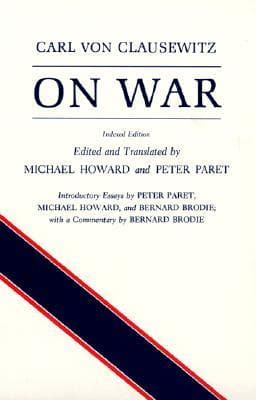
On War cover
Archivist's Choice

On War

Carl von Clausewitz

Genre

Politics / Leadership / History / Philosophy

Reading Time

1500 min

Key Themes

See below

Track Your Reading

Sign in to track this book

Clausewitz's "On War" explores conflict not just as violence, but as a political tool, redefining how we understand its strategy and philosophy.

Core Idea

Clausewitz's "On War" states that war is not a separate event but a tool of policy, an extension of political interaction using other means. It is a complex social activity driven by political goals, but always subject to chance, uncertainty (the 'fog of war'), and the interplay of emotion, reason, and probability (the 'Wondrous Trinity'). The book examines the nature of war, stressing its political role while acknowledging its destructive character.
Reading time
1500 min
Difficulty
Hard
✓ Read this if...
You are a serious student of military strategy, international relations, political science, or leadership, and wish to understand the foundational theoretical framework of modern warfare and its intrinsic link to politics. Essential for anyone seeking to grasp the enduring principles behind conflict and statecraft.
✗ Skip this if...
You are looking for a light read, tactical how-to guide, or a quick historical overview. This book is dense, philosophical, and requires significant dedication to digest its abstract concepts and detailed arguments. Not for those averse to deep theoretical analysis.

Core idea

The central argument and framework that powers the entire book.

Clausewitz's "On War" states that war is not a separate event but a tool of policy, an extension of political interaction using other means. It is a complex social activity driven by political goals, but always subject to chance, uncertainty (the 'fog of war'), and the interplay of emotion, reason, and probability (the 'Wondrous Trinity'). The book examines the nature of war, stressing its political role while acknowledging its destructive character.

At a glance

Reading time

1500 min

Difficulty

Hard

Read this if...

You are a serious student of military strategy, international relations, political science, or leadership, and wish to understand the foundational theoretical framework of modern warfare and its intrinsic link to politics. Essential for anyone seeking to grasp the enduring principles behind conflict and statecraft.

Skip this if...

You are looking for a light read, tactical how-to guide, or a quick historical overview. This book is dense, philosophical, and requires significant dedication to digest its abstract concepts and detailed arguments. Not for those averse to deep theoretical analysis.

Key Takeaways

1

War as a Continuation of Politics

War is not an isolated act, but an instrument of policy.

Quote

War is not merely an act of policy but a true political instrument, a continuation of political intercourse, carried on with other means.

Clausewitz's most famous idea is that war is political. It is not an end in itself, nor is it purely military; instead, states use it to achieve political goals. This means military strategy must always serve political aims. Commanders and leaders need to understand the political reasons for fighting, as these determine the conflict's size, intensity, and length. Ignoring the political context leads to strategic errors, costly victories, or endless wars without clear purpose. War is simply a more violent form of diplomacy, and its obj...

Supporting evidence

Clausewitz's analysis of the Napoleonic Wars heavily informed this principle, demonstrating how Napoleon's military campaigns were always in service of his political ambitions to dominate Europe.

Apply this

Before engaging in any conflict, clearly define the political objectives. Throughout the conflict, regularly reassess whether military actions are still serving those objectives. Avoid purely military solutions to political problems.

political-objectivesmilitary-subordinationrational-warfare
2

The Trinity of War

War's complex nature stems from its three inherent, interacting tendencies.

Quote

War is thus not only a true chameleon, because it changes its nature in each particular case, but also, as a whole, in relation to the predominant tendencies inherent in it, a wonderful trinity – composed of primordial violence, hatred, and animosity, which may be looked upon as a blind natural force; of the play of chance and probability within which the creative spirit is free to roam; and of its element of subordination, as an instrument of policy, which makes it subject to reason alone.

Clausewitz describes war as an 'astonishing trinity' made of three main tendencies: violence (passion), chance (friction), and its role as a policy tool (reason). These three elements constantly interact and change in importance. The 'blind natural force' of passion refers to the emotional, often irrational, parts of war—hatred, courage, fear. 'Chance and probability' include war's unpredictable nature, the 'fog of war,' and the role of genius and luck. 'Subordination to reason' confirms war's political nature, guiding it toward ratio...

Supporting evidence

The Battle of Jena-Auerstedt, where Prussian overconfidence and underestimation of Napoleon's forces led to their catastrophic defeat, exemplifies the interplay of passion (overconfidence), friction (miscommunication, unexpected resistance), and a failure of rational political calculation.

Apply this

When analyzing a conflict, consider how passion, chance, and reason are influencing events. Don't underestimate the emotional drivers of combatants or the inherent unpredictability of the battlefield, while still striving for rational political aims.

fog-of-warpassion-in-warchance-in-war
3

Friction and the Fog of War

Reality on the battlefield is messy, unpredictable, and far from theoretical perfection.

Quote

Everything in war is very simple, but the simplest thing is difficult. The difficulties accumulate and produce a friction which no man can imagine exactly who has not seen war.

Clausewitz introduces 'friction' to describe the many small events that together hinder military operations. This includes physical exhaustion, unexpected problems, fear, miscommunication, bad weather, and human error. Friction makes even simple tasks difficult in combat, disrupting clean, theoretical plans. Related to this is the 'fog of war,' which describes the uncertainty in awareness experienced by those in military operations. Information is incomplete, conflicting, or delayed, making it impossible to have a clear picture of the...

Supporting evidence

Clausewitz recounts how simple tasks like moving troops or coordinating attacks become immensely complex due to unexpected rain, broken equipment, or the sheer terror of combat, illustrating how the 'simplest thing is difficult' in war.

Apply this

Design plans with flexibility and redundancy. Train for unexpected contingencies and empower subordinates to make decisions within a broader intent. Recognize that perfect information is impossible and learn to act effectively with uncertainty.

unpredictability-of-warmilitary-planningadaptive-leadership
4

The Culminating Point of Victory

Success has limits; pushing beyond them can turn triumph into defeat.

Quote

There is a culminating point of the attack, and beyond it the defensive is superior.

Clausewitz argues that every offensive has a 'culminating point' past which the attacker's strength starts to decline relative to the defender's. As an army advances, its supply lines get longer, its forces spread out, and its troops tire. Meanwhile, the defender fights closer to home, benefiting from shorter supply lines, fresh troops, and the motivation of defending their own land. Pushing an offensive past this point is a strategic mistake, turning a possible victory into a costly stalemate or even a defeat. A wise commander recogn...

Supporting evidence

Napoleon's disastrous Russian Campaign of 1812 is a prime example. His initial successes were followed by an overextension of forces, logistical collapse, and ultimately, a devastating retreat, having passed his culminating point of victory.

Apply this

Assess the sustainability of an offensive. Understand the logistical and morale limits of your forces. Be prepared to consolidate gains and secure objectives rather than pursuing an endless advance that risks overextension.

logistics-in-warstrategic-overextensionoffensive-defensive-balance
5

Defense as the Stronger Form of War

Defense, when employed actively, is inherently more powerful than offense.

Quote

The defensive form of warfare is intrinsically stronger than the offensive.

Surprisingly for many, Clausewitz states that defense is the stronger form of war. This is not passive defense, but an active, smart defense designed to wear down the attacker and then move to a decisive counter-offensive. The defender benefits from prepared positions, shorter supply lines, and the psychological advantage of fighting on home ground. The attacker, conversely, must overcome problems, extend lines, and keep momentum against growing resistance. By choosing the time and place for battle, the defender can force the attacker...

Supporting evidence

Wellington's Peninsular War campaigns, where he masterfully used defensive lines and terrain to exhaust French attacks before launching counter-offensives, illustrate the power of active defense.

Apply this

When facing a superior foe, consider a strategic defensive posture to exhaust the enemy. Focus on preparing strong defensive positions and developing plans for a decisive counter-attack when the enemy is weakest.

strategic-defensecounter-offensiveterrain-advantage
6

The Importance of Moral Factors

Psychological elements are as crucial as physical force in determining victory.

Quote

The moral factors are among the most important in war. They are the spirit which permeates the whole being of war.

Clausewitz places great importance on 'moral factors'—things like courage, morale, leadership, public opinion, and national spirit. He argues that these psychological forces are not minor considerations but are often decisive in war, able to increase or cancel out physical strength. A well-led army with high morale can overcome fewer numbers, while a demoralized force, even with better equipment, can collapse. The will to fight, a commander's skill, and public support are intangible but powerful assets. Ignoring these aspects is a ser...

Supporting evidence

The French Revolutionary Wars, where the highly motivated and ideologically driven French armies, despite initial disorganization, often triumphed against more established and disciplined but less enthusiastic monarchical armies, highlight the power of moral factors.

Apply this

Prioritize troop morale, effective leadership development, and maintaining public support for the war effort. Understand that propaganda and psychological operations can be as vital as artillery in shaping the outcome.

military-moraleleadership-in-warpsychological-warfare
7

Absolute War vs. Real War

The theoretical concept of 'absolute war' is tempered by the realities of 'real war'.

Quote

In theory, war should always be absolute, but in practice it never is.

Clausewitz distinguishes between 'absolute war' (or 'ideal war') and 'real war.' Absolute war is a theoretical idea where fighters use maximum force to completely disarm the enemy, with no political or social limits. It's a logical extreme. However, Clausewitz quickly points out that real war is always limited by political goals, available resources, the 'friction' of reality, and human emotions. Real war is rarely a fight to the death, but rather a calculated use of violence to achieve specific, limited political ends. Understanding ...

Supporting evidence

While the Napoleonic Wars approached the 'absolute' in their scale and ambition, even Napoleon had to contend with political resistance, logistical limitations, and the will of other nations, preventing a truly absolute outcome.

Apply this

Avoid pursuing unattainable 'absolute' victories. Recognize that real-world constraints will always limit the scope and intensity of conflict. Set achievable political goals rather than aiming for total annihilation.

limited-warescalationstrategic-restraint
8

Genius and the Military Commander

Exceptional leadership is crucial for navigating war's inherent difficulties.

Quote

What genius does is to elevate itself above all theory and to derive light from a higher source, by bringing the whole of the military experience of the past to bear on the present.

Clausewitz focuses on 'military genius,' recognizing that while theory provides a framework, war's unpredictable and chaotic nature demands exceptional leadership. A military genius has a unique mix of courage, intellect, intuition, and strong will. They can see through the 'fog of war,' make decisive judgments under pressure, and inspire their troops. This genius is not just about intelligence but also about character and a deep understanding of human nature and the psychological pressures of combat. It's the ability to act effective...

Supporting evidence

Clausewitz often refers to Napoleon as the epitome of military genius, demonstrating how his intuition, audacity, and ability to grasp complex situations under pressure allowed him to achieve extraordinary victories.

Apply this

Focus on developing leaders who possess not only tactical knowledge but also strong character, adaptability, and the ability to inspire. Recognize that rigid adherence to doctrine can stifle the necessary improvisation and intuition of true genius.

military-leadershipintuition-in-wardecision-making-under-pressure
9

The Act of Combat is Decisive

Ultimately, direct confrontation and the will to fight determine outcomes.

Quote

The fighting is the only effective force in war.

Despite all political, logistical, and strategic considerations, Clausewitz stresses that the 'act of combat'—the direct clash of opposing forces—remains the fundamental and decisive part of war. All other activities (logistics, intelligence, diplomacy) serve to enable this ultimate confrontation. The outcome of battles, influenced by physical strength, moral factors, and the commander's skill, directly shapes the war's course. Avoiding combat, or losing the will to fight, means admitting defeat. This highlights the harsh truth that h...

Supporting evidence

Clausewitz's experiences in battles like Jena-Auerstedt reinforced that even brilliant strategy can be undone by a decisive defeat in combat, demonstrating the supremacy of the actual fighting.

Apply this

While planning and politics are vital, never lose sight of the need to be prepared for and decisive in direct combat. Ensure forces are trained, equipped, and led to win engagements, as these directly impact political leverage.

battle-strategywill-to-fightdecisive-engagement
10

War is a Social Phenomenon

War's character is shaped by the society and era in which it occurs.

Quote

Every age has had its own peculiar forms of war, its own limiting conditions, and its own peculiar pre-conceptions.

Clausewitz understood that war is not a static, universal concept but a changing social phenomenon. Its nature, methods, and intensity are shaped by the political, technological, economic, and cultural characteristics of the society fighting it. The wars of ancient Rome differed from those of medieval knights, which in turn differed from the mass armies of revolutionary France. Therefore, any theory of war must be flexible and recognize that war's 'chameleon-like' nature means it will always reflect the society that creates it. This p...

Supporting evidence

Clausewitz's observations on the transformation of warfare during the French Revolution and Napoleonic era, from limited dynastic conflicts to total national wars, demonstrate how societal changes fundamentally alter the character of war.

Apply this

When analyzing current or future conflicts, consider the unique societal, technological, and political context. Avoid applying historical lessons blindly without accounting for contemporary differences. Adapt strategies to the specific characteristics of the adversaries and the era.

evolution-of-warfaresocietal-impact-on-warhistorical-context

Critical analysis

Notable Quotes

War is thus an act of force to compel our enemy to do our will.

Defining the fundamental nature of war.

War is nothing but a continuation of politics with the admixture of other means.

One of the most famous statements, linking war directly to political objectives.

The first, the supreme, the most far-reaching act of judgment that the statesman and commander have to make is to establish… the kind of war on which they are embarking.

Emphasizing the importance of correctly identifying the nature of a specific conflict.

Everything in war is simple, but the simplest thing is difficult.

Highlighting the inherent challenges and friction in warfare despite seemingly straightforward concepts.

No one starts a war—or rather, no one in his senses ought to do so—without first being clear in his mind what he intends to achieve by that war and how he intends to conduct it.

Underlining the necessity of clear political aims and strategic planning before engaging in conflict.

The political object is the goal, war is the means of reaching it, and the means can never be considered in isolation from their purpose.

Reinforcing the idea that military action must always serve a political end.

Friction is the only concept that more or less corresponds to the factors that distinguish real war from war on paper.

Introducing the concept of 'friction' as the myriad of small, unexpected difficulties that impede military operations.

Two great moral forces, courage and the sense of honor, are the soul of the military body.

Discussing the importance of intangible moral factors in military effectiveness.

The defensive form of warfare is not a simple shield, but a shield of blows.

Explaining that defense is not passive, but involves active countermeasures and counter-offensives.

The maximum use of force is in no way incompatible with the simultaneous use of the intellect.

Countering the notion that brute force negates the need for intelligent application.

The human mind, in its fear of the unknown, is prone to exaggerate the dangers.

Acknowledging the psychological impact of uncertainty and fear in decision-making.

The greater the value of the political object, the greater must be the force used, and vice versa.

Establishing a direct relationship between political aims and the level of military effort required.

Boldness, directed by an overriding intelligence, is the hallmark of the hero.

Describing a key characteristic of effective military leadership.

The will of the enemy must be broken. It is not enough to defeat his army.

Emphasizing that true victory requires breaking the enemy's resolve, not just winning battles.

Quiz

Test Your Knowledge

Ready to see how well you understood this book? Take our interactive quiz with 10 questions.

10
Questions
~5
Minutes
?
Best Score

Key Questions (FAQ)

'On War' attempts to construct an all-embracing theory of how war functions, emphasizing its complex and often unpredictable nature. Its core idea is that war is fundamentally a political act, famously encapsulated by the phrase 'War is a continuation of politics by other means.'

About the author

Carl von Clausewitz

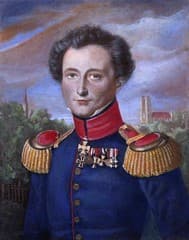
Carl von Clausewitz was a Prussian general and military theorist whose seminal work, "On War," remains a foundational text in military strategy and philosophy. His writings extensively analyzed the nature of warfare, its relationship to politics, and the psychological and strategic elements involved. Clausewitz's concepts, such as the "fog of war" and "friction," continue to influence military thought worldwide.