The Fallibility of Memory
Eyewitness accounts are inherently unreliable and prone to distortion.
Quote
The memory of a fact, however vivid it may be, is not a reproduction, but a new production, and may be an entirely new creation.
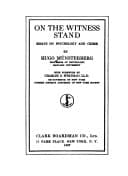
Munsterberg, a pioneer in applied psychology, shows that the common legal idea that human memory works like a perfect recording device is wrong. He argues that memory is not just stored but actively put back together, influenced by emotions, suggestions, and later experiences. This means even well-meaning witnesses can give wrong testimony, leading to unfair outcomes. The book helps us understand how thought biases work in legal settings, showing that perception and recall are personal and easily changed, even without bad intentions. ...
Supporting evidence
Munsterberg describes experiments where individuals' memories of simple events (like a staged argument) varied wildly, with participants often adding details that never occurred or misremembering crucial aspects, even immediately after the event. He also cites cases where suggestibility led witnesses to 'remember' things that were merely implied.
Apply this
Legal professionals should approach eyewitness testimony with extreme caution, corroborating it with physical evidence whenever possible. Jurors should be educated on the psychological limitations of memory, and judges should allow expert testimony on memory fallibility. Individuals should also be aware of how their own memories can be influenced and not blindly trust their recollections.