BookBrief
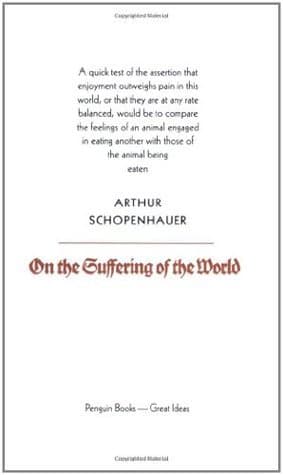
On the Suffering of the World cover
Archivist's Choice

On the Suffering of the World

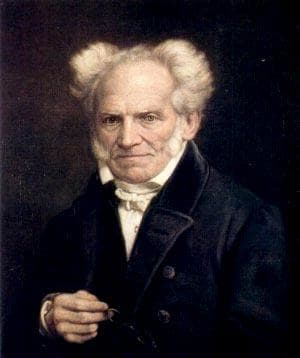
Arthur Schopenhauer

Genre

Philosophy

Reading Time

120 min

Key Themes

See below

Track Your Reading

Sign in to track this book

Schopenhauer argues that existence is futile, with art, morality, and self-awareness offering the only comfort in an indifferent world.

Core Idea

Schopenhauer says that an insatiable, blind 'Will-to-Live' drives all existence, including humans. This Will causes suffering because its constant pursuit of satisfaction is pointless, leading only to temporary relief, new desires, and boredom. Life is a cycle of wanting, pain, and ennui; happiness is an illusion, and optimism a cruel trick. True peace comes from temporarily stopping the Will through art, or by denying it completely through self-control, compassion, and recognizing shared suffering.
Reading time
120 min
Difficulty
Hard
✓ Read this if...
You are interested in a rigorous, albeit pessimistic, philosophical exploration of human existence, suffering, and the nature of reality. You appreciate dense, systematic philosophy that challenges conventional notions of happiness and purpose.
✗ Skip this if...
You are looking for an optimistic, self-help, or light read. You are easily discouraged by profound pessimism or find philosophical arguments against the value of life too unsettling.

Core idea

The central argument and framework that powers the entire book.

Schopenhauer says that an insatiable, blind 'Will-to-Live' drives all existence, including humans. This Will causes suffering because its constant pursuit of satisfaction is pointless, leading only to temporary relief, new desires, and boredom. Life is a cycle of wanting, pain, and ennui; happiness is an illusion, and optimism a cruel trick. True peace comes from temporarily stopping the Will through art, or by denying it completely through self-control, compassion, and recognizing shared suffering.

At a glance

Reading time

120 min

Difficulty

Hard

Read this if...

You are interested in a rigorous, albeit pessimistic, philosophical exploration of human existence, suffering, and the nature of reality. You appreciate dense, systematic philosophy that challenges conventional notions of happiness and purpose.

Skip this if...

You are looking for an optimistic, self-help, or light read. You are easily discouraged by profound pessimism or find philosophical arguments against the value of life too unsettling.

Key Takeaways

1

Life as a Cycle of Want and Suffering

Existence is defined by unfulfilled desires and the pain of their pursuit or satiation.

Quote

All willing springs from a need, from a lack, from a suffering. To this extent, suffering is original and essential to life.

Schopenhauer states that life is a state of suffering, driven by an insatiable 'Will-to-Live' that creates an endless cycle of desires. We constantly strive, and each unmet desire causes pain. Even if a desire is met, satisfaction is brief, soon replaced by boredom or new desires, returning us to a state of lack. This constant shift between wanting and boredom, both forms of suffering, defines human existence. Happiness is only the temporary end of pain, not a positive state itself. This bleak view suggests that true, lasting contentm...

Supporting evidence

Schopenhauer frequently uses the analogy of a pendulum, swinging between pain and boredom, to illustrate the human condition. He also points to the universal experience of striving and the ephemerality of pleasure as evidence of this inherent suffering.

Apply this

Recognize that the pursuit of external gratification is a Sisyphean task. Instead of constantly chasing desires, cultivate an awareness of their transient nature and the inherent futility of complete satiation. This understanding can foster a detachment that lessens the impact of unfulfilled desires.

will-to-livesufferingdesireboredompessimism
2

The Illusion of Individuality

Our sense of separate self is a manifestation of the blind, universal Will.

Quote

The individual is only an appearance, a phenomenon; the thing in itself is the Will.

Schopenhauer states that individual beings are not truly independent but are manifestations of a single, undifferentiated, irrational 'Will-to-Live.' This Will is a blind, unconscious force that underpins all phenomena, from plant growth to human desires. Our ego, our sense of 'I,' is a temporary, localized expression of this universal Will, designed to perpetuate itself. We believe we are free agents, but our actions and desires are ultimately dictated by this underlying force. This idea breaks the illusion of individual free will, s...

Supporting evidence

Schopenhauer points to the universality of certain drives (like self-preservation and reproduction) across all living beings as evidence of a single, underlying Will. He also refers to the pre-rational, instinctual nature of these drives, suggesting they operate prior to conscious thought.

Apply this

Cultivate a sense of interconnectedness with all life and a detachment from the ego-driven desires that fuel individual suffering. Recognizing the shared source of all striving can foster compassion and diminish the perceived importance of personal triumphs and failures.

will-to-liveindividualitynoumenonphenomenonego
3

Compassion as Moral Imperative

Understanding the shared suffering of all beings is the foundation of genuine morality.

Quote

Compassion is the basis of all true morality.

Since all beings are manifestations of the same suffering Will, Schopenhauer argues that true morality comes from compassion. This morality is not based on divine command or rational duty, but on an intuitive understanding of others' suffering as our own. When we see another suffer, we are recognizing a reflection of the universal suffering inherent in the Will. This insight moves beyond the illusion of individuality and promotes empathy, leading to actions that ease suffering rather than cause it. Compassion, then, is the only true e...

Supporting evidence

Schopenhauer contrasts his view with Kant's duty-based ethics, arguing that abstract reason alone cannot motivate true ethical behavior. He emphasizes the immediate, intuitive feeling of sympathy for others' pain as the true source of moral action, observable in acts of selflessness.

Apply this

Actively practice empathy by imagining yourself in the position of others, particularly those experiencing hardship. Prioritize actions that reduce harm and alleviate suffering, understanding that this is the most direct way to mitigate the pervasive suffering of the world.

compassionmoralityethicsempathysuffering
4

Aesthetic Contemplation as Escape

Art offers temporary liberation from the tyranny of the Will and its suffering.

Quote

Aesthetic pleasure consists in the pure, will-less knowledge of the beautiful.

Schopenhauer identifies aesthetic contemplation, especially through art, as a temporary escape from the Will's constant demands. When we engage with art—music, painting, or poetry—we move beyond our individual desires and become a 'pure, will-less subject of knowledge.' In this state, we perceive the 'Platonic Ideas' or universal forms that underpin phenomena, rather than being caught in our own wants and needs. This detachment offers a momentary break from suffering, a brief glimpse of peace and objectivity. Music, for Schopenhauer, ...

Supporting evidence

Schopenhauer uses the experience of being utterly absorbed in a beautiful piece of music or a captivating painting as an example. In such moments, one forgets oneself and one's troubles, becoming a pure spectator of the 'Idea.'

Apply this

Actively seek out and engage with art that resonates deeply with you. Dedicate time to truly contemplate and absorb artistic expressions, allowing yourself to detach from personal desires and immerse in the pure aesthetic experience. This can be a vital practice for mental and emotional respite.

aestheticsartplatonic-ideaswill-less-contemplationmusic
5

Asceticism and Denial of the Will

True liberation from suffering requires the active suppression of desires and the Will.

Quote

If the Will has turned and denied itself, then the whole of existence, this world which is merely its manifestation, sinks into nothing.

For Schopenhauer, true and lasting freedom from suffering is not found in temporary escapes like art, but in the complete denial of the Will itself. This requires a deep change in consciousness, moving beyond affirming life and its desires towards ascetic practices. These practices, such as voluntary poverty, chastity, fasting, and self-denial, aim to systematically extinguish the Will's various manifestations within the individual. By suppressing drives for reproduction, acquisition, and pleasure, one begins to dismantle the engine o...

Supporting evidence

Schopenhauer draws heavily on Eastern philosophies, particularly Buddhism and Hinduism, and the practices of Christian saints and mystics, as examples of individuals who have successfully embarked on the path of Will-denial.

Apply this

While extreme asceticism may not be practical for most, one can incorporate principles of Will-denial by practicing mindfulness, detachment from material possessions, conscious moderation of desires, and embracing voluntary simplicity. Challenge your automatic impulses for gratification.

asceticismwill-denialsufferingliberationenlightenment
6

The Supremacy of Music

Music uniquely expresses the Will itself, offering direct insight and profound solace.

Quote

Music is by no means, like the other arts, the copy of the Ideas, but the copy of the Will itself.

Schopenhauer considers music superior to all other art forms because it does not simply represent the 'Platonic Ideas' (universal forms) that underlie phenomena, but directly expresses the Will itself. While other arts like painting or poetry depict the objective world and its forms, music operates on a deeper, more fundamental level, mirroring the ebb and flow, tension and release, striving and satisfaction of the unconscious Will. This direct connection allows music to bypass the intellect and communicate directly with our deepest b...

Supporting evidence

Schopenhauer's analysis of music's structure – its melodies reflecting the Will's constant striving, its harmonies representing different stages of satisfaction – serves as evidence. He points to the universal emotional impact of music, regardless of cultural context.

Apply this

Engage with music mindfully, not just as background noise. Allow yourself to be fully immersed in its structure, rhythm, and melody, recognizing its unique capacity to connect you with fundamental aspects of existence and provide emotional release.

musicwill-to-liveaestheticsartemotions
7

The Futility of Optimism

Optimism is a cruel delusion that masks the inherent suffering of existence.

Quote

To call the world a vale of tears, an abode of sorrow, is no hyperbole, but a simple description.

Schopenhauer strongly rejects optimism, seeing it as a naive and harmful delusion. He argues that any attempt to justify the world as the 'best of all possible worlds' (a jab at Leibniz) is absurd given widespread suffering, disease, death, and the endless cycle of unmet desires. Optimism, he believes, stops us from facing life's harsh realities and thus hinders our ability to find real solutions or comfort. By sugarcoating life's inherent misery, optimism perpetuates the Will's blind striving and prevents individuals from recognizing...

Supporting evidence

Schopenhauer frequently cites the prevalence of pain, loss, and death throughout human and animal life, as well as the constant struggle for survival and the fleeting nature of pleasure, as irrefutable evidence against any optimistic worldview.

Apply this

Cultivate a realistic perspective on life's challenges, acknowledging suffering without succumbing to despair. Avoid 'toxic positivity' and instead, embrace a clear-eyed view of reality, which can empower you to address difficulties more effectively and appreciate genuine moments of peace.

optimismpessimismsufferingdelusionreality
8

The Meaninglessness of History

History is a repetitive drama of the Will, devoid of genuine progress or ultimate purpose.

Quote

History shows us nothing but the same thing in a different dress.

For Schopenhauer, history is not a story of progress or a grand unfolding of divine purpose, but a monotonous repetition of the same fundamental struggles and manifestations of the Will. Human nature, driven by the same selfish desires and the urge to dominate, remains essentially unchanged across time. Wars, revolutions, and the rise and fall of empires are merely different costumes worn by the same underlying, irrational Will. There is no ultimate meaning or goal in historical events; they are simply the perpetual re-enactment of th...

Supporting evidence

Schopenhauer points to the recurring patterns of conflict, ambition, and suffering throughout recorded history, arguing that human beings consistently make the same mistakes and pursue the same ends, regardless of technological or societal advancements.

Apply this

While learning from historical events for practical lessons is valuable, avoid seeking ultimate meaning or inevitable progress in historical narratives. Focus instead on understanding the timeless aspects of human nature and the Will, which can be found in any era.

historymeaninglessnesswill-to-liverepetitionprogress
9

The Intellect as a Servant

Reason is a secondary faculty, serving the primary, irrational Will.

Quote

The intellect is the mere minister of the Will; it is not the Will itself.

Contrary to Enlightenment philosophies that praised reason, Schopenhauer sees the intellect as a secondary faculty, a mere tool or 'lamp' that serves the primary, irrational 'Will-to-Live.' Our reason, our ability to think and use logic, does not control our basic desires or motivations; instead, the Will uses it to devise strategies for its own satisfaction and perpetuation. We rationalize our desires after the fact, believing we are making logical choices when in reality our underlying Will has already set the course. This challenge...

Supporting evidence

Schopenhauer frequently refers to the powerful, often irrational, nature of human passions, instincts, and desires (e.g., love, fear, ambition) that often override logical considerations. He suggests that we often find reasons to justify what we already want to do.

Apply this

Be critically aware of the motivations behind your thoughts and actions. Question whether your 'rational' decisions are truly independent or merely justifications for deeper, unconscious desires. Practice self-observation to identify the Will's influence.

intellectwill-to-livereasonrationalizationunconscious-drives
10

Death as a Release, Not Annihilation

Death is the end of individual suffering, allowing the Will to persist in new forms.

Quote

Death is the great opportunity not to be oneself anymore.

Schopenhauer offers a unique view of death, seeing it not as the ultimate end of the Will, but as the dissolution of the individual manifestation of the Will. The individual ego, with its specific desires and sufferings, ceases to exist. However, the underlying, universal Will-to-Live continues, appearing in new forms and new individuals. For the individual, death is a release from the cycle of suffering inherent in their particular existence. It is a return to the undifferentiated state of the Will, where the pain of individuality is...

Supporting evidence

Schopenhauer draws parallels with the natural world, where individual organisms die but life itself continues. He argues that the fear of death is primarily the Will's fear of its own objectification's cessation, not a fear of personal non-existence.

Apply this

Embrace a perspective on mortality that emphasizes the release from individual suffering rather than clinging to the illusion of personal perpetuity. This can foster a greater acceptance of life's impermanence and reduce the fear of death, allowing for a more present and less anxious existence.

deathwill-to-livesufferingimmortalitydissolution

Critical analysis

Notable Quotes

Unless suffering is the direct and immediate object of life, our existence must entirely fail of its aim.

Opening argument on the nature of existence.

Life is a business which does not cover its expenses.

Metaphorical description of the futility of life's efforts.

The world is hell, and men are on the one hand the tortured souls and on the other the devils in it.

A stark comparison of the world to hell.

To desire immortality is to desire the perpetuation of a great mistake.

Critique of the desire for an eternal life.

Every man takes the limits of his own field of vision for the limits of the world.

Observation on human perception and egocentrism.

Happiness is merely the cessation of pain.

Definition of happiness as a negative state.

If you want to know what a man is, don't ask what he thinks but what he does.

Advocating for judging character by actions rather than thoughts.

The greatest wisdom is to know that this world is not a place for happiness.

A central tenet of his pessimistic philosophy.

The more intelligent a man is, the more pain he will experience.

Linking intelligence with increased suffering.

The truth is that we ought to be miserable, and we are.

A direct statement about the inherent misery of existence.

Every parting gives a foretaste of death; every reunion a foretaste of the resurrection.

Reflecting on the emotional impact of separation and reunion.

Sleep is the interest we have to pay on the capital which is called health.

An analogy for the necessity of sleep.

The only sure way not to be miserable is to have no desires.

Suggesting the path to avoiding suffering through asceticism.

Man is at bottom a savage, horrible beast.

A bleak view of fundamental human nature.

Quiz

Test Your Knowledge

Ready to see how well you understood this book? Take our interactive quiz with 10 questions.

10
Questions
~5
Minutes
?
Best Score

Key Questions (FAQ)

Schopenhauer argues that suffering is an inherent and unavoidable aspect of existence, stemming from the ceaseless striving of the Will, a blind, irrational force underlying all phenomena. He contends that life is a cycle of desire, temporary satisfaction, and new desire, leading inevitably to pain and boredom.

About the author

Arthur Schopenhauer

Arthur Schopenhauer was a 19th-century German philosopher renowned for his pessimistic worldview. His seminal work, 'The World as Will and Representation,' profoundly influenced existentialism and psychoanalysis. Schopenhauer's writings, including 'The Wisdom of Life' and 'On the Suffering of the World,' explore themes of suffering, desire, and the nature of reality, offering a unique perspective on the human condition.