BookBrief
On The Road cover
Archivist's Choice

On The Road

Jack Kerouac (1976)

Genre

Lifestyle

Reading Time

480 min

Key Themes

See below

Track Your Reading

Sign in to track this book

Dean Moriarty and Sal Paradise go on a wild, cross-country trip with jazz, drugs, and a desperate search for meaning on America's post-war roads.

Synopsis

Sal Paradise, a young writer, feels restless in post-World War II New York. His life changes when Dean Moriarty arrives. Dean is wild and unpredictable, and his energy for life makes Sal want freedom and adventure. Sal and Dean take many road trips across America, hitchhiking, driving stolen cars, and riding buses. They are fueled by jazz, drugs, and a search for a pure moment of existence. Their journeys go from New York to Denver, San Francisco, New Orleans, and Mexico City. They meet many beatniks, musicians, and wanderers. Sal watches Dean's chaotic relationships, his passionate but destructive life, and his search for a father figure. Sal thinks about his own identity and purpose. The trips have moments of great joy, friendship, poverty, and disappointment. Sal tries to write about their experiences, but Dean is always moving. The novel ends with Sal recovering from illness in Mexico, thinking about their adventures. He has one last meeting with Dean in New York before Dean leaves again. Sal is left with a bittersweet understanding of their past and the feeling of the open road.
Reading time
480 min
Difficulty
Medium
Pacing
Fast
Mood
Feverish, Restless, Exhilarating, Melancholy, Adventurous
✓ Read this if...
You are drawn to stories of restless youth, bohemian lifestyles, and the search for meaning on the open road; you appreciate stream-of-consciousness prose and a strong sense of place.
✗ Skip this if...
You prefer tightly plotted narratives, characters with clear motivations, or stories with a definitive resolution; you dislike meandering prose or depictions of drug use and casual relationships.

Plot Summary

Sal Paradise's Restless Beginnings and the Arrival of Dean Moriarty

Sal Paradise, a young writer in Paterson, New Jersey, and New York City, feels a deep emptiness after his divorce and his aunt's illness. He wants more from life. His world changes with the arrival of Dean Moriarty, an energetic young man from Denver, recently out of reform school. Dean, with his young wife Marylou, impresses Sal with his spontaneous way of thinking, his constant search for feelings, and his enthusiasm for life, jazz, and the road. Sal sees in Dean his own unexpressed desires and the freedom he wants. This sets up their intertwined lives.

First Westward Journey: Hitchhiking to Denver

Inspired by Dean and his own restlessness, Sal decides to go west. He hitchhikes from New York, meeting many different people and seeing the vastness of America. He works briefly as a farmhand in North Carolina, gets rides from truckers, and sleeps outside. His trip takes him through Chicago and to Denver, where he meets Dean, Marylou, and their Beat friends again, including Carlo Marx. This first trip shows Sal the raw reality of the American landscape and the temporary lives of its people, making him want more adventure.

Denver Revelry and the Rush to San Francisco

In Denver, Sal enters Dean's chaotic and exciting world, full of late-night talks, jazz clubs, and drug-filled parties with friends like Carlo Marx and Ed Dunkel. Dean's energy and unpredictable nature control their lives. After a time of intense fun, Dean, Marylou, and Ed Dunkel decide to move to San Francisco. Sal, low on money, follows them by bus, crossing mountains in a snowstorm. He meets them in San Francisco, where their life of free exploration, jazz, and casual relationships continues, strengthening Sal's interest in Dean's spontaneous life.

Sal's Return East and Dean's Brief Stint in New York

Feeling a need to return home and take a break from Dean's fast life, Sal decides to go back to the East Coast. He travels alone, thinking about his experiences. Soon after, Dean, having left Marylou, arrives in New York with a new girlfriend, Camille, who is pregnant with his child. Dean's presence excites Sal's New York literary friends, bringing his energetic style and philosophical ideas to their discussions. However, Dean's inability to stay in one place and his constant need to move soon make him leave Camille and return to the West, leaving Sal wanting his friend to come back.

Second Westward Journey: Dean's Return and the Cross-Country Dash

Dean Moriarty, now with his third wife, Inez, and another child coming, returns to New York in a stolen car. His arrival makes Sal want adventure again. Sal, Dean, and Marylou (who has rejoined them) take a frantic, fast drive back west. This trip has Dean's reckless driving, their constant search for jazz and excitement, and a general disregard for societal rules. They stop briefly in Denver to see Dean's family and friends, then go to San Francisco, where Dean tries to manage his two wives, Camille and Inez, leading to domestic chaos.

San Francisco Chaos and Dean's Desertion

In San Francisco, Dean's complicated home life with Camille and Inez breaks down. His inability to commit to one woman or one place, along with his constant search for experience, creates a difficult situation. Sal watches Dean's struggles and his ability for both great love and deep irresponsibility. Dean eventually leaves both women and children, driven by his desire to wander and his need to move on. Sal thinks about the results of Dean's actions and the sadness under his friend's happy outside, feeling a sense of loss.

Third Westward Journey: To New Orleans and Mexico

Dean reappears, and he and Sal, with Stan Shepard, go on a third major trip, this time heading south to New Orleans to visit Old Bull Lee (William S. Burroughs). The trip is marked by poverty, hitchhiking, and a growing sense of desperation and tiredness. After a short, drug-filled stay in New Orleans, they decide to go further south into Mexico, driven by Dean's belief that ultimate freedom and experience can be found there. The trip through Mexico is hard, with heat, poverty, and cultural differences, pushing their physical and mental limits.

Mexico City: Freedom and Illness

Arriving in Mexico City, Sal feels a great sense of freedom and joy. The culture, the cheap drugs, and the feeling of complete freedom from American rules lead him to a peak experience, a moment of pure happiness. His joy is short-lived. Sal gets very sick with dysentery and a fever. Dean Moriarty, always restless and self-absorbed, leaves Sal behind in Mexico City to pursue another woman, promising to return but never doing so. Sal is left alone, sick and abandoned, feeling the pain of Dean's impulsiveness.

Sal's Recovery and Return to New York

After Dean leaves, a kind Mexican woman nurses Sal back to health. Being abandoned and sick gives him a deeper, sadder understanding of Dean's character and their friendship. He slowly gets his strength back and, with help, eventually makes the long trip back to New York. The return is not a triumph, but a quiet reflection, as he thinks about his intense travels and his complex relationship with Dean. He is changed by the road, no longer the same restless young man who first set out.

Final Encounter and Lingering Memories

Months later, Dean Moriarty makes a final, brief visit to Sal in New York. He is getting ready for another trip, this time to San Francisco with a new companion, a French-Canadian girl. Their meeting has sadness, as their intense bond seems to have faded, replaced by a tired understanding. Dean is still restless, still searching, but the magic of their shared youth is gone. Sal watches him leave, knowing it is likely their last meeting. He is left to think about their adventures, the 'mad ones,' and the bittersweet memories of the road, forever marked by the search for experience and Dean Moriarty's charismatic, elusive spirit.


Principal Figures

Sal Paradise

The Protagonist

Sal evolves from a restless, searching intellectual to a man deeply marked by his experiences, gaining a more complex understanding of freedom, friendship, and the human condition.

Dean Moriarty

The Antagonist/Supporting

Dean remains largely unchanged in his relentless pursuit of 'kicks,' but his actions increasingly reveal the underlying sadness and irresponsibility beneath his charismatic exterior.

Marylou

The Supporting

Marylou remains largely consistent in her wild, free-spirited nature, experiencing the highs and lows of life with Dean before eventually moving on.

Carlo Marx

The Supporting

Carlo remains a consistent intellectual and poetic presence, observing and analyzing the lives around him.

Old Bull Lee

The Supporting

Old Bull Lee remains a static, detached intellectual figure, observing the world from his drug-induced perspective.

Camille

The Supporting

Camille endures Dean's abandonment and tries to build a life for herself and her children despite his irresponsibility.

Remi Boncoeur

The Supporting

Remi's role is primarily to provide a temporary living situation and a different social dynamic for Sal in San Francisco.

Ed Dunkel

The Supporting

Ed remains a largely static, passive figure, continually subject to the whims of Dean and the road.

Inez

The Supporting

Inez, like Camille, endures Dean's fleeting presence and ultimate abandonment.

Themes & Insights

Freedom vs. Responsibility

This theme is a main part of the novel, shown mostly through Dean Moriarty. Dean shows complete freedom: freedom from societal rules, work, common relationships, and even self-preservation. He lives only for the moment, looking for 'kicks.' However, this radical freedom comes at a cost, as seen when he leaves his wives and children, and eventually Sal. Sal Paradise thinks about this, admiring Dean's freedom but also feeling guilt and a need for connection. The book asks if true freedom can exist without considering its effect on others, suggesting a tragic exchange.

''What is that feeling when you're driving away from people and they recede on the plain till you see their specks disappearing? It's the too-huge world vaulting us, and it's good-bye. But we lean forward to the next crazy adventure under the sky.''

Sal Paradise

The Search for 'It' and Transcendence

Sal and Dean are always looking for an elusive 'IT,' a moment of pure experience, truth, or spiritual transcendence, often found in jazz, drugs, sex, or the speed of the road. This 'IT' means a deeper meaning beyond the everyday. Dean's energy is entirely focused on this search, believing 'IT' can be found in every heightened feeling. Sal, who thinks more, looks for 'IT' through observation and writing, hoping to capture these experiences. The theme suggests a spiritual quest, even if the methods are unusual and often self-destructive, to reach a higher state of being.

''The only people for me are the mad ones, the ones who are mad to live, mad to talk, mad to be saved, desirous of everything at the same time, the ones who never yawn or say a commonplace thing, but burn, burn, burn like fabulous yellow roman candles exploding like spiders across the stars.''

Sal Paradise

Restlessness and Wanderlust

The story is driven by an intense restlessness and desire to wander. Sal and Dean are always moving, crossing America many times. This constant movement is not just physical; it is a symbol for an inner spiritual and existential search, a refusal to be limited by place or societal expectations. The open road stands for endless possibility and escape from stagnation. The theme explores the appeal and the eventual pointlessness of constantly running, as the characters often repeat behaviors despite changing locations, suggesting that true peace might not come from external movement alone.

''No matter what Dean did he could never go as far as he wanted to go, so now he had a new idea, which was to go as far as he could in the time allotted, and then turn around and go back.''

Sal Paradise

Friendship and Betrayal

The complicated friendship between Sal Paradise and Dean Moriarty is the emotional heart of the novel. Sal is drawn to Dean's exciting energy, seeing him as an inspiration and a catalyst for his own life. Their bond is strong, filled with shared experiences, deep talks, and mutual admiration. However, Dean's irresponsibility and self-centeredness lead to moments of betrayal, especially when he leaves a sick Sal in Mexico. This theme explores the limits of admiration and the painful realization that even inspiring people can be flawed and hurtful, making Sal face the darker side of his idolization.

''I was behind Dean, and Dean was behind nobody, and Dean was going to make it and make it and make it. But he never made it. He never made it, and I was the one who was going to make it.''

Sal Paradise

The American Landscape and Identity

The vast American landscape is not just a setting but an active part of the novel. The journeys across the country—from East Coast cities to plains, mountains, and the Southwest—shape the characters' experiences and views. The road itself becomes a symbol of American freedom, possibility, and a search for a national identity different from European influences. Kerouac's writing often celebrates the beauty and raw energy of America, suggesting that the nation's true spirit is in its vastness and the nomadic lives of its people, deeply influencing Sal's understanding of himself as an American writer.

''The air was sweet and cold and pure. It was a beautiful night. I was a young man and I was going to the West. I felt like a great pioneer.''

Sal Paradise

Plot Devices & Literary Techniques

Stream of Consciousness Narrative

A narrative style that mimics the free flow of thought, emotion, and sensory input.

Kerouac employs a spontaneous prose style, often referred to as 'spontaneous bop prosody,' which mirrors the improvisational nature of jazz. The narrative in 'On the Road' is characterized by long, unbroken sentences, rapid shifts in focus, and a direct, unedited voice that reflects Sal Paradise's immediate perceptions and thoughts. This technique immerses the reader directly into Sal's subjective experience, conveying the frenetic energy, sensory overload, and emotional intensity of the Beat lifestyle and the constant movement of the road, blurring the lines between observation and internal monologue.

The Road as Metaphor

The physical journey across America symbolizes a spiritual and existential quest.

The literal highways and byways traversed by Sal and Dean serve as a powerful metaphor for their inner journeys of self-discovery, rebellion, and the search for 'IT.' The open road represents freedom from societal constraints, endless possibility, and a rejection of stagnation. Each leg of their cross-country trips signifies a new phase of their quest, a new set of experiences, and a deeper plunge into the unknown. It is both a physical path and a symbolic route to spiritual enlightenment, even as it sometimes leads to disillusionment and exhaustion.

Episodic Structure

The narrative unfolds as a series of distinct, yet interconnected, adventures and encounters.

The novel is structured as a series of loosely connected episodes, reflecting the transient and unpredictable nature of the characters' lives. Each chapter or section often details a particular journey, a specific city, or a memorable encounter, rather than a tightly plotted, linear progression. This episodic structure emphasizes the spontaneous, improvisational quality of their travels and relationships, allowing for a diverse cast of characters and settings to be introduced without rigid adherence to a conventional plot arc. It mirrors the 'bop' rhythm of jazz, moving from one distinct improvisation to the next.

The Anti-Hero (Dean Moriarty)

A central character who lacks conventional heroic attributes but drives the narrative with his compelling flaws.

Dean Moriarty functions as an anti-hero. While he inspires Sal and embodies a radical form of freedom and vitality, he also possesses profound flaws: irresponsibility, selfishness, and a destructive impulsiveness that leads to the abandonment of his family and friends. He is not a moral exemplar but a charismatic force that both attracts and repels. His compelling, flawed nature challenges traditional notions of heroism, forcing Sal (and the reader) to confront the complexities of human nature and the dark side of unbridled passion and freedom.

Critical analysis

Notable Quotes

The only people for me are the mad ones, the ones who are mad to live, mad to talk, mad to be saved, desirous of everything at the same time, the ones who never yawn or say a commonplace thing, but burn, burn, burn like fabulous yellow roman candles exploding like spiders across the stars and in the middle you see the blue centerlight pop and everybody goes 'Awww!'

Sal Paradise describes the kind of vibrant, passionate people he is drawn to, embodied by Dean Moriarty.

What is that feeling when you're driving away from people and they recede on the plain till you see their specks disappearing? It's the too-huge world, and we are all rushing through it.

Sal reflects on the bittersweet feeling of departure and the vastness of the world.

Our brains were crackling and popping like a frying pan.

Describing an intense conversation or intellectual exchange between characters.

I was halfway across America, at the dividing line between the East of my youth and the West of my future.

Sal reflects on his journey and the symbolic transition he is undergoing.

No matter what Dean and I were doing, we were always knowing we'd have to leave it someday.

A poignant realization about the transient nature of their adventures and relationships.

And we all began to babble, just like we did in the old days, and everybody was happy.

A moment of nostalgic joy and camaraderie among friends.

The air was sweet, like a girl's breath, and the stars were winking at me from the dark.

A sensory description of a beautiful night, evoking a sense of wonder.

He was simply a youth tremendously excited with life, and though he was a con-man, he was only conning because he wanted to live and to love and to talk and to get excited more than anything else.

Sal's complex understanding and affection for Dean Moriarty's character.

I like too many things and get all confused and hung-up running from one falling star to another till I drop. This is the American night.

Sal describes his overwhelming desire for experience and the frenetic energy of his life.

With the coming of Dean Moriarty began the part of my life you could call my life on the road.

Sal marks Dean's arrival as the catalyst for his adventures and transformation.

We were going to the end of the road and we didn't know what we would find there, but we knew it would be good.

A statement of hopeful anticipation for the unknown future of their journey.

But at least I know what I'm doing and I'm not running around like a chicken with its head cut off.

A rare moment of self-assuredness or clarity amidst the chaos of their lives.

Soon it got dark, and I was all alone on the road, going to New York, and it was a happy thing.

Sal finds contentment in solitary travel, heading towards a new destination.

The one thing that we yearn for in our living days, that makes us sigh and groan and undergo sweet agonies, is love, or the lack of it.

A reflection on the central human pursuit of love and its emotional impact.

Quiz

Test Your Knowledge

Ready to see how well you understood this book? Take our interactive quiz with 10 questions.

10
Questions
~5
Minutes
?
Best Score

Key Questions (FAQ)

Jack Kerouac's 'On The Road' follows the spontaneous, cross-country adventures of Sal Paradise and his charismatic, wild friend Dean Moriarty. Their four road trips across late 1940s/1950s America are a relentless quest for 'IT' – a transcendent experience, meaning, and true freedom, fueled by jazz, drugs, sex, and a longing for authentic existence outside societal norms.

About the author

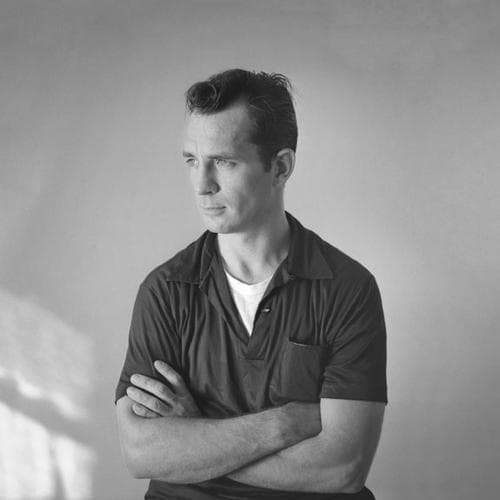
Jack Kerouac

Jean-Louis Lebris de Kérouac, known as Jack Kerouac, was an American novelist and poet who, alongside William S. Burroughs and Allen Ginsberg, was a pioneer of the Beat Generation.