BookBrief
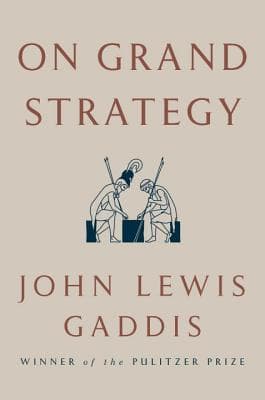
On Grand Strategy cover
Archivist's Choice

On Grand Strategy

John Lewis Gaddis (2018)

Genre

Business / Politics / Leadership / History / Philosophy

Reading Time

10-12 hours

Key Themes

See below

Track Your Reading

Sign in to track this book

From ancient battlefields to Cold War diplomacy, Gaddis distills centuries of strategic thinking into a masterclass on leadership.

Core Idea

Grand strategy is not a formula but an ongoing, often contradictory, art. It balances big visions with focused actions and ambitious goals with limited resources. Drawing lessons from historical figures like Xerxes and Lincoln, Gaddis says effective strategists must be both 'foxes' (knowing many things, adapting) and 'hedgehogs' (knowing one big thing, keeping a clear objective). Success depends on understanding how geography, resources, morality, and unpredictable events interact, all while remembering that war is an extension of politics. Ultimately, grand strategy means making hard choices under uncertainty, often needing wisdom to hold back as much as courage to act, and accepting that perfect solutions are rare.
Reading time
10-12 hours
Difficulty
Hard
✓ Read this if...
You are interested in the historical evolution and philosophical underpinnings of strategic thought, particularly if you appreciate a broad, interdisciplinary approach to leadership and decision-making in complex environments.
✗ Skip this if...
You are looking for a practical, step-by-step guide to modern business strategy or a purely contemporary analysis of geopolitical issues without extensive historical context.

Core idea

The central argument and framework that powers the entire book.

Grand strategy is not a formula but an ongoing, often contradictory, art. It balances big visions with focused actions and ambitious goals with limited resources. Drawing lessons from historical figures like Xerxes and Lincoln, Gaddis says effective strategists must be both 'foxes' (knowing many things, adapting) and 'hedgehogs' (knowing one big thing, keeping a clear objective). Success depends on understanding how geography, resources, morality, and unpredictable events interact, all while remembering that war is an extension of politics. Ultimately, grand strategy means making hard choices under uncertainty, often needing wisdom to hold back as much as courage to act, and accepting that perfect solutions are rare.

At a glance

Reading time

10-12 hours

Difficulty

Hard

Read this if...

You are interested in the historical evolution and philosophical underpinnings of strategic thought, particularly if you appreciate a broad, interdisciplinary approach to leadership and decision-making in complex environments.

Skip this if...

You are looking for a practical, step-by-step guide to modern business strategy or a purely contemporary analysis of geopolitical issues without extensive historical context.

Key Takeaways

1

The Fox and the Hedgehog: Balancing Breadth and Depth

Effective strategists must integrate a broad understanding of the world with deep, focused knowledge.

Quote

The fox knows many things, but the hedgehog knows one big thing.

Gaddis uses Isaiah Berlin's distinction between the fox and the hedgehog to highlight a key tension in grand strategy. A 'hedgehog' strategist, like Philip II of Spain, has one main vision, which can lead to sticking to it even when things change. In contrast, a 'fox,' like Elizabeth I, is adaptable, understands different viewpoints, and can change plans. True grand strategy, Gaddis argues, combines both: the hedgehog's clear purpose with the fox's flexibility and broad awareness. Without purpose, strategy lacks direction; without fle...

Supporting evidence

Gaddis contrasts Philip II's unwavering, religiously motivated grand strategy, which ultimately led to the Spanish Armada's defeat, with Elizabeth I's more opportunistic and flexible approach, characterized by balancing alliances and internal stability.

Apply this

Leaders should cultivate both a clear, long-term vision (hedgehog) and the capacity for continuous learning, adaptation, and an understanding of diverse viewpoints (fox). Regularly question core assumptions and seek out information that challenges your primary thesis.

fox-hedgehog-dichotomystrategic-flexibilityvision-adaptability
2

Ends, Ways, and Means: The Strategic Trinity

Grand strategy is the art of aligning objectives (ends) with available resources (means) through effective methods (ways).

Quote

Strategy is the process by which ends are related to means, and means to ends.

Gaddis emphasizes the fundamental strategic trinity: goals, methods, and resources. 'Goals' are the desired outcomes, the 'what' of strategy. 'Resources' are what is available—military, economic, diplomatic, cultural—the 'with what.' 'Methods' are the actions used to achieve the goals with the available resources, the 'how.' Failing to balance these three leads to strategic disaster. Overly ambitious goals with too few resources, or bad ways of using plenty of resources, will both fail. The best strategists, from Octavian to Lincoln, ...

Supporting evidence

Gaddis analyzes Octavian's careful consolidation of power after Caesar's assassination, meticulously aligning his political objectives (ends) with his military and diplomatic resources (means) and his calculated actions (ways) to establish the Roman Empire.

Apply this

Before embarking on any major initiative, clearly define your desired outcomes (ends), rigorously assess all available resources (means), and then develop a realistic plan of action (ways) that connects the two. Be prepared to adjust any of the three components if they fall out of alignment.

strategic-planningresource-allocationobjective-setting
3

Geography's Enduring Influence: The Stage of Strategy

Physical geography, though often overlooked, fundamentally shapes and constrains strategic choices.

Quote

Geography is the stage on which grand strategy is performed, and it sets limits on what can be achieved.

Gaddis reminds us that while human actions and ideas matter, grand strategy always operates within the firm limits of geography. From ancient Greece's fragmented city-states due to mountains to Britain's island security leading to naval power, geography greatly affects military capabilities, logistical problems, and even national character. Strategists who ignore or misunderstand geography do so at their own risk. The physical land determines communication lines, defensible borders, access to resources, and whether certain strategic m...

Supporting evidence

Gaddis discusses the geographical advantages of the American colonies, particularly their vastness and the difficulty for Britain to project power across the Atlantic, contributing to the success of the American Revolution.

Apply this

When developing strategy, always conduct a thorough geographical analysis. Consider how terrain, climate, natural barriers, and proximity to resources and adversaries will impact your plans and the feasibility of achieving your goals.

geopoliticslogisticsenvironmental-constraints
4

The Perils of Hubris: When Grand Strategy Fails

Overconfidence and a refusal to acknowledge limits are common threads in strategic catastrophes.

Quote

Hubris is the greatest enemy of strategy, blinding its practitioners to their own limitations and the realities of the world.

Gaddis shows how hubris—excessive pride—has undone many grand strategists. From Xerxes invading Greece to Napoleon's Russian campaign, refusing to admit limits, adapt to changes, or accurately assess an enemy's capabilities often causes catastrophic failure. Hubris encourages an 'ends justify the means' mindset, where ethical concerns and practical limits are ignored for a grand, often personal, vision. Successful strategists, in contrast, show humility, learn from mistakes, and pragmatically understand their own and their nation's li...

Supporting evidence

Gaddis uses the example of Xerxes's overambitious invasion of Greece, where his vast numbers were ultimately defeated by the disciplined, geographically advantageous defense of the Greeks, highlighting the perils of underestimating an opponent and overestimating one's own capabilities.

Apply this

Actively cultivate humility in your strategic thinking. Seek out dissenting opinions, conduct pre-mortems to identify potential failures, and regularly re-evaluate your assumptions. Acknowledge that even the best-laid plans can go awry and be prepared to pivot.

strategic-failureoverconfidencehumility
5

Moral Compass and Strategic Legibility

Effective grand strategy requires a clear moral foundation that makes objectives understandable and justifiable.

Quote

Strategy is not just about power; it is also about purpose, and purpose must ultimately be rooted in morality.

Gaddis, drawing from figures like St. Augustine and Abraham Lincoln, argues that grand strategy is not just about calculating power. It also needs a moral side, a 'legibility' that makes the strategy understandable and fair to both citizens and other countries. A strategy without moral basis risks alienating allies, strengthening enemies, and losing domestic support. Lincoln's framing of the Civil War as a fight for Union and against slavery gave a moral reason that sustained the Union through huge difficulties. This is not about stri...

Supporting evidence

Gaddis highlights Lincoln's profound moral leadership during the American Civil War, transforming the conflict from merely preserving the Union to a struggle for human freedom, which garnered essential international and domestic support.

Apply this

Ensure your strategic objectives are clearly articulated and morally defensible. Understand the ethical implications of your actions and how they will be perceived. A strategy that resonates morally will garner greater support and resilience.

moral-leadershiplegitimacystrategic-narrative
6

The Clausewitzian Paradox: War as a Continuation of Politics

War is never an isolated act but an instrument of policy, profoundly shaped by political objectives.

Quote

War is merely the continuation of policy by other means.

Gaddis gives much attention to Clausewitz's insight: war is not separate but a political tool. This means military action must always serve political goals, and political leaders, not just generals, must guide it. Failing to combine military strategy with political aims leads to 'war for war's sake,' a disastrous and pointless effort. This view makes strategists constantly ask: what political outcome are we trying to achieve with this use of force? It implies that the decision to wage war, its conduct, and its end must all be seen thr...

Supporting evidence

Gaddis discusses Clausewitz's influence on later strategists, emphasizing how the American Founding Fathers, particularly Washington, understood the political nature of their military struggle against Britain.

Apply this

Always define the political objectives before considering military action. Ensure that military leaders understand and align their operations with these political goals. Continuously reassess whether military means are still serving the desired political ends.

political-warfaremilitary-strategypolicy-integration
7

Contingency and Adaptation: The Unpredictable Nature of History

Grand strategy must account for unforeseen events and possess the capacity to adapt to radical shifts.

Quote

No grand strategy can ever be entirely planned; it must always be improvised, adjusted, and revised in response to the unpredictable flow of events.

Gaddis, as a historian, understands that history is not a straight line but a story woven with chance. No grand strategy, no matter how well planned, can fully account for the 'fog and friction' Clausewitz described, or the sheer randomness of events. The most successful strategists, from Elizabeth I navigating European power struggles to Franklin D. Roosevelt adapting to World War II, showed an extraordinary ability to improvise and adapt. They knew that rigidly following an initial plan when new realities appear leads to failure. Th...

Supporting evidence

Gaddis illustrates FDR's remarkable adaptability during WWII, constantly adjusting American strategy in response to unforeseen events like Pearl Harbor and the shifting alliances and battlefronts.

Apply this

Build flexibility into your strategic plans. Develop multiple contingencies, conduct scenario planning, and foster an organizational culture that encourages rapid learning and adaptation in response to unexpected developments.

scenario-planningstrategic-flexibilityadaptive-leadership
8

The Art of Restraint: Knowing When Not to Act

Sometimes the most strategic move is inaction, patience, or a refusal to overextend.

Quote

The greatest strategists are often those who know when to hold back, when to choose inaction over action, and when to let events unfold.

Gaddis argues that a crucial part of grand strategy is the art of restraint. This is not being passive, but a deliberate choice to hold back resources, be patient, or avoid unnecessary fights. Machiavelli's advice to save one's strength, or Elizabeth I's careful diplomacy, show this principle. Overextending, fighting too many conflicts, or chasing too many goals at once, often leads to strategic exhaustion and failure. Knowing when to wait, when to let an enemy overreach, or when to simply secure gains, requires deep judgment and self...

Supporting evidence

Gaddis highlights Elizabeth I's skillful use of restraint, avoiding direct military confrontation with more powerful states like Spain while subtly supporting their rivals and building up English naval power.

Apply this

Before committing resources, consider the strategic benefits of inaction, patience, or a more limited response. Ask whether an action is truly necessary or if a wait-and-see approach might yield better long-term results.

strategic-patienceprudent-leadershipresource-conservation
9

The Legacy of Leadership: Shaping the Future

Grand strategy involves not just winning battles, but shaping the long-term historical trajectory.

Quote

Grand strategy is about more than just surviving; it's about shaping the future, leaving a lasting imprint on history.

Gaddis shows grand strategy as an effort that goes beyond immediate wins or losses. It's about conscious attempts to shape the future, create lasting orders, and leave a significant historical mark. Figures like Octavian/Augustus, who not only won a civil war but established the Pax Romana, or the American Founding Fathers, who crafted a durable constitutional republic, show this. Their strategies aimed not just at solving immediate problems but at creating lasting structures and principles that would outlive them. This long-term view...

Supporting evidence

Gaddis consistently returns to the American Founding Fathers' extraordinary vision in crafting the Constitution and establishing a republic designed for longevity, demonstrating a grand strategy focused on shaping the future rather than just winning a war.

Apply this

When developing strategy, consider its long-term implications and potential legacy. Aim to create sustainable systems and positive precedents, not just short-term wins. Think about the world you want to leave for future generations.

legacy-buildinglong-term-planninghistorical-impact

Critical analysis

Notable Quotes

Grand strategy, then, is the art of reconciling ends and means.

Defining the core concept of grand strategy.

The problem with ends is that they multiply. The problem with means is that they don't.

Highlighting the fundamental challenge in strategic planning.

Knowing what you want to do is essential. Knowing what you can do is equally so. Knowing what you should do is the most difficult of all.

Discussing the various dimensions of strategic decision-making.

The owl of Minerva flies only at dusk.

Quoting Hegel to emphasize that wisdom often comes after the fact.

There are no permanent friends or permanent enemies, only permanent interests.

Attributed to Palmerston, illustrating the pragmatic nature of international relations.

To be truly grand, a strategy must transcend the immediate and the material.

Emphasizing the long-term, holistic nature of effective grand strategy.

Fear is a great motivator, but a poor guide.

Cautioning against decisions driven solely by fear.

The greatest danger in strategy is not failure, but irrelevance.

Suggesting that being ignored is worse than making mistakes.

History does not repeat itself, but it often rhymes.

A common observation, used by Gaddis to discuss the utility of historical analogy.

The strategist's task is not to predict the future, but to prepare for it.

Distinguishing between prophecy and preparedness in strategic thinking.

What makes a strategy 'grand' is its capacity to integrate disparate elements into a coherent whole.

Defining the unifying characteristic of grand strategy.

The best strategies are often those that leave room for improvisation.

Highlighting the importance of flexibility within a strategic framework.

Statesmen are like chess players: they think several moves ahead, but they also have to react to unexpected moves by their opponents.

Using a chess analogy to describe the dynamic nature of statecraft.

Success in strategy often depends on knowing when to stop, and when to keep going.

Emphasizing the critical role of timing and judgment.

Quiz

Test Your Knowledge

Ready to see how well you understood this book? Take our interactive quiz with 10 questions.

10
Questions
~5
Minutes
?
Best Score

Key Questions (FAQ)

In 'On Grand Strategy,' Gaddis defines grand strategy as the alignment of ends with means, considering both the immediate tactical objectives and broader, long-term goals. It involves reconciling aspirations with capabilities in a constantly changing environment.

About the author