BookBrief
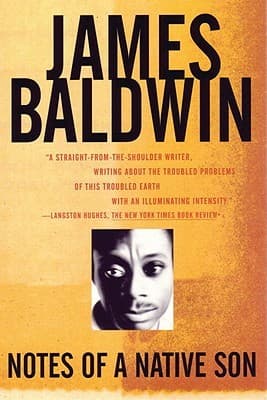
Notes of a Native Son cover
Archivist's Choice

Notes of a Native Son

James Baldwin (1955)

Genre

Politics / Biography / Memoir / History

Reading Time

240 min

Key Themes

See below

Track Your Reading

Sign in to track this book

In these sharp essays, James Baldwin examines racial conflict in mid-20th century America, from the streets of Harlem to the cafes of Europe, with clear thought and deep feeling that still connects with readers today.

Core Idea

James Baldwin's "Notes of a Native Son" is a collection of essays that explores the realities of race, identity, and the American experience in the mid-20th century. Through personal reflections and social commentary, Baldwin discusses the cost of racism, the weight of prejudice, and the search for self-definition in a society that judges people by their skin color. He argues for a direct look at both personal and national myths, stating that freedom comes from facing uncomfortable truths about history, power, and how people are connected. The book's main point is that the American racial problem is not just political but a moral and human crisis. It requires a new way of thinking about love, anger, and the words used to describe human life. Baldwin questions the limits of common stories, including the 'protest novel,' to argue for a more honest engagement with identity. He urges readers to move past simple categories and accept the full range of human emotion and experience.
Reading time
240 min
Difficulty
Medium
✓ Read this if...
You want to understand the profound psychological and social impact of racism in mid-20th century America through the lens of one of its most eloquent and insightful observers. Essential for those interested in civil rights, American literature, and the intersection of personal narrative with political critique.
✗ Skip this if...
You are looking for a straightforward historical account or a purely academic analysis of the Civil Rights movement without personal introspection. This book is intensely personal and essayistic, not a chronological history or a policy brief.

Core idea

The central argument and framework that powers the entire book.

James Baldwin's "Notes of a Native Son" is a collection of essays that explores the realities of race, identity, and the American experience in the mid-20th century. Through personal reflections and social commentary, Baldwin discusses the cost of racism, the weight of prejudice, and the search for self-definition in a society that judges people by their skin color. He argues for a direct look at both personal and national myths, stating that freedom comes from facing uncomfortable truths about history, power, and how people are connected.

The book's main point is that the American racial problem is not just political but a moral and human crisis. It requires a new way of thinking about love, anger, and the words used to describe human life. Baldwin questions the limits of common stories, including the 'protest novel,' to argue for a more honest engagement with identity. He urges readers to move past simple categories and accept the full range of human emotion and experience.

At a glance

Reading time

240 min

Difficulty

Medium

Read this if...

You want to understand the profound psychological and social impact of racism in mid-20th century America through the lens of one of its most eloquent and insightful observers. Essential for those interested in civil rights, American literature, and the intersection of personal narrative with political critique.

Skip this if...

You are looking for a straightforward historical account or a purely academic analysis of the Civil Rights movement without personal introspection. This book is intensely personal and essayistic, not a chronological history or a policy brief.

Key Takeaways

1

The Weight of Inheritance

Generational trauma and the crushing legacy of racial injustice in America.

Quote

It is a terrible thing, to be forced to love a civilization that despises you.

Baldwin clearly describes the deep psychological burden Black Americans carry. His essays, especially 'Notes of a Native Son,' show how systemic racism is not just external problems but an internal wound passed down through generations. He describes the difficulty of matching one's identity with a society that demands loyalty but denies full humanity. This inheritance is a mix of anger, love, and a desperate search for self-definition within a hostile system. The individual's path is tied to the history of oppression, making personal ...

Supporting evidence

Baldwin's personal account of his relationship with his father, a man consumed by bitterness and paranoia, serves as a central example. He sees his father's anger as a direct consequence of living in a racist society, and recognizes the danger of inheriting that same rage within himself.

Apply this

Reflect on how historical injustices continue to shape contemporary individual and community experiences. Challenge narratives that minimize the long-term psychological and social impacts of systemic discrimination, understanding that present struggles often have deep historical roots.

generational-traumasystemic-racismracial-identity
2

The Artist's Imperative

Art as a mirror to society and a tool for truth-telling, even when uncomfortable.

Quote

The great force of history, which is to say, the great force of man, has been to make of the world a place for man's life.

Baldwin sees the artist not just as an entertainer but as a societal witness and predictor. He believes true art must face reality, no matter how unpleasant, and that avoiding difficult truths lessens both the art and the society it reflects. He critiques the limits of American literature, especially the 'protest novel,' for often sacrificing complexity and human detail for political messages, which can unintentionally keep stereotypes alive. For Baldwin, the artist's job is to explore the full range of human experience, exposing the ...

Supporting evidence

His essays 'Everybody's Protest Novel' and 'Many Thousands Gone' critique works like 'Uncle Tom's Cabin' and Richard Wright's 'Native Son' not for their intentions, but for their perceived failure to fully capture the interiority and complex humanity of Black characters, reducing them to symbols rather than individuals.

Apply this

Seek out and engage with art that challenges your perspectives and forces you to confront uncomfortable truths about society and yourself. Support artists who prioritize authenticity and complexity over simplistic narratives, even if their work is unsettling.

art-as-social-commentarytruth-in-artartist-responsibility
3

The Myth of Innocence

America's refusal to confront its racial history perpetuates its moral crisis.

Quote

In America, the color of my skin is the only thing that is held against me.

Baldwin examines the American myth of exceptionalism and innocence, arguing that the nation's failure to honestly deal with its history of slavery and racial oppression is its biggest moral flaw. He suggests that this denial creates a deep problem, where the country constantly tries to escape its own past. This refusal to acknowledge history prevents real progress and peace, trapping both oppressor and oppressed in a cycle of misunderstanding and resentment. The 'innocence' is a dangerous illusion, allowing injustices to continue unde...

Supporting evidence

Baldwin points to the ways American culture, including Hollywood films and popular narratives, consistently distorts or ignores the realities of Black life, reinforcing stereotypes and maintaining a comfortable, but false, image of national virtue.

Apply this

Actively interrogate historical narratives taught in schools and presented in media. Seek out diverse historical perspectives that challenge dominant, often sanitized, accounts of American history, particularly concerning race and power. Understand that confronting uncomfortable truths is essential for genuine societal healing.

american-exceptionalismhistorical-revisionismracial-denial
4

Europe as a Mirror

Leaving America offers a new lens to understand racial identity and belonging.

Quote

It was only in Paris that I became an American. It was only in Paris that I became a Negro.

Baldwin's time in Europe, especially Paris, changed him. He found that distance from America allowed him to see his homeland and his own identity with new clarity. While Europe had its own prejudices, the specific racial dynamics were different, offering a temporary break from the constant pressure of being Black in America. This move helped him let go of the immediate weight of American racial labels and begin to define himself on his own terms. It allowed for a more objective, critical look at American society and its racial problem...

Supporting evidence

His essay 'Encounter on the Seine: Black Notes from a Paris Journal' directly explores his experiences and observations abroad, noting the different ways race is perceived and the insights gained from an external vantage point.

Apply this

Seek out experiences that remove you from your familiar environment and cultural context. Travel, study abroad, or engage deeply with different cultures to gain new perspectives on your own identity, society, and previously unquestioned assumptions.

expatriate-experiencecultural-relativismself-discovery
5

The Power of Love and Rage

Navigating the complex emotional landscape of Black existence in America.

Quote

To be a Negro in this country and to be relatively conscious, is to be in a rage almost all the time.

Baldwin acknowledges the widespread anger Black Americans feel in response to ongoing injustice, but he also supports the power of love. He sees anger as a natural and often necessary reaction to oppression, a fuel for resistance. However, he warns against letting anger completely take over, as it can lead to bitterness and self-destruction, mirroring the very hatred one fights against. True freedom, he suggests, must be based on a deep love for humanity, a love that pushes one to fight for justice not just for oneself, but for everyo...

Supporting evidence

Baldwin's reflections on his father's life and death, and his own struggle to avoid succumbing to the same bitterness, are central. He notes the destructive nature of his father's rage, but also the love that compelled him to protect his family.

Apply this

Recognize and validate the anger that arises from injustice, but also cultivate empathy and a broader vision of justice that extends beyond retribution. Channel anger into constructive action and advocacy, rather than allowing it to fester into destructive resentment.

emotional-laborresistance-and-resilienceempathy-in-activism
6

Beyond the Protest Novel

Critiquing art that simplifies human experience for political ends.

Quote

The only thing that can be said to be true about the protest novel is that it is a vehicle for a protest.

Baldwin's critique of the 'protest novel' does not dismiss protest itself, but calls for better artistic quality and psychological depth. He argues that works like 'Uncle Tom's Cabin' or, to some extent, 'Native Son,' while important politically, often reduce Black characters to symbols of suffering or rebellion, rather than fully developed human beings. This simplification, he believes, ultimately serves the white reader's conscience rather than truly changing their understanding of Black humanity. He advocates for literature that de...

Supporting evidence

His specific analyses of Harriet Beecher Stowe's 'Uncle Tom's Cabin' and Richard Wright's 'Native Son' highlight how their characters, though intended to evoke sympathy or outrage, often lack the psychological complexity that Baldwin believes is essential for truly great and impactful literature.

Apply this

When engaging with art or media about social issues, look beyond simplistic narratives and question whether characters are fully developed or merely serving as archetypes. Demand and support works that embrace complexity and nuance in their portrayal of marginalized communities.

literary-criticismcharacter-developmentauthenticity-in-storytelling
7

The Interconnectedness of Fate

White liberation is inextricably linked to Black liberation.

Quote

It is a question of the American conscience, which has been so long dead, and which must be resurrected if we are to survive.

Baldwin strongly states that the future of white Americans is tied to the future of Black Americans. He argues that the systems of oppression meant to control Black people ultimately lessen the humanity of white people too. The constant need to keep a racial hierarchy, to justify injustice, and to deny reality twists the oppressor's moral sense and stops them from living fully and truthfully. True freedom and moral integrity for all Americans, he implies, can only come when the nation faces and dismantles its racial caste system. Whit...

Supporting evidence

Baldwin's arguments throughout the collection, particularly in essays like 'Stranger in the Village,' suggest that the 'white problem' of denying racial injustice is as profound as the 'Negro problem' of enduring it, and that both are inextricably linked components of a larger American crisis.

Apply this

Recognize that fighting for racial justice is not just about helping one group, but about achieving a more just and humane society for everyone. Understand that systems of oppression harm all involved, albeit in different ways, and that collective liberation requires dismantling these systems.

intersectional-justicecollective-liberationmoral-responsibility
8

The Burden of Representation

The pressure to embody a race, not just an individual, in the public eye.

Quote

The Negro in America, as a result of the peculiar history of this country, is a symbol.

Baldwin explores the great psychological pressure placed on Black individuals to represent their entire race, especially when dealing with white society. This pressure means that personal failures or successes are often seen not as individual, but as reflections on all Black people. This symbolic weight denies individuality and creates a constant state of performance, where one must navigate stereotypes and expectations rather than simply existing. It also means that Black voices are often sought out not for their unique view, but to ...

Supporting evidence

Baldwin's own experience as a prominent Black intellectual and writer, often called upon to explain 'the Negro problem' to white audiences, illustrates this burden of representation, where his personal voice was often subsumed by the expectation to be a spokesperson for an entire race.

Apply this

Challenge the tendency to ask individuals from marginalized groups to speak for their entire community. Instead, seek out diverse voices and perspectives within those communities, recognizing and valuing individual experiences. Avoid making assumptions based on group identity.

tokenismracial-stereotypesidentity-politics
9

The Language of Race

How words construct and perpetuate racial realities.

Quote

Words, when they are true, are not only the best way of expressing what one means, but the only way.

Baldwin is keenly aware of language's power to shape perception and create reality. He breaks down how terms like 'Negro' or 'white' are not neutral descriptions but historically loaded ideas that carry great social and political weight. He shows how the language used to describe Black people often dehumanizes them, justifying their control, while the language used by white society often hides its own prejudices. His own writing shows his belief that precise, honest language is key to breaking down these false realities and for explai...

Supporting evidence

Baldwin's meticulous choice of words and his careful deconstruction of terms like 'Negro' and 'white' throughout his essays demonstrate his understanding of language as a tool for both oppression and liberation. His own writing style is an example of using language to reveal rather than obscure truth.

Apply this

Pay close attention to the language used to discuss race in media, politics, and everyday conversations. Question loaded terms and challenge euphemisms that obscure racial injustice. Strive for precision and honesty in your own language when discussing sensitive topics.

discourse-analysislinguistic-relativitydehumanizing-language
10

The Personal is Political

Individual experiences reveal the systemic nature of injustice.

Quote

One writes out of one's experience.

Baldwin's essays are deeply personal, drawing from his own life, family history, and emotions. He shows how individual struggles and close relationships, especially with his father, are not isolated events but small examples of bigger societal forces. The personal pain and anger he describes are direct results of systemic racism, showing that what seems like a private problem is, in fact, a public issue. By basing his analysis in his lived experience, Baldwin makes the abstract ideas of racism and oppression real and understandable, p...

Supporting evidence

The titular essay, 'Notes of a Native Son,' is a profound exploration of his fraught relationship with his father, intertwining their personal history with the larger history of racial oppression in America, showing how his father's bitterness was a product of his environment.

Apply this

Recognize the validity and importance of personal narratives in understanding social issues. Connect individual struggles and experiences to broader systemic patterns. Share and listen to personal stories to build empathy and inform collective action.

personal-narrativeintersectionalitylived-experience

Critical analysis

Notable Quotes

I imagine that one of the reasons people cling to their hates so stubbornly is because they sense, once hate is gone, that they will be forced to deal with pain.

Reflecting on the nature of hatred and its psychological underpinnings.

It is a terrible thing, to be a Negro and to be proud.

Discussing the societal pressures and complexities of black identity in America.

The great force of history comes from the fact that we carry it within us, are unconsciously controlled by it in many ways, and history is literally present in all that we do.

Explaining the pervasive influence of history on individuals and society.

To be a Negro in this country and to be relatively conscious is to be in a rage almost all the time.

Expressing the constant anger and frustration experienced by conscious black individuals in America.

Children, of course, don't know this, but they know when they are loved and when they are not. They also know when they are feared.

Reflecting on the intuitive understanding children have about emotions, particularly fear and love.

One is not born a Negro, one becomes one.

Exploring the social construction of racial identity.

The story of the Negro in America is the story of America—or, more precisely, it is the story of the failure of America to create a genuinely humane society.

Connecting the black experience to the larger narrative of American history and its shortcomings.

It is only in his music, which Americans are able to admire because a protective sentimentality allows them to feel that Negroes are, after all, human, that the Negro in America has been able to tell his story.

Discussing the role of music as a primary medium for black expression and storytelling in America.

Freedom is not something that anybody can be given. Freedom is something people take, and people are as free as they want to be.

A powerful statement on the active pursuit and definition of freedom.

The most dangerous creation of any society is the man who has nothing to lose.

Warning about the societal implications of desperation and disenfranchisement.

I had known my father all my life, but I had never really known him.

Reflecting on his complex relationship with his father, particularly after his father's death.

The people who believe that they are in the best position to control others are always the least likely to be able to control themselves.

Offering a critique of power dynamics and self-awareness among those in authority.

One of the reasons for the terrible schism between blacks and whites in America is the fact that the white man has never been able to see the Negro as a man.

Addressing the fundamental issue of dehumanization at the core of racial division.

The world is before you, and you need not take it on other people's terms.

An empowering message about self-determination and forging one's own path.

Quiz

Test Your Knowledge

Ready to see how well you understood this book? Take our interactive quiz with 10 questions.

10
Questions
~5
Minutes
?
Best Score

Key Questions (FAQ)

'Notes of a Native Son' explores the complex realities of racial injustice in America, examining the personal and societal impact of racism on Black individuals. Baldwin delves into themes of identity, belonging, and the struggle for self-definition within a prejudiced society.

About the author

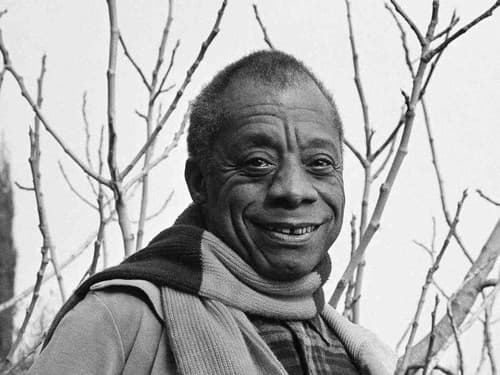
James Baldwin

James Arthur Baldwin was an American writer. He garnered acclaim for his work across several forms, including essays, novels, plays, and poems. His first novel, Go Tell It on the Mountain, was published in 1953; decades later, Time magazine included the novel on its list of the 100 best English-language novels released from 1923 to 2005. His first essay collection, Notes of a Native Son, was published in 1955.