BookBrief
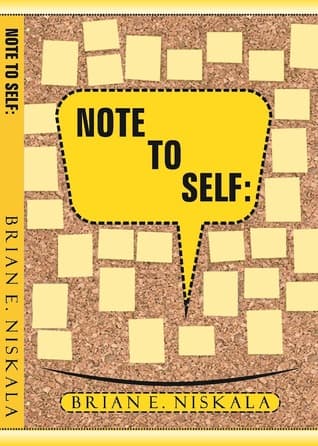
Note To Self cover
Archivist's Choice

Note To Self

Brian E. Niskala (2012)

Genre

General

Reading Time

12 Minutes

Key Themes

See below

Track Your Reading

Sign in to track this book

A manager's witty, and sometimes sharp, collection of personal thoughts and observations, navigating the fine line between open-mindedness and the tolerance for 'stupid ideas'.

Core Idea

Brian E. Niskala's "Note To Self" is a concise, motivational guide that encourages readers to take responsibility for their own happiness and success by cultivating a positive mindset and actively pursuing their goals. The book emphasizes the power of self-talk, the importance of learning from past experiences without dwelling on them, and the necessity of proactive decision-making. It serves as a personal pep talk, urging individuals to stop making excuses and start creating the life they desire through intentional thought and action. The central argument posits that true fulfillment comes from within and is a direct result of one's attitude and choices. Niskala advocates for a shift from a reactive to a proactive stance, where individuals consciously choose to embrace challenges, maintain optimism, and continuously strive for self-improvement. The book suggests that by consistently applying its principles, readers can overcome obstacles, achieve personal growth, and ultimately lead more satisfying lives.
Difficulty
Easy

Core idea

The central argument and framework that powers the entire book.

Brian E. Niskala's "Note To Self" is a concise, motivational guide that encourages readers to take responsibility for their own happiness and success by cultivating a positive mindset and actively pursuing their goals. The book emphasizes the power of self-talk, the importance of learning from past experiences without dwelling on them, and the necessity of proactive decision-making. It serves as a personal pep talk, urging individuals to stop making excuses and start creating the life they desire through intentional thought and action.

The central argument posits that true fulfillment comes from within and is a direct result of one's attitude and choices. Niskala advocates for a shift from a reactive to a proactive stance, where individuals consciously choose to embrace challenges, maintain optimism, and continuously strive for self-improvement. The book suggests that by consistently applying its principles, readers can overcome obstacles, achieve personal growth, and ultimately lead more satisfying lives.

At a glance

Difficulty

Easy

Key Takeaways

1

The Art of Selective Open-Mindedness

Balancing receptiveness with a pragmatic filter for 'stupid ideas.'

Quote

In conversation someone asked me if I was open-minded, I replied “Yes, but not to the extent of listening to stupid ideas.”

Niskala presents a core idea: open-mindedness is good, but it has limits. He suggests listening carefully but knowing when to stop engaging with an idea that seems 'stupid.' This isn't about being arrogant; it's a practical way to stay focused and productive, especially for managers. The book, a collection of thoughts, suggests that because our mental energy is limited, we need to filter out unhelpful or illogical input. This allows us to focus on valuable ideas and save mental energy.

Supporting evidence

The author's opening anecdote about his response to being asked about open-mindedness and his subsequent managerial strategy of 'listening with one ear' until an idea becomes 'stupid.'

Apply this

Cultivate a 'smart filter' in professional and personal interactions. Practice active listening with an internal assessment, and learn to politely disengage or redirect conversations that are clearly unproductive or based on flawed premises. This prevents emotional drain and allows focus on constructive dialogue.


2

Humor as a Personal Outlet

Using wit as a coping mechanism and a means of expression.

Quote

I find most to be humorous and witty. My wife just finds them mildly funny if at all tolerable.

The book, a collection of Niskala's notable thoughts, shows that humor is a big part of how he expresses himself. Even if his wife doesn't always appreciate it as much, he sees his thoughts as 'humorous and witty.' This suggests that creating and writing down these observations serves a personal purpose for him. It's a way for him to understand the world, find humor in daily life, and perhaps deal with the 'less than intelligible people' he met as a manager. This highlights that humor can be personally valuable even without external a...

Supporting evidence

His self-description of his thoughts as 'humorous and witty' contrasted with his wife's less enthusiastic reception.

Apply this

Identify and cultivate a personal outlet for processing thoughts and emotions, even if it's not universally appreciated. Whether it's journaling, drawing, or a specific brand of humor, having a personal space for expression can be therapeutic and help maintain perspective.

3

The Managerial Challenge of 'Less Than Intelligible' People

Navigating workplace interactions with varying levels of comprehension.

Quote

As a manager, I often dealt with less than intelligible people. Most often times these people where far from intelligent, but not necessarily stupid.

Niskala's honest look at his management experiences reveals a common workplace problem: dealing with coworkers or subordinates who aren't intelligent but aren't necessarily 'stupid.' This difference is important; it points to a lack of critical thinking or understanding rather than a complete absence of intellect. His method of 'listening with one ear' and disengaging when ideas became 'stupid' was a way to stay 'tolerable' and effective. This idea is especially useful for managers, as it recognizes the emotional toll of such interact...

Supporting evidence

His direct statement about dealing with 'less than intelligible people' as a manager and his subsequent description of his listening strategy.

Apply this

Managers should develop strategies for handling interactions with varying intellectual capacities. This could involve setting clear boundaries, simplifying communication, providing structured feedback, or knowing when to delegate tasks that align with individual strengths rather than forcing engagement on complex issues. Empathy, combined with practical limits, is key.

4

The Subjectivity of 'Stupid Ideas'

What constitutes a 'stupid idea' is often in the eye of the beholder.

Quote

as soon as I deemed it getting “stupid” I stopped listening

Niskala's system relies on his personal decision that an idea is 'stupid.' This shows how subjective evaluating ideas can be, especially in real-time conversations. While his filter works for him, it's important to remember that what one person calls 'stupid' might just be undeveloped, unusual, or misunderstood by another. The book doesn't explain his criteria for the 'stupid' label; it seems to be an intuitive, personal judgment. This suggests that while his method helps with personal tolerance, it might risk dismissing potentially v...

Supporting evidence

The phrase 'as soon as I deemed it getting “stupid”' directly indicates a personal, subjective judgment.

Apply this

Before dismissing an idea as 'stupid,' consider if it's truly nonsensical or merely poorly presented, or if it challenges your own assumptions. Develop a conscious checklist for evaluating ideas: Is it illogical? Is it based on false premises? Is it merely unconventional? This can help refine one's own 'stupid idea' filter.

5

Self-Preservation Through Disengagement

Protecting mental well-being by limiting exposure to unproductive input.

Quote

this helped me stay more tolerable to the people around me

The author's admission that his selective listening 'helped me stay more tolerable to the people around me' offers a strong insight into the need for self-preservation in mentally demanding situations. Instead of getting frustrated or becoming impatient, Niskala chose an internal coping method. This suggests that keeping one's emotional balance is most important, even if it means mentally tuning out of some conversations. This is a practical, though perhaps cynical, way to handle interpersonal dynamics, putting personal peace above fu...

Supporting evidence

His explicit statement that his listening strategy 'helped me stay more tolerable to the people around me.'

Apply this

Recognize when engaging with certain inputs or individuals is detrimental to your mental well-being. Develop strategies for polite disengagement or setting boundaries, whether it's mentally filtering, redirecting the conversation, or physically excusing yourself. Prioritize your mental health to avoid burnout and maintain positive relationships.

6

The Value of Personal Reflection (Even if Unfiltered)

The act of recording thoughts, regardless of their perceived profundity.

Quote

This is a collection of my thoughts over the years, well the ones I felt note worthy anyhow.

The book, a collection of personal thoughts, Facebook posts, and private reflections, shows the value of writing down one's thoughts. Niskala filters what he shares as 'noteworthy,' but the fact that the collection exists suggests he regularly observes and documents. This highlights that personal reflection, whether for others or just for oneself, helps with self-understanding, memory, and creative expression. The informal nature of the collection reinforces that such reflection doesn't need to be perfect or deep to be meaningful to t...

Supporting evidence

The book's nature as a 'collection of my thoughts over the years,' including 'Facebook posts, others private or not so private thought moments.'

Apply this

Start a personal practice of recording your thoughts, observations, or ideas, even if it's just a few notes a day. This could be a journal, a digital document, or a voice memo. The goal is not perfection, but consistent reflection to gain clarity, track personal growth, and preserve memories.

7

The Disconnect Between Self-Perception and External Perception

How others perceive our humor or insights often differs from our own view.

Quote

My wife just finds them mildly funny if at all tolerable. She reminds me often that I am not as funny as I think I am.

This charming, self-deprecating admission is perhaps the book's best insight into human nature. Niskala humorously acknowledges the difference between how he sees himself ('I find most to be humorous and witty') and how his wife sees him. This gap is a common experience, especially with humor, which is very subjective. It's a valuable reminder that our inner world, our intentions, and our self-assessments are not always reflected in how others perceive us. This insight encourages humility and self-awareness about how we present oursel...

Supporting evidence

The direct quote about his wife's reaction to his humor and her frequent reminders.

Apply this

Cultivate self-awareness by actively seeking feedback (when appropriate) and observing reactions to your communication style, especially humor. Don't take differing perceptions personally, but use them as data points to understand how you are received. This can help you adjust your communication for different audiences.

8

The Brevity and Accessibility of Thought Collections

Short, digestible insights can offer value without demanding extensive commitment.

Quote

I hope you enjoy this short collection of moments and stories.

The book's short length (81 pages) and its structure as a 'short collection of moments and stories' highlight the appeal of easy-to-read content. In a world with too much information, a book that doesn't require a lot of time can still offer useful ideas or simply provide amusement. This approach makes the author's thoughts accessible and less daunting than a dense philosophical work. It suggests that deep or amusing observations don't always need long explanations; sometimes, a concise thought is enough to resonate.

Supporting evidence

The author's description of his book as a 'short collection' and its actual page count.

Apply this

When trying to communicate ideas, consider the power of brevity. Focus on delivering key messages concisely rather than over-explaining. For personal learning, seek out short-form content or break down larger works into smaller, manageable chunks to improve comprehension and reduce overwhelm.

9

The 'Not Listening' Defense Mechanism

A humorous, yet effective, strategy for maintaining composure.

Quote

just short of sticking fingers in my ears and going “la la la la la not listening!”

Niskala's vivid, almost cartoonish, description of his internal reaction to 'stupid' ideas — 'just short of sticking fingers in my ears and going “la la la la la not listening!”' — humorously illustrates a common, though unspoken, defense mechanism. While he doesn't physically do this, the mental image perfectly captures the desire to block out overwhelming or illogical input. This extreme comparison highlights the emotional burden that unproductive conversations can place on a person and shows the lengths one might go to internally p...

Supporting evidence

The specific, humorous description of his internal 'la la la' reaction.

Apply this

Recognize when you're feeling overwhelmed or frustrated by unproductive conversations and acknowledge the urge to disengage. While not advocating for literal 'la la la' behavior, develop healthier, more professional ways to mentally or physically distance yourself from such situations, such as taking a brief break or politely redirecting the conversation.

10

Embracing Imperfection in Published Works

A collection of raw thoughts can still offer value and connection.

Quote

Either way, I hope you enjoy this short collection of moments and stories.

The book's unpolished nature – a collection of Facebook posts and private thoughts – challenges the idea that published works must be perfectly structured, well-researched, or universally profound. Niskala offers his thoughts as they are, acknowledging their informal origin. This approach makes authorship more accessible and suggests that authentic, raw observations can be as valuable, if not more so, than highly refined academic texts. It invites readers to connect through shared human experiences and reflections, even when presented...

Supporting evidence

The introduction explicitly states the book's origin as Facebook posts and private thoughts, and the author's simple hope that readers 'enjoy' it.

Apply this

Don't let the pursuit of perfection hinder your creative or expressive endeavors. Embrace the value of sharing authentic, even if imperfect, thoughts and experiences. Focus on genuine connection and impact rather than flawless execution, especially in personal projects or informal communication.

Critical analysis

Notable Quotes

Quiz

Test Your Knowledge

Ready to see how well you understood this book? Take our interactive quiz with 10 questions.

10
Questions
~5
Minutes
?
Best Score

Key Questions (FAQ)

'Note To Self' is a collection of thoughts, reflections, and stories, primarily drawn from Brian E. Niskala's personal writings like Facebook posts and private musings. The author aims for a humorous and witty tone, sharing his observations on life, management, and human interaction.

About the author

Brian E. Niskala is a non-fiction author known for his book "Note To Self." His writing often explores themes of personal growth and self-reflection, offering readers practical insights and guidance. Niskala's work is characterized by its accessible style and relatable approach to complex life topics.