BookBrief
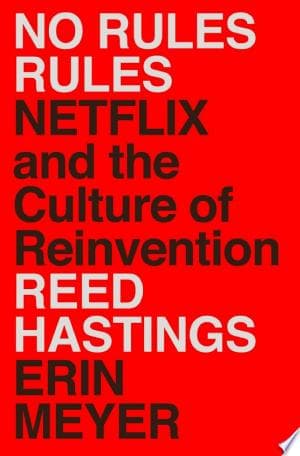
No Rules Rules cover
Archivist's Choice

No Rules Rules

Reed Hastings (2020)

Genre

Leadership

Reading Time

240 min

Key Themes

See below

Track Your Reading

Sign in to track this book

Netflix's journey from DVD rentals to a global entertainment giant was fueled by its unique culture of freedom, responsibility, and candor, where 'adequate performance gets a generous severance.'

Core Idea

Netflix's success comes from its 'Freedom & Responsibility' culture. It hires top talent, pays them well, and gives them great autonomy within a transparent system of constant, direct feedback. This approach helps the company innovate and adapt faster than traditional command-and-control structures. The book explains how Netflix creates this environment, showing that many talented people need fewer rules, have more accountability, and build a more adaptable, high-performing company.
Reading time
240 min
Difficulty
Medium
✓ Read this if...
You are a leader or manager looking to radically rethink traditional HR and management practices, empower your team, and build a high-performance culture based on trust, transparency, and freedom.
✗ Skip this if...
You prefer a highly structured, process-driven management style and are uncomfortable with extreme transparency or a culture that actively discourages pleasing the boss.

Core idea

The central argument and framework that powers the entire book.

Netflix's success comes from its 'Freedom & Responsibility' culture. It hires top talent, pays them well, and gives them great autonomy within a transparent system of constant, direct feedback. This approach helps the company innovate and adapt faster than traditional command-and-control structures. The book explains how Netflix creates this environment, showing that many talented people need fewer rules, have more accountability, and build a more adaptable, high-performing company.

At a glance

Reading time

240 min

Difficulty

Medium

Read this if...

You are a leader or manager looking to radically rethink traditional HR and management practices, empower your team, and build a high-performance culture based on trust, transparency, and freedom.

Skip this if...

You prefer a highly structured, process-driven management style and are uncomfortable with extreme transparency or a culture that actively discourages pleasing the boss.

Key Takeaways

1

People Over Process

High talent density enables radical freedom and responsibility.

Quote

The best managers don't think of themselves as managers, but as talent scouts and developers.

Netflix values exceptional talent over rigid processes. The idea is that a team of highly effective, self-motivated people will perform better than a larger team with average talent, even with many control systems. This 'talent density' means many traditional corporate rules can be removed, as capable people need less oversight and are driven to perform. This also means 'adequate' performance is not enough; only outstanding contributors stay. This focus on talent helps innovation happen naturally.

Supporting evidence

Hastings recounts the 'keeper test' where managers are asked if they would fight to keep an employee if they were considering leaving. If the answer isn't a resounding 'yes,' a generous severance package is offered, and the employee is let go. This ruthless focus on top talent was particularly evident during the dot-com bubble burst when Netflix laid off a third of its employees, leading to a more focused and productive remaining team.

Apply this

Evaluate your team's talent density regularly. Be willing to make tough decisions to remove adequate performers, even if it feels uncomfortable. Invest heavily in recruiting and retaining top-tier talent, understanding that a smaller, elite team can achieve more than a larger, average one. Focus on providing context and challenging problems rather than micro-managing tasks.


talent-densitykeeper-testhigh-performance-culture
2

Radical Candor

Direct, honest feedback is a gift, not an insult.

Quote

We believe that honest feedback is a gift. It's how we help each other improve.

Netflix promotes extreme transparency and direct feedback, called 'radical candor.' Employees are expected to give and receive feedback directly, immediately, and openly, regardless of their position. The goal is always to help others improve, not to criticize. This requires high psychological safety and trust, where people understand feedback, even if uncomfortable, comes from good intentions. This constant exchange of direct observations speeds up learning, finds problems quickly, and prevents misunderstandings, leading to better de...

Supporting evidence

Netflix encourages the '4A feedback' model: Aim to Assist, Actionable, Appreciate, Accept or Decline. This framework ensures feedback is constructive and respectful. Hastings shares stories of receiving blunt feedback himself, such as being told a presentation was 'boring' or a decision was 'stupid,' and how embracing this feedback, rather than rejecting it, led to better outcomes.

Apply this

Implement a culture where direct, constructive feedback is normalized and encouraged. Train employees on how to give and receive feedback effectively, focusing on specific behaviors and impacts rather than personal attacks. As a leader, model this behavior by actively soliciting and openly accepting feedback, demonstrating vulnerability and a commitment to continuous improvement. Create mechanisms for safe, anonymous feedback initially if direct feedback is challenging.

radical-candorfeedback-culturepsychological-safety
3

Context, Not Control

Empower employees with information, then trust their judgment.

Quote

Provide employees with the full context of the business, and they will make excellent decisions without needing to be told what to do.

Instead of rigid rules and approval processes, Netflix gives employees extensive context about the company's strategy, goals, and challenges. The belief is that well-informed people, especially talented ones, will make sound decisions that fit the company's best interests. This removes bureaucratic approval layers, speeding up decisions and building ownership. Leaders set clear strategic direction and provide data, then let teams innovate and act independently. This trust-based system values independent judgment over hierarchical comm...

Supporting evidence

Netflix has no vacation policy or expense policy; employees are simply told to 'act in Netflix's best interest.' This radical trust is underpinned by providing them with deep understanding of company finances, competitive landscape, and strategic priorities. For instance, engineers are given access to detailed financial data and customer metrics, empowering them to prioritize features and projects based on business impact.

Apply this

Shift from a 'control' mindset to a 'context' mindset. Share comprehensive company information, including financials, strategic objectives, and key performance indicators, with all employees. Clearly articulate the 'why' behind decisions and goals. Empower teams to make their own operational decisions within defined strategic boundaries, trusting their expertise and judgment. Remove unnecessary approval layers and bureaucratic hurdles.

autonomyempowermentdistributed-decision-making
4

Freedom & Responsibility

Unleashing innovation by removing rules and demanding accountability.

Quote

The amount of freedom you can give your employees depends on the density of talent you have and how much context you provide.

Netflix's culture is built on combining extreme freedom with responsibility. Employees have great freedom in how they work, manage their time, and spend company money, seen in the lack of vacation or expense policies. This freedom helps creativity and innovation. However, this freedom comes with high responsibility: employees must act in the company's best interest, own their results, and be accountable for decisions. Not meeting this responsibility, even with good intentions, can lead to separation. This creates an entrepreneurial en...

Supporting evidence

The 'no rules rules' philosophy is best encapsulated by policies like 'take as much vacation as you want' and 'spend company money as if it were your own.' The expectation is that employees, given sufficient context and being top talent, will use this freedom wisely and responsibly. The book details instances where this trust was tested and how Netflix responded by doubling down on context and talent density rather than reinstating rules.

Apply this

Identify areas where rules can be replaced with principles and trust. Empower employees with decision-making authority for their domains. Clearly communicate the high expectations for responsibility and accountability that accompany this freedom. Regularly evaluate whether the balance between freedom and responsibility is yielding desired results, adjusting context or talent density as needed rather than resorting to more rules.

autonomyaccountabilityentrepreneurial-culture
5

Pay Top of Market

Attract and retain the best by compensating generously.

Quote

We pay our employees the most we can, not the least we can get away with. It's an investment in talent density.

Netflix's pay philosophy is to offer top-of-market rates for every role, ensuring employees are among the highest paid in their fields. This is not just about being competitive; it's a strategic choice to attract and keep the best talent. By offering premium pay, Netflix shows it values exceptional performance and reduces reasons for top performers to leave. This supports the 'talent density' idea, helping create a workforce where every person is valuable, making it easier to let go of average performers and making the team more produ...

Supporting evidence

Netflix actively researches what top companies like Google and Facebook pay for similar roles and aims to pay at the very top end of that spectrum. They also regularly adjust salaries based on market fluctuations, often giving significant raises without employees having to ask. The book highlights how this policy, combined with the 'keeper test,' ensures that only the most valuable contributors remain.

Apply this

Regularly benchmark salaries against top-tier competitors and adjust compensation to be at the top of the market. View compensation as an investment in talent and productivity, not just a cost. Be transparent with employees about how compensation is determined and what factors influence it. Ensure performance reviews are tied to market value and contribution, not just internal pay bands.

compensation-strategytalent-retentionmarket-rate
6

Don't Seek to Please Your Boss

Focus on company impact, not managerial approval.

Quote

Your job is to do what's best for Netflix, not to please your boss.

In traditional hierarchies, employees often work to please their direct manager, which can lead to 'upward management' and poor decisions for the company. Netflix discourages this by fostering an environment where employees prioritize the company's best interests, even if it means disagreeing with their boss. This requires courage, a good understanding of company goals, and the safety to speak up. By shifting focus from pleasing an individual to serving the collective, Netflix aims for decisions based on merit and impact, not personal...

Supporting evidence

Hastings describes how employees are encouraged to 'disagree and commit' if they ultimately cannot persuade their boss, but are also expected to voice their differing opinions strongly beforehand. The 'skip-level feedback' system, where employees give feedback on their boss's boss, further reinforces that influence flows in multiple directions, not just top-down. The book includes anecdotes where junior employees successfully challenged senior leaders on product decisions.

Apply this

Cultivate a culture where challenging ideas and constructive dissent are valued. As a leader, actively solicit differing opinions and demonstrate that you are open to being wrong. Encourage employees to focus on measurable impact and strategic alignment rather than just fulfilling assigned tasks. Implement feedback mechanisms that allow for multi-directional input, empowering employees to provide upward feedback without fear of retribution.

dissentupward-feedbackorganizational-alignment
7

Lead with Transparency

Openly share successes, failures, and challenges.

Quote

Transparency is not about sharing everything, but sharing everything that matters.

Netflix operates with high internal transparency, sharing sensitive financial data, strategic discussions, and even potential layoff scenarios with many employees. This is a deliberate strategy to give employees the context needed to make informed decisions and act responsibly. By making the company's operations, challenges, and successes clear, Netflix builds trust, creates shared ownership, and ensures everyone works with the same information. This openness also supports the 'no rules rules' by showing that leaders trust employees w...

Supporting evidence

Netflix openly shares its board materials with all employees, a practice almost unheard of in other companies. They also openly discuss competitive threats, internal mistakes, and even the reasons behind difficult decisions, such as letting go of employees. This transparency was crucial during moments of crisis, like the 'Qwikster' debacle, where open communication helped the company navigate a difficult period.

Apply this

Identify what 'everything that matters' means for your organization and commit to sharing it widely. This could include financial performance, strategic updates, competitive analysis, and even internal challenges or failures. Create channels for regular, transparent communication (e.g., all-hands meetings, internal newsletters, shared documents). Be prepared for questions and some initial discomfort as employees adjust to this level of openness.

open-communicationtrust-buildinginformation-sharing
8

Rethink Performance Reviews

Focus on continuous feedback and development, not annual rituals.

Quote

The annual performance review is a relic of the past. Continuous, candid feedback is what truly drives improvement.

Netflix mostly avoids traditional annual performance reviews, which are often seen as backward-looking and formal. Instead, the company emphasizes continuous, informal feedback and regular '360-degree' reviews, where employees get input from peers, subordinates, and managers. The goal is to make feedback a regular part of work, integrated into daily interactions. This constant flow of direct input, along with a focus on self-improvement and high performance, helps people grow faster and ensures performance issues are addressed quickly...

Supporting evidence

Netflix utilized a '360-degree feedback' process where employees received written feedback from numerous colleagues, which was then discussed openly. This process, while sometimes intense, provided a rich tapestry of perspectives for individual development. The informal, continuous nature of feedback, often delivered in person and in the moment, is also heavily emphasized.

Apply this

Move away from rigid annual review cycles. Implement systems for regular, informal feedback and coaching. Encourage peer-to-peer feedback and create a culture where feedback is seen as a normal and valuable part of collaboration. Consider adopting or adapting a 360-degree feedback model that prioritizes actionable insights and open discussion. Train managers to be effective coaches and facilitators of development, not just evaluators.

continuous-feedback360-degree-feedbackperformance-development
9

Innovation Over Efficiency

Optimize for creativity and speed, even if it means some redundancy.

Quote

We'd rather be fast and innovative than slow and efficient.

Netflix prioritizes innovation and speed over strict efficiency. This means it accepts some redundancy, failed experiments, or even minor chaos if it leads to new ideas and faster execution. Unlike many companies that focus on cost-cutting and streamlined processes, Netflix understands that true innovation often comes from allowing teams to explore, even if some efforts do not succeed. This philosophy connects with its high talent density and context-driven approach, as capable individuals are trusted to make smart bets and learn from...

Supporting evidence

The book details instances where Netflix allowed multiple teams to work on similar projects or pursue different approaches to the same problem, accepting the potential for overlap or 'waste' in the short term, in exchange for increasing the odds of a breakthrough. This was particularly evident in their early streaming efforts and content acquisition strategies, where rapid experimentation was key.

Apply this

Evaluate where strict efficiency measures might be stifling innovation. Be willing to invest in parallel experimentation or allow for 'good failures' that provide valuable learning. Empower teams to move quickly and make decisions without excessive layers of approval, even if it means occasional missteps. Shift the focus from preventing errors to learning rapidly from them and iterating.

agile-developmentexperimentationrisk-taking
10

Culture is Not Static

A company's culture must evolve with its growth and challenges.

Quote

Culture isn't something you set once and forget. It's a living, breathing thing that needs constant attention and adaptation.

Netflix's 'no rules rules' culture is not fixed but changes over time. Hastings notes that as the company grew from a small startup to a global power, and as its business model moved from DVDs to streaming and content creation, its cultural practices also needed to adapt. What worked for 50 employees might not work for 5,000, and what worked in one country might not directly apply to another. This constant review and willingness to question its own cultural ideas are key to long-term relevance and success. It shows that a strong cultu...

Supporting evidence

Hastings openly discusses how some aspects of their culture, like extreme candor, had to be adapted for different global cultures, particularly in Japan, where direct feedback can be perceived differently. He also details how the company had to re-evaluate certain aspects of freedom as it scaled, ensuring that the underlying principles remained effective despite increased complexity and size.

Apply this

Regularly audit and reflect on your company's culture. Are your existing practices still serving the organization's current size, goals, and global presence? Be open to adapting cultural norms and rules as the company evolves, rather than clinging to outdated practices. Solicit feedback from employees at all levels and across different regions to understand how the culture is experienced and where it might need refinement. View culture as a strategic asset that requires continuous management.

cultural-evolutionorganizational-developmentadaptive-culture

Critical analysis

Notable Quotes

Adequate performance gets a generous severance package.

Describing the 'keeper test' and high-performance culture at Netflix.

Don't seek to please your boss. Seek to serve the company.

Highlighting the importance of candor and company-first mindset over hierarchical obedience.

The best managers don't tell their people what to do. They give them the context to make their own decisions.

Explaining the 'context, not control' management philosophy.

As companies get bigger, they tend to get slower and less innovative. We fight that.

Introducing the core challenge Netflix aims to overcome with its unique culture.

Tell the truth, even if it's uncomfortable.

Emphasizing the importance of radical candor and direct feedback.

If you give employees more freedom, they will take more ownership.

Arguing for high freedom and high responsibility.

Most companies are like a family. Netflix is like a professional sports team.

Distinguishing Netflix's talent philosophy from traditional corporate structures.

Don't try to predict the future. Prepare for it.

Discussing strategic agility and adapting to change rather than rigid planning.

Eliminate rules. Increase freedom. Instill responsibility.

Summarizing the core tenets of the Netflix culture.

The goal is to increase the talent density of the company, not just manage the existing talent.

Explaining the continuous focus on attracting and retaining top talent.

If you hire great people and give them freedom, they will amaze you.

Advocating for trusting employees with significant autonomy.

We pay top of market. Our goal is to be the highest payer.

Detailing Netflix's compensation philosophy to attract and retain elite talent.

We don't try to minimize mistakes. We try to maximize innovation.

Explaining the approach to risk-taking and learning from failures.

The power of the feedback loop is immense. It's how we learn and grow.

Highlighting the importance of constant, direct, and constructive feedback.

Quiz

Test Your Knowledge

Ready to see how well you understood this book? Take our interactive quiz with 10 questions.

10
Questions
~5
Minutes
?
Best Score

Key Questions (FAQ)

'No Rules Rules' details Netflix's radical management principles centered on freedom and responsibility. This culture prioritizes people over process, innovation over efficiency, and giving employees context rather than controls, enabling unparalleled adaptability and speed.

About the author