“There are only two kinds of leaders: those who lead for the sake of power and those who lead for the sake of service.”
— Sam Damon's philosophy on leadership, contrasting his approach with others.

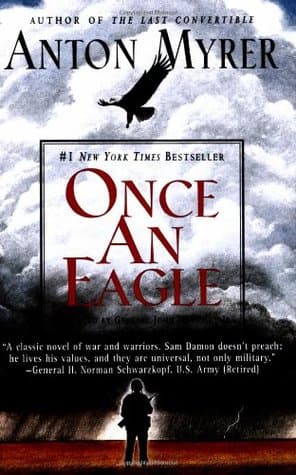
Anton Myrer (1968)
Genre
Leadership / Historical Fiction
Reading Time
2180 min
Key Themes
See below
Sign in to track this book
From World War I to Vietnam, an honorable soldier's commitment to duty and his men conflicts with a rival's rise through the ranks, defining a lifetime of struggle over military leadership.
The novel begins with Private Sam Damon, a young, idealistic American soldier, arriving on the Western Front in World War I. He quickly shows courage, concern for his men, and tactical skill, earning a battlefield commission. During a brutal engagement, Damon's patrol is ambushed, and he decides to sacrifice a few men to save the majority, a choice that will stay with him. He meets Ben Krisler, a seasoned sergeant who becomes his mentor and friend, and experiences the horrors of trench warfare. Courtney Massengale, a more ambitious and politically smart officer, begins making connections to help his career, though he is not yet directly in conflict with Damon. Damon's experiences solidify his commitment to selfless leadership and his soldiers' welfare.
After World War I, Sam Damon marries Tommy Caldwell, a strong and supportive woman, and works on developing the U.S. Army during the lean interwar years. He serves in various posts, training new recruits and developing tactics, always prioritizing his troops' welfare and readiness. His career advances steadily but quietly. Courtney Massengale, however, uses peacetime to build influential contacts in Washington D.C., and strategically positions himself for promotion, often at others' expense. He marries Joyce, a woman from a wealthy and connected family, further solidifying his social and professional standing. The different approaches to military life and career progression between Damon and Massengale become clear, setting up their future conflict.
With World War II's start, Sam Damon is assigned to the Pacific Theater, where he distinguishes himself in the brutal island campaigns. He commands troops with courage and integrity, earning the loyalty of his men, including his aide, Captain Jack Devlin. Damon focuses on achieving objectives with minimal loss of life, often putting himself in danger. He faces personal loss and the moral complexities of war. Courtney Massengale, meanwhile, gets a staff position, using his connections to be in influential and visible roles, often taking credit for others' successes. Their paths cross, showing their different philosophies, with Massengale seeing Damon's integrity as naive and inefficient.
As World War II continues, Courtney Massengale's career grows. He is promoted quickly, often using political maneuvering and self-promotion rather than direct combat leadership. He is good at presenting a favorable image to the press and high command. Tragically, Sam Damon's son, Captain George Damon, a promising young officer, is killed in action during a reconnaissance mission, a loss that deeply affects Sam and Tommy. The circumstances of George's death are unclear, hinted to be from a poorly conceived order or intelligence failure, adding to Damon's grief and a growing doubt about the military's detached decision-making. This personal tragedy strengthens Damon's resolve to protect his soldiers from similar fates.
After World War II, Sam Damon finds himself at odds with the changing military, which seems to prioritize political advantage and technology over the human element of warfare. He continues to serve in various commands, always emphasizing training, morale, and his soldiers' well-being. The Korean War starts, and Damon, now a general, again shows his tactical skill and commitment to his troops in the field. Courtney Massengale, by this point a high-ranking general in the Pentagon, helps shape policy and strategy from afar, often promoting his own agenda and those of his political allies. The ideological gap between the two men widens, with Massengale representing the bureaucratic, power-driven side of the military establishment.
In the early 1960s, Sam Damon, now a respected but somewhat sidelined general, is sent to Vietnam as a senior advisor. He quickly understands the complex political and cultural situation, knowing that conventional military solutions will not work. He supports a strategy focused on winning the local people's trust and training local forces, often clashing with the military doctrine in Washington. His insights are often ignored or downplayed by those in power, particularly by Courtney Massengale, who is now a figure in the Joint Chiefs of Staff, advocating for a more aggressive, large-scale American intervention, believing in overwhelming force and technological superiority.
As the situation in Vietnam worsens, Courtney Massengale, now a full general and a major architect of American foreign policy, pushes aggressively for more military involvement, including deploying many ground troops. He dismisses Sam Damon's warnings about the uselessness of a conventional war in an unconventional conflict, seeing Damon's views as outdated and too cautious. Massengale wants a decisive victory and the consolidation of American power, often manipulating intelligence and public perception to support his agenda. Damon, observing the escalating conflict more directly, grows frustrated by the political schemes that override sound military judgment and ethical considerations, seeing disaster beginning.
During his time in Vietnam, Sam Damon suffers another personal loss with the death of his old friend and mentor, Ben Krisler, who had served as a civilian advisor. Krisler's death, a casualty of the escalating conflict, further strengthens Damon's belief that the war is being handled poorly. Captain Jack Devlin, who has risen through the ranks under Damon's mentorship, sees firsthand the bureaucratic incompetence and political interference that affect the war effort. Devlin, initially idealistic, becomes disillusioned by the gap between Washington's pronouncements and the brutal realities on the ground, reflecting Damon's own despair about the conflict's direction and the military leadership's integrity.
Sam Damon, unable to watch the war in Vietnam spiral out of control, directly confronts Courtney Massengale. Damon argues for a strategy change, emphasizing understanding local culture, limiting civilian casualties, and empowering South Vietnamese forces. Massengale, however, dismisses Damon's arguments as sentimental and unstrategic, seeing them as a threat to his own power and vision for American dominance. Their confrontation shows their fundamental philosophical differences: Damon's focus on the individual soldier and ethical leadership versus Massengale's emphasis on power, political maneuvering, and abstract strategic objectives. Massengale, using his influence, ensures Damon's views are ignored.
Despite being sidelined, Sam Damon continues to advocate for what he believes is right. He uses his remaining influence to speak out against the flawed strategy in Vietnam, even if it means risking his career and reputation. In a moment, he gives a powerful, honest assessment of the war's failures and the ethical compromises being made. This act of integrity, though it does not immediately change the war's course, serves as a moral guide for those who still believe in the military's core values. His actions solidify his legacy as a true soldier, committed to his men and his nation, even when it costs him much. Massengale, by contrast, continues to rise, seemingly untouched by his decisions' consequences.
The Vietnam War ends in withdrawal, proving many of Sam Damon's early warnings correct. Courtney Massengale, despite the war's outcome, retires with honors, his reputation largely protected by his political connections and ability to avoid blame. Sam Damon lives out his remaining years quietly, having sacrificed his career for his principles. The novel concludes with reflections on the different paths taken by the two men and their lasting impact. Jack Devlin, having witnessed both men's careers, carries on Damon's ideals, understanding the true cost of moral compromise. The story shows the struggle between integrity and ambition within the military and the importance of ethical leadership, even when facing political pressure.
The Protagonist
Damon matures from an idealistic young soldier into a seasoned, morally resolute general, increasingly isolated but steadfast in his principles despite personal loss and institutional friction.
The Antagonist
Massengale ascends to the pinnacle of military power through cunning and ambition, remaining unrepentant and largely unaffected by the human cost of his decisions.
The Supporting
Tommy endures the trials of military life and personal tragedy with grace and resilience, remaining Sam's steadfast partner and moral compass.
The Supporting
Krisler remains a consistent, loyal, and experienced guide for Damon, serving as a moral touchstone until his tragic death in Vietnam.
The Supporting
Devlin transforms from an idealistic young officer into a disillusioned but ultimately principled inheritor of Damon's values.
The Supporting
George's brief but impactful life tragically ends in WWII, his death serving as a catalyst for his father's unwavering dedication to his men.
The Mentioned
Her role is static, primarily serving as a symbol of Massengale's social and political ambition.
The Supporting
Loring's career reflects the struggles of ethical officers against political ambition within the military hierarchy.
This is the novel's central conflict, shown by Sam Damon and Courtney Massengale. Damon consistently chooses moral integrity, selfless leadership, and his men's welfare over personal gain or political advantage. Massengale, conversely, prioritizes personal ambition, power, and career advancement, often at others' expense. The book explores the effects of unchecked ambition on individuals and institutions, and the power of integrity, even when it leads to personal sacrifice. Damon's principled stands, even when they cost him promotions, show the value of character.
“A soldier's first loyalty is to his men, and then to his country. The rest is just noise.”
The novel contrasts two forms of military leadership. Sam Damon shows authentic leadership, with courage, empathy, direct experience, and a deep understanding of men in combat. He leads from the front, earns loyalty through respect, and prioritizes the mission and his soldiers' lives. Courtney Massengale, on the other hand, represents a more detached, manipulative, and politically driven leadership, focused on managing perceptions and gaining power. The story argues that true leadership is about service and sacrifice, not self-promotion, and that the best leaders are those who truly understand war's human cost.
“You don't command men, you lead them. And you lead them by example, not by decree.”
From World War I trenches to Vietnam jungles, the novel shows the realities and human cost of warfare. It looks at the physical and psychological toll on soldiers, families' grief, and the moral compromises conflict demands. The deaths of Ben Krisler and George Damon, and the constant threat to Sam Damon's men, highlight this theme. The story critiques the detached decision-making of high command that often disregards individual soldiers' lives, showing how political and strategic ambitions can overshadow human suffering.
“War is not a game, or a theory, or a map exercise. It is men dying.”
The book spans decades and conflicts, showing how military strategy, technology, and the institution itself change. It shows the shift from direct, often brutal, combat of World War I to the complex, politically charged conflicts of the Cold War era, especially Vietnam. The story explores how the military establishment changed, sometimes for the better in professionalism, but also becoming more bureaucratic, politicized, and detached from the front line. Sam Damon often struggles against this changing institutional inertia, advocating for timeless principles of soldiering against modern strategic doctrines.
“They teach you to fight the last war, not the next one.”
These military values are explored and often challenged in the novel. Sam Damon embodies these ideals, seeing duty as selfless service to his men and country, honor as integrity, and country as the people it protects. Courtney Massengale, however, twists these concepts, using them for personal advancement or as abstract justifications for politically convenient actions. The novel questions what these values mean in practice, especially when facing bureaucratic corruption, political pressure, and war's moral ambiguities, ultimately affirming their importance through Damon's adherence.
“There are some things a man can't do, no matter what the order. Not if he wants to stay a man.”
Sam Damon and Courtney Massengale serve as direct contrasts.
The most prominent plot device is the use of Sam Damon and Courtney Massengale as foil characters. Their opposing philosophies, leadership styles, and career trajectories drive the entire narrative. Damon embodies integrity, selflessness, and a deep connection to his men, while Massengale represents ambition, political manipulation, and a detached, self-serving approach. This stark contrast highlights the central themes of the novel, allowing the author to explore the two extreme paths available within the military and the consequences of each choice, both for the individual and for the institution.
The narrative unfolds through distinct segments set in different major conflicts.
The novel employs an episodic structure, with distinct sections set during World War I, the interwar period, World War II, the Korean War, and the Vietnam War. This allows the author to trace the long-term development of the characters, particularly Damon and Massengale, and to show how their philosophies evolve (or remain fixed) across different historical contexts and types of warfare. Each war serves as a new proving ground for their contrasting leadership styles and provides specific scenarios to test their principles and ambitions, demonstrating the timelessness of their conflict.
Ben Krisler and Sam Damon act as guides for younger soldiers.
Mentor figures play a crucial role in the development of key characters. Ben Krisler mentors Sam Damon in the realities of combat and the importance of looking out for his men during WWI, shaping Damon's foundational beliefs. Later, Sam Damon himself becomes a mentor to younger officers like Jack Devlin, passing on his values of integrity, courage, and ethical leadership. This device emphasizes the generational transmission of military culture and values, and the profound impact that experienced, principled individuals can have on shaping the character of those who follow them, providing a hopeful counterpoint to the negative influences.
The title refers to a specific type of principled military leader.
The title 'Once An Eagle' is symbolic, referring to a specific type of soldier—one who possesses true leadership, integrity, courage, and a deep commitment to duty and his men, often likened to the noble, far-sighted, and protective nature of an eagle. Sam Damon is the embodiment of this 'eagle,' standing in stark contrast to the 'fox' (Massengale), who is cunning and self-serving. This symbolism reinforces the novel's central theme about the nature of true military leadership and the qualities that define a truly honorable soldier versus a merely ambitious one.
“There are only two kinds of leaders: those who lead for the sake of power and those who lead for the sake of service.”
— Sam Damon's philosophy on leadership, contrasting his approach with others.
“The only thing harder than getting a new idea into the military mind is getting an old one out.”
— Commentary on military bureaucracy and resistance to change.
“You don't lead by hitting people over the head—that's assault, not leadership.”
— Sam Damon criticizing aggressive or authoritarian leadership styles.
“The object of war is not to die for your country but to make the other bastard die for his.”
— A pragmatic view of warfare, often attributed to General Patton but echoed in the novel.
“A man's got to know his limitations.”
— Reflection on self-awareness and humility in leadership.
“The first duty of a leader is to make himself unnecessary.”
— Sam Damon's belief in empowering others and building self-sufficient teams.
“In war, there are no unwounded soldiers.”
— Observation on the psychological and physical toll of combat.
“You can't make a man good by passing a law; you can only make him careful.”
— Comment on morality, laws, and human behavior in military contexts.
“The only thing that endures is character.”
— Emphasis on personal integrity over temporary achievements.
“A leader is best when people barely know he exists; when his work is done, his aim fulfilled, they will say: we did it ourselves.”
— Paraphrasing Lao Tzu to describe Sam Damon's humble leadership style.
“There is no substitute for victory.”
— A stark military maxim highlighting the importance of outcomes in conflict.
“The real hero is the man who does his job every day.”
— Praising ordinary, consistent effort over dramatic acts.
“You fight for the man next to you, not for flags or speeches.”
— Describing the bonds between soldiers in combat.
“Power corrupts, but absolute power corrupts absolutely.”
— A warning about the dangers of unchecked authority, relevant to characters like Courtney Massengale.
“The hardest thing about being a leader is demonstrating vulnerability when appropriate.”
— Insight into the balance between strength and openness in command.
Ready to see how well you understood this book? Take our interactive quiz with 10 questions.
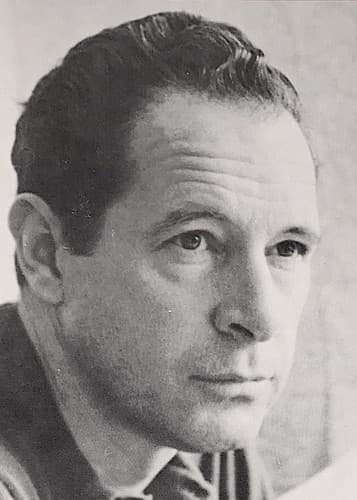
Anton Myrer was an American novelist known for his powerful depictions of military life and the complexities of command. His most celebrated work, "Once an Eagle" (1968), is a sprawling epic that follows the career of an ambitious and principled army officer through World War I and into the post-war era. The novel is lauded for its realism, psychological depth, and exploration of moral compromise within the military structure.
Phil Knight
4.5
Chris Voss
4.4

Jeff Olson
4.4
Jim Stockdale
4.3
Napoleon Hill
4.3
Robert Greene
4.3
Doris Kearns Goodwin
4.3
Zig Ziglar
4.3