BookBrief
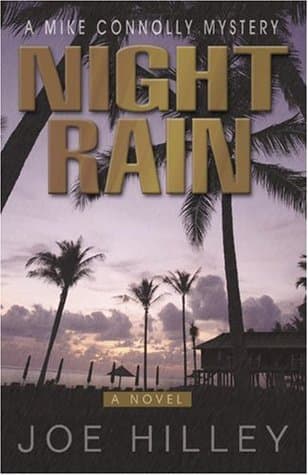
Night Rain cover
Archivist's Choice

Night Rain

Joe Hilley (2007)

Genre

General

Reading Time

8-10 hours

Key Themes

See below

Track Your Reading

Sign in to track this book

As a hurricane hits Dauphin Island, a young looter finds a murdered body, drawing his lawyer into dangerous secrets within the island's community.

Core Idea

Night Rain shows how natural events can expose hidden human secrets and injustices in a close community. It argues that forces meant to hide truth, like a storm or an island's isolation, can instead reveal it. This forces people to question old beliefs, challenge reputations, and rethink justice. The story suggests truth will surface, often in unexpected ways.
Reading time
8-10 hours
Difficulty
Medium
✓ Read this if...
You enjoy thrillers where natural disasters serve as catalysts for uncovering hidden crimes, and you appreciate a narrative that delves into the moral complexities of a small, isolated community.
✗ Skip this if...
You prefer fast-paced, action-heavy thrillers with minimal character development or if you dislike stories where the environment plays a significant, almost character-like, role in the plot.

Core idea

The central argument and framework that powers the entire book.

Night Rain shows how natural events can expose hidden human secrets and injustices in a close community. It argues that forces meant to hide truth, like a storm or an island's isolation, can instead reveal it. This forces people to question old beliefs, challenge reputations, and rethink justice. The story suggests truth will surface, often in unexpected ways.

At a glance

Reading time

8-10 hours

Difficulty

Medium

Read this if...

You enjoy thrillers where natural disasters serve as catalysts for uncovering hidden crimes, and you appreciate a narrative that delves into the moral complexities of a small, isolated community.

Skip this if...

You prefer fast-paced, action-heavy thrillers with minimal character development or if you dislike stories where the environment plays a significant, almost character-like, role in the plot.

Key Takeaways

1

The Allure of the Storm

Natural disaster as both threat and opportunity for human transgression.

Quote

The hurricane was a mask, a cloak of invisibility for deeds best left unseen.

Natural disasters, like the hurricane hitting Dauphin Island, often expose darker sides of human nature. While most people leave, the storm's chaos offers a chance for those with bad intentions, like Dibber Landry, to act without fear. The breakdown of order and focus on survival create a space where small thefts can become serious crimes. This shows how extreme situations can make people break rules they would normally follow, seeing the disaster as an opportunity and a cover for their actions. It highlights how easily civility can d...

Supporting evidence

Dibber Landry's decision to remain on Dauphin Island specifically to plunder evacuated homes, seeing the hurricane as an opportunity rather than solely a danger.

Apply this

Consider how societal structures and the presence of law enforcement act as crucial deterrents to crime, and how their absence, even temporary, can reveal underlying opportunism in some individuals.


disaster-opportunismmoral-relativismsocietal-breakdown
2

Secrets Buried by the Tide

Small island communities harbor deep, interconnected mysteries.

Quote

On an island like this, everyone knows everyone, and everyone has a secret they hope the tide never washes ashore.

Small, isolated communities, especially old ones like Dauphin Island, often hold deep secrets and hidden connections. Their close-knit nature means everyone's lives are linked, creating a complex web of relationships, grudges, and untold stories. When a major event, like a murder, happens, it not only reveals a crime but also uncovers layers of shared history that residents have kept hidden. The murder of Inez Marchand, found by Dibber, is not a single event but a thread that pulls at the island's past, bringing old truths to the surf...

Supporting evidence

The murder of Inez Marchand is not a simple case but quickly reveals a 'web of secrets' that Mike Connolly must untangle, implying a history of hidden island dynamics.

Apply this

When investigating complex situations in small communities, look beyond the immediate facts to understand the historical context and interpersonal relationships that might be driving underlying conflicts.

community-secretsinterconnected-livesisland-mentality
3

The Accidental Witness

Unintended discoveries can thrust ordinary people into extraordinary circumstances.

Quote

He went looking for trinkets and found a nightmare he couldn't unsee.

The story clearly shows how a small mistake can lead someone into a much more dangerous and complex situation. Dibber Landry only wanted to steal during the hurricane's chaos. However, finding Inez Marchand's body turns him from a common looter into the main suspect in a murder case. This shift highlights how quickly fate can change and how one misstep can have huge consequences. Dibber's situation shows that even those with bad intentions can become unwilling players in bigger, more sinister events, forcing them to face realities far...

Supporting evidence

Dibber's act of plundering Inez Marchand's house directly leads to his discovery of her dead body, immediately implicating him and changing his role from thief to murder suspect.

Apply this

Be aware that even small, seemingly isolated actions can have unforeseen and significant repercussions, particularly when they intersect with hidden truths or ongoing conflicts.

unintended-consequencescatalyst-eventmoral-dilemma
4

Justice in the Eye of the Storm

Seeking truth when natural and human chaos intertwine.

Quote

The storm wasn't just physical; it was in the air, in the lies, in the fear that gripped the island.

The novel presents a situation where seeking justice is complicated by a natural disaster and human lies. Mike Connolly's challenge is not just to solve a murder, but to do so amid a literal and figurative 'storm.' The hurricane provides cover for the crime, hides evidence, scatters witnesses, and disrupts communication. Also, the distrust and protective nature of a small community, heightened by fear, make finding the truth difficult. This point emphasizes how environmental chaos can make criminal investigations harder, requiring mor...

Supporting evidence

Mike Connolly's investigation is directly hampered by the approaching hurricane, which impacts the ability to collect evidence, interview residents, and maintain a clear chain of events.

Apply this

Recognize that investigations conducted during periods of crisis or societal upheaval require adaptive strategies and a heightened awareness of how the environment influences human behavior and access to information.

crisis-investigationenvironmental-impacttruth-seeking
5

The Unlikely Advocate

Sometimes, the accused's only hope lies with an outsider.

Quote

He was the only one willing to look beyond the obvious, beyond the easy answer.

Dibber Landry, a known small-time criminal and now the main suspect, is in a desperate situation with little credibility. His only hope is Mike Connolly, who, because of his job and moral compass, is willing to challenge assumptions and look deeper. This dynamic shows the important role of a fair, dedicated advocate, especially when the accused is an outsider or has low social standing. Connolly's willingness to 'untangle a web of secrets no one else will touch' speaks to the need for people who can look past quick judgments and quest...

Supporting evidence

Dibber, despite his history of plundering, turns to Mike Connolly for help, indicating that Connolly is seen as his last resort or the only one capable of believing his innocence and uncovering the real killer.

Apply this

In situations where someone is quickly judged or condemned, actively seek out alternative perspectives and be open to the possibility that the obvious conclusion is not always the correct one.

advocacy-for-accusedchallenging-assumptionsmoral-courage
6

The Weight of Reputation

Past misdeeds can unjustly condemn an individual in the present.

Quote

His history weighed on him like a shroud, making every denial sound like another lie.

Dibber Landry's reputation as a looter immediately makes him the prime suspect in Inez Marchand's murder, regardless of actual evidence. This shows the strong and often harmful effect of a person's past on their present, especially in a close community. Once a 'bad character' story is set, it is very hard to change, leading to an immediate assumption of guilt. The book suggests that society and local authorities too quickly rely on existing reputations instead of conducting a thorough, unbiased investigation. Dibber's challenge is not...

Supporting evidence

Dibber is 'charged with murder' almost immediately after finding the body, largely due to his known intentions of plundering and his presence at the scene, rather than concrete forensic evidence pointing to him as the killer.

Apply this

When evaluating individuals or situations, consciously work to separate past reputation from present facts to avoid confirmation bias and ensure fair judgment.

reputational-biaspresumption-of-guiltcharacter-assassination
7

The Silent Language of the Island

The environment itself holds clues and shapes the narrative.

Quote

The wind and the waves knew more than any human soul on that island, if only you knew how to listen.

Dauphin Island, as a barrier island, is not just a setting but an active part of the story. Its unique geography, the coming hurricane, and its isolation are key to the plot. The environment controls event timing, witness availability, and evidence preservation or destruction. The 'night rain' and storm surge can wash away clues or reveal hidden parts of the landscape. This emphasizes the importance of environmental context in crime stories. The island's changing nature and vulnerability to nature reflect the instability and hidden de...

Supporting evidence

The hurricane's approach directly impacts residents' decisions to evacuate, Dibber's opportunity to loot, and the subsequent challenges Mike Connolly faces in his investigation due to the storm.

Apply this

In any complex problem-solving scenario, consider how the physical environment and its unique characteristics might be influencing the situation, providing hidden clues, or creating obstacles.

environmental-narrativesetting-as-charactergeographical-impact
8

The Burden of Proof

Establishing innocence requires dismantling complex layers of circumstantial evidence and prejudice.

Quote

It wasn't enough to say he didn't do it; he had to prove what everyone already believed was wrong.

For Dibber Landry, proving his innocence is very hard. He is found at the crime scene, his past criminal intent (looting) provides a believable motive, and his reputation strengthens the prosecution's case. Mike Connolly's job is huge: to break down this structure of circumstantial evidence, prejudice, and convenient assumptions. This means not only finding the real killer but also carefully showing why Dibber could not have committed the crime. It illustrates the challenges faced by those accused with strong circumstantial cases agai...

Supporting evidence

Dibber is 'charged with murder' based on his presence and known intent, forcing Mike Connolly to 'untangle a web of secrets' to prove his client's innocence, rather than the state proving guilt beyond a reasonable doubt.

Apply this

When evaluating legal cases or accusations, critically assess the quality and nature of the evidence presented, distinguishing between direct proof, circumstantial indicators, and potential biases.

presumption-of-innocencecircumstantial-evidencelegal-challenge

Critical analysis

Notable Quotes

The rain fell, a steady, relentless drumming that seemed to echo the beat of his own anxious heart.

Describing the weather and protagonist's mood early in the story.

Some secrets, once unearthed, refuse to be buried again.

A general reflection on the nature of truth and its consequences.

He'd learned long ago that the most dangerous lies were often the ones you told yourself.

The protagonist's internal struggle with self-deception.

The past wasn't a static thing; it was a living, breathing shadow, always just out of sight, waiting to pounce.

Reflecting on how past events continue to influence the present.

Justice, he mused, was rarely a clean, straight line. More often, it was a tangled knot of compromises and regrets.

The protagonist's cynical view of the legal system and moral outcomes.

The city at night had a different pulse, a hidden rhythm only those who walked its shadowed streets truly understood.

Describing the unique atmosphere of the urban setting after dark.

Fear was a cold companion, but it was also a powerful motivator.

The protagonist grappling with his own fears while pursuing a lead.

Every confession carried a price, not just for the confessor, but for everyone caught in its ripple.

Considering the broader impact of revealing hidden truths.

He found solace in the methodical nature of his work, a small island of order in a chaotic world.

The protagonist's professional dedication as a coping mechanism.

The truth, like the rain, eventually found every crack, seeped into every hidden space.

A metaphor for the inevitability of truth being revealed.

Sometimes, the hardest thing to do was simply to let go, to accept that some wounds might never fully heal.

The protagonist's struggle with acceptance and moving on.

The silence after the storm was often more unsettling than the storm itself.

Reflecting on the aftermath of intense events and emotional quiet.

A man's past was a tapestry woven with threads of his own making, and sometimes, those threads unraveled in unexpected ways.

Contemplating the intricate and unpredictable nature of personal history.

He knew the kind of darkness that lived in people's hearts, the kind that thrived when no one was watching.

The protagonist's understanding of human depravity and hidden evils.

Quiz

Test Your Knowledge

Ready to see how well you understood this book? Take our interactive quiz with 10 questions.

10
Questions
~5
Minutes
?
Best Score

Key Questions (FAQ)

'Night Rain' follows Dibber Landry, a resident of Dauphin Island who stays behind during a hurricane to loot houses. He discovers a dead body in Inez Marchand's home, leading to him being charged with murder. Attorney Mike Connolly must then uncover the island's hidden secrets to prove Dibber's innocence.

About the author