BookBrief
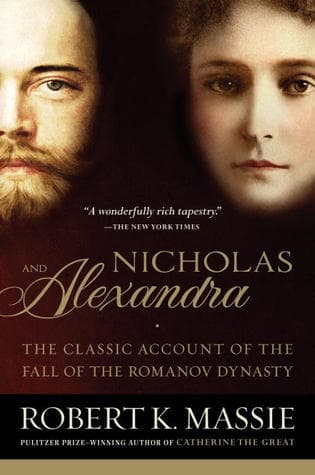
Nicholas and Alexandra cover
Archivist's Choice

Nicholas and Alexandra

Robert K. Massie (1960)

Genre

Politics / Biography / History

Reading Time

16-20 hours (approx. 640 pages)

Key Themes

See below

Track Your Reading

Sign in to track this book

In the twilight of Imperial Russia, Tsar Nicholas and Empress Alexandra, bound by a love deepened by their hemophiliac son and a devotion to Rasputin, unknowingly brought about the dramatic fall of their ancient dynasty.

Core Idea

Nicholas and Alexandra tells the story of the last Romanov dynasty's collapse. It suggests that their personal flaws—Nicholas's indecisiveness and Alexandra's stubbornness and trust in Rasputin—combined with an outdated autocracy in a changing Russia. Their inability to adapt to political and social shifts, along with their son Alexei's hemophilia and World War I, led to a series of events resulting in the Russian Revolution and their execution. The book argues that while individual personalities were important, the absolute monarchy's outdated nature in the early 20th century made their end almost certain.
Reading time
16-20 hours (approx. 640 pages)
Difficulty
Medium
✓ Read this if...
You are fascinated by the personal lives of historical figures, the decline of empires, or the intricate interplay between individual character and sweeping historical forces. Essential for understanding the human drama behind the Russian Revolution.
✗ Skip this if...
You prefer a purely political or economic analysis of the Russian Revolution, or find detailed biographical narratives of royalty less engaging. The book is long and rich in personal detail, which might deter those seeking a concise overview.

Core idea

The central argument and framework that powers the entire book.

Nicholas and Alexandra tells the story of the last Romanov dynasty's collapse. It suggests that their personal flaws—Nicholas's indecisiveness and Alexandra's stubbornness and trust in Rasputin—combined with an outdated autocracy in a changing Russia. Their inability to adapt to political and social shifts, along with their son Alexei's hemophilia and World War I, led to a series of events resulting in the Russian Revolution and their execution. The book argues that while individual personalities were important, the absolute monarchy's outdated nature in the early 20th century made their end almost certain.

At a glance

Reading time

16-20 hours (approx. 640 pages)

Difficulty

Medium

Read this if...

You are fascinated by the personal lives of historical figures, the decline of empires, or the intricate interplay between individual character and sweeping historical forces. Essential for understanding the human drama behind the Russian Revolution.

Skip this if...

You prefer a purely political or economic analysis of the Russian Revolution, or find detailed biographical narratives of royalty less engaging. The book is long and rich in personal detail, which might deter those seeking a concise overview.

Key Takeaways

1

The Peril of Autocracy in a Modernizing World

Nicholas II's unwavering belief in absolute power sealed his fate and Russia's.

Quote

Nicholas inherited from his ancestors not only a continent-sized empire but also a sacred belief in the divine right of autocracy.

Nicholas II's main flaw was his firm belief in his divine right to autocratic power. In a time of growing industry, social unrest, and calls for political change across Europe, Nicholas held onto an old idea of rule. He saw any effort to limit his power, whether through a constitution or a representative group, as a betrayal of his duty to his ancestors and to God. This rigid thinking stopped him from making timely and important compromises that could have eased revolutionary pressures. His inability to adapt to the changing political...

Supporting evidence

Massie details Nicholas's reaction to the 1905 Revolution, where he grudgingly granted the October Manifesto creating the Duma but consistently sought to undermine its power and autonomy, seeing it as an infringement on his autocratic prerogatives.

Apply this

Leaders, whether in government or business, must cultivate adaptability and a willingness to evolve their governance structures. Rigid adherence to outdated systems, even those with historical precedent, can lead to catastrophic failure in the face of changing societal or market demands.


autocracypolitical-reformromanov-downfall
2

Love's Blindness and Political Folly

Alexandra's devotion to Nicholas, fueled by her son's illness, overshadowed rational governance.

Quote

Alexandra's love for her husband was total, consuming, and ultimately, destructive to the empire.

Empress Alexandra's deep love for Nicholas and her worry over their hemophiliac son, Alexei, became a political problem. Her insecurity, combined with a strong need to shield Nicholas from perceived threats to his autocratic power (which she saw as tied to Alexei's future inheritance), made her a firm opponent of reform. Her influence over Nicholas, especially during World War I, led to bad ministerial appointments and a loss of public trust. Her reliance on Rasputin, driven by desperation for Alexei's health, further alienated the co...

Supporting evidence

Massie extensively chronicles Alexandra's constant encouragement of Nicholas to be 'firm' and 'autocratic,' particularly in his dealings with the Duma. Her letters to him during the war, urging him to dismiss ministers she disliked and uphold his absolute power, are cited.

Apply this

Personal crises, no matter how profound, must be carefully managed to prevent them from unduly influencing public or professional decision-making. Leaders must establish clear boundaries and seek objective counsel, separating personal anguish from the demands of their public role to maintain credibility and effective governance.

alexandra-feodorovnarasputinhemophiliaimperial-court
3

The Rasputin Phenomenon: A Symptom, Not the Cause

Rasputin's rise exposed the rot within the Romanov court, rather than initiating it.

Quote

Rasputin was not the cause of the Romanov downfall, but a monstrous symptom of the decay that had already set in.

Grigori Rasputin, the Siberian peasant mystic, symbolized the Romanov dynasty's moral and political breakdown; he was more a symptom than the main cause. His influence came almost entirely from his perceived ability to help Tsarevich Alexei's hemophilia, making him essential to Alexandra. This desperation allowed a man of questionable character and spiritual standing to gain great access and sway over the imperial family. That such a figure could become so prominent showed the imperial couple's deep isolation, their separation from re...

Supporting evidence

Massie details the specific instances where Rasputin's presence seemed to miraculously stop Alexei's bleeding, convincing Alexandra of his divine power. He also chronicles the widespread rumors of Rasputin's debauchery and his interference in governmental appointments, which fueled public outrage.

Apply this

When an organization or system succumbs to the influence of unqualified or morally compromised individuals, it often points to deeper systemic weaknesses, such as a lack of accountability, poor decision-making processes, or a leadership vacuum. Addressing the visible 'symptoms' without tackling the underlying structural issues will yield only temporary relief.

grigori-rasputinimperial-corruptionpublic-opinionalexei-romanov
4

The Weight of Inheritance and Inexperience

Nicholas II, unprepared and unwilling, was burdened by an empire too vast for his capabilities.

Quote

I am not ready to be a Tsar. I never wanted to be one. I know nothing of the business of ruling.

Nicholas II became tsar too early and without enough preparation, a fact he honestly admitted. His father, Alexander III, a strong autocratic ruler, had kept Nicholas from the complexities of government, intending to train him later. His sudden death left Nicholas, a gentle man with little interest in politics, in charge of a large, troubled empire. This lack of experience, combined with his shyness and dislike of confrontation, made him ill-suited to handle the social, economic, and political challenges of early 20th-century Russia. ...

Supporting evidence

Massie quotes Nicholas's own lament upon his father's death. He also describes Nicholas's preference for military parades and family life over detailed state papers or political debates, often leaving crucial decisions to subordinates or procrastinating.

Apply this

Leadership succession planning is paramount, especially in high-stakes environments. Simply inheriting a position does not confer competence. Organizations must invest in rigorous training and mentorship for future leaders, ensuring they possess not only the necessary skills but also the temperament and willingness to confront complex challenges.

tsar-nicholas-iileadership-failureimperial-russiasuccession-planning
5

The Isolation of the Crown

The imperial family's insular existence fostered a dangerous detachment from reality.

Quote

Surrounded by a wall of sycophants and anachronistic traditions, the imperial couple lived in a gilded cage, increasingly deaf to the rumblings outside.

The Romanov imperial family, especially Nicholas and Alexandra, lived an increasingly isolated life, both physically and psychologically. Their favored homes, like Tsarskoe Selo, were grand but acted as fortresses, separating them from the public and even much of the aristocracy. Alexandra's shyness and German background, along with the need to hide Alexei's illness, increased this isolation. This created a bubble where critical feedback was filtered or stopped, and difficult truths rarely reached the Emperor. The court became a place...

Supporting evidence

Massie describes the strict court protocol, the limited circle of trusted advisors, and Alexandra's reclusiveness, all contributing to their insulation. He highlights how reports of unrest were often downplayed or dismissed by courtiers eager to please the Tsar.

Apply this

Leaders must actively combat organizational isolation by fostering open communication channels, seeking diverse perspectives, and regularly engaging with all levels of their constituency or workforce. A 'bubble' of information or influence can lead to critical blind spots and catastrophic misjudgments.

tsarskoe-selocourt-intriguesocial-detachmentinformation-silos
6

The Cruel Irony of Hemophilia

A hidden genetic flaw became a catalyst for an empire's destruction.

Quote

The greatest tragedy for the Romanovs was not the revolution itself, but the silent, bleeding secret that fueled their fatal choices.

Alexei's hemophilia, inherited from Queen Victoria through Alexandra, was a cruel twist of fate that changed Russian history. This debilitating and often life-threatening genetic condition put the imperial couple, especially Alexandra, in a state of constant worry and desperation. This desperation led to Rasputin, whose apparent ability to ease Alexei's suffering gave him an unchallengeable position in the Empress's eyes. The need to keep Alexei's illness a secret, due to fears of political instability and undermining the heir's legit...

Supporting evidence

Massie details the numerous crises Alexei suffered, from internal bleeding to crippling pain, and how each episode intensified Alexandra's frantic search for a cure or relief, making her increasingly reliant on Rasputin despite widespread condemnation.

Apply this

Understanding the 'hidden' factors and personal circumstances that influence decision-makers is crucial for analyzing historical events or contemporary leadership. What appears irrational on the surface may be driven by deeply personal, often unseen, pressures. Transparency and support systems can mitigate the destructive potential of such hidden burdens.

hemophiliaalexei-romanovroyal-diseasefate-of-empire
7

The Weight of World War I

The Great War exposed and exacerbated every existing flaw in the Romanov regime.

Quote

World War I was not merely a conflict for Russia; it was an crucible that exposed the empire's every weakness and accelerated its inevitable collapse.

While the Romanov dynasty faced internal problems long before 1914, World War I was the main cause of its downfall. The war put great strain on an already weak and inefficient Russian state. Nicholas II's poor decision to personally lead the army in 1915, despite his lack of military experience, left Alexandra and Rasputin effectively in charge of domestic policy, leading to unstable ministers and widespread corruption. The war effort itself, marked by huge casualties, constant supply shortages, and economic disruption, destroyed publ...

Supporting evidence

Massie recounts the horrific losses on the Eastern Front, the widespread desertions, the economic collapse marked by inflation and food shortages in cities, and the political chaos resulting from frequent changes in government ministers under Alexandra's influence.

Apply this

Major external crises often reveal the underlying vulnerabilities of an organization or nation. Effective leadership during such times requires not just managing the immediate crisis, but also addressing pre-existing structural weaknesses. Failure to do so will amplify the crisis's destructive potential.

world-war-irussian-revolutionmilitary-leadershipeconomic-collapse
8

The Unseen Hand of History: Inevitability vs. Agency

While systemic forces were at play, individual choices ultimately sealed the Romanovs' fate.

Quote

History is not a river that flows inevitably to a predetermined sea. It is a confluence of currents, where human choices can divert or accelerate the flow.

Massie's narrative, while noting the historical, social, and economic forces pushing Russia toward revolution, suggests that history is not entirely predetermined. He presents the Romanov downfall not as something bound to happen, but as the tragic result of specific, often poor, choices made by Nicholas and Alexandra. If Nicholas had been more politically smart, more willing to compromise, or less devoted to autocracy, or if Alexandra had not been so focused on her son's illness and her faith in Rasputin, the outcome might have been ...

Supporting evidence

Massie repeatedly highlights moments where Nicholas had opportunities to implement significant reforms or delegate authority but chose not to, often swayed by Alexandra's advice or his own ingrained beliefs. The specific sequence of events leading to Rasputin's influence and the ministerial merry-go-round are presented as direct consequences of their personal decisions.

Apply this

While understanding broad trends and systemic pressures is vital, never underestimate the power of individual leadership and decision-making. In any context, the choices made by key figures can significantly alter trajectories, for better or worse, even when operating within seemingly predetermined conditions. Accountability for individual choices remains paramount.

historical-determinismindividual-agencyromanov-fatedecision-making
9

The Power of Public Perception (and Misperception)

The Romanovs' inability to control their narrative proved fatal to their legitimacy.

Quote

In the end, it was not merely the facts of their rule, but the stories told about them—true or false—that brought the Romanovs down.

The Romanovs' fall was made much faster by a failure to manage public opinion. The imperial family, isolated and secretive, allowed stories of incompetence, moral decay, and foreign influence (due to Alexandra's German background) to grow. Rasputin's presence, exaggerated by sensational rumors of his behavior and political meddling, became a focus for public anger and ridicule. The gap between the lavish imperial lifestyle and widespread poverty, combined with the government's harsh suppression of dissent, destroyed any remaining good...

Supporting evidence

Massie details the proliferation of unflattering cartoons and scandalous rumors about Rasputin and the Empress, which circulated widely among all classes. He also highlights the contrast between the court's extravagant balls and the suffering of soldiers and civilians during the war.

Apply this

In any leadership role, effective communication and narrative control are crucial for maintaining legitimacy and public trust. Allowing negative or false narratives to proliferate without a strong counter-message can fatally undermine authority, regardless of the underlying truth. Transparency and empathy are key to shaping positive perception.

public-perceptionpropagandalegitimacy-crisismedia-influence

Critical analysis

Notable Quotes

All I want is to be able to breathe freely the air of my own country, to walk on my own soil, and to live in my own house.

Alexandra's longing for peace and normalcy amidst the growing unrest and her husband's struggles.

I am not prepared to be a Tsar. I never wanted to become one. I know nothing of the business of ruling.

Nicholas II's confession upon inheriting the throne after his father's sudden death.

When you are a Tsar, you do not ask for advice; you give orders.

A general's blunt advice to Nicholas, highlighting the autocratic nature of the Russian monarchy.

Russia needs a firm hand, and I shall give it to her.

Nicholas's declaration of his intent to maintain absolute power, despite calls for reform.

The greatest tragedy of the Romanovs was not that they were bad rulers, but that they were not strong enough to be good ones.

Massie's commentary on the inherent weaknesses of Nicholas and Alexandra's reign.

He was a man of good intentions, but fatally flawed by indecision and a profound lack of understanding of the forces at work in his country.

Massie's assessment of Nicholas II's character and his impact on Russia.

There are no accidents in history; there is only a sequence of events leading to a logical conclusion.

A philosophical observation on the inevitability of the Russian Revolution.

One day, when you are grown up, you will tell your children that you have seen the last Emperor of Russia.

A poignant remark made by a courtier to one of the Grand Duchesses, foreshadowing the end of the monarchy.

The people love me, but they don't know it.

Nicholas's delusional belief in his popularity, despite widespread discontent.

I believe in God, in my country, and in the destiny of Russia.

Alexandra's unwavering faith and her deep conviction in the divine right of the monarchy.

The further one goes in history, the clearer one sees that the fate of nations is determined not by the will of the people, but by the will of a few.

A reflection on the concentrated power and influence within the Russian aristocracy.

He lived in a world of symbols and traditions, remote from the harsh realities of his time.

Massie describing Nicholas's detachment from the suffering and demands of his subjects.

The greatest gift a ruler can give his people is not prosperity, but justice.

A commentary on the fundamental failure of the Tsarist regime to address social inequality.

In the end, it was not revolution that destroyed the monarchy, but the monarchy that destroyed itself.

Massie's concluding thought on the internal weaknesses and missteps that led to the downfall of the Romanovs.

Quiz

Test Your Knowledge

Ready to see how well you understood this book? Take our interactive quiz with 10 questions.

10
Questions
~5
Minutes
?
Best Score

Key Questions (FAQ)

'Nicholas and Alexandra' by Robert K. Massie primarily focuses on the lives of the last Russian Emperor Nicholas II and his Empress Alexandra, exploring their personal relationship, their rule over Imperial Russia, and the tragic downfall of the Romanov dynasty amidst political turmoil and revolution.

About the author