“New York was not a city of dreams; it was a city of realities, hard and unyielding, but it was also a city of hope.”
— Reflecting on the city's dual nature throughout its history.

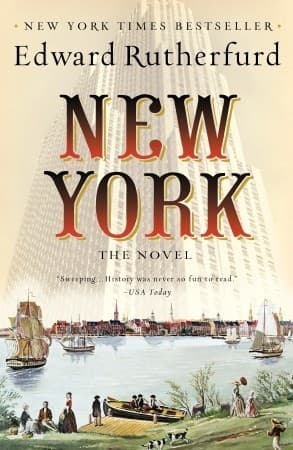
Edward Rutherfurd (2009)
Genre
Lifestyle / Historical Fiction
Reading Time
28-35 hours
Key Themes
See below
Sign in to track this book
Edward Rutherfurd's "New York" follows the city's journey from a fishing village to a modern skyline, covering centuries of varied lives and constant change through war, prosperity, and difficulty.
The story begins in 1609, showing the Lenape people's life on Mannahatta, a land with many resources. Chief Ramapo and his family, including his son, Running Deer, live in balance with nature. Their world changes with the arrival of Henry Hudson's ship, the Half Moon, which is the first contact with Europeans. Later chapters describe the founding of New Amsterdam by the Dutch West India Company, led by people like Peter Stuyvesant. The Lenape first trade with the Europeans but soon face more pressure as settlers expand, leading to fights and the eventual removal of the native population from their lands. These early interactions set the stage for centuries of cultural clashes and the first struggle for control of the island.
Under Dutch rule, New Amsterdam becomes a busy trading post. Families like the Van Dycks and the Master families, including the ambitious Dirck van Dyck, settle there, involved in trade and buying land. The city grows, known for its varied population and practical approach to business. However, the English, wanting more power, see the Dutch presence as a problem. In 1664, an English fleet arrives, demanding surrender. Governor Peter Stuyvesant, though he first resists, has to give in to the stronger force, and New Amsterdam is peacefully given to English control, becoming New York. This change is a big shift in the city's identity and government, making it part of the larger British colonial system.
As a British colony, New York continues to grow in importance, becoming a key port and trade center. Families like the Master and the Maverick families deal with colonial life. The story follows generations, including the lawyer Ben Master, as they build their wealth and power. However, British rules, like the Stamp Act and other taxes, cause widespread anger among the colonists. New Yorkers, along with other colonial cities, start to organize protests and resistance. People like Alexander Hamilton appear, arguing for independence. The city becomes a place of revolutionary feeling, setting the stage for the coming fight with Britain.
New York has a role in the American Revolutionary War. George Washington's Continental Army tries to defend the city but loses battles, leading to British occupation for most of the war. Families are split by their loyalties, with some supporting the Loyalists and others the Patriots. Characters like the descendants of the Master and Maverick families experience the difficulties and political unrest. After the British surrender at Yorktown, the war ends, and New York celebrates its freedom. The city then faces the task of rebuilding and becoming a part of the new United States, preparing for its future as a national capital and economic center.
In the years after the Revolution, New York quickly becomes America's main port and financial center. The Erie Canal's completion in 1825 secures its place, connecting the city to the Great Lakes and the continent's interior. The story introduces new immigrant families, such as the O'Donnells from Ireland, who arrive looking for opportunity and a new life. They face bias and hardship but add to the city's growing workforce and varied culture. People like the ambitious bankers and merchants from the Master and Van Dyck lines continue to shape the city's economy, building wealth and affecting its growth. The difference between the established rich and the struggling newcomers is a repeated idea.
The Civil War greatly affects New York, which remains a divided city with strong business ties to the South. The story follows characters like the O'Donnells, some of whom join the Union Army, while others, especially poor Irish immigrants, dislike the draft. The Draft Riots of 1863 happen, driven by class and racial tensions, leading to widespread violence, looting, and destruction. The riots show the deep social divisions within the city, showing the struggles of its varied population. Despite the chaos, the city's economy keeps going, and families like the Masters and Mavericks deal with the changing political and social situation, some making money from the war.
The late 19th century, the Gilded Age, sees New York changed by great wealth, industry, and immigration. Large houses rise on Fifth Avenue, built by families like the Mavericks, who now represent old money, and new industrialists. At the same time, the Lower East Side becomes a busy area for millions of European immigrants, including the Jewish immigrants, the Steinbergs. They face crowded housing, poverty, and exploitation, but also find community and opportunity. The story looks at the sharp contrast between the city's rich elite and its struggling working class, as well as the rise of political groups like Tammany Hall, which have great power. New technologies, like skyscrapers and elevated trains, begin to change the city's appearance.
The early 20th century brings more change and problems to New York. The city helps in both World War I and World War II, providing troops and industrial power. The 1920s bring a time of economic growth and cultural activity, with new art forms and social freedoms. However, the Great Depression destroys this prosperity, putting many New Yorkers into poverty and despair. The story follows families like the O'Donnells and Steinbergs as they deal with these difficult times, experiencing both hardship and strength. The city's buildings continue to develop, with public works projects aimed at jobs and modernization, further solidifying its global standing.
After World War II, New York enters a time of new prosperity and cultural leadership, becoming a global center for finance, art, and media. The story follows descendants of the established families and newer arrivals as they work and live in the growing city. However, the latter half of the 20th century brings new problems: racial tensions, rising crime, and the financial crisis of the 1970s. The city experiences a period of urban decline and uncertainty, with many fearing its downfall. Characters see some residents move to the suburbs and the difficulties faced by those who stay, especially in the outer areas and struggling neighborhoods.
The 1980s and 1990s see New York City come back, driven by economic growth, less crime, and renewed civic pride. New businesses appear, and the city again attracts talent and money from around the world. The story ends in the early 21st century, focusing on the lives of current New Yorkers, including a young woman named Sarah Master, a descendant of the original Master family. The city's strength is tested by the attacks of September 11, 2001, on the World Trade Center. The book finishes with thoughts on the city's lasting spirit, its ability to rebuild, and the shared memory of its residents, showing its continuous development.
The Protagonist / Ancestral Figures
From proud sovereign leaders, their line experiences gradual displacement and cultural erosion, yet their memory persists in the city's foundation.
The Supporting / Ancestor
Establishes a powerful family dynasty rooted in the city's commercial and land-owning elite.
The Supporting / Ancestor
His family line transitions from colonial loyalty to becoming integral figures in the new American republic.
The Supporting / Ancestor
Initially loyal to the Crown, his family line endures the Revolution to become part of the city's enduring wealthy elite.
The Supporting / Ancestor
His family's arc represents the classic immigrant journey from poverty and struggle to gradual integration and success.
The Supporting / Ancestor
From impoverished refugee, his family builds a new life and achieves prosperity and influence in the city.
The Protagonist / Contemporary
Embodies the modern New Yorker, connecting the city's historical legacy to its present-day challenges and resilience.
The novel is a story of immigration, from the first Dutch and English settlers to the waves of Irish, Jewish, and other European immigrants, and later global arrivals. Characters like Michael O'Donnell and Samuel Steinberg show the hard journey of leaving one's home, facing bias and difficulty, yet working for a better life and adding to the city's growth. The search for opportunity, freedom, and social movement is a constant force, shaping individual lives and the city's varied character. The story shows both the successes and the struggles in this search.
“For New York was built on the dreams of strangers, and its streets were paved with the hope of a new beginning.”
Despite wars, fires, economic downturns, social unrest, and attacks, New York shows a strong ability to recover and rebuild. The novel tells of the city's ability to rebuild, change itself, and come back stronger from every crisis. This idea is throughout the story, from the early Dutch settlers rebuilding after conflicts to the city's recovery from the 1970s financial crisis and the 9/11 tragedy. The shared determination and inventive spirit of its residents are shown as the force behind its continuous development and lasting global importance.
“The city would always rise again, a phoenix of concrete and dreams, because its people would not allow it to do otherwise.”
New York's history is a constant mix of conflict and living together. From the first fights between the Lenape and European settlers, through the rivalries between Dutch and English, Loyalists and Patriots, and later, tensions between old wealth and new immigrants, the city is a mix of competing interests and cultures. Despite these conflicts, there is also a thread of adaptation, negotiation, and eventually, if sometimes difficult, living together that allows the city to grow. The Draft Riots of 1863 clearly show the violent potential of these conflicts, while everyday interactions show the slow formation of a shared civic identity.
“Two worlds had collided, and from their uneasy embrace, a new one was being born, scarred but vibrant.”
The buying and control of land are central to the city's growth and its families' wealth. From the 'purchase' of Manhattan from the Lenape to the large estates of colonial landowners and the later building of skyscrapers, land is a basic source of wealth and power. The novel carefully shows how families like the Van Dycks and Masters gain and keep their influence through generations by controlling key pieces of land and doing business. This idea shows the lasting impact of early decisions on the city's physical and social makeup, and how legacies are built on property and ambition.
“The very ground beneath their feet was a testament to ownership, a palimpsest of forgotten deeds and ancient claims.”
Traces the lives of several intertwined families across centuries.
The novel uses a multi-generational saga structure, following the descendants of a few key families (e.g., Master, Van Dyck, O'Donnell, Steinberg, Maverick, and the indigenous Lenape) from the 17th century to the 21st. This device allows Rutherfurd to illustrate the long-term impact of historical events, the evolution of social classes, and the enduring characteristics of the city through the continuity of bloodlines and names. It provides a personal lens through which to view the vast sweep of New York's history, highlighting both change and continuity in its inhabitants' fortunes and identities. Each new generation faces new challenges, but their lineage connects them to the city's founding moments.
Covers over 400 years of the city's development, integrating real historical events.
Rutherfurd employs a panoramic historical scope, moving chronologically through four centuries of New York's history. This allows him to integrate major historical events—such as the arrival of Henry Hudson, the English takeover, the Revolutionary War, the Erie Canal, the Civil War Draft Riots, the Gilded Age, the Great Depression, and 9/11—directly into the narrative. The fictional characters interact with, and are shaped by, these real historical moments and figures (like Peter Stuyvesant or Alexander Hamilton), providing a comprehensive and immersive historical experience. The city itself becomes a central character, evolving through these epochs.
New York itself functions as a dynamic, evolving entity that shapes its inhabitants.
Beyond merely being a setting, New York City is presented as a living, breathing character in the novel. Its physical landscape, economic opportunities, social challenges, and cultural identity are not static but constantly evolving, directly influencing the lives and fates of the fictional families. The city's growth, decline, and rebirth are central to the narrative, reflecting its resilience and dynamism. Characters' dreams and struggles are inextricably linked to the city's fortunes, making its transformation over centuries as compelling as any individual's arc. The changing street names, buildings, and demographics are all part of this character's development.
The destinies of diverse families are intricately linked through marriage, business, and conflict.
The novel skillfully interweaves the histories of various families—some old money, some new immigrants, some indigenous—through generations. Their paths cross through marriages, business partnerships, rivalries, and chance encounters. This device emphasizes the interconnectedness of New York's diverse population and how different social strata and ethnic groups contributed to the city's complex tapestry. It allows for contrasts in experience (e.g., the wealthy Maverick and the struggling O'Donnell families) while showing how their lives, over time, become part of a shared, collective history that defines the city. This creates a rich social mosaic.
“New York was not a city of dreams; it was a city of realities, hard and unyielding, but it was also a city of hope.”
— Reflecting on the city's dual nature throughout its history.
“In New York, you could be whoever you wanted to be, and nobody would ask where you came from.”
— Describing the city's role as a melting pot for immigrants.
“The skyline was not just a collection of buildings; it was a testament to human ambition.”
— Observing the construction of skyscrapers in the early 20th century.
“Money talked in New York, but so did art, and sometimes they spoke the same language.”
— Commenting on the interplay between commerce and culture in the Gilded Age.
“Every stone in the city had a story, if you knew where to look.”
— A character reflecting on the layers of history beneath modern streets.
“The harbor was the city's beating heart, pumping life into its veins with every ship that arrived.”
— Describing New York's reliance on its port during the 19th century.
“In the chaos of the streets, there was a strange kind of order, a rhythm that only New Yorkers understood.”
— Portraying daily life in the bustling city during the Industrial Revolution.
“They built their fortunes on the backs of others, but they also built a city that would outlast them all.”
— Critiquing the robber barons while acknowledging their legacy.
“The fire of 1835 did not destroy New York; it merely cleared the way for something greater.”
— Referring to a historical disaster that led to rebuilding and innovation.
“Love in New York was as fleeting as a cab in the rain, but just as desperately sought.”
— A character's musing on personal relationships in the fast-paced city.
“The subways carved through the city like arteries, connecting lives that would otherwise never touch.”
— Highlighting the impact of the subway system on social dynamics.
“In the shadow of the great bridges, people found ways to cross divides that seemed insurmountable.”
— Metaphor for social and racial integration in the 20th century.
“New York was a palimpsest, each generation writing over the last, but never quite erasing it.”
— Philosophical observation on the city's layered history.
“The stock market crash didn't just break fortunes; it broke spirits, but New Yorkers mended both.”
— Reflecting on resilience during the Great Depression.
Ready to see how well you understood this book? Take our interactive quiz with 10 questions.
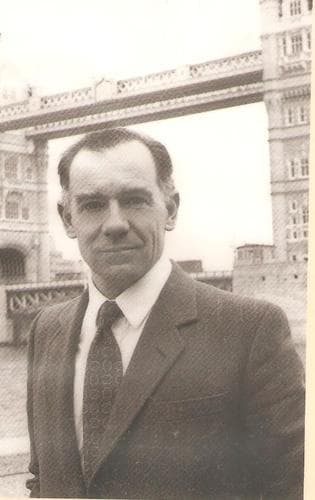
Biography coming soon.