BookBrief
Nana cover
Archivist's Choice

Nana

Emile Zola (2022)

Genre

General

Reading Time

15-20 hours (approx. 568 pages at average reading speed)

Key Themes

See below

Track Your Reading

Sign in to track this book

Nana's relentless rise as a courtesan, from Parisian slums to the Second Empire's elite, reveals the moral decay and hypocrisy of a society drawn to her destructive charm.

Core Idea

Emile Zola's "Nana" explores the destructive nature of uncontrolled sensuality and the moral decline it causes in 19th-century Paris. Nana, a courtesan whose only 'skill' is her attractiveness, rises quickly and then falls. Zola argues that society, especially the aristocracy, participates in its own corruption by raising up and admiring figures of vice, even as those figures destroy them. The novel suggests that people, without societal rules, are driven by basic, animal desires. Attempts to escape or control these impulses fail, leading to widespread moral degradation and an unavoidable reckoning for everyone involved. The book supports the Naturalist idea that people are shaped by their genes and surroundings. Nana, born poor and exposed to a life of moral looseness, becomes an irresistible force. Her story shows that the idea of freedom and moving up in society is a social construct; she remains tied to her instincts and what people expect of her. Zola criticizes the hypocrisy of a society that condemns her while also supporting her existence. He presents a grim picture where vice, like a disease, spreads without control, leaving ruin and death.
Reading time
15-20 hours (approx. 568 pages at average reading speed)
Difficulty
Medium
✓ Read this if...
You are fascinated by detailed social commentary, the psychological impact of societal corruption, and the unvarnished depiction of human nature through a Naturalist lens. Ideal for readers interested in the Belle Époque and the downfall of the aristocracy.
✗ Skip this if...
You prefer optimistic narratives, shy away from explicit depictions of sensuality and moral decay, or find extensive descriptions of societal rot and the grim realities of human instinct to be too bleak.

Core idea

The central argument and framework that powers the entire book.

Emile Zola's "Nana" explores the destructive nature of uncontrolled sensuality and the moral decline it causes in 19th-century Paris. Nana, a courtesan whose only 'skill' is her attractiveness, rises quickly and then falls. Zola argues that society, especially the aristocracy, participates in its own corruption by raising up and admiring figures of vice, even as those figures destroy them. The novel suggests that people, without societal rules, are driven by basic, animal desires. Attempts to escape or control these impulses fail, leading to widespread moral degradation and an unavoidable reckoning for everyone involved.

The book supports the Naturalist idea that people are shaped by their genes and surroundings. Nana, born poor and exposed to a life of moral looseness, becomes an irresistible force. Her story shows that the idea of freedom and moving up in society is a social construct; she remains tied to her instincts and what people expect of her. Zola criticizes the hypocrisy of a society that condemns her while also supporting her existence. He presents a grim picture where vice, like a disease, spreads without control, leaving ruin and death.

At a glance

Reading time

15-20 hours (approx. 568 pages at average reading speed)

Difficulty

Medium

Read this if...

You are fascinated by detailed social commentary, the psychological impact of societal corruption, and the unvarnished depiction of human nature through a Naturalist lens. Ideal for readers interested in the Belle Époque and the downfall of the aristocracy.

Skip this if...

You prefer optimistic narratives, shy away from explicit depictions of sensuality and moral decay, or find extensive descriptions of societal rot and the grim realities of human instinct to be too bleak.

Key Takeaways

1

The Golden Fly: Alluring Decay

Nana's meteoric rise symbolizes the corrupting power of beauty and unchecked desire in Second Empire Paris.

Quote

She was a force of nature, a ferment of destruction, a golden fly just emerged from the dung-heap, that poisoned men by merely touching them.

Nana, the courtesan in Zola's novel, shows the moral decay and superficiality of Second Empire French society. Her rise from a working-class background to being admired by Parisian high society is not a success story, but one of the quiet spread of corruption. She does not actively try to destroy; instead, her presence and physical appeal cause the ruin of every man she meets. This points to a larger societal problem, showing how a society obsessed with pleasure, appearances, and status can be brought down by the very thing it desires...

Supporting evidence

The steady decline and financial ruin of figures like Count Muffat, Vandeuvres, and Georges Hugon, all of whom are obsessed with Nana, illustrate her destructive impact. Muffat, initially a pillar of respectability, loses his fortune, his reputation, and his wife to his infatuation.

Apply this

Recognize how unchecked societal desires for superficiality, status, and instant gratification can create an environment ripe for exploitation and moral collapse. Critically evaluate the 'idols' a society elevates and the values they represent.

naturalismsecond-empire-decadencesocietal-corruption
2

The Illusion of Freedom

Despite her independence and power over men, Nana remains trapped by her class origins and the expectations of her profession.

Quote

She was a queen, but a queen of the gutters, forever dragged back to the mud from which she sprang.

Nana's story shows a complex situation: she has great power over the elite, yet she is not truly free. Her 'freedom' depends on her beauty and her ability to manipulate men, not on real independence. She seeks luxury and a way out of her poor past, but her choices always lead her back to a life controlled by others' desires and the business-like nature of her existence. Her attempts to rise above her origins through wealth only trap her more in a different kind of servitude – where her body and charm are her only value. This shows how...

Supporting evidence

Nana's lavish spending habits and inability to manage money keep her perpetually dependent on wealthy patrons. Her brief attempts at 'respectability' or settling down are always short-lived, inevitably leading her back to the stage and the demimonde.

Apply this

Examine the true nature of 'freedom' and whether it's tied to financial independence or genuine self-determination. Be wary of systems where personal agency is conditional on exploiting or being exploited by others.

social-mobility-illusiongender-roles-19th-centuryeconomic-servitude
3

The Brutality of Naturalism

Zola's unflinching realism exposes the harsh biological and environmental determinants shaping human fate.

Quote

She had the blood of the drunkard in her veins, the madness of her ancestors, a taint that would always drag her down.

Zola's naturalism is clear in 'Nana,' which portrays people as products of their genes and environment. Nana's character is not just a moral choice but a result of her family (her alcoholic father, Gervaise, from 'L'Assommoir') and the poor Parisian slums where she grew up. This deterministic view suggests that people, despite their hopes, often cannot control the forces of biology and social circumstances. Her eventual, undignified death from smallpox highlights this harsh, scientific approach, removing any romantic ideas about her l...

Supporting evidence

Nana's inherited 'taint' from her family, particularly her mother Gervaise's alcoholism and mental instability, is frequently referenced as a contributing factor to her impulsive behavior and eventual downfall. Her death from smallpox, described in graphic detail, is a raw, biological end.

Apply this

Understand the profound impact of genetics and environment on individual behavior and societal outcomes. While not absolving personal responsibility, it encourages empathy and systemic thinking about the root causes of social issues.

heredityenvironmental-determinismbiological-fate
4

The Stage as a Microcosm

The theatre where Nana first achieves fame mirrors the artificiality and moral corruption of Parisian society.

Quote

She was a goddess, a beast, a woman, and the audience, intoxicated, saw themselves reflected in her nakedness.

The Variétés theatre, where Nana first appears, is a strong symbol for the entire social scene of Second Empire Paris. On stage, artificiality rules; reality is twisted, and morality is openly ignored for entertainment. The audience, made up of the same elite who will later fall for Nana, is drawn in not by her talent but by her raw, animalistic sexuality. This dynamic perfectly captures the hypocrisy of a society that publicly upholds strict moral rules while privately enjoying every possible vice. The theatre is a place where societ...

Supporting evidence

Nana's initial success is not due to her singing or acting ability but to her scandalous stage presence and revealing costumes, particularly in 'The Blonde Venus.' The audience's reactions, a mix of shock and titillation, highlight their own moral ambiguity.

Apply this

Be critical of public performances and media that prioritize sensationalism and superficiality over genuine artistic merit or substance. Recognize how entertainment can both reflect and shape societal values, sometimes for the worse.

social-hypocrisyartifice-vs-realityspectacle-society
5

The Decay of the Aristocracy

The novel exposes the moral and financial bankruptcy of the French upper class under the Second Empire.

Quote

The old families were dying out, consumed by their own pleasures, leaving behind only the ruins of their names.

Zola systematically breaks down the idea of aristocratic superiority, showing the French nobility and upper middle class as morally bankrupt, financially careless, and intellectually empty. Figures like Count Muffat, initially shown as respectable, quickly give in to their basic desires, losing their money, dignity, and family honor because of Nana. Their inability to resist her charm, despite their supposed education and social standing, reveals a deep weakness at the core of the ruling class. Their obsession with appearances and ple...

Supporting evidence

The financial and social ruin of Count Muffat, the moral decay of his wife, Sabine, and the general dissipation of other noble figures like Vandeuvres, who eventually commits suicide after losing everything, all demonstrate this decline.

Apply this

Question institutions and individuals who claim moral authority or superiority based solely on lineage or wealth. Recognize that power and status do not inherently confer virtue or wisdom, and can even accelerate moral decline.

aristocratic-declinesecond-empire-politicsclass-critique
6

The Price of Objectification

Nana, while powerful, is ultimately a victim of the male gaze and a society that reduces women to their physical form.

Quote

She was a woman, but to them, she was a thing, a pleasure, a possession.

Despite her ability to ruin men, Nana herself is largely seen as an object. Her entire existence, her worth, and her power depend on her physical beauty and sexual appeal. Men do not see her as a complex person but as a way to fulfill their desires, something to be bought and sold. This constant objectification, while giving her temporary power, prevents her from forming real connections, gaining respect, or having self-worth outside of her role as a courtesan. Her eventual physical decay and death, mostly unmourned, show the tragedy ...

Supporting evidence

Nana's identity is almost solely defined by her body and her sexual encounters. The detailed descriptions of her nudity on stage and the men's reactions to it consistently reinforce her status as an object of desire rather than a person.

Apply this

Challenge and deconstruct the objectification of individuals, particularly women, in media and society. Advocate for seeing and valuing people for their intellect, character, and humanity beyond their physical attributes.

male-gazegender-exploitationcommodification-of-women
7

The Contagion of Vice

Vice, like a disease, spreads inexorably through society, corrupting all it touches.

Quote

The poison flowed from her, seeping into every crack of the city, infecting even the most virtuous.

Zola uses the idea of disease and spread to show how vice, once present, moves through society. Nana is the 'golden fly' that carries the 'ferment of destruction.' Her presence affects not just her immediate lovers; it spreads outwards, touching their families, their money, and their reputations. The novel shows how moral decay is not isolated but connected, demonstrating a chain reaction where one person's indulgence leads to another's downfall. This supports Zola's deterministic view that societal corruption is an unavoidable, almos...

Supporting evidence

The smallpox epidemic that ultimately kills Nana serves as a literal and symbolic representation of the moral contagion she embodies. The widespread ruin of various characters, from nobles to courtesans, all linked to her, shows the 'spread' of her influence.

Apply this

Recognize that individual actions have ripple effects throughout a community. Be vigilant against the normalization and spread of harmful behaviors, understanding that societal health is a collective responsibility.

social-pathologymoral-epidemicinterconnectedness-of-vice
8

The Futility of Escape

Characters repeatedly attempt to escape their circumstances, only to be dragged back by their own weaknesses or societal forces.

Quote

They built their castles in the air, but the mud was always there, waiting to drag them down.

Throughout 'Nana,' characters, including Nana, want a different life, trying to escape their social class, their pasts, or their destructive habits. Nana tries to settle down with Fontan, or later to live a quiet life abroad, but she is always drawn back to the Parisian demimonde. Count Muffat tries to maintain his respectability, only to be consumed by his obsession. Even minor characters, like young Georges Hugon, try to break free from their family or personal limits. These attempts, however, are consistently stopped, not just by o...

Supporting evidence

Nana's numerous attempts to leave her life as a courtesan, such as her brief marriage to Fontan or her disappearance to Egypt, always end with her returning to Paris and her old habits. Georges Hugon's attempt to escape his infatuation through suicide is a tragic, albeit final, form of 'escape'.

Apply this

Acknowledge the powerful forces of habit, environment, and personal history that can hinder change. While striving for improvement, recognize the deep-seated challenges in fundamentally altering one's path without significant internal and external shifts.

determinismpersonal-agency-limitssocietal-trap
9

The Animalistic Undercurrent

Zola frequently portrays human behavior through an animalistic lens, emphasizing primal instincts over reason.

Quote

She was a magnificent animal, a wild beast whose scent drove men mad.

Zola's naturalism often uses animal imagery to describe human behavior, removing ideas of civilizing reason and highlighting basic urges. Nana herself is often called a 'golden fly,' a 'beast,' or a 'magnificent animal,' whose appeal is more instinctive than intellectual. The men who chase her are shown as driven by basic desires, like predators or dogs in heat, losing all appearance of their sophisticated manners. This imagery supports Zola's belief that beneath polite society, humans are mainly governed by their biological instincts...

Supporting evidence

Descriptions of Nana's stage presence as 'animalistic' and the men's 'howls' and 'snarls' of desire. Count Muffat's degradation is often described in terms that suggest a loss of humanity, reducing him to a mere supplicant driven by lust.

Apply this

Examine how primal instincts and biological drives influence human decision-making, even in seemingly rational contexts. Recognize the potential for 'civilized' behavior to mask deeply ingrained, often destructive, animalistic urges.

primal-instinctshuman-animal-dichotomybiological-determinism
10

The Inevitable Reckoning

The novel culminates in a stark, unromanticized death that underscores the ultimate consequences of a life built on excess and superficiality.

Quote

And on that rotten, flowery body, the golden fly, the ferment of destruction, lay dead.

Nana's death from smallpox is one of the novel's most powerful and shocking moments. It is Zola's final judgment on the character and the society she represents. After a life of great luxury, sexual excess, and manipulation, her end is ugly, alone, and without any romance. Her once-beautiful body is destroyed, making her unrecognizable, symbolizing the complete decay of both her personal charm and the moral structure of Second Empire Paris. This direct depiction of death is a sharp reminder that all earthly pleasures and superficial t...

Supporting evidence

The vivid, repulsive description of Nana's body ravaged by smallpox, contrasted sharply with her former beauty. Her death occurs amidst the cries of 'To Berlin!' signaling the Franco-Prussian War, linking her personal end to a larger societal catastrophe.

Apply this

Reflect on the long-term consequences of prioritizing superficiality, transient pleasures, and unchecked desires. Consider the value of building a life on enduring principles rather than fleeting external validations.

memento-moriconsequences-of-excesssocietal-collapse

Critical analysis

Notable Quotes

For the first time, she had a vision of the world, a glimpse into the abyss of Parisian vice, a world she would soon dominate.

Nana's initial experience with the theater and its backstage world.

It was the golden fly, flying out of the dung-heap of the people, a ferment of destruction, infecting the upper classes with its decomposition.

Describing Nana's rise and impact on society.

Her body was a weapon, her beauty a destructive force, bringing ruin to all who approached.

Reflecting on Nana's power over men.

Men were like flies, drawn to her light, only to be consumed by its flame.

A common observation about men's attraction to Nana.

She was a force of nature, an elemental creature, embodying the unconscious desires and brutal instincts of humanity.

A broader commentary on Nana's symbolic role.

The stage was her kingdom, where she reigned supreme, adored and desired, yet always on the verge of scandal.

Nana's performance and public persona.

Luxury was her element, the only air she could breathe, and she consumed it with insatiable greed.

Nana's extravagant lifestyle and spending habits.

Beneath the dazzling surface, there was nothing but emptiness, a void that no amount of pleasure or money could fill.

A deeper insight into Nana's inner state.

Paris was a vast, glittering cesspool, and she was its most brilliant, most putrid flower.

A metaphor for Paris and Nana's place within it.

He felt himself drawn into her orbit, a helpless satellite, destined to crash.

One of Nana's lovers reflecting on his fate.

The decomposition of her body was the decomposition of an entire society.

The final scene, describing Nana's death from smallpox.

Above all, she was a woman, a creature of flesh and blood, driven by desires she barely understood herself.

A more sympathetic perspective on Nana's character.

The crowd roared, a beast demanding its spectacle, its idol, its sacrifice.

Describing the audience's reaction to Nana's performances.

She was the unconscious agent of a higher power, a force of nature unleashed on a decadent world.

Further exploring Nana's symbolic significance.

Quiz

Test Your Knowledge

Ready to see how well you understood this book? Take our interactive quiz with 10 questions.

10
Questions
~5
Minutes
?
Best Score

Key Questions (FAQ)

'Nana' chronicles the rise and fall of Anna Coupeau, nicknamed Nana, a beautiful and promiscuous actress and courtesan in Second Empire Paris. From her humble beginnings, she captivates wealthy and influential men, ultimately leading them to financial ruin and social disgrace, while her own life descends into a tragic end.

About the author

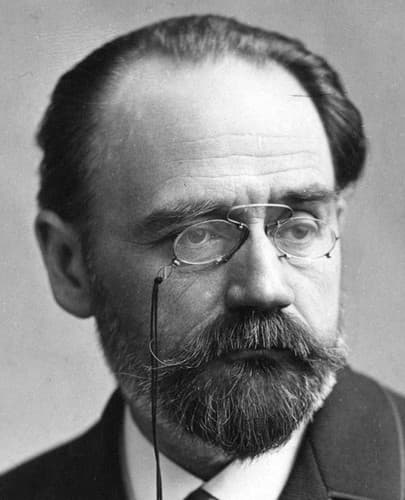
Emile Zola

Émile Édouard Charles Antoine Zola was a French novelist, journalist, playwright, the best-known practitioner of the literary school of naturalism, and an important contributor to the development of theatrical naturalism. He was a major figure in the political liberalization of France and in the exoneration of the falsely accused and convicted army officer Alfred Dreyfus, which is encapsulated in his renowned newspaper opinion headlined J'Accuse…!  Zola was nominated for the first and second Nobel Prize in Literature in 1901 and 1902.