BookBrief
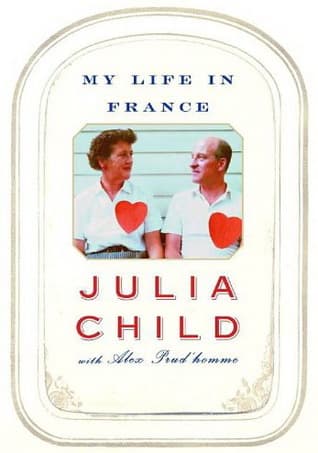
My Life in France cover
Archivist's Choice

My Life in France

Julia Child (2006)

Genre

Lifestyle / Biography / Memoir

Reading Time

6-8 hours

Key Themes

See below

Track Your Reading

Sign in to track this book

Julia Child's "My Life in France" follows her path from a cooking beginner to a famous chef, detailing her discovery of French food and culture.

Core Idea

Julia Child's "My Life in France" tells the story of her ten years in post-WWII France, where she, an American with no cooking background, found her love for French food. The book shows that trying new things, practicing a lot, and being open to adventure can lead to personal and career success, even when things are hard at first. It is about finding one's purpose through a new culture and a supportive partner.
Reading time
6-8 hours
Difficulty
Easy
✓ Read this if...
You are interested in the origins of a culinary icon, enjoy memoirs about cultural immersion, or need inspiration to pursue a late-life passion.
✗ Skip this if...
You prefer a purely instructional cookbook, dislike biographical narratives, or are looking for a fast-paced, high-stakes plot.

Core idea

The central argument and framework that powers the entire book.

Julia Child's "My Life in France" tells the story of her ten years in post-WWII France, where she, an American with no cooking background, found her love for French food. The book shows that trying new things, practicing a lot, and being open to adventure can lead to personal and career success, even when things are hard at first. It is about finding one's purpose through a new culture and a supportive partner.

At a glance

Reading time

6-8 hours

Difficulty

Easy

Read this if...

You are interested in the origins of a culinary icon, enjoy memoirs about cultural immersion, or need inspiration to pursue a late-life passion.

Skip this if...

You prefer a purely instructional cookbook, dislike biographical narratives, or are looking for a fast-paced, high-stakes plot.

Key Takeaways

1

Embrace the Unfamiliar

Stepping into a new culture can unlock unforeseen passions and life paths.

Quote

I was 36 years old when I began to learn how to cook, and I had no idea that it would become my life's work. But I was open to it, and that made all the difference.

Julia Child's journey started not with a plan to cook, but with an open mind and a desire to experience a new culture. She arrived in France with little French and no cooking skills, but she did not avoid the new. Instead, she embraced French life, from going to markets to taking cooking classes. This first step into the unknown, driven by interest rather than skill, shows that big personal and career changes often come from leaving one's comfort zone and letting new experiences guide you. Her story shows that important callings can c...

Supporting evidence

Julia's initial arrival in France in 1948, speaking little French and knowing nothing about the country, yet her immediate dive into exploring markets and eventually enrolling in Cordon Bleu.

Apply this

Actively seek out new experiences, even if they seem daunting or unrelated to your current skills. Travel to new places, try new hobbies, or learn a new language. Allow curiosity to guide you, rather than feeling pressured to have a clear goal from the outset.
cultural-immersionopen-mindednessserendipity
2

The Power of Palate

Discovering true flavor can redefine one's understanding of food and cooking.

Quote

The whole experience was a revelation. It was the most exciting meal of my life.

Julia's first cooking moment was not in a class, but at a simple restaurant in Rouen, where a sole meunière changed how she saw food. This meal was not just about taste; it showed her the potential of fresh ingredients, precise methods, and careful preparation. It showed how a truly good dish can be more than just food, becoming an art that brings great pleasure and starts a lifelong interest. This moment shows how important it is to try good food to understand what 'good' means, setting a standard for future cooking and inspiring a s...

Supporting evidence

Her detailed description of the sole meunière at La Couronne in Rouen, her first truly memorable French meal, which she described as a 'revelation'.

Apply this

Seek out opportunities to taste truly excellent food, whether by dining at a highly-regarded restaurant, trying a dish prepared by a skilled home cook, or using exceptional ingredients. Pay close attention to the flavors, textures, and aromas to develop a more refined palate.

culinary-epiphanysensory-experienceflavor-development
3

Mastery Through Diligence

True expertise in any field is built on relentless practice and a deep understanding of fundamentals.

Quote

I found that the more I cooked, the more I learned. And the more I learned, the more I wanted to cook.

Julia's progress from beginner to master chef came from her steady commitment to practice and a careful way of learning. She did not just take classes; she remade dishes, tried things, and repeated methods until they became easy. Her dedication to understanding 'why' each cooking step worked, not just 'how,' helped her learn the principles instead of just following recipes. This constant effort to do things well, along with a real love for the process, shows that skill is not something you are born with but something you build through...

Supporting evidence

Her detailed accounts of attending Cordon Bleu, then continuing her education at Le Richemont, and her extensive home experimentation, often repeating dishes dozens of times.

Apply this

Identify a skill you want to master. Break it down into fundamental components and practice each component deliberately and repeatedly. Don't be afraid to make mistakes; view them as opportunities for learning and refinement. Seek out multiple sources of instruction and compare techniques.

deliberate-practiceskill-acquisitionfoundational-knowledge
4

The Collaborative Spirit

Great achievements often arise from unexpected partnerships and shared passions.

Quote

We were three women, all passionate about French cooking, and we knew we had something important to share.

Making 'Mastering the Art of French Cooking' was not Julia Child's work alone, but a team effort with Simone Beck and Louisette Bertholle. This partnership, formed from a shared love for French cooking and a wish to make it easier for American home cooks, shows the strength of working together. Despite different personalities and methods, their combined strengths—Julia's careful testing and clear explanations, Simca's traditional French knowledge, and Louisette's first structure—made a more complete and effective book than any one of ...

Supporting evidence

The detailed narrative of her collaboration with Simone Beck and Louisette Bertholle on the cookbook, initially conceived as a book for American women by the French women, then evolving into a joint effort with Julia taking a leading role.

Apply this

Actively seek out collaborators who share your passion but bring different skills or perspectives. Embrace the challenges and rewards of teamwork, recognizing that diverse inputs can lead to more robust and innovative outcomes. Clearly define roles and communicate openly.

teamworkcreative-collaborationshared-vision
5

Perseverance in the Face of Rejection

Setbacks are inevitable; sustained effort is key to ultimate success.

Quote

It took us a long time, and a lot of rejections, but we never gave up. We knew we had a good book.

The path to publishing 'Mastering the Art of French Cooking' faced many rejections and delays, lasting years. Publishers thought the manuscript was too long, too hard, or too specific. But Julia and her co-authors never gave up on their idea. Their strong belief in the value of their work, and their constant willingness to change and resubmit, led to its important publication. This story of persistence shows that even new ideas face doubt at first, and success often depends not on avoiding rejection, but on getting through it, learnin...

Supporting evidence

The extensive account of the cookbook's many rejections from publishers like Houghton Mifflin, who initially signed them, then dropped them, and the eventual acceptance by Alfred A. Knopf after years of revisions.

Apply this

When facing rejection or obstacles, critically evaluate the feedback but don't let it derail your core vision. Maintain belief in your project, adapt where necessary, and continue to seek new avenues or refine your approach. Develop resilience by focusing on the long-term goal.

resiliencegritovercoming-adversity
6

The Joy of Teaching

Sharing knowledge can amplify passion and create lasting impact.

Quote

I enjoyed the teaching so much, the sharing of the knowledge, and watching people learn and grow.

Beyond her cooking skills, Julia Child had a natural talent for teaching and a great joy in sharing what she knew. Whether through her cooking classes, her TV show, or her cookbook, her goal was always to help others, to make French cooking easier to understand, and to make difficult methods simple. Her excitement was catching, and her ability to break down hard tasks into easy steps changed cooking from a scary chore into a fun activity for many Americans. This shows that true skill often leads to a desire to teach, finding great sat...

Supporting evidence

Her detailed accounts of teaching cooking classes in her Paris kitchen, then later her famous television show, 'The French Chef,' which brought her methods to a national audience.

Apply this

Actively seek opportunities to share your expertise with others. This could be through mentoring, teaching a class, writing a guide, or simply explaining concepts to friends. Focus on clarity, patience, and making complex ideas approachable to foster true understanding.

pedagogyknowledge-sharingempowerment
7

A Partner in Life and Work

A supportive relationship is a cornerstone for personal and professional flourishing.

Quote

Paul was always there, encouraging me, supporting me, and believing in me, even when I didn't believe in myself.

The lasting love and constant support of her husband, Paul Child, were key to Julia's success. Paul was not just a husband but a true partner in every way: her first and biggest fan, her photographer, editor, artistic director, and constant supporter. His belief in her talent and his willingness to change his own life to help her growing career gave Julia the stability and confidence she needed to follow her big goals. Their relationship shows how a very supportive partnership, built on mutual respect and shared adventure, can be the ...

Supporting evidence

Throughout the memoir, Julia consistently highlights Paul's role: his encouragement to take cooking seriously, his artistic contributions (photography, book design), his willingness to move for her career, and his constant emotional support.

Apply this

Cultivate relationships that are built on mutual support, encouragement, and shared values. Actively support your partner's passions and allow them to support yours. Recognize the immense value of a strong personal foundation in achieving professional goals.

supportive-relationshipspartnershipmutual-respect
8

The French Paradox of Simplicity

True culinary excellence often lies in the quality of ingredients and fundamental techniques, not complexity.

Quote

The French are not afraid of butter, or cream, or a good crusty baguette. They understand that simple, good ingredients, properly prepared, are the key.

Julia's time with French cooking taught her that its famous richness and elegance come from a deep respect for simplicity. The focus is on getting the freshest, best ingredients and using basic methods with care. It is not about fancy decorations or rare items, but about letting the natural tastes of butter, cream, fresh vegetables, and good meats stand out. This idea challenges the thought that 'gourmet' must be complex, instead suggesting a return to basics, where respect for ingredients and skill in core methods make simple dishes ...

Supporting evidence

Her frequent descriptions of shopping at local markets for fresh, seasonal produce, and her emphasis in the cookbook on basic techniques for sauces, roasting, and sautéing rather than overly complex recipes.

Apply this

Focus on sourcing the best possible ingredients you can afford. Invest time in mastering foundational cooking techniques (e.g., sautéing, roasting, making a basic sauce). Prioritize flavor and quality over unnecessary complexity in your cooking.

ingredient-qualityculinary-fundamentalsterroir
9

Embrace Imperfection with Joy

Cooking should be an enjoyable, hands-on process, not a rigid pursuit of flawlessness.

Quote

I think it's important to have a good time in the kitchen. If you're not having fun, you're not doing it right.

Julia Child's TV personality, famously dropping a potato or struggling with a chicken, was not an act but a real sign of her belief that cooking should be fun and easy, even with its normal mistakes. She made French cooking less scary by showing that being perfect is not the goal; the process, the learning, and the good food are what really matter. Her willingness to show her own mistakes made her relatable and encouraged home cooks to try things without fear of failing, leading to a more relaxed and adventurous way of cooking. This s...

Supporting evidence

Her well-known antics and mistakes on 'The French Chef,' such as dropping food, struggling with a stubborn turkey, or recovering from a spilled dish, which she always handled with good humor.

Apply this

Approach cooking (and other creative endeavors) with a sense of playfulness and experimentation. Don't be afraid to make mistakes; learn from them and laugh them off. Focus on the enjoyment of the process rather than striving for unattainable perfection.

culinary-joyexperimental-cookinggraceful-failure
10

Life is a Grand Adventure

Approach life with curiosity, enthusiasm, and a zest for new experiences.

Quote

The more you learn, the more you want to learn. And the more you do, the more you want to do.

Throughout her memoir, Julia Child shows a strong love for life, food, travel, and learning. Her story is not just about cooking; it is about taking every chance with enthusiasm—from finding her way in new cities to mastering hard cooking methods, from publishing an important book to becoming a TV personality in her fifties. Her spirit suggests that life should be lived fully, explored with an open heart and a strong interest. This main idea encourages readers to avoid being too comfortable, to keep looking for new challenges and joys...

Supporting evidence

Her consistent tone of wonder and excitement about her experiences in France, Norway, Germany, and later back in the US, always eager to learn and try new things, even later in life.

Apply this

Cultivate a lifelong learner's mindset. Actively seek out new hobbies, travel to new places, meet new people, and continuously challenge yourself intellectually and creatively. Approach each day with enthusiasm and a willingness to explore the unknown.

lifelong-learningcuriosityoptimism

Critical analysis

Notable Quotes

I was 32 when I started to learn to cook; up until then, I just ate.

Reflecting on her relatively late start in the culinary world.

You don't have to cook fancy or complicated masterpieces—just good food from fresh ingredients.

Emphasizing the importance of quality ingredients and simplicity in cooking.

The only real stumbling block is fear of failure. In cooking you've got to have a what-the-hell attitude.

Encouraging a fearless approach to cooking and experimentation.

I think every woman should have a blowtorch.

A humorous and practical take on kitchen tools.

If you're afraid of butter, use cream.

A witty response to those concerned about richness in French cuisine.

This is my invariable advice to people: Learn how to cook—try new recipes, learn from your mistakes, be fearless, and above all, have fun!

A comprehensive summary of her advice for aspiring cooks.

The French never, never, eat and run. They eat and talk and laugh and linger over coffee, and then talk some more.

Observing the cultural differences in dining habits between France and America.

A party without cake is just a meeting.

A playful remark on the importance of dessert and celebration.

I was hungry for something I knew nothing about.

Describing her initial curiosity and drive to explore French cuisine.

It was in France that I first learned about the importance of good food and the pleasures of the table.

Reflecting on the profound impact of her time in France on her culinary education.

I could never have written my cookbook without Paul. He was my partner in everything, especially in the kitchen.

Acknowledging the crucial role her husband, Paul, played in her career and life.

To be a good cook, you must have a good palate.

Highlighting the fundamental importance of taste and discernment in cooking.

Dining with Paul was always a treat, even if it was just a simple meal at home.

Illustrating the joy and appreciation she shared with her husband over meals.

I firmly believe that with the right attitude, and a good dose of courage, anyone can learn to cook.

Expressing her conviction that cooking is an accessible skill for everyone.

Quiz

Test Your Knowledge

Ready to see how well you understood this book? Take our interactive quiz with 10 questions.

10
Questions
~5
Minutes
?
Best Score

Key Questions (FAQ)

'My Life in France' is Julia Child's memoir recounting her transformative years in France starting in 1948, where she discovered her passion for French cuisine, learned to cook at Le Cordon Bleu, and began her journey to write 'Mastering the Art of French Cooking'. It details her culinary awakening and personal growth.

About the author