BookBrief
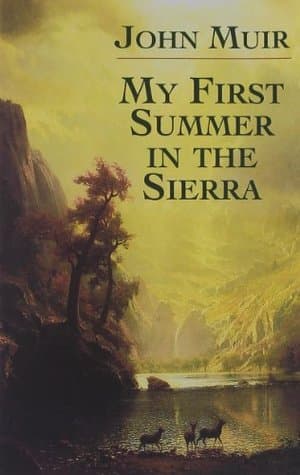
My First Summer in the Sierra cover
Archivist's Choice

My First Summer in the Sierra

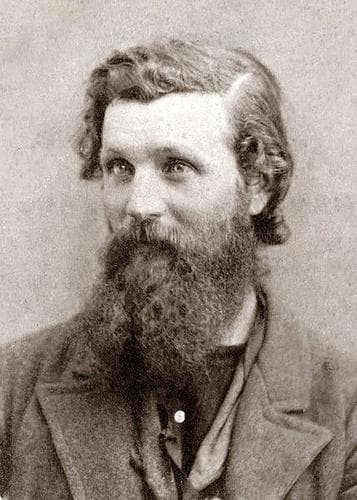
John Muir (1911)

Genre

Lifestyle / Biography / Memoir / History

Reading Time

240 min

Key Themes

See below

Track Your Reading

Sign in to track this book

John Muir, as a young naturalist and sheep herder, discovers the Sierra Nevada's beauty, changing his life and inspiring a nation to explore Yosemite.

Core Idea

John Muir's "My First Summer in the Sierra" records his 1869 journey as a sheep herder in Yosemite, a key text for American environmentalism. It describes the spiritual and intellectual awakening that comes from close contact with nature. Muir carefully notes the Sierra Nevada's geology, plants, and animals, showing an interconnected web of life. This challenges human-centered views and gives nature its own value and wonder. The book argues that understanding nature requires solitude and a willingness to follow its rhythms, which brings a sense of belonging. Muir's writing turns scientific observation into a poetic celebration. He advocates for preserving wild places not just for their usefulness, but for their beauty, their ability to inspire, and their role in human well-being.
Reading time
240 min
Difficulty
Medium
✓ Read this if...
You seek a foundational text in nature writing and environmental thought, appreciate detailed observational prose, or wish to experience the Sierra Nevada through the eyes of its most ardent champion.
✗ Skip this if...
You prefer fast-paced narratives, dislike extensive descriptions of flora and fauna, or find spiritual interpretations of nature unappealing.

Core idea

The central argument and framework that powers the entire book.

John Muir's "My First Summer in the Sierra" records his 1869 journey as a sheep herder in Yosemite, a key text for American environmentalism. It describes the spiritual and intellectual awakening that comes from close contact with nature. Muir carefully notes the Sierra Nevada's geology, plants, and animals, showing an interconnected web of life. This challenges human-centered views and gives nature its own value and wonder.

The book argues that understanding nature requires solitude and a willingness to follow its rhythms, which brings a sense of belonging. Muir's writing turns scientific observation into a poetic celebration. He advocates for preserving wild places not just for their usefulness, but for their beauty, their ability to inspire, and their role in human well-being.

At a glance

Reading time

240 min

Difficulty

Medium

Read this if...

You seek a foundational text in nature writing and environmental thought, appreciate detailed observational prose, or wish to experience the Sierra Nevada through the eyes of its most ardent champion.

Skip this if...

You prefer fast-paced narratives, dislike extensive descriptions of flora and fauna, or find spiritual interpretations of nature unappealing.

Key Takeaways

1

The Immersive Power of Direct Observation

True understanding of nature comes from prolonged, unmediated engagement.

Quote

I was awakened every morning by the sunbeams streaming through my open cabin door, and by the music of the birds.

Muir's 'first summer' shows the power of directly observing nature for a long time. He lived in the Sierra for months, not just visiting. This constant exposure helped him move from surface-level appreciation to a deep understanding of its rhythms, ecosystems, and subtle changes. He carefully notes the changing light, bird calls, plant growth, and geological processes. This level of immersion creates a strong connection, showing details that a quick visitor would miss. It argues that we need to slow down and truly 'live' in a natural ...

Supporting evidence

Muir's daily diary entries detailing specific plant species, bird behaviors, and geological formations observed over four months, such as his description of the 'glacier-sculptured walls' and the 'noble forest' of sequoias.

Apply this

Dedicate extended, device-free time to a single natural space – a local park, a forest, or a backyard. Keep a journal of observations, noting changes in light, sound, flora, and fauna over several days or weeks to deepen your connection and understanding.
nature-immersionobservational-learningecological-awareness
2

The Interconnected Web of Life

Every element of nature is intrinsically linked, forming a harmonious whole.

Quote

When we try to pick out anything by itself, we also find it hitched to everything else in the universe.

Muir's story illustrates ecological interconnectedness well before the term was common. He sees how glaciers shaped valleys, how water feeds plants, how plants feed animals, and how even bears play a role in nature's balance. His descriptions often link geology to plant and animal life, showing a whole view of the landscape. This view challenges a narrow approach to nature, instead promoting appreciation for the complex, interdependent relationships that support life in the Sierra and everywhere else.

Supporting evidence

His detailed accounts of the 'glacier-sculptured' Yosemite Valley, the diverse flora thriving in different elevations and soil types, and the interplay between predators and prey, such as bears and sheep, within the ecosystem.

Apply this

When observing nature, consciously look for connections: how do insects interact with flowers? How does water influence plant growth in a specific area? How do different species rely on each other for food or shelter? This practice fosters a more systemic understanding.

ecological-interdependenceholistic-viewbiodiversity
3

Challenging the Anthropocentric View

Muir elevates nature's intrinsic value beyond its utility to humanity.

Quote

The sheep are the dirtiest, most destructive, and most foolish of all the animals.

Though first a shepherd, Muir quickly saw the sheep's harm to the Sierra meadows. This experience shaped his environmental ideas, pushing back against the common view that nature was just a resource for humans. He admired the Sierra's wild beauty for its own sake, not just for its timber or grazing land. His dislike for the 'hoofed locusts' (sheep) shows his belief in wilderness's value and the need to protect it from human impact, setting the stage for modern conservation. He saw the mountains as cathedrals, not just goods.

Supporting evidence

His repeated, often scathing, criticisms of the sheep's grazing habits, describing them as 'trampling' and 'devouring' the delicate flora, and contrasting this with the pristine beauty he seeks to preserve.

Apply this

Reflect on how you value natural spaces. Do you see them primarily for recreation, resources, or their inherent existence? Challenge yourself to appreciate nature for its own sake, advocating for its protection even when there's no direct human benefit.

conservation-ethicsintrinsic-valuewilderness-preservation
4

The Spiritual Dimension of Wilderness

Nature as a source of profound spiritual solace and revelation.

Quote

God's first temples were the mountains, and here, in the Sierra, I found my sanctuary.

For Muir, the Sierra Nevada is more than a beautiful place; it is sacred, a 'grand show' of creation. His language often sounds religious when describing mountains, waterfalls, and giant sequoias. He finds spiritual renewal and peace in the wilderness, contrasting it with the perceived artificiality of human civilization. This spiritual tie to nature is a core part of his philosophy, suggesting that time in wild places is vital for human well-being and a deeper understanding of one's place in the universe. It is a call to find meaning...

Supporting evidence

His frequent use of words like 'divine,' 'sacred,' 'temple,' and 'sanctuary' to describe natural features, particularly the Yosemite Valley and the giant sequoias, and his expressions of awe and wonder.

Apply this

Seek out natural spaces for quiet contemplation or meditation. Approach these environments with a sense of reverence, allowing yourself to feel the awe and wonder they inspire, and reflect on their deeper meaning beyond mere aesthetics.

eco-spiritualitynature-as-sanctuarytranscendentalism
5

The Unfolding Drama of Geological Time

Muir sees the landscape as a dynamic record of Earth's ancient processes.

Quote

The rocks are not dead, but alive, and tell a story of a long and eventful past.

Muir's geology background heavily influenced his observations. He saw not just mountains, but the forces that shaped them: glaciers, erosion, and earthquakes. He viewed the 'sculptured' valleys and polished granite domes as a living record of vast geological time, a grand story unfolding over millennia. This view added intellectual depth to his appreciation of the Sierra, letting him see the dynamic processes that continue to shape the landscape, rather than seeing it as static scenery. It reminds us that the natural world is always c...

Supporting evidence

His detailed descriptions of glacial erosion, moraines, polished granite, and the formation of valleys and waterfalls, often speculating on the geological history behind these features.

Apply this

When visiting natural landmarks, research their geological history. Understand how they were formed, what forces shaped them, and how they continue to change. This adds a richer, deeper dimension to your experience.

geological-processesdeep-timeearth-science
6

The Art of Detailed Nature Writing

Muir's lyrical prose makes the natural world vivid and accessible.

Quote

I received a letter from home, telling me that I was a 'wild man,' living 'like a bear.'

Beyond his scientific notes and ideas, Muir's lasting impact comes from his ability to put the Sierra's grandeur and detail into vivid, poetic writing. His writing uses strong images, personification, and a passionate, almost joyful tone that shows his deep love for wilderness. He does not just describe; he paints pictures with words, inviting the reader to experience the mountains' sights, sounds, and feelings. This storytelling helped inspire public appreciation for nature and the early conservation movement. It shows that strong ad...

Supporting evidence

His rich descriptive passages of waterfalls 'singing,' forests 'whispering,' and mountains 'smiling,' along with his detailed accounts of specific flora and fauna, such as the 'noble pine' and the 'daring chipmunk.'

Apply this

Practice descriptive writing about a natural object or scene. Focus on engaging all five senses and using evocative language to convey its essence, aiming to make the reader feel present in the environment.

nature-writingdescriptive-proseenvironmental-literature
7

Embracing Solitude and Wildness

True self-discovery can occur in the absence of human society.

Quote

I wandered away from the camp for days, feeling no loneliness, but rather a profound sense of companionship with the wild.

Muir's summer in the Sierra is largely solitary, with only occasional meetings with sheep and herders. He thrives in this solitude, finding company in trees, animals, and vast landscapes. This shows that leaving human society and entering the wild can lead to self-discovery and deep happiness. It challenges the idea that human connection is the only source of fulfillment, suggesting that a deep connection with nature can offer a unique spiritual and emotional support, promoting independence and a clearer view of life's priorities.

Supporting evidence

His frequent descriptions of venturing alone into the wilderness for extended periods, his lack of desire for human company, and his expressed joy in the company of nature itself.

Apply this

Schedule intentional periods of solitude in nature, even if it's just a few hours in a local park. Turn off distractions and allow yourself to simply be present, observing and reflecting without external input.

solitude-in-natureself-reliancewilderness-experience
8

The Imperative of Conservation

Muir's observations laid the groundwork for the modern environmental movement.

Quote

These temple destroyers, devotees of ravaging commercialism, seem to have a perfect contempt for Nature, and, instead of lifting their eyes to the God of the mountains, lift them to the Almighty Dollar.

While 'My First Summer' is a personal story, it argues for protecting wilderness. Muir's shock at the environmental damage from sheep, combined with his deep respect for the Sierra's beauty, solidified his commitment to conservation. This book, published later in his life, showed the value of wild places and the urgent need to preserve them. It is a key text that helped shape public opinion and the early environmental movement, showing how personal experience can fuel a lifelong dedication to a cause larger than oneself.

Supporting evidence

His stark comparisons between the pristine wilderness and the 'desecrated' meadows, and his later life's work as an activist for national parks and wilderness preservation.

Apply this

Identify a local environmental issue or organization and get involved. Support efforts to protect natural spaces and advocate for sustainable practices in your community, drawing inspiration from Muir's passionate advocacy.

environmental-activismwilderness-advocacyland-stewardship
9

Finding Wonder in the Mundane

Even the smallest natural phenomena hold profound beauty and lessons.

Quote

Every drop of water, every grain of sand, every leaf and flower, is a marvel.

Muir's sharp eye and curiosity meant his observations were not limited to Yosemite's grand views. He found equal wonder in a tiny wildflower, a pinecone's patterns, or a hummingbird's flight. His detailed descriptions of these 'small things' show that deep beauty and complex natural processes are everywhere, not just in large landscapes. This encourages readers to develop a similar attention to nature's small details, suggesting that a rich experience of nature does not always need epic journeys but can be found nearby.

Supporting evidence

His meticulous descriptions of specific flowers like the 'purple pentstemon' and 'scarlet mimulus,' the behavior of small birds and insects, and the texture of different rock formations.

Apply this

Take a 'micro-walk' in your garden, a local park, or even a crack in the pavement. Focus intensely on one small area for 10-15 minutes, observing every detail of the plants, insects, and textures present.

mindful-observationeveryday-wonderbiodiversity-appreciation
10

The Call of the Wild as a Life's Purpose

Muir's summer transformed a job into a lifelong mission.

Quote

I was only a shepherd, but I was learning a new language, the language of the mountains.

What started as a summer job tending sheep became the central experience that set John Muir's life's purpose. His 'first summer' was not just a vacation; it was an awakening, a realization that his destiny was linked to the world's wild places, especially the Sierra Nevada. He learned the 'language of the mountains,' understanding their deep ecological and spiritual importance. This shift from laborer to naturalist and wilderness advocate shows how a deep connection with nature can reveal one's true calling and inspire a lifelong comm...

Supporting evidence

The entire book serves as evidence, detailing his evolving perspective from an employee to a devoted student and lover of the Sierra, foreshadowing his later role as a leading conservationist and founder of the Sierra Club.

Apply this

Reflect on experiences that have deeply resonated with you, especially those in nature. Consider how these moments might reveal underlying passions or a sense of purpose, and explore ways to integrate them more fully into your life.

life-purposepersonal-transformationenvironmental-vocation

Critical analysis

Notable Quotes

Climb the mountains and get their good tidings. Nature's peace will flow into you as sunshine flows into trees. The winds will blow their own freshness into you, and the storms their energy, while cares will drop off like autumn leaves.

Reflecting on the restorative power of nature after a summer in the Sierra.

I only went out for a walk and finally concluded to stay out till sundown, for going out, I found, was really going in.

Describing his deep immersion and introspection while exploring the wilderness.

The clearest way into the Universe is through a forest wilderness.

Emphasizing the profound insights gained from experiencing wild, untouched nature.

The world, we are told, was made especially for man — a presumption that is not supported by all the facts.

Challenging anthropocentric views of nature and the purpose of creation.

I am in the mountains alone, and the wind is with me, and the trees, and the rocks, and the streams, and the sky. I am in the whole world, and the whole world is in me.

Expressing a profound sense of unity and connection with the natural world.

I'd rather be in the mountains thinking of God, than in church thinking of the mountains.

Highlighting his preference for experiencing spirituality directly in nature over formal religious settings.

One day's exposure to mountains is better than a car-load of books.

Advocating for direct experience in nature as superior to theoretical knowledge.

No matter how far you have wandered away from the good path, the wilderness will always embrace you, and will show you the way back.

Suggesting that nature offers solace and guidance, even when one feels lost.

How many hearts go into the making of a man? How many minds go into the making of a mountain?

Pondering the intricate processes of creation in both human and natural forms.

The snow is not a mere white cover on the ground, but an active, living agent, a sculptor of the landscape.

Observing the dynamic and transformative role of snow in the Sierra environment.

The little birds, with their sweet songs, were the first to greet me in the morning, and the last to bid me goodnight.

Recalling the constant companionship and simple joys of the Sierra's wildlife.

I got my first taste of mountain freedom, a taste that will never leave me.

Describing the profound and lasting impact of his initial experience with the Sierra's wild independence.

Every excursion into the mountains is of necessity a spiritual journey.

Highlighting the inherent spiritual dimension of exploring mountainous regions.

To the lover of wilderness, Alaska is one of the most wonderful countries in the world.

Though the book is about the Sierra, Muir often extends his love for wilderness, here hinting at other grand natural places.

The mountains are calling and I must go.

A classic expression of an irresistible pull towards the wilderness.

Quiz

Test Your Knowledge

Ready to see how well you understood this book? Take our interactive quiz with 10 questions.

10
Questions
~5
Minutes
?
Best Score

Key Questions (FAQ)

'My First Summer in the Sierra' chronicles John Muir's four-month journey in 1869 through the Sierra Nevada Mountains as a shepherd. It details his observations of the majestic landscapes, diverse flora and fauna, and the profound impact of nature on him.

About the author