BookBrief
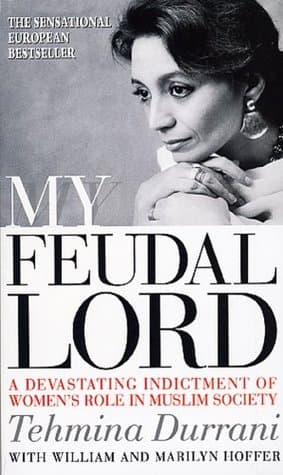
My Feudal Lord cover
Archivist's Choice

My Feudal Lord

Tehmina Durrani (1991)

Genre

Politics / Biography / Memoir / History

Reading Time

10-12 hours

Key Themes

See below

Track Your Reading

Sign in to track this book

Trapped in a gilded cage, a Pakistani socialite defies her powerful, abusive political husband and a patriarchal society, sacrificing everything to reclaim her voice and expose the hidden plight of women.

Core Idea

Tehmina Durrani's "My Feudal Lord" is a memoir about the harsh realities of power, patriarchy, and political corruption in Pakistan's elite. It tells Durrani's story, from a privileged life to one of abuse and public shaming under her husband, a well-known politician. The book argues that behind political authority and respectability often lies a system of personal control, especially against women, supported by cultural norms, religious views, and a society that stays silent. Durrani's story criticizes the feudal thinking that still exists in modern politics, where personal relationships mirror the cruel dynamics of traditional lord-vassal arrangements. It suggests that freedom requires not just personal rebellion but also publicly revealing these hidden controls, even at great personal cost, to break cycles of silence and help vulnerable women in conservative societies.
Reading time
10-12 hours
Difficulty
Medium
✓ Read this if...
You are interested in the intersection of politics, patriarchy, and personal courage in a South Asian context, or want to understand the challenges faced by women within powerful, traditional societies.
✗ Skip this if...
You are sensitive to graphic descriptions of abuse and psychological torment, or prefer a less emotionally intense and more academic exploration of Pakistani politics.

Core idea

The central argument and framework that powers the entire book.

Tehmina Durrani's "My Feudal Lord" is a memoir about the harsh realities of power, patriarchy, and political corruption in Pakistan's elite. It tells Durrani's story, from a privileged life to one of abuse and public shaming under her husband, a well-known politician. The book argues that behind political authority and respectability often lies a system of personal control, especially against women, supported by cultural norms, religious views, and a society that stays silent.

Durrani's story criticizes the feudal thinking that still exists in modern politics, where personal relationships mirror the cruel dynamics of traditional lord-vassal arrangements. It suggests that freedom requires not just personal rebellion but also publicly revealing these hidden controls, even at great personal cost, to break cycles of silence and help vulnerable women in conservative societies.

At a glance

Reading time

10-12 hours

Difficulty

Medium

Read this if...

You are interested in the intersection of politics, patriarchy, and personal courage in a South Asian context, or want to understand the challenges faced by women within powerful, traditional societies.

Skip this if...

You are sensitive to graphic descriptions of abuse and psychological torment, or prefer a less emotionally intense and more academic exploration of Pakistani politics.

Key Takeaways

1

The Golden Cage of Privilege

High society in Pakistan often masks profound personal oppression for women.

Quote

The gilded cage of my upbringing, I now realize, was merely a prelude to the iron bars of my marriage.

Durrani's memoir shows how, even in the highest parts of Pakistani society, women's lives are controlled by societal expectations and patriarchal power. Her early life, with its comfort and social standing, gave a false sense of security that did not protect her from marital abuse. This point emphasizes that wealth and status, while offering some freedoms, do not guarantee personal freedom or safety for women in a traditional, male-dominated culture. The societal pressure to keep up appearances and follow gender roles often traps wome...

Supporting evidence

Durrani's description of her childhood in Lahore's elite, contrasted with the immediate and profound control her husband, Mustafa Khar, exerted over her life, isolating her from family and friends despite her privileged background.

Apply this

Recognize that outward signs of privilege do not equate to personal freedom or safety, especially for women in societies with strong patriarchal norms. Challenge assumptions about 'happy' or 'successful' lives based solely on material wealth or social standing.


patriarchysocial-controlgender-inequality
2

The Politician's Private Tyranny

Public power can enable private brutality, particularly when societal norms shield abusers.

Quote

His public persona as a powerful leader was a stark contrast to the monster he became behind closed doors.

Mustafa Khar, a well-known political figure, had great power and influence in Pakistan, which he used to control and abuse Tehmina without consequence. This point highlights a dangerous situation where a person's public standing and political connections can hide private cruelties. Society's respect for powerful men, along with a culture of silence about domestic abuse, allowed Khar to maintain his image while subjecting Tehmina to years of physical and psychological torment. This shows how political power can corrupt not just governm...

Supporting evidence

Durrani's detailed accounts of Khar's violent possessiveness, pathological jealousy, and the extreme lengths he went to cut her off from all external contact, all while maintaining his public image as a respected leader.

Apply this

Be critical of public figures whose private lives are shielded from scrutiny, especially when allegations of abuse arise. Support mechanisms that allow victims of powerful individuals to speak out safely and be heard without fear of reprisal.

abuse-of-powerdomestic-violencepolitical-corruption
3

The Cost of Rebellion

Challenging patriarchal norms incurs severe personal and social penalties for women.

Quote

The price of my freedom was everything I held dear: my children, my home, my family, my social standing.

Tehmina Durrani's decision to leave her abusive marriage and get a divorce took immense courage, but it cost her dearly. Her family disowned her, she lost custody of her children, and she lost all financial support, becoming an outcast in her own society. This point highlights the harsh reality for women who challenge deeply ingrained patriarchal systems. Societal structures punish dissent, ensuring that women who step outside prescribed roles are severely ostracized, making it very difficult for others to do the same. Her story shows...

Supporting evidence

The immediate and severe consequences Durrani faced after her divorce: alienation from her parents, loss of her four children, and the complete absence of financial support, as detailed in the book.

Apply this

Advocate for legal and social reforms that protect women seeking divorce or escaping abuse, ensuring they do not face destitution or loss of their children. Challenge societal attitudes that blame or punish women for leaving abusive relationships.

social-ostracismgender-rolesdivorce-stigma
4

Faith and Feminism Reconciled

It is possible to reconcile Islamic faith with a fervent belief in women's rights.

Quote

My faith was not the problem; it was the twisted interpretations and patriarchal customs that had usurped its true meaning.

One of the strongest parts of Durrani's story is how she connects her deep faith in Islam with her strong belief in women's rights. She criticizes not Islam itself, but the patriarchal interpretations and cultural practices that have historically made women subservient in Muslim societies. This point challenges the common idea that Islam is inherently oppressive to women, arguing instead that many practices come from cultural traditions rather than core religious principles. Her journey shows that a progressive, equal understanding of...

Supporting evidence

Durrani's internal struggle and eventual resolution to hold onto her faith while fighting for her rights, seeing her struggle as a fight against misinterpretation rather than the religion itself.

Apply this

Engage in critical analysis of religious texts and traditions to identify and challenge patriarchal interpretations. Support initiatives that promote feminist readings of religious doctrine and empower women within faith communities.

islamic-feminismreligious-interpretationwomen's-rights-in-islam
5

The Power of the Pen

Memoir can be a potent weapon against oppression and a catalyst for social change.

Quote

I wrote not just for myself, but for every woman silenced by the weight of tradition and tyranny.

The publication of 'My Feudal Lord' was a major event in Pakistani society, sparking widespread discussion about women's rights and domestic abuse. This point emphasizes the power of personal stories and writing. By sharing her personal and painful experiences, Durrani not only found her own voice but also became a voice for many other women who suffered in silence. Her memoir showed that individual stories, when told honestly, can expose societal injustices, challenge cultural norms, and start movements for change, proving that writi...

Supporting evidence

The book's initial reception in Pakistan, where it 'shook Pakistani society to its foundations' and provided 'extraordinary insights into the vulnerable position of women.'

Apply this

Encourage and support the sharing of personal stories, especially from marginalized voices, as a means of social advocacy. Recognize the power of literature and memoir to foster empathy and drive societal reform.

memoir-impactsocial-activismnarrative-power
6

The Intergenerational Cycle of Silence

Societal pressure to maintain family honor often perpetuates cycles of abuse and silence.

Quote

My parents, trapped by their own societal expectations, chose to disown me rather than confront the truth of my suffering.

Durrani's estrangement from her family, especially her parents, after she spoke out about her abuse shows the deep impact of 'family honor' on individual well-being. This point illustrates how the great pressure to uphold a family's reputation and avoid scandal often leads to victims being silenced and abuse continuing. Parents, caught between cultural expectations and their child's suffering, sometimes prioritize societal standing over their child's safety and happiness. This creates a cycle where abuse is hidden, and those who expos...

Supporting evidence

The fact that Durrani was 'disowned by her parents' after her decision to rebel and seek divorce, illustrating their prioritization of social standing over her individual suffering.

Apply this

Challenge cultural norms that prioritize family honor over individual safety and well-being. Create safe spaces and support systems for individuals to report abuse without fear of familial ostracism.

family-honorintergenerational-traumaculture-of-silence
7

Vulnerability of Women in Muslim Society

Despite varying interpretations, women in many Muslim societies face systemic vulnerabilities.

Quote

My story was a window into the vulnerable position of women caught in the complex web of Muslim society.

The book gives "extraordinary insights into the vulnerable position of women caught in the complex web of Muslim society." This point acknowledges that while Islam is a diverse religion with many interpretations, women in many Muslim-majority countries often face a complex mix of legal, social, and cultural challenges that can make them vulnerable. These vulnerabilities can include limited legal help in cases of divorce or abuse, societal pressure to conform to traditional gender roles, and the difficulty of challenging patriarchal in...

Supporting evidence

The overall narrative arc of the book, detailing the legal and social disadvantages Durrani faced as a Muslim woman seeking a divorce and challenging a powerful man.

Apply this

Support international efforts and local organizations working to empower women in Muslim-majority societies, focusing on legal reform, education, and advocacy for gender equality within diverse cultural contexts.

muslim-women's-rightsgender-equality-challengescultural-vulnerability
8

The Illusion of Protection

Traditional structures often claim to protect women while simultaneously controlling them.

Quote

They said they were protecting my honor, but they were only protecting their own control over my life.

Durrani's early life and later marriage show a common societal illusion: that traditional structures and patriarchal control are meant to 'protect' women. In reality, these systems often limit women's freedom, restrict their choices, and make them dependent on men. The idea of 'honor' is often used to justify strict controls over women's behavior, movement, and choices, supposedly for their safety or reputation. However, as Durrani's story clearly shows, this 'protection' often becomes a form of imprisonment, where women have little r...

Supporting evidence

The societal expectation that she lead a 'sheltered life of leisure' which, under her husband's control, became extreme isolation. Her family's initial attempts to arrange a suitable marriage, which ultimately led to her abusive situation.

Apply this

Critically examine claims of 'protecting' women, especially when such claims involve restricting their choices or autonomy. Advocate for genuine protection that empowers women to make their own decisions and escape harmful situations.

patriarchal-protectionfemale-autonomygender-control

Critical analysis

Notable Quotes

I was a woman, and in Pakistan, a woman's life is rarely her own.

Reflecting on the societal constraints and lack of autonomy for women in her country.

My life with Mustafa was a gilded cage, beautiful on the outside, but suffocating within.

Describing her marriage to Mustafa Khar and the superficial glamour that masked a deeply oppressive reality.

The greatest prison is not one of stone, but of the mind, where fear and silence become your jailers.

Pondering the psychological impact of her abuse and the internal struggle to break free.

To speak the truth, in my world, was to invite destruction. To stay silent was to destroy myself.

Grappling with the impossible choice between exposing her abuser and enduring her suffering in silence.

He was my feudal lord, and I was merely one of his many possessions.

A direct and stark statement about her husband's absolute control and her dehumanized status within the marriage.

The political landscape was a game of chess, where human lives were mere pawns.

Observing the ruthless and often morally bankrupt nature of Pakistani politics through her husband's involvement.

Hope is a dangerous thing when it is the only thing you have left.

Reflecting on moments of desperation and the fragile nature of hope in dire circumstances.

My children were my anchors, the only reason I held on when everything else was falling apart.

Highlighting the profound role her children played in her will to survive and fight for a better future.

He taught me that love could be a weapon, wielded with devastating precision.

Realizing the manipulative ways her husband used emotional tactics, disguised as love, to control her.

The price of my freedom was my reputation, my social standing, and almost my life.

Detailing the immense personal cost of her decision to leave her husband and publish her story.

Writing this book was an act of defiance, a scream against the silence.

Explaining her motivation for penning the memoir, seeing it as a powerful act of resistance.

Beneath the veneer of tradition and piety, lies a brutal reality for many women.

Exposing the hypocrisy and harsh truths hidden behind cultural and religious customs in Pakistan.

I had to become a monster to fight the monster that held me captive.

Describing the difficult transformation and inner strength she had to cultivate to confront her abuser.

The scars on my soul were deeper than any physical wound, but they also taught me resilience.

Reflecting on the lasting psychological trauma of her experiences and the strength she gained from enduring them.

Quiz

Test Your Knowledge

Ready to see how well you understood this book? Take our interactive quiz with 10 questions.

10
Questions
~5
Minutes
?
Best Score

Key Questions (FAQ)

'My Feudal Lord' is a biographical memoir by Tehmina Durrani, detailing her tumultuous marriage to Pakistani politician Mustafa Khar. It exposes the abuse she endured and her subsequent struggle for independence and justice within a patriarchal Muslim society.

About the author